
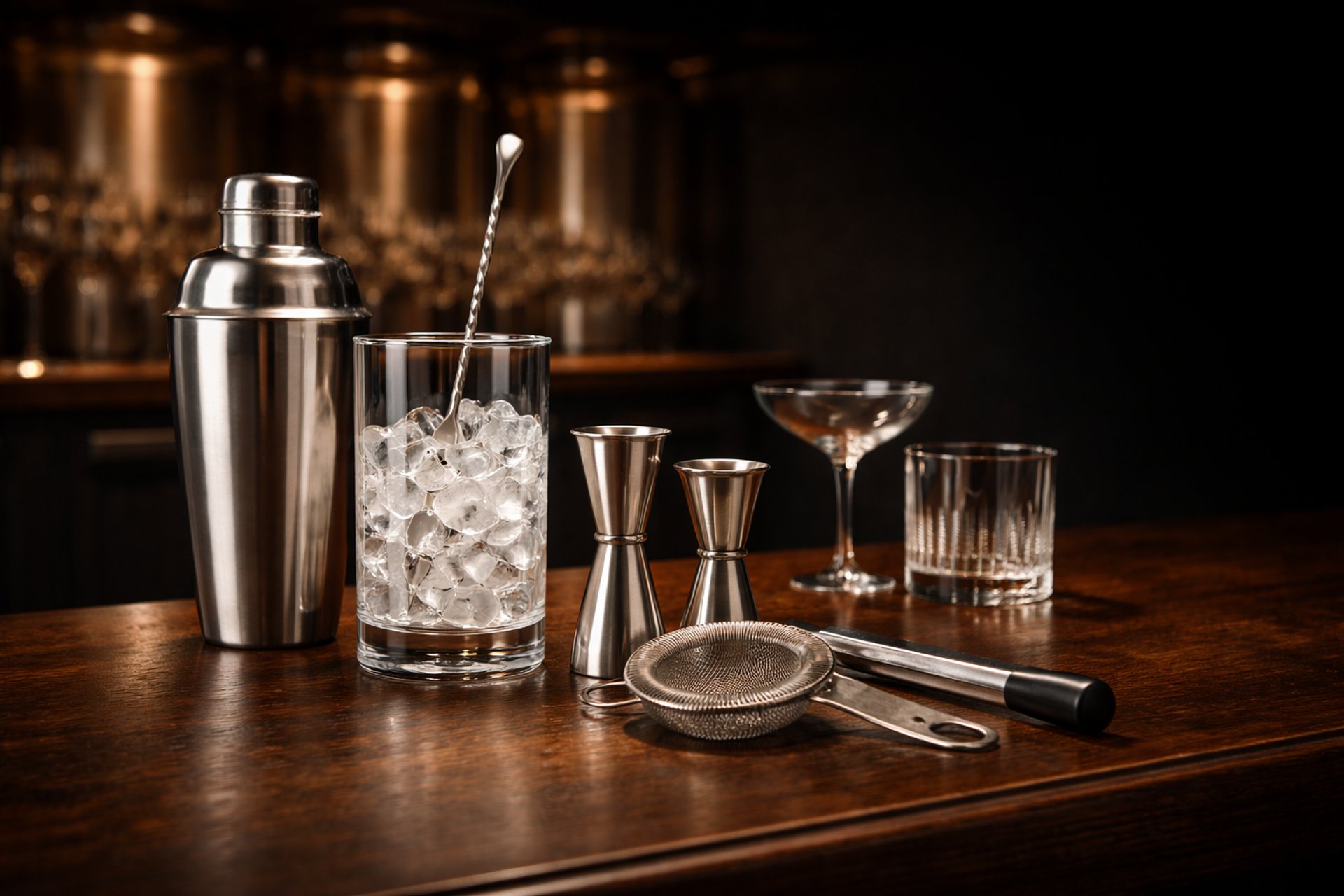
Bar Spoon Design Explained
Bar spoons are one of the most versatile tools behind the bar, used for stirring, layering, and fine control when building cocktails. While they may look simple at first glance, their design is highly intentional and plays a major role in how they perform.
From the twisted handle to the different spoon ends, every part of a bar spoon is built to improve precision and efficiency. Understanding these design elements helps you choose the right spoon and use it effectively.
If you’re building your setup, it’s helpful to see how bar spoons fit into the larger system of tools in the Bar Tools guide or within a complete Essential Home Bar setup.
Why Bar Spoon Design Matters
Bar spoons are designed for control. Unlike standard kitchen spoons, they allow for smooth movement through liquid, helping bartenders stir cocktails without disrupting texture or clarity.
The design directly impacts:
stirring efficiency
dilution control
layering precision
overall comfort during use
If you’ve ever struggled to stir smoothly, the design of the spoon is often the reason.
To refine your technique, explore How to Stir with a Bar Spoon and improve consistency behind the bar.
Core Bar Spoon Components
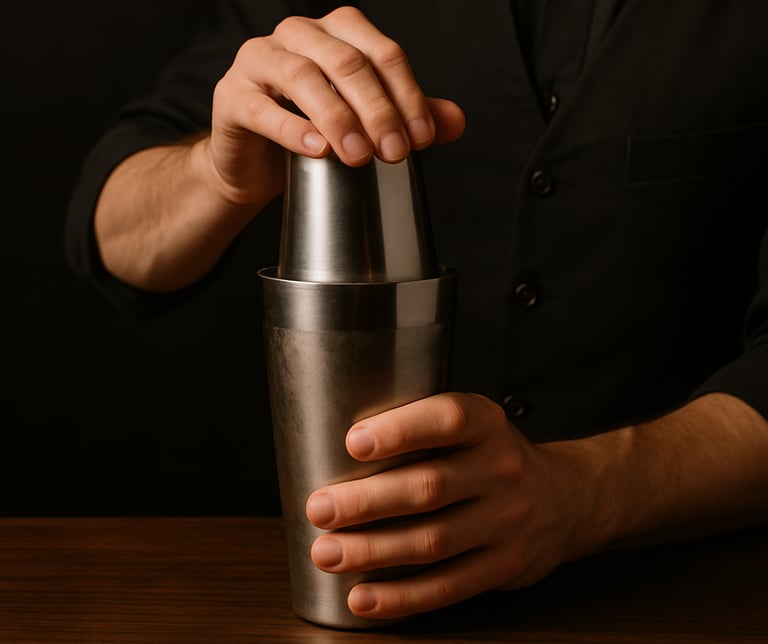
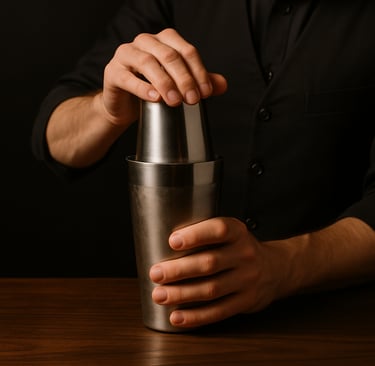
Boston Shaker
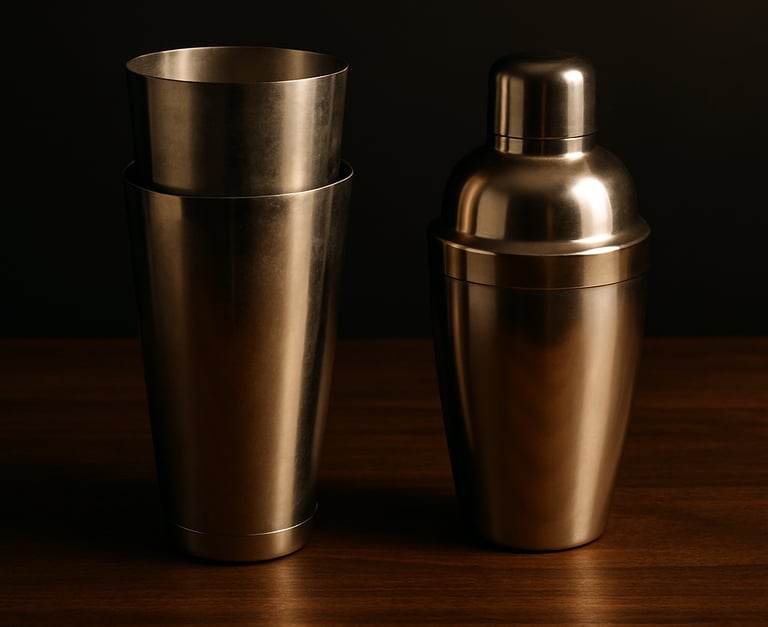
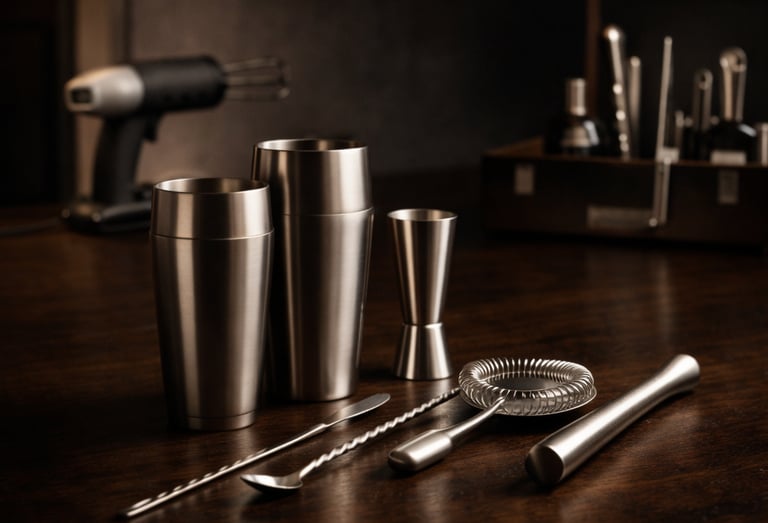
The Boston shaker is the most widely used shaker in professional bars. It consists of two pieces: a larger metal tin and either a smaller metal tin or a mixing glass.
This design provides a large internal space that allows ice to move freely during shaking, producing rapid chilling and consistent dilution.
Because it does not include a built-in strainer, bartenders typically pair the Boston shaker with a separate Hawthorne strainer.
Advantages of the Boston shaker include strong sealing, fast chilling, and durability. Its simplicity also makes it easier to clean and less prone to mechanical issues.
Many bartenders prefer Boston shakers because they rarely get stuck and allow for quick opening after shaking.
Cobbler Shaker
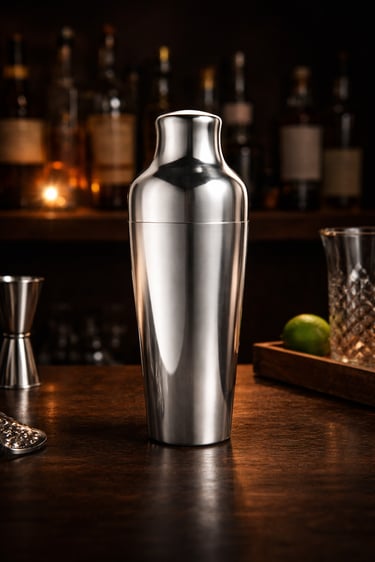
French (Parisian) Shaker
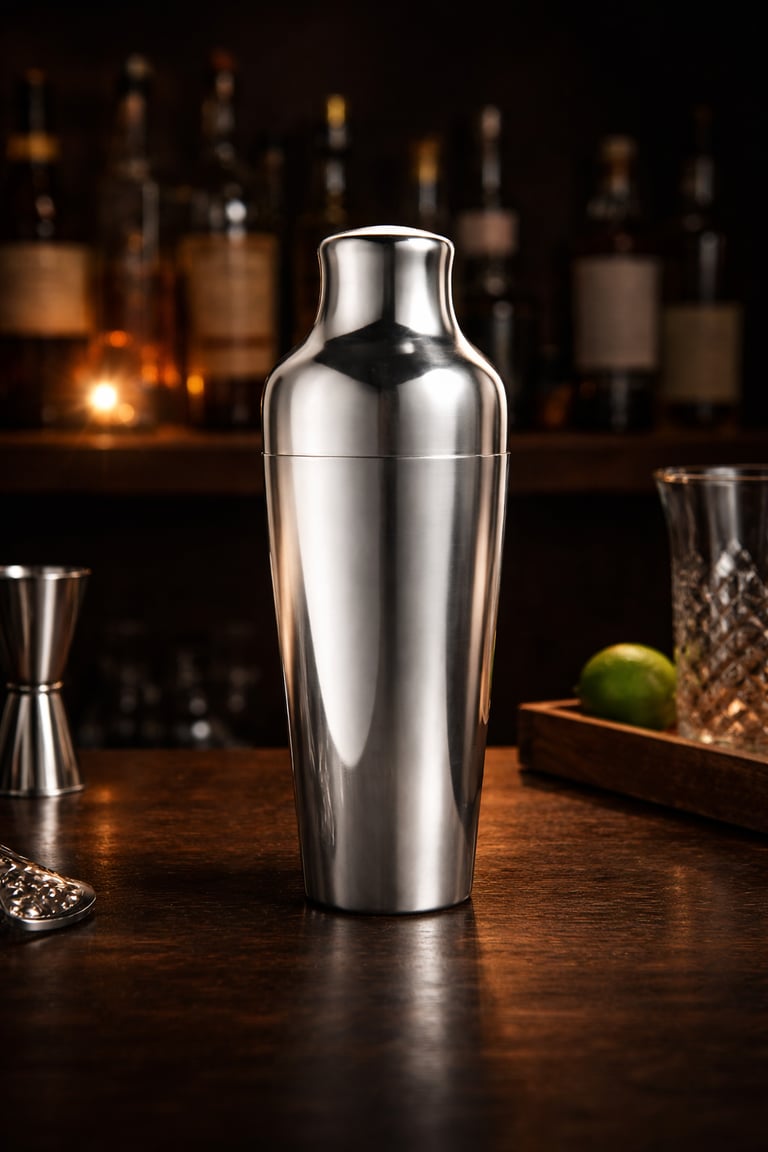
The French shaker sits somewhere between the Boston and Cobbler designs.
It consists of two metal pieces that resemble a Cobbler shaker but lack the built-in strainer.
Because it is a two-piece system, it seals and performs similarly to a Boston shaker while maintaining a more polished appearance.
French shakers are often favored in upscale bars where aesthetics matter, but they are less common overall due to higher cost and limited availability.
Functionally, they offer many of the same advantages as Boston shakers while providing a slightly more refined visual style.
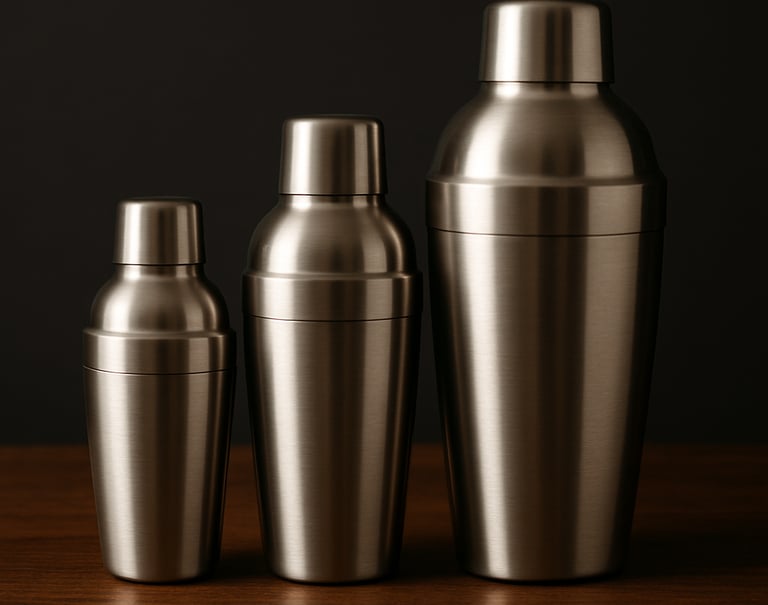
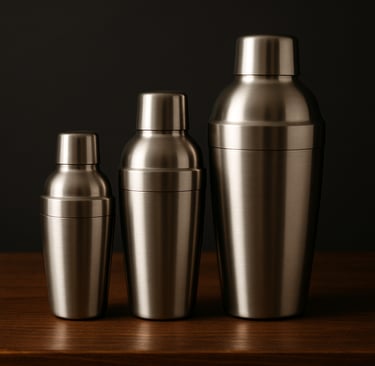
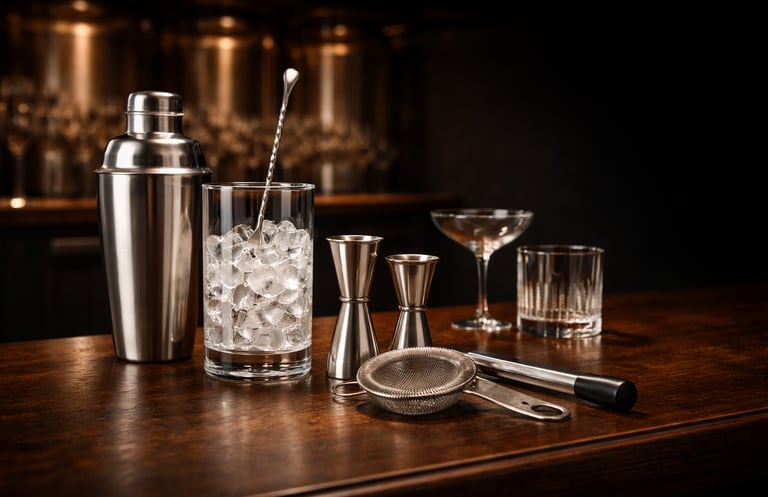
The Cobbler shaker is the most recognizable cocktail shaker style and is often included in beginner bar tool sets.
It consists of three pieces:
• a metal shaker body
• a built-in strainer lid
• a small cap that covers the strainer
This design simplifies pouring because the strainer is integrated directly into the shaker. For many home bartenders, the Cobbler shaker feels convenient and self-contained.
However, the multi-piece construction can introduce problems. The lid may become difficult to remove after shaking, especially if the metal contracts from the temperature change.
Despite these challenges, Cobbler shakers remain popular because they are compact and easy to understand for beginners.
Related articles:
Why Cobbler Shakers Get Stuck / How to Break a Stuck Shaker / Why Boston Shakers Seal Better
How Shaker Design Affects Dilution and Temperature
One of the most important characteristics of a cocktail shaker is how efficiently it chills a drink.
Metal shakers tend to cool faster than glass because stainless steel transfers heat quickly away from the liquid inside. This rapid temperature change helps cocktails reach their target temperature within seconds.
The amount of space inside the shaker also affects dilution. Larger shakers allow ice to move more freely, increasing agitation and accelerating the chilling process.
Boston shakers typically provide the largest internal volume, which is one reason they are so common in professional environments.
Related article:
Why Metal Shakers Chill Faster
Which Shaker Type Is Best for Different Situations
Each shaker style works well in different environments.
Boston shakers are the standard for professional bartenders and serious home enthusiasts. Their durability, fast chilling performance, and simple design make them reliable tools for frequent use.
Cobbler shakers are often preferred by beginners who want an all-in-one design that does not require separate strainers.
French shakers appeal to those who want the functionality of a Boston shaker combined with a more elegant appearance.
Choosing the right shaker depends less on absolute performance and more on how you prefer to work behind the bar.
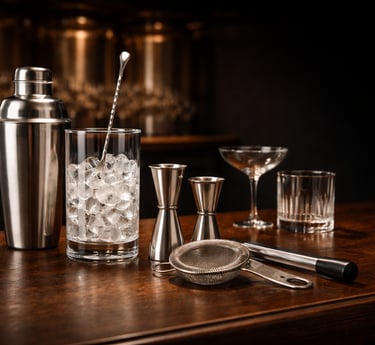
Choosing the Right Shaker for Your Home Bar
For most home bartenders, the best approach is choosing a shaker that matches how you plan to use your bar.
If you expect to make cocktails frequently or want the same tools used by professional bartenders, a Boston shaker is usually the most versatile option.
If you prefer simplicity and fewer separate tools, a Cobbler shaker can be a practical starting point.
Those building a more refined bar setup may prefer the French shaker for its balance of function and appearance.
The most important factor is comfort and reliability. A shaker that seals easily, chills efficiently, and opens without struggle will quickly become one of the most used tools in your bar.
Common Cocktail Shaker Mistakes
Many problems people experience with cocktail shakers come from technique rather than the shaker itself.
One common mistake is underfilling the shaker with ice. Too little ice leads to excessive dilution because the ice melts before the drink fully chills.
Another frequent issue occurs when the shaker is sealed incorrectly. If the two pieces are not aligned properly before shaking, the seal may be weak and cause leaks.
With Cobbler shakers, overtightening the cap or lid can make the shaker difficult to open after shaking.
Understanding how the shaker works prevents most of these problems and leads to much more consistent cocktails.
Where Cocktail Shakers Fit in a Complete Bar Tool System
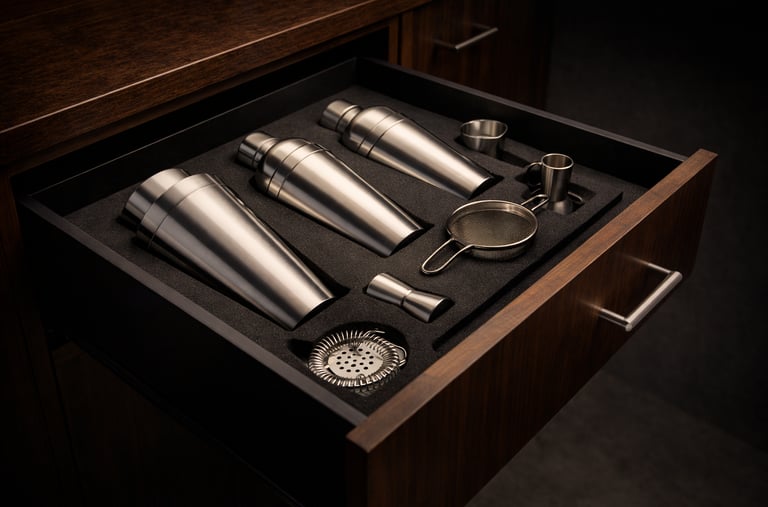
A cocktail shaker is only one part of a complete mixing setup. Most cocktails also require tools such as jiggers for measurement, strainers for clean pours, and bar spoons for stirred drinks.
Choosing the right shaker is the first step toward building a reliable home bar toolkit.
If you want to explore the best-performing shaker models currently available, see our full guide:
© 2026 Barkeepers Buzz. All rights reserved.
Barkeepers Buzz
Master cocktails, spirits, and bar knowledge with clarity and precision. Built for serious home enthusiasts.
Crafted with respect for the culture — and the responsibility that comes with it.
For educational purposes only. Intended for legal drinking age audiences. Please drink responsibly.
General Inquiries: