
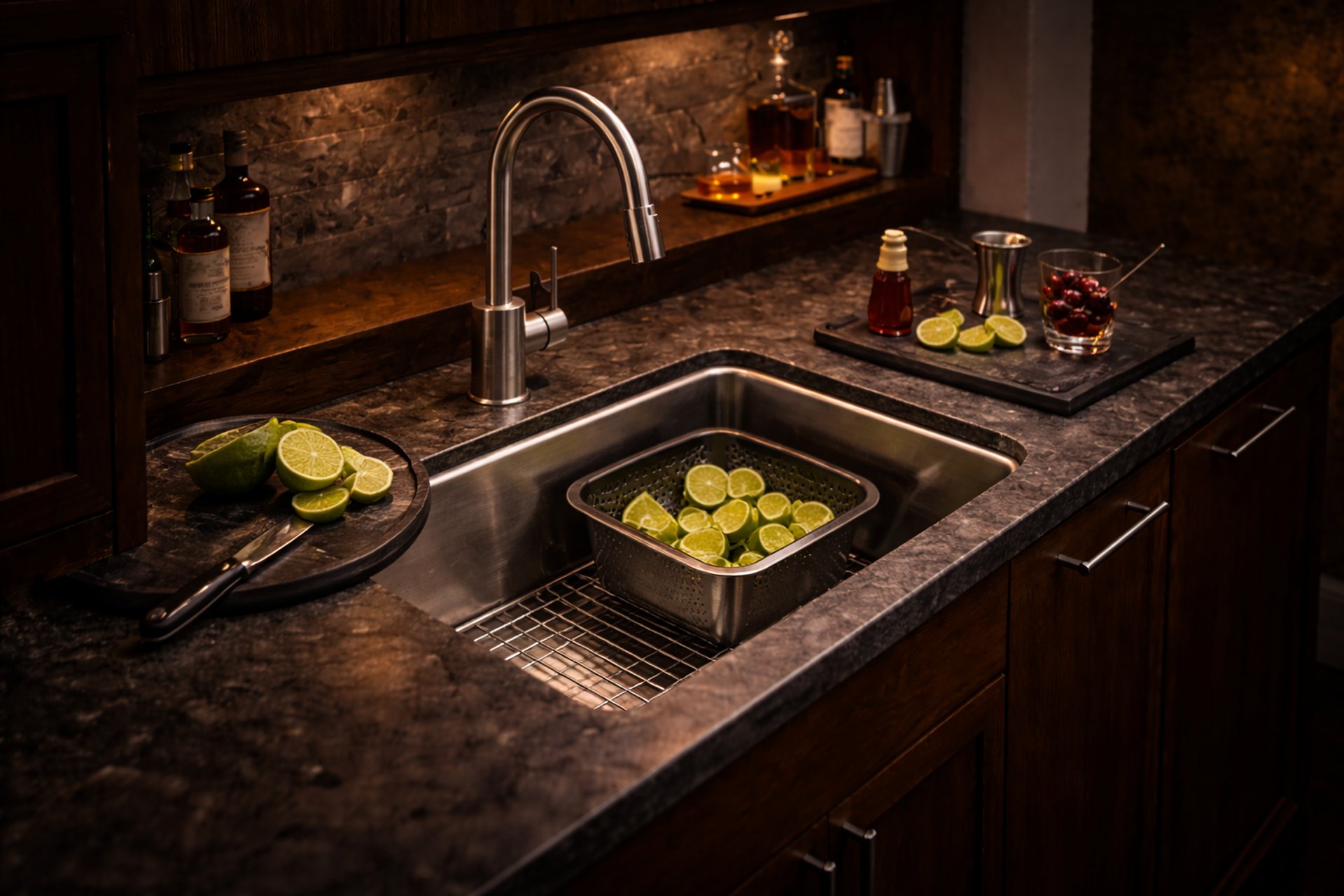
Best Wet Bar Sinks for Home Bars
Structured Prep. Clean Workflow. Permanent Integration.
A serious home bar eventually runs into one constraint:
Water access.
Without a dedicated sink, you rely on:
Kitchen trips
Improvised rinsing
Limited prep efficiency
Reduced hosting speed
A wet bar sink transforms a decorative bar into a functional station.
It supports:
Glass rinsing
Garnish prep
Ice handling
Cocktail cleanup
Draft system maintenance
For permanent home bar builds, a wet bar sink is not an upgrade.
It’s workflow infrastructure.
Transparency Note: We may earn a commission from qualifying purchases. Product selections are made independently and are not influenced by manufacturers.
What Is a Wet Bar Sink?
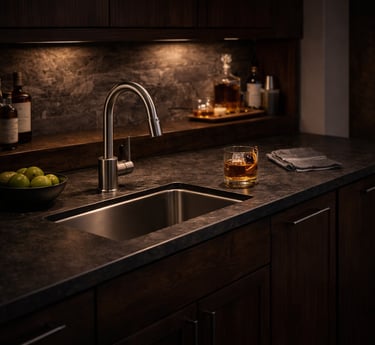
A wet bar sink is a compact sink installed within a home bar or entertainment area, typically connected to plumbing for hot and cold water.
Unlike kitchen sinks, wet bar sinks are:
Smaller footprint
Designed for prep and rinsing
Built for integration into bar cabinetry
Often paired with compact faucets or glass rinsers
They are not utility sinks.
They are prep and service stations.
Why a Wet Bar Sink Changes Everything
Without a sink in your bar:
You leave the hosting zone
Glass cleaning slows down
Draft maintenance becomes inconvenient
Ice melts while you walk
With a sink:
You maintain flow
You reduce interruption
You centralize cleaning
You improve speed
Infrastructure reduces friction.
Types of Wet Bar Sinks
Not all sinks serve the same purpose.
Drop-In Wet Bar Sinks
Simple Installation
Installed by dropping into a cutout in the countertop.
Best For:
DIY installs
Renovation retrofits
Budget-conscious builds
Advantages:
Easier installation
Flexible sizing
Lower labor cost
Limitations:
Visible rim
Slightly less seamless finish
Undermount Wet Bar Sinks
Clean Counter Integration
Mounted beneath the countertop for flush appearance.
Best For:
Stone countertops
Permanent bar builds
Premium installations
Advantages:
Seamless look
Easier countertop wipe-down
Elevated design appeal
Limitations:
Requires professional installation
Higher labor cost
Prep Sinks / Multi-Function Sinks
Expanded Functionality
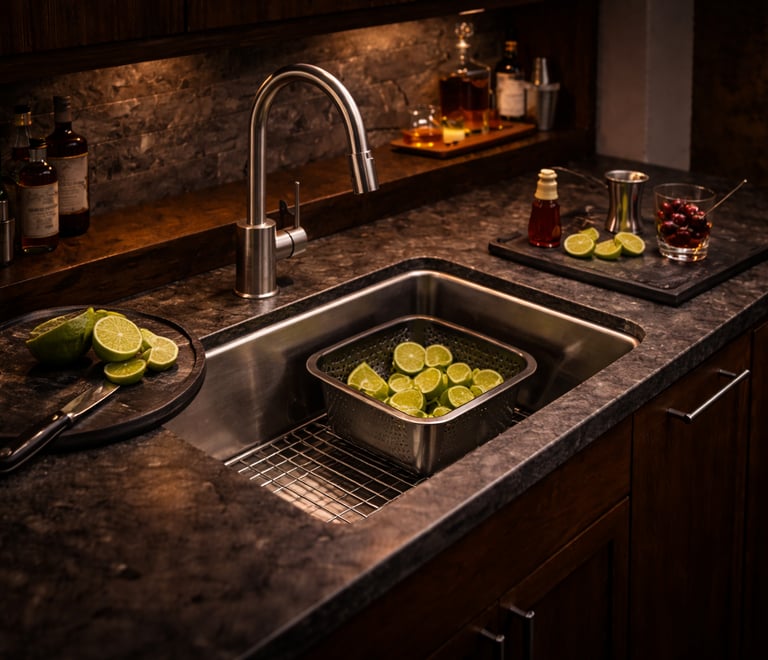
Larger sinks with added depth or accessories.
Best For:
Cocktail-intensive home bars
Garnish prep
Ice bin integration
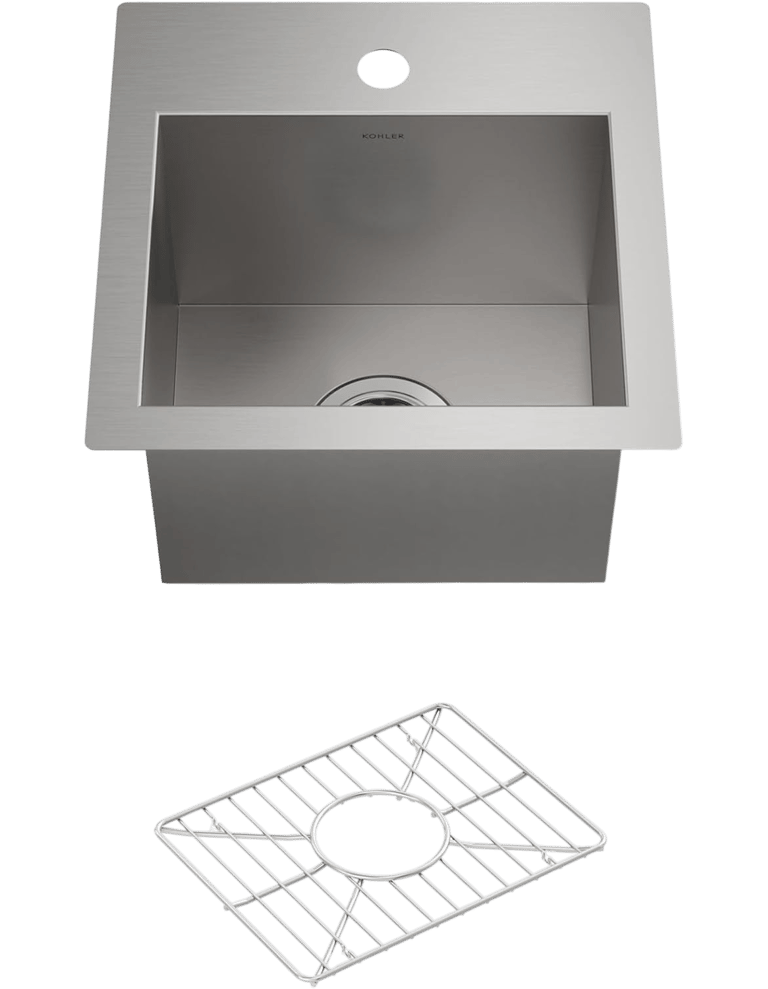
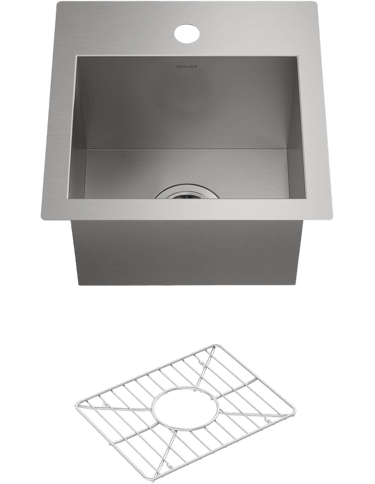
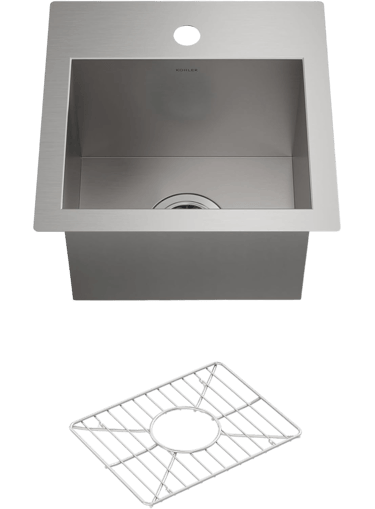
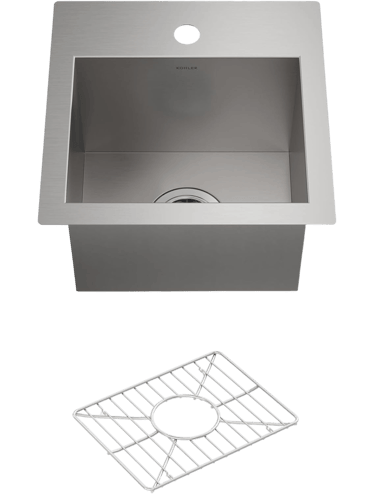
KOHLER Vault Top-/Undermount Bar Sink
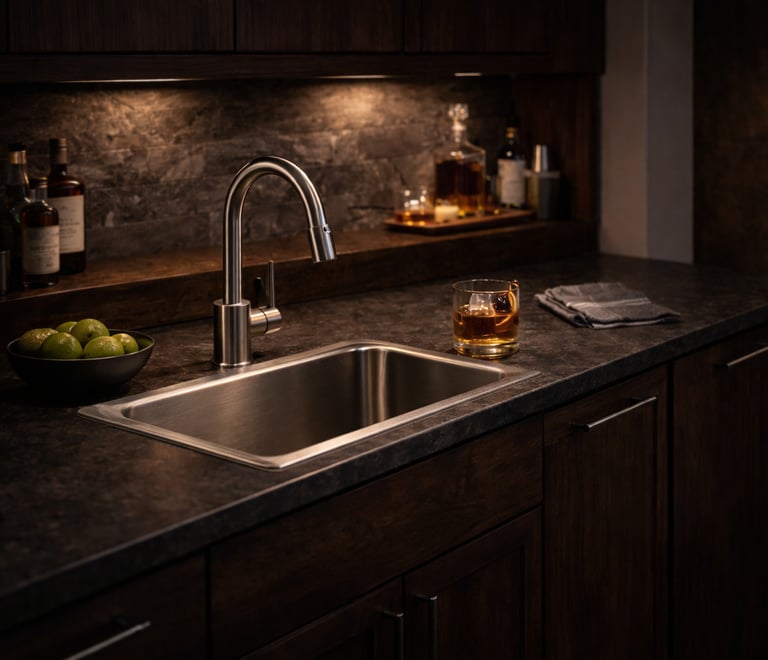
The KOHLER Vault works because it focuses on practicality instead of gimmicks. While some wet bar sinks try to maximize accessories or oversized workstation layouts, the Vault stays compact, durable, and easy to integrate into almost any home bar setup.
The deep bowl gives it enough room for rinsing glassware, dumping ice, washing tools, and handling light prep without taking over the entire counter. That balance is a big reason why it works so well in real-world wet bars where space matters just as much as functionality.
It also feels more refined than many utility-focused stainless sinks. The clean lines, tight corners, and premium finish help it blend naturally into modern bars, basement lounges, and entertainment spaces without looking overly commercial.
Specs (Quick Breakdown)
Material: 18-gauge stainless steel
Installation: Top-mount or undermount
Bowl Depth: 9 inches
Exterior Size: Approx. 15" x 15"
Faucet Hole: Single-hole configuration
Finish: Satin stainless
Best Use Case: Everyday home bar setups
Why This Wins
The KOHLER Vault succeeds because it balances usability, durability, and clean aesthetics better than most compact wet bar sinks.
It is large enough to be useful, small enough to fit almost anywhere, and polished enough to work inside higher-end bar builds without feeling industrial.
👉 It is not the flashiest option—it is simply one of the easiest wet bar sinks to live with long term.
BUZZ'S TOP PICK
KOHLER Vault Bar Sink
Best Overall
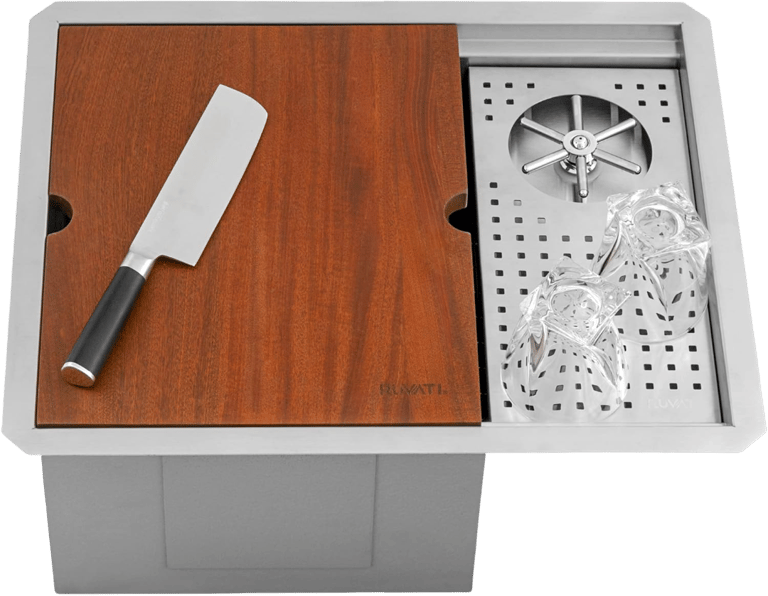
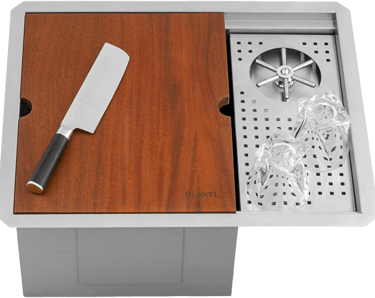
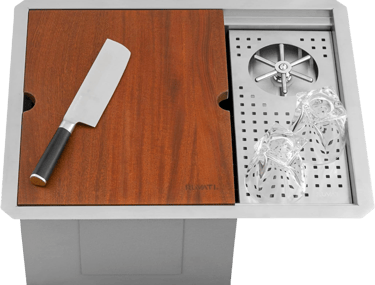
Ruvati Glass Rinser and Sink Combo
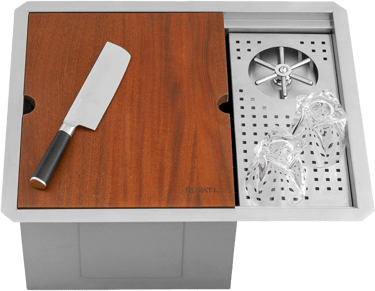
The Ruvati Glass Rinser Combo feels purpose-built for modern cocktail bars. Instead of acting like a basic prep sink, this setup combines rinsing, workflow organization, and utility into a compact workstation-style layout that makes active drink prep noticeably easier.
The integrated glass rinser is the standout feature. For cocktail-heavy setups, it speeds up rinsing glasses, shakers, strainers, and tools while keeping the workflow cleaner and more efficient. Once you use a rinser regularly, going back to a standard sink feels surprisingly limiting.
The 16-gauge stainless construction also gives the sink a more premium feel than many residential wet bar options. It feels solid, quieter during use, and more capable of handling high-use environments.
Specs (Quick Breakdown)
Material: 16-gauge T-304 stainless steel
Installation: Undermount workstation
Features: Integrated glass rinser
Bowl Depth: 10 inches
Exterior Size: 22" x 18"
Finish: Brushed stainless
Best Use Case: Modern cocktail bars and entertaining
Why This Wins
The Ruvati stands out because it improves workflow instead of simply adding sink space.
The rinser, divided layout, and workstation design make it feel more like a true cocktail prep station than a traditional wet bar sink.
👉 This is one of the strongest options for people who actively make drinks instead of only occasionally pouring them.
BUZZ'S TOP PICK
Ruvati Glass Rinser Combo
Best Modern Sink
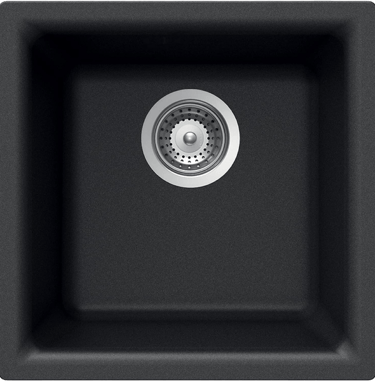
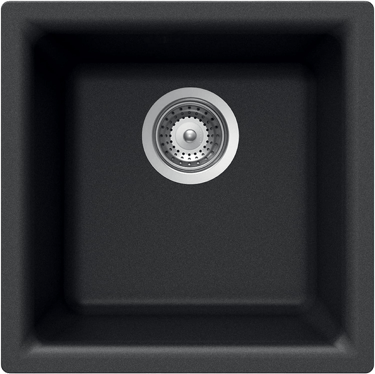
Houzer E-100 MIDNITE Quartztone Granite
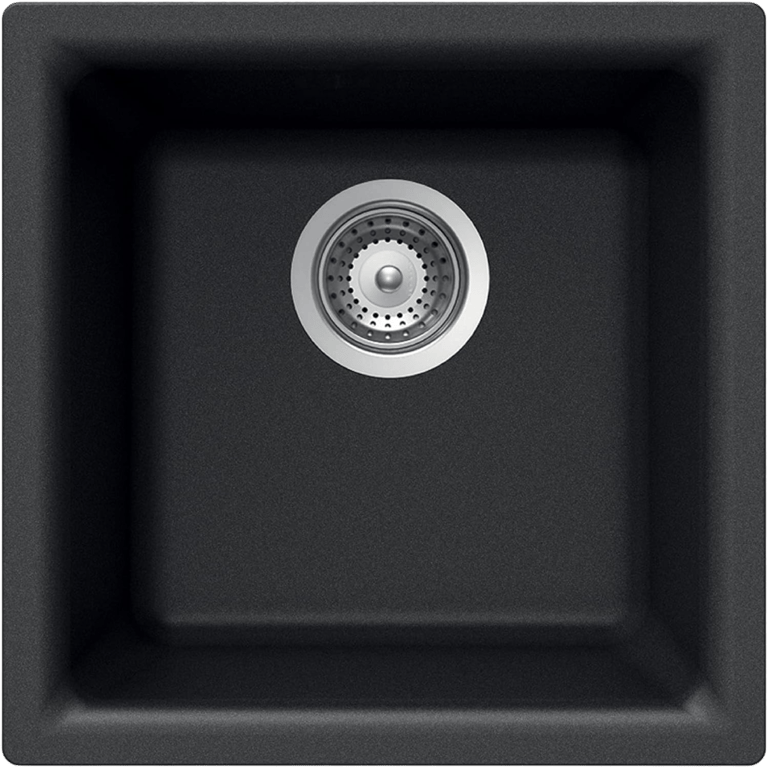
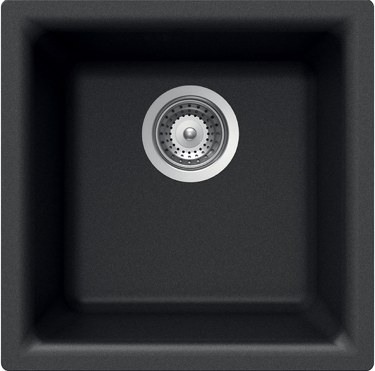
The Houzer E-100 MIDNITE takes a very different approach from most wet bar sinks. Instead of emphasizing commercial stainless styling, it focuses on darker finishes, quieter operation, and a softer overall appearance that works especially well in moodier home bar environments.
The Quartztone granite composite construction also changes the feel of the sink completely. It absorbs noise better than stainless steel, resists scratches well, and gives the bar a more refined built-in appearance instead of an industrial prep-station look.
Its compact square footprint makes it especially useful for basement bars, lounge-style setups, and entertainment areas where visual integration matters just as much as utility.
Specs (Quick Breakdown)
Material: Quartztone granite composite
Installation: Dual-mount
Exterior Size: Approx. 15.75" x 15.75"
Bowl Depth: Approx. 8 inches
Finish: MIDNITE black
Heat Resistance: Up to 500°F
Best Use Case: Dark modern home bars
Why This Wins
The Houzer succeeds because it feels warmer and more integrated than traditional stainless steel sinks.
The darker finish works exceptionally well in:
black cabinetry
walnut bars
speakeasy-style setups
moodier entertainment spaces
👉 This is one of the best options for people who want their wet bar to feel less like a kitchen extension and more like furniture.
BUZZ'S TOP PICK
Houzer E-100 MIDNITE
Best Granite Composite
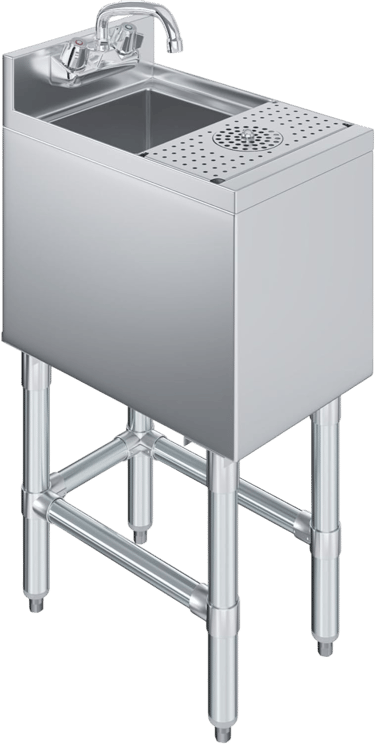
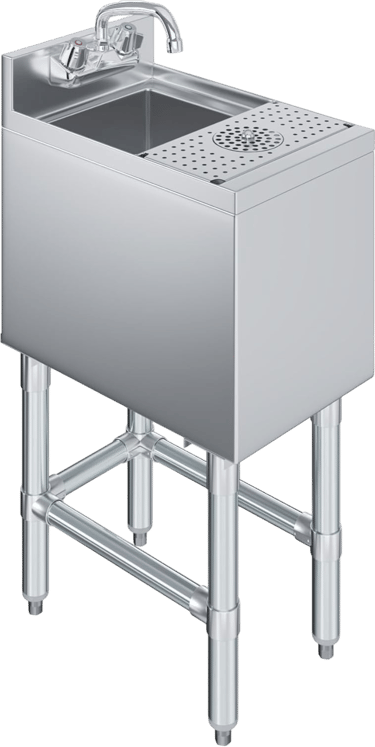
Express KitchQuip Commercial Underbar Mixology Station
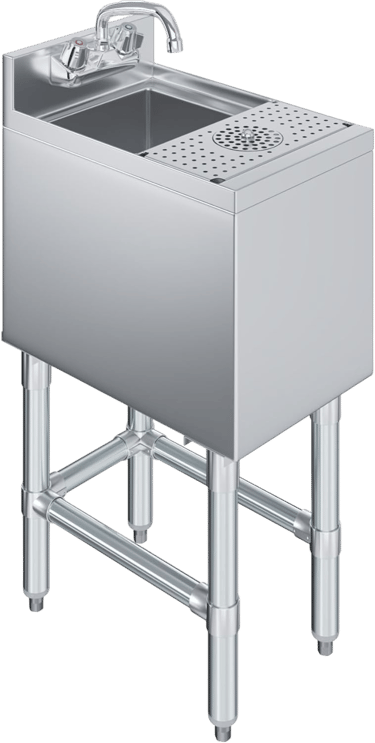
The Express KitchQuip Mixology Station is much closer to commercial bar equipment than a standard residential wet bar sink. Instead of focusing mainly on aesthetics, this setup is designed around workflow efficiency, glass turnover, and active cocktail prep.
The integrated rinse area, stainless construction, and underbar layout make it feel more like a compact bartender workstation than a traditional sink. That changes how the entire bar functions once you start making drinks regularly.
It is also one of the most utility-focused options in this category. The workspace organization makes repetitive tasks faster, cleaner, and easier during high-volume entertaining or cocktail-heavy setups.
Specs (Quick Breakdown)
Material: Type 304 stainless steel
Style: Commercial underbar station
Features: Integrated rinse/workflow layout
Backsplash: 3-inch rear backsplash
Feet: Adjustable leveling feet
Construction: Reinforced stainless framing
Best Use Case: Cocktail workflow and active entertaining
Why This Wins
The Express KitchQuip succeeds because it prioritizes efficiency over presentation.
Unlike traditional wet bar sinks, this setup is designed to support:
active bartending
faster rinsing
cleaner prep workflow
better station organization
👉 It is not the most luxurious-looking option—but it is easily the most functional for serious cocktail setups.
BUZZ'S TOP PICK
Express KitchQuip Station
Best Mixology Station
Materials Matter
The most common wet bar sink materials:
Granite Composite
Scratch resistant.
Visually refined.
Heavier installation.
More aesthetic-driven.
Fireclay / Porcelain
Traditional appearance.
More fragile.
Better for aesthetic-focused builds.
Stainless Steel
Most common.
Durable.
Rust-resistant.
Easy to clean.
Best overall performance-to-cost ratio.
For serious hosting and durability → stainless steel wins.
What to Look for in a Quality Wet Bar Sink
Gauge Thickness (Stainless Steel)
Lower number = thicker steel.
Look for:
16–18 gauge
Thicker gauge:
Reduces noise
Improves durability
Minimizes flex
Bowl Depth
Shallow sinks limit functionality.
Ideal depth:
6–10 inches
Deep enough for:
Shaker rinsing
Ice scoops
Glass cleaning
Sound Dampening
Better sinks include:
Undercoating
Sound-deadening pads
Reduces echo and vibration noise.
Drain Placement
Rear-set drains allow:
Better storage under sink
Improved plumbing clearance
Faucet Considerations
Pair your sink with:
High-arc faucet
Pull-down sprayer
Compact bar faucet
Glass rinser attachment
Do not treat faucet selection as secondary.
It defines usability.
Size Recommendations by Bar Type
Compact Bar Install
Sink Width:
10–15 inches
Best for:
Rinsing & basic prep
Mid-Size Dedicated Bar
Sink Width:
15–20 inches
Best for:
Garnish prep + glass rinsing
Full Wet Bar Station
Sink Width:
20–25+ inches
Best for:
Draft cleaning
Ice bin pairing
Multi-person hosting
Wet Bar Sink vs Utility Sink
Utility sinks:
Large
Industrial
Not visually integrated
Wet bar sinks:
Compact
Designed for cabinetry
Built for hosting aesthetics
Different purposes.
Common Mistakes to Avoid
• Installing sink without considering drain placement
• Choosing too shallow a bowl
• Ignoring gauge thickness
• Not accounting for ventilation and cabinet space
• Overbuilding sink size for small bar
Plan around workflow — not visual scale.
Quick Picks for Your Home Bar
KOHLER
Vault Bar Sink
Premium stainless design with clean everyday usability


BUZZ PICK – Best Overall
Ruvati Glass Rinser Combo
Integrated rinser and workstation layout for busy bars
BUZZ PICK – Best Modern
Houzer
E-100 MIDNITE
Quiet granite composite sink with a bold modern finish
BUZZ PICK – Best Granite
Express KitchQuip Commercial Mixology
Commercial-style cocktail workflow built for fast prep
BUZZ PICK – Best Mixology
Frequently Asked Questions
Can you install a wet bar sink in a basement?
Yes, but plumbing planning is critical.
Are composite sinks better than stainless?
Composite offers aesthetic benefits; stainless offers durability and performance.
Do wet bar sinks increase home value?
In finished basement or entertainment builds, yes — especially when professionally installed.
Can you add a glass rinser to a wet bar sink?
Yes. Many faucets support integrated glass rinsers.
How deep should a wet bar sink be?
6–10 inches provides optimal functionality for cocktail prep and cleaning.
Do you need plumbing for a wet bar sink?
Yes. A wet bar sink requires water supply and drain connections.
What size sink is best for a home bar?
Most dedicated bars perform best with a 15–20 inch sink width.
Is undermount better than drop-in?
For permanent builds and stone countertops, undermount offers a cleaner finish.
What gauge stainless steel is best?
16–18 gauge is ideal for durability and reduced vibration.
Do wet bar sinks need garbage disposals?
Typically no. They are designed for rinsing and light prep.
Building Intelligently:
Integrating a Wet Bar Sink Into Your System
A wet bar sink should integrate into a complete infrastructure system.
Pair it with:
Best Under-Counter Beverage Centers for mixer refrigeration
Best Wine Fridges for Home Bars for bottle preservation
Best Kegerators for draft systems
Best Freezers for Home Bars for ice staging
Automatic Clear Ice Systems for structured cocktail service
Best Home Bar Cabinets for storage integration
A complete bar build includes:
A sink anchors prep workflow.
Temperature and water control define operational flow.
Where Do You Want to Go Next?
Choose your path based on what you need right now.
You don’t need to build your home bar one piece at a time with no plan. A good setup starts with the layout, storage, appliances, lighting, and serving flow working together.
Start here if you want the full home bar framework before choosing more equipment.
Explore Everything
Before you buy more furniture or appliances, make sure the full setup makes sense. Placement, power, storage, refrigeration, lighting, and workflow all matter more than people expect.
Use this if you’re still mapping out the room before committing to gear.
Compare Before You Buy
If you want a wet bar sink that simply works, start here.
The KOHLER Vault delivers durable stainless construction, a deep usable bowl, and a clean design that fits naturally into almost any home bar setup.
It is one of the easiest wet bar sinks to recommend for everyday use.
Just Get It Done
© 2026 Barkeepers Buzz. All rights reserved.
Barkeepers Buzz
Master cocktails, spirits, and bar knowledge with clarity and precision. Built for serious home enthusiasts.
Crafted with respect for the culture — and the responsibility that comes with it.
For educational purposes only. Intended for legal drinking age audiences. Please drink responsibly.
General Inquiries: