
Ice Dilution &
Drink Temperature Science
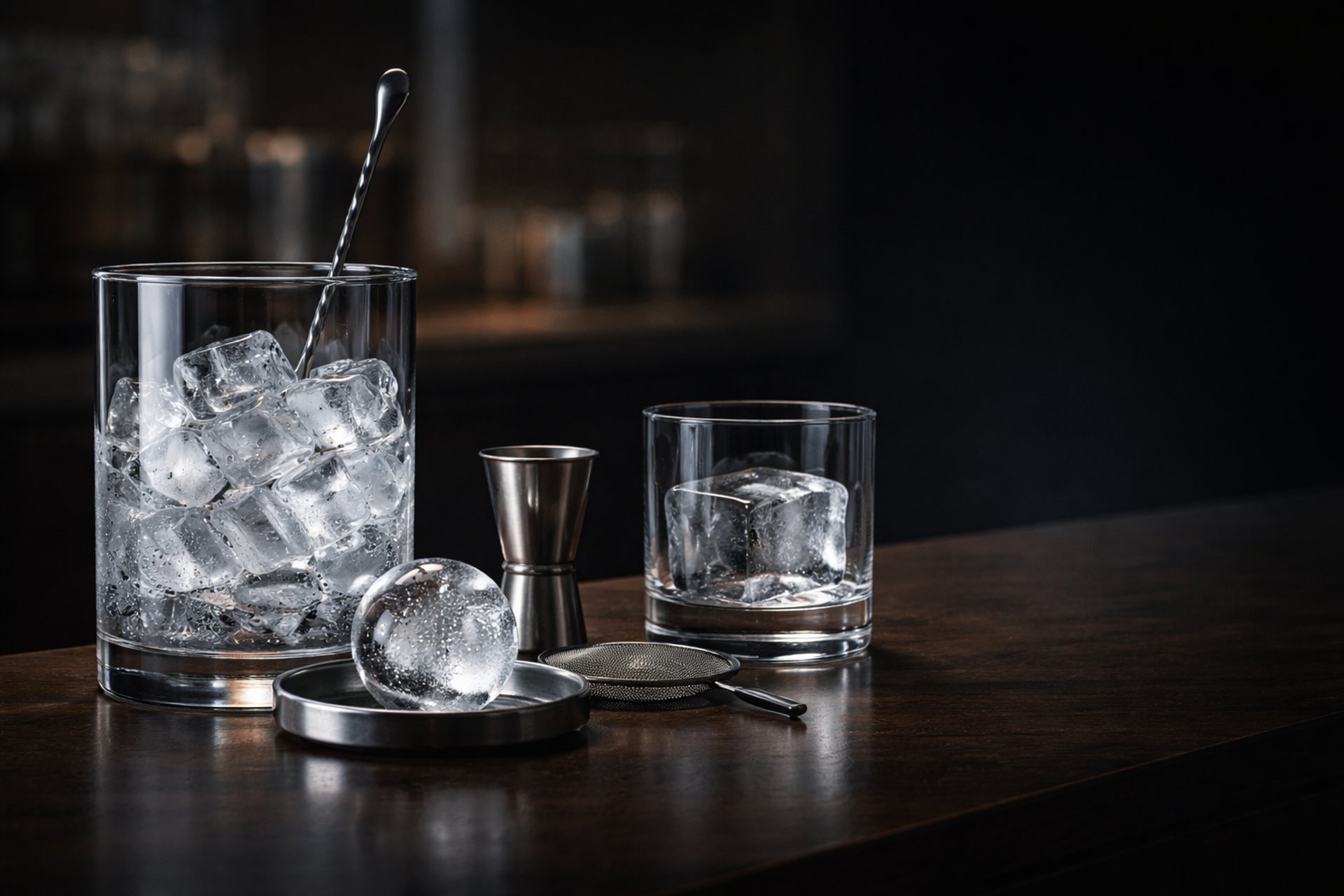
Whether you're pouring a neat bourbon, building an Old Fashioned, stirring a Negroni, or shaking a Daiquiri, ice does far more than simply make a drink cold.
Every piece of ice in a glass changes temperature, dilution, aroma, texture, and overall balance. Understanding how ice interacts with a drink is one of the biggest differences between an average cocktail and a great one.
The reality is that temperature and dilution are connected. As ice cools a drink, it also melts. That melting ice introduces water, which changes flavor concentration, mouthfeel, and how aromas are perceived. The goal isn't to prevent dilution entirely—it's to control it.
If you're new to the science behind cocktail chilling, start with our complete Ice & Temperature Control pillar for a full breakdown of ice makers, molds, storage solutions, and ice systems used in home bars.
Why Dilution Matters More Than
Most People Realize
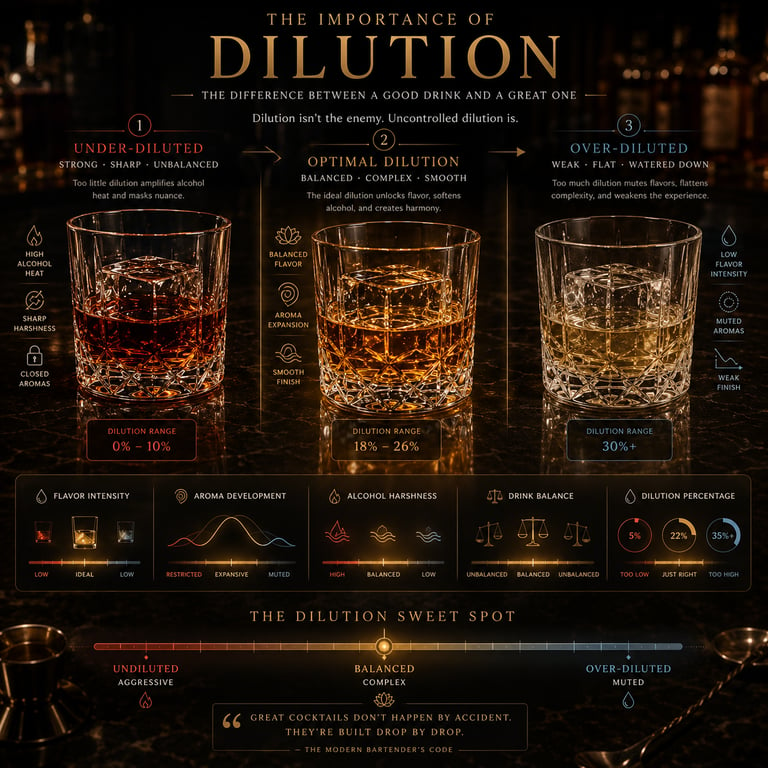
Many people think dilution ruins a drink, but properly controlled dilution actually improves most cocktails.
When water is introduced through melting ice, it softens harsh alcohol notes, opens aromas, and helps blend flavors together. This is why bartenders intentionally stir or shake drinks with ice rather than simply refrigerating ingredients beforehand.
The challenge is controlling how quickly dilution occurs. Too much water too quickly can flatten flavors and leave a cocktail tasting weak. Too little dilution can leave a drink sharp, aggressive, and unbalanced.
Understanding ice size, ice clarity, drink temperature, and serving style helps create predictable dilution rates that improve the overall drinking experience.
For a deeper look at how ice structure impacts melting behavior, see How Ice Shape Controls Dilution Rate.
The Relationship Between
Temperature and Dilution
Temperature and dilution are inseparable. As ice absorbs heat from a drink, it begins melting. The warmer the liquid, the harder the ice works and the faster dilution occurs.
Several factors influence this process:
Ice Size
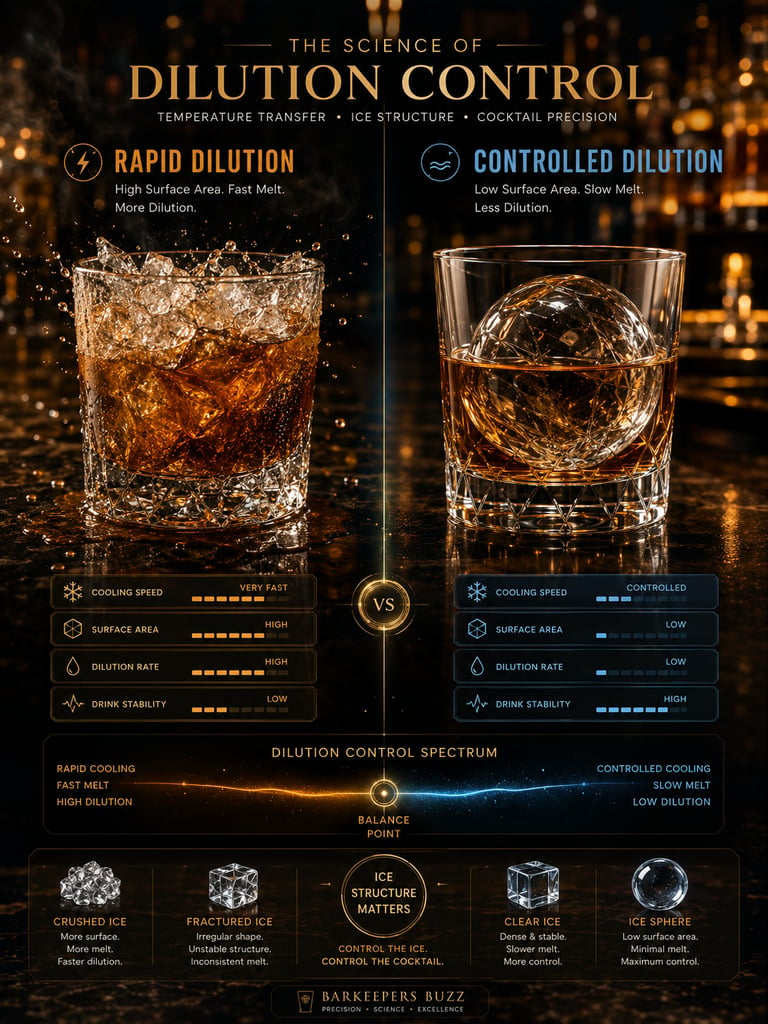
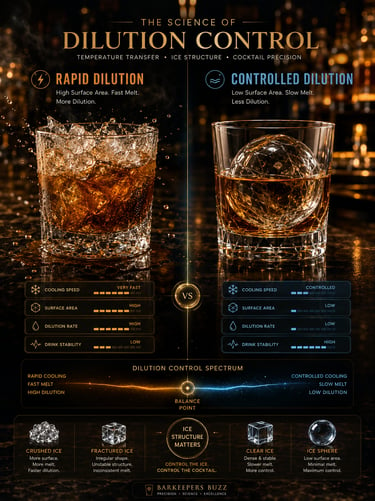
Larger ice melts slower because it has less surface area relative to its volume. This is one reason large whiskey cubes and spheres have become popular for spirit-forward drinks.
For more detail, see Why Large Clear Ice Cubes Melt Slower (And Why It Matters for Whiskey).
Ice Shape
Different shapes expose different amounts of surface area to the liquid. Large cubes and spheres generally dilute more slowly than crushed ice or smaller cubes.
For drink-specific recommendations, see The Best Ice Shapes for Old Fashioneds, Negronis & Spirit-Forward Cocktails.
Ice Clarity
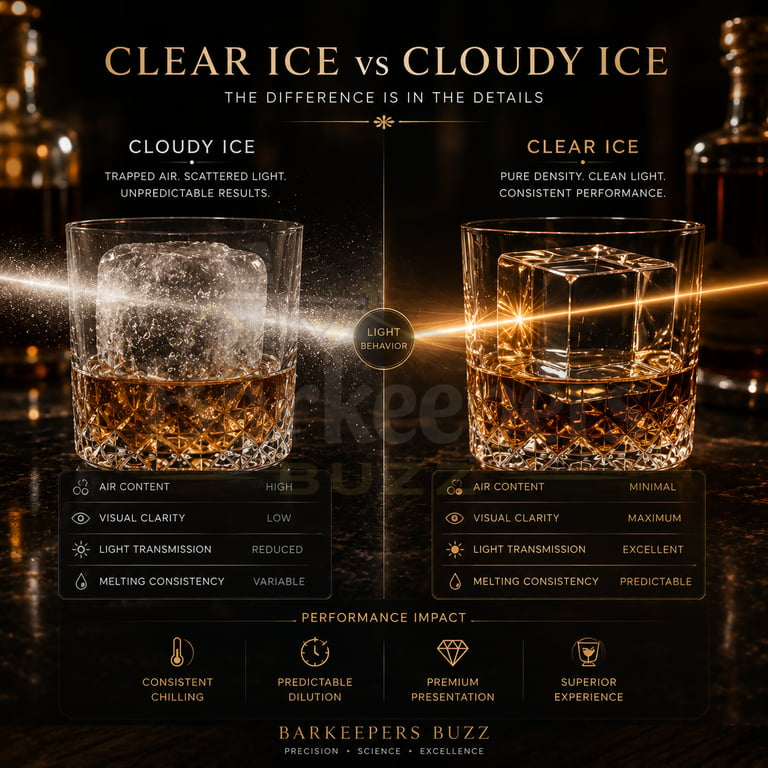
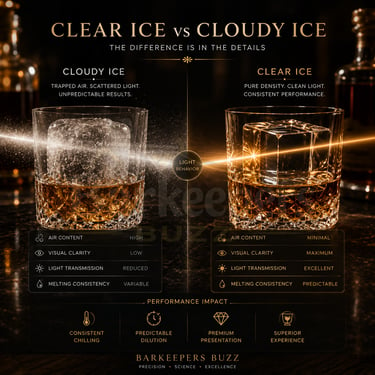
Clear ice is typically denser than cloudy ice because impurities and trapped air have been removed during freezing. Denser ice often melts more predictably and creates a cleaner presentation.
Learn more in Clear Ice vs Cloudy Ice: What Actually Changes in the Drink.
Starting Drink Temperature
A room-temperature spirit requires more cooling than a pre-chilled bottle. The larger the temperature difference, the more melting occurs during the chilling process.
Why Different Drinks Need Different Ice
Not every cocktail benefits from the same type of ice.
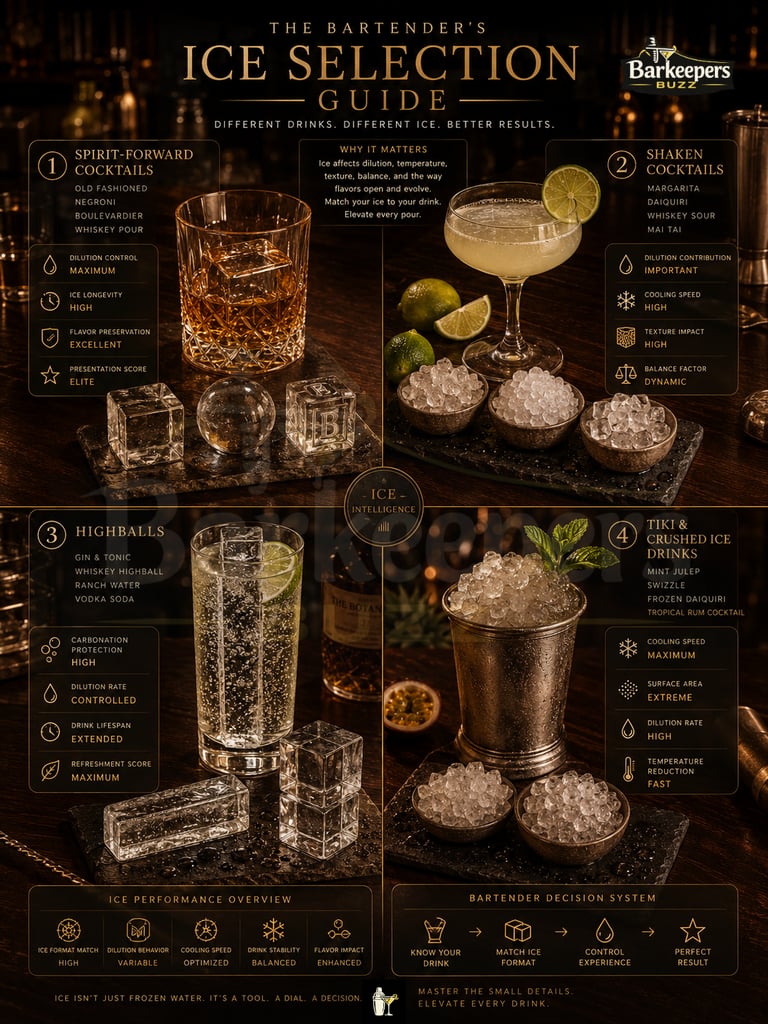
Spirit-Forward Cocktails
Drinks like:
Old Fashioneds
Negronis
Boulevardiers
Whiskey pours
typically benefit from large-format ice that chills slowly and minimizes rapid dilution.
Many bartenders prefer clear cubes, spheres, or decorative ice for these drinks.
Related guides:
Shaken Cocktails
Drinks such as:
Margaritas
Daiquiris
Whiskey Sours
Mai Tais
rely on dilution as part of their final balance.
Ice is not simply chilling the drink—it is becoming part of the recipe.
See Best Ice for Shaken Cocktails for more information.
Highball Drinks
Gin and tonics, whiskey highballs, and similar drinks benefit from larger cubes that preserve carbonation while slowing dilution.
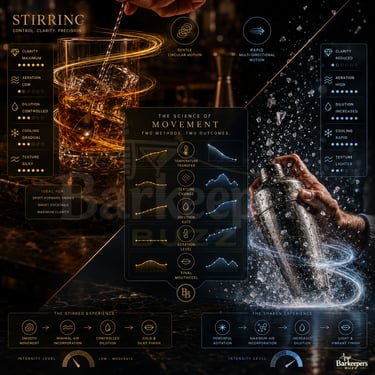
How Stirring and Shaking Affect Dilution
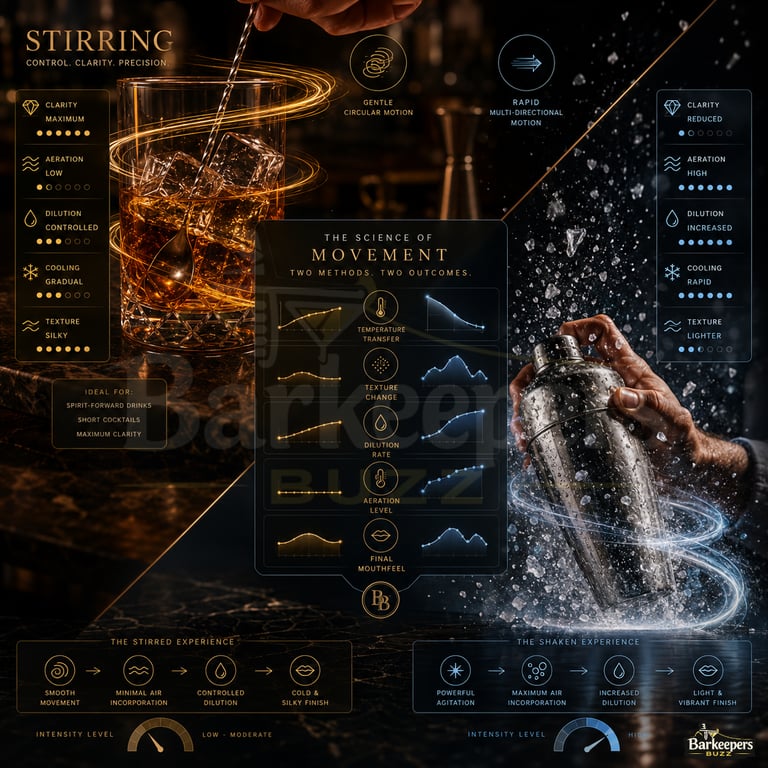
One of the most important lessons in cocktail preparation is understanding the difference between stirring and shaking.
Stirring
Stirring introduces dilution gradually while preserving clarity and texture. It is typically used for spirit-forward cocktails where maintaining visual clarity is important.
Shaking
Shaking introduces air, chills more rapidly, and creates greater dilution. This is ideal for cocktails containing citrus, juices, syrups, or egg whites.
For a complete breakdown, see Stirred vs Shaken: How Ice Changes the Outcome.
The Science Behind Large Ice
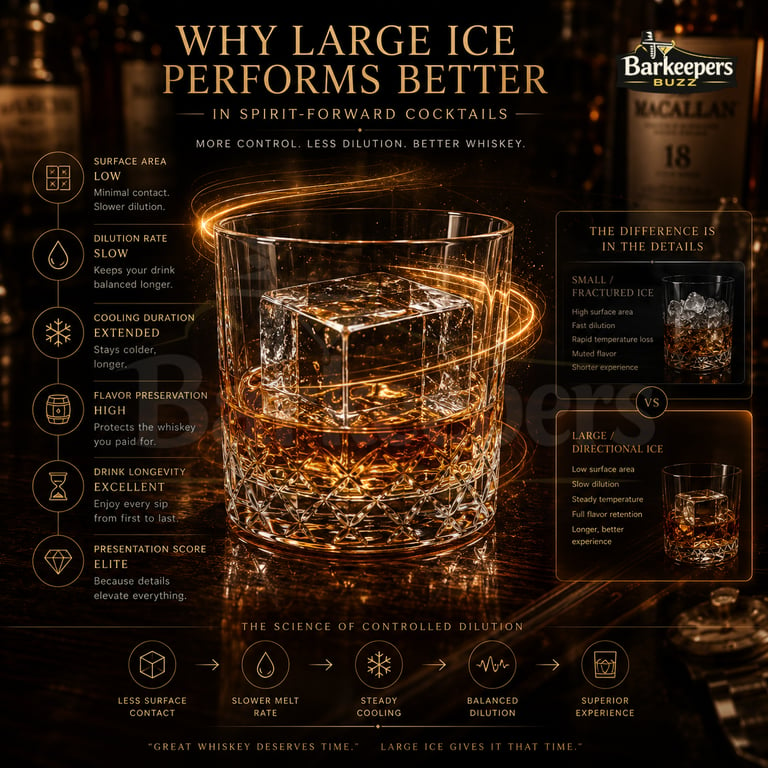
Large-format ice has become increasingly popular because it slows dilution without sacrificing chilling performance.
Large cubes and spheres contain significantly more mass than standard refrigerator ice while exposing less surface area to the liquid.
The result is:
Slower melt rates
More consistent cooling
Better presentation
Longer drinking windows
This is particularly beneficial for whiskey enthusiasts who want temperature control without rapidly watering down a pour.
Learn more in:
Why Clear Ice Performs Differently
Clear ice is often associated with aesthetics, but appearance is only part of the story.
Directional freezing techniques remove trapped air and impurities, creating denser ice with improved visual clarity.
Benefits include:
Cleaner appearance
Reduced cracking
More predictable melting
Better compatibility with decorative patterns
If you're interested in creating presentation-focused cocktails, also explore:
Ice Presentation and Perceived Quality
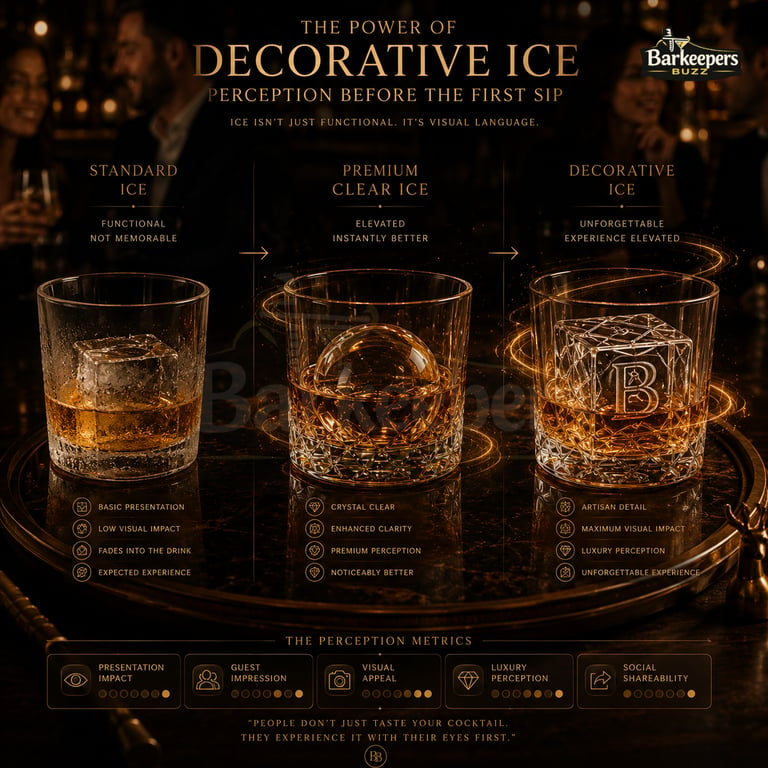
Presentation affects how people experience drinks.
Premium bars often use decorative ice because it creates a stronger first impression and reinforces the perception of quality.
Techniques such as:
Patterned ice
Branded ice
Crystal-clear cubes
Large spheres
have become increasingly popular in whiskey and cocktail service.
To explore this area further, see:

Common Dilution Mistakes
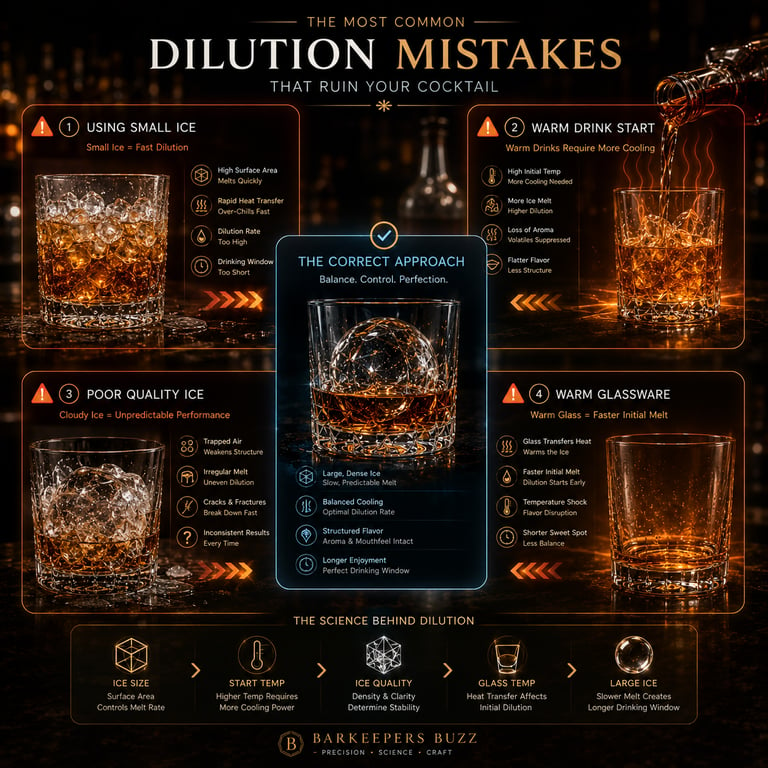
Even experienced home bartenders make mistakes that accelerate dilution.
Using Small Ice for Spirit-Forward Drinks
Small cubes melt quickly and can overpower delicate spirits.
Serving Drinks Warm
Warm ingredients require more cooling, resulting in more meltwater.
Using Poor-Quality Ice
Cloudy, cracked, or poorly stored ice often melts inconsistently.
See:
Ignoring Glass Temperature
Warm glassware can dramatically increase initial melt rates.
For more information, read How Ice Temperature Changes Whiskey Flavor & Dilution.
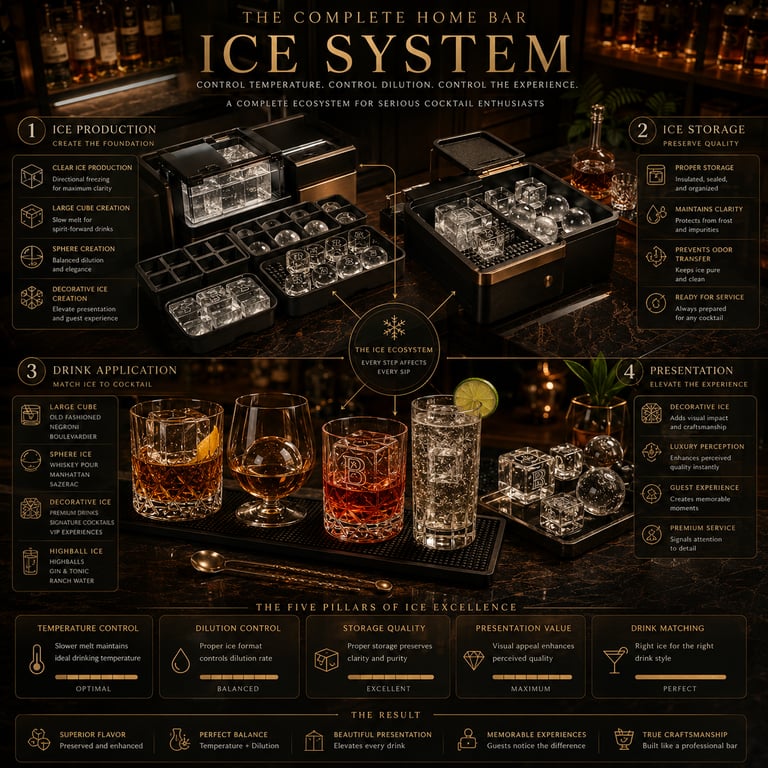
Building the Ideal Home Bar Ice System
The best home bar setups focus on controlling both temperature and dilution rather than simply producing more ice.
Depending on your goals, that may include:
Clear ice makers
Sphere systems
Decorative molds
Ice branding tools
Freezer storage
Beverage refrigeration
Helpful resources include:

Final Verdict
Ice is one of the most important ingredients in any cocktail, yet it is often the least understood. Every decision—from ice size and shape to temperature and clarity—affects how a drink tastes, feels, and evolves over time.
By understanding the science behind dilution and temperature control, you can make better choices about the ice you use, the drinks you serve, and the equipment you add to your home bar. Whether your goal is slower-melting whiskey cubes, crystal-clear cocktail presentation, or simply better-tasting drinks, mastering dilution is one of the fastest ways to improve every pour.
If you're ready to upgrade your setup, start by exploring Best Decorative Ice Stamp Trays for Whiskey & Cocktails, Best Ice Branding Stamps for Whiskey & Cocktails, and our complete Ice & Temperature Control pillar.
© 2026 Barkeepers Buzz. All rights reserved.
Barkeepers Buzz
Master cocktails, spirits, and bar knowledge with clarity and precision. Built for serious home enthusiasts.
Crafted with respect for the culture — and the responsibility that comes with it.
For educational purposes only. Intended for legal drinking age audiences. Please drink responsibly.
General Inquiries: