
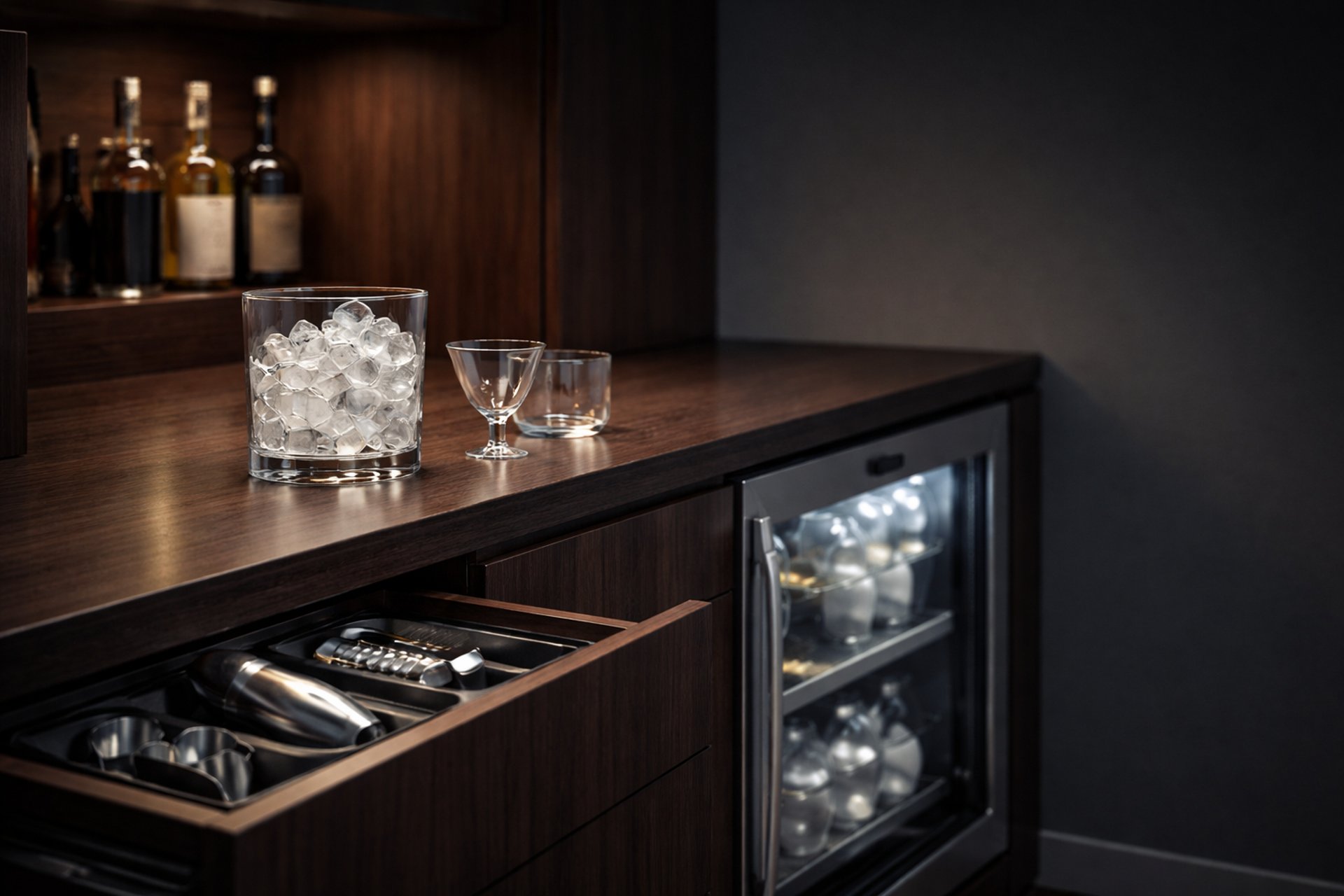
Best Under-Counter Beverage Centers for Home Bars
Structured Cold Storage. Integrated Design. Controlled Access.
A serious home bar operates on temperature discipline.
Ice production.
Wine preservation.
Draft control.
Mixer storage.
An under-counter beverage center bridges the gap between refrigeration and presentation.
Unlike standard compact fridges, beverage centers are built to:
Integrate into cabinetry
Maintain stable cooling ranges
Handle cans, bottles, and mixers
Operate quietly in entertainment spaces
Support structured hosting
If your bar includes frequent guests, batch cocktails, carbonated mixers, or sparkling beverages, a beverage center becomes infrastructure — not convenience.
Transparency Note: We may earn a commission from qualifying purchases. Product selections are made independently and are not influenced by manufacturers.
What Is an Under-Counter Beverage Center?
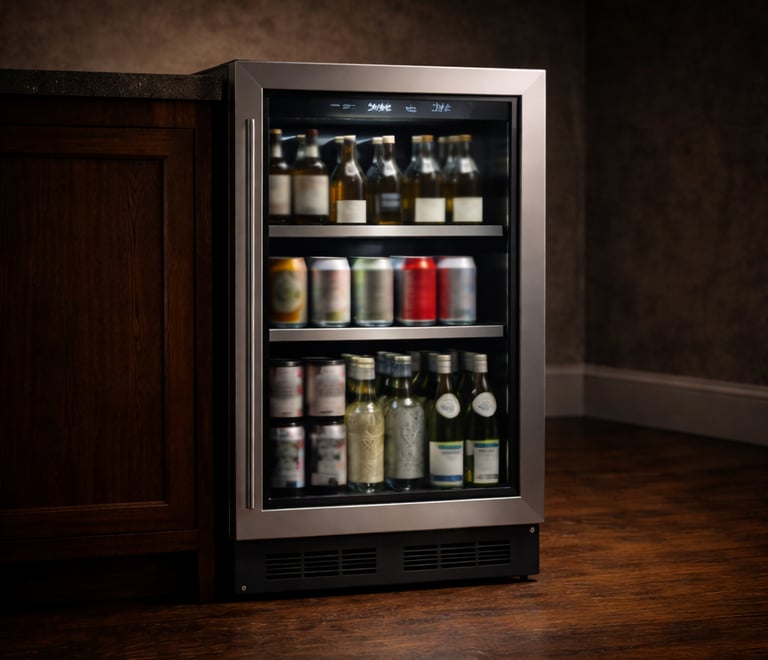
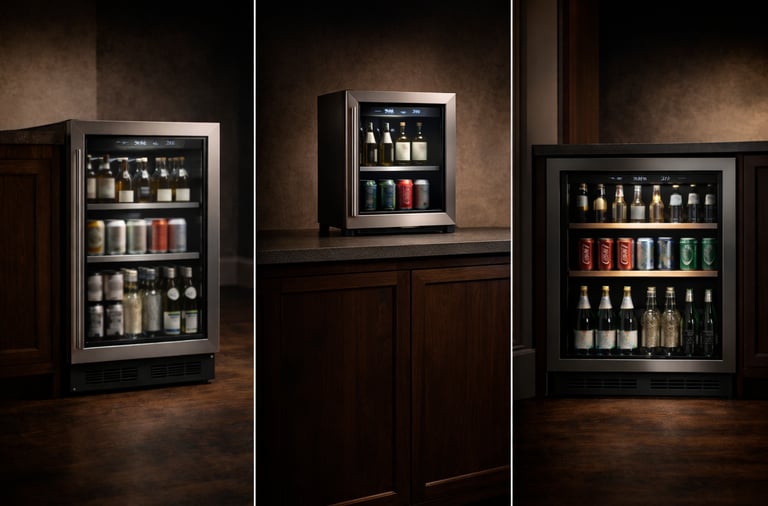
An under-counter beverage center is a front-venting refrigeration unit designed to be installed flush within cabinetry.
Unlike rear-vent compact refrigerators, these units:
Exhaust heat from the front
Allow built-in installation
Maintain consistent mid-range temperatures
Optimize bottle and can storage layout
They are not wine fridges.
They are not freezers.
They are controlled cold storage systems for ready-to-serve beverages.
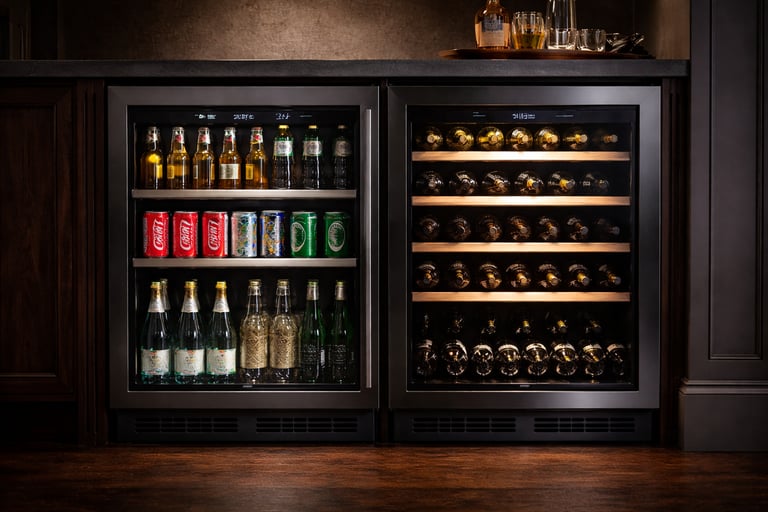
Why Beverage Centers Matter in a Home Bar
Without dedicated cold storage, you get:
Kitchen fridge congestion
Warm mixers
Overcrowded shelving
Inconsistent carbonation
A beverage center centralizes:
Sparkling water
Tonic
Soda
Canned cocktails
Beer
Pre-batched drinks
It supports workflow and that workflow becomes even more important when paired with ice systems from Automatic Clear Cube & Sphere Systems.
Structured bars require structured storage.
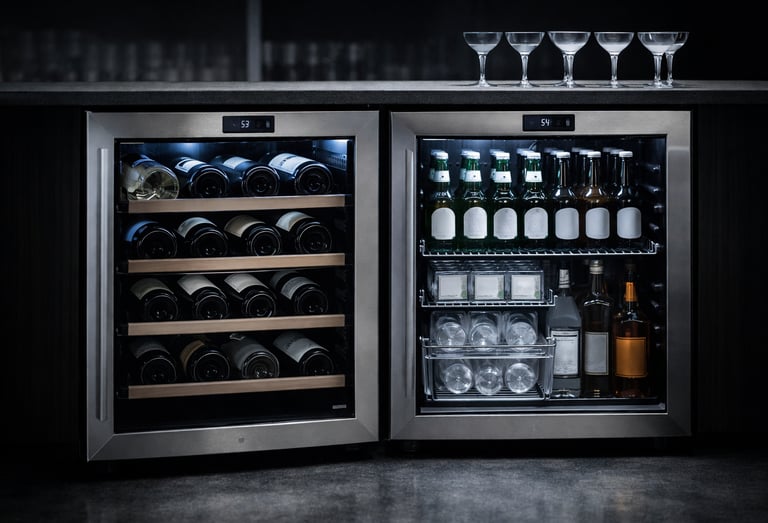
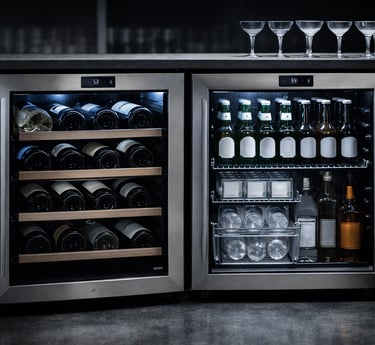

Best 15-Inch Under-Counter Beverage Fridges
Finding the right under-counter beverage fridge starts with one measurement: width. Fifteen-inch beverage refrigerators are designed for compact home bars, kitchen islands, and entertainment spaces where every inch matters. Despite their narrow footprint, many of today's models still offer room for more than 100 cans, adjustable shelving, and built-in installation.
The best 15-inch beverage fridges balance capacity, cooling performance, and flexibility. Some prioritize premium construction and quiet operation, while others focus on delivering the most storage for the money. Whether you're upgrading a wet bar or finishing a new kitchen, these are the best 15-inch beverage refrigerators worth considering.
Icyglee 15-Inch Beverage Refrigerator
Best Overall 15-Inch Beverage Fridge
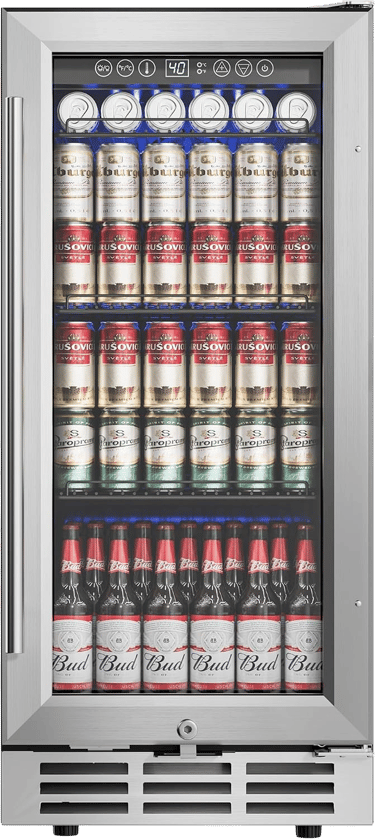
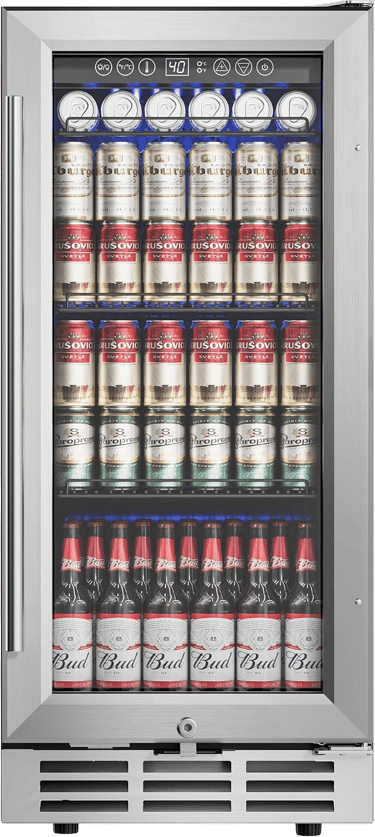
The Icyglee 15-Inch Beverage Refrigerator delivers one of the strongest value propositions in this category. At just under 15 inches wide, it offers room for up to 126 cans while maintaining a true built-in design that slides neatly beneath standard countertops. Three adjustable shelves make it easy to switch between soda cans, beer bottles, sparkling water, and wine.
Unlike many entry-level beverage coolers, the Icyglee includes a wide temperature range, front ventilation, and a glass door with soft blue LED lighting. Its combination of storage capacity, modern styling, and aggressive pricing makes it the easiest recommendation for most buyers.
Best For
Home bars
Kitchen islands
Soda and beer storage
Entertainment rooms
Buyers seeking maximum value
Specs (Quick Breakdown)
Width: 14.9 inches
Capacity: 126 cans
Installation: Built-in or freestanding
Temperature Range: 36°F–61°F
Shelves: Three adjustable shelves
Lighting: Blue LED
Door: Glass door with lock
Why This Wins
The Icyglee wins because it offers premium features and class-leading capacity at one of the lowest prices in the category. It delivers everything most buyers want from a 15-inch beverage fridge without pushing into luxury pricing.
👉 This is the best choice if you want the most storage for the money.
BUZZ'S TOP PICK
Icyglee 15-Inch
Best Budget
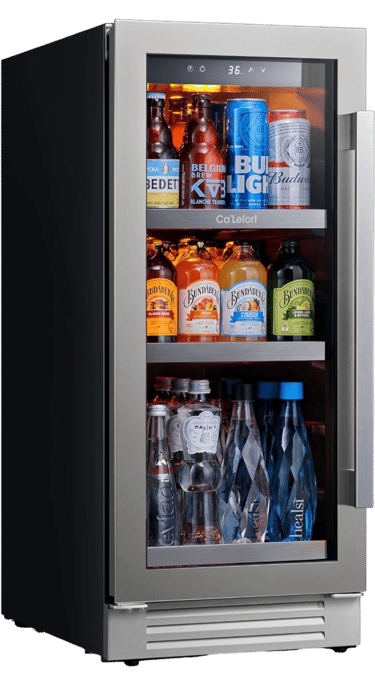
Ca'Lefort 15-Inch Beverage Refrigerator
Best Budget 15-Inch Beverage Fridge
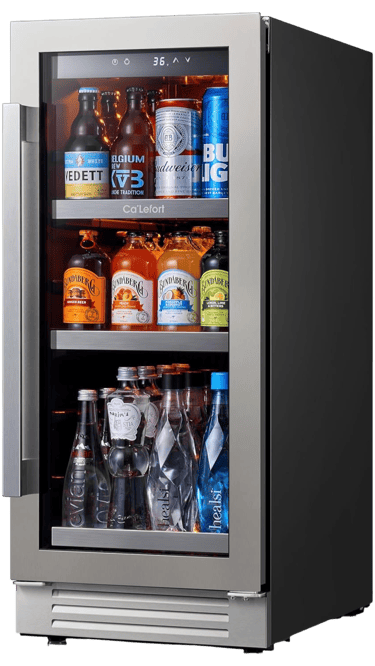
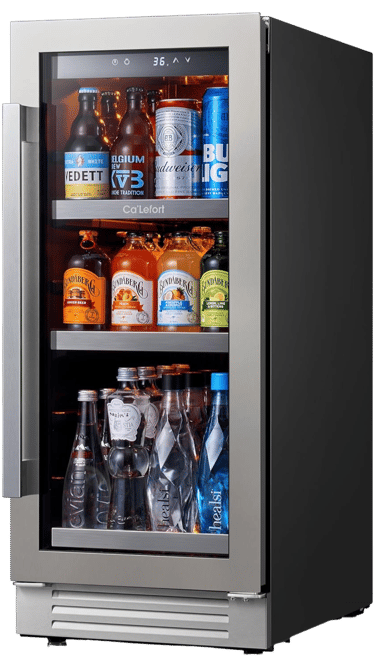
The Ca'Lefort 100-Can Beverage Refrigerator is proof that you do not need to spend premium money to get a capable built-in beverage cooler. Its compact design fits standard under-counter spaces while offering adjustable shelving and a quiet cooling system that keeps drinks consistently cold.
A double-layer glass door, memory settings, and LED lighting help it feel more expensive than its price tag suggests. For buyers who simply want a dependable under-counter beverage fridge without unnecessary extras, this model delivers excellent value.
Best For
Budget-conscious buyers
Apartments
Secondary beverage storage
Game rooms
Casual entertaining
Specs (Quick Breakdown)
Width: 14.8 inches
Capacity: 100 cans
Installation: Built-in or freestanding
Temperature Range: 34°F–54°F
Shelves: Three adjustable shelves
Lighting: Three-color LED
Door: Double-pane glass
Why This Wins
The Ca'Lefort earns its spot by offering true under-counter installation and solid cooling performance at a price that undercuts much of the competition.
👉 This is the better choice if affordability matters most.
BUZZ'S TOP PICK
Ca'Lefort 15-Inch
Best Overall
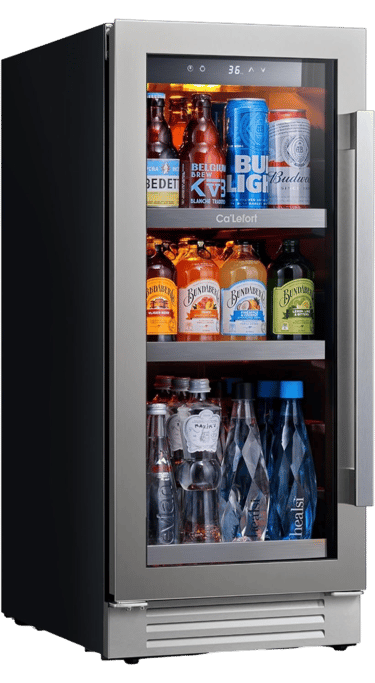
Ca'Lefort 15-Inch Beverage Refrigerator with Removable Shelves
Best Flexible Storage
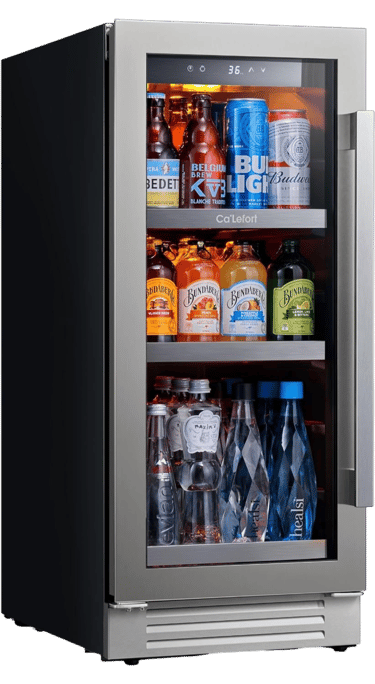
This version of the Ca'Lefort beverage refrigerator takes the standard formula and adds greater flexibility. The removable shelving system makes it easier to accommodate taller bottles, larger cans, and mixed drink collections that would not fit in more rigid layouts.
The brushed stainless finish, LED lighting options, and precise digital controls give it an upscale appearance while preserving the practical footprint buyers expect from a 15-inch beverage fridge.
Best For
Mixed beverage collections
Wine and soda storage
Home bars
Entertainers
Buyers needing adjustable layouts
Specs (Quick Breakdown)
Width: 14.8 inches
Capacity: 100 cans
Installation: Built-in or freestanding
Temperature Range: 34°F–54°F
Shelves: Three removable shelves
Lighting: Three-color LED
Door: UV-resistant glass
Why This Wins
The removable shelves create a more versatile interior than most competing models, making it easier to customize storage as your beverage collection changes.
👉 This is the best option if flexibility is more important than maximum capacity.
BUZZ'S TOP PICK
Ca'Lefort 15-Inch
Best Premium
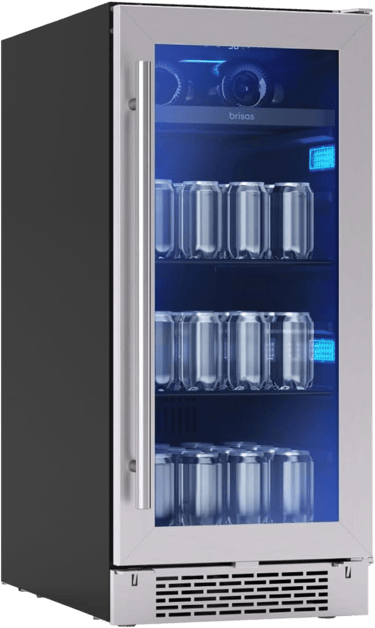
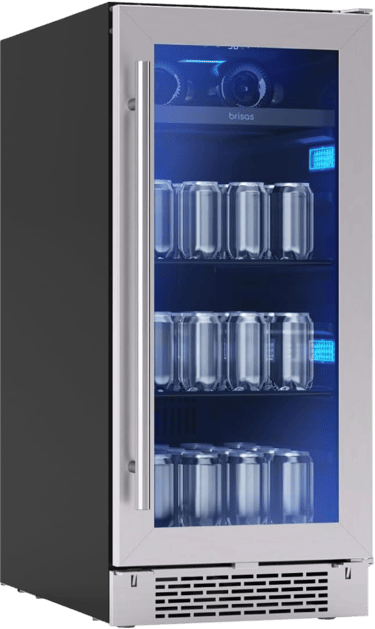
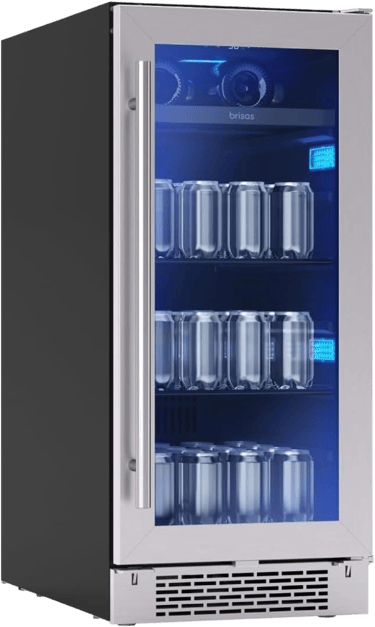
Zephyr Brisas 15-Inch Slim Beverage Fridge
Best Premium 15-Inch Beverage Fridge
The Zephyr Brisas is built for buyers who care as much about aesthetics and long-term reliability as they do storage space. Its slim 15-inch profile hides premium materials, quiet operation, and upscale design touches that feel right at home in luxury kitchens and custom bars.
Blue LED lighting, reversible door hinges, and Zephyr's reputation in the ventilation and refrigeration space help justify the higher price tag. While it holds fewer cans than some competitors, the overall fit and finish are among the best in the category.
Best For
Luxury kitchens
High-end home bars
Design-conscious buyers
Quiet environments
Long-term installations
Specs (Quick Breakdown)
Width: 15 inches
Capacity: 64 cans
Installation: Built-in or freestanding
Cooling: Single-zone system
Lighting: Blue LED
Door: Reversible glass door
Finish: Stainless steel
Why This Wins
The Zephyr Brisas wins on refinement. Premium materials, quieter operation, and excellent styling make it one of the most polished 15-inch beverage refrigerators available.
👉 This is the better choice if premium design matters more than raw storage capacity.
BUZZ'S TOP PICK
Zephyr Brisas 15-Inch
Best Luxury
Best 18-Inch Under-Counter Beverage Fridges
Not every beverage fridge needs to be built into cabinetry. Eighteen-inch beverage refrigerators sit in a sweet spot between compact countertop coolers and larger under-counter models, offering significantly more storage without demanding as much space as a full-size appliance. They are ideal for apartments, offices, game rooms, garages, and smaller home bars.
Most 18-inch beverage fridges prioritize flexibility over luxury features. Adjustable shelving, glass doors, LED lighting, and generous can capacities make them excellent choices for buyers who want maximum storage in a relatively small footprint. These are the best 18-inch beverage refrigerators worth considering.
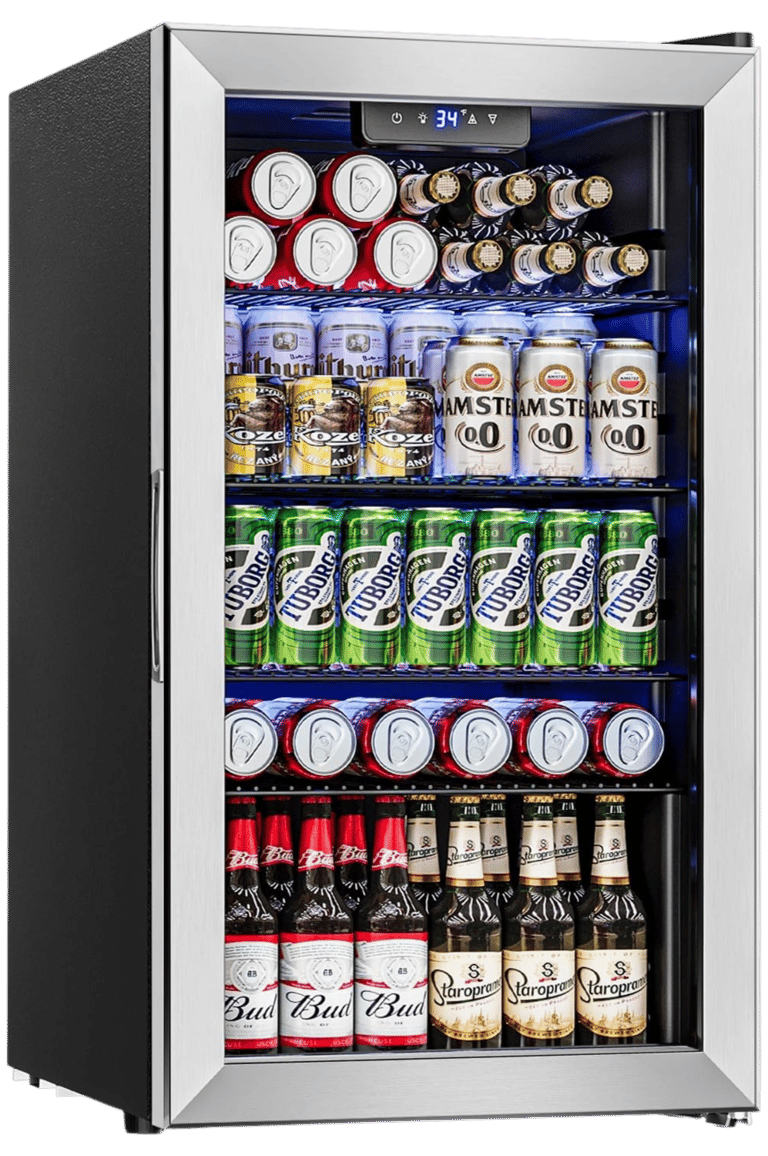
Feelfunn Beverage Refrigerator Cooler
Best Overall 18-Inch Beverage Fridge
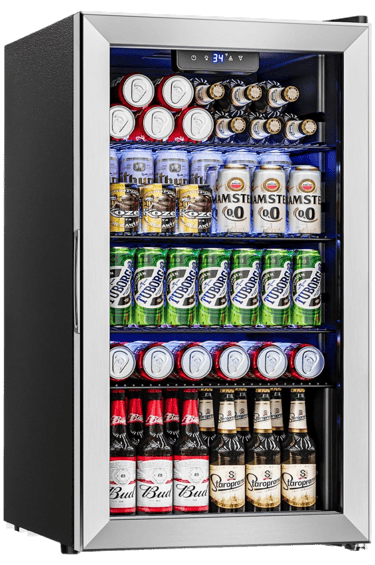
The Feelfunn Beverage Refrigerator strikes the best balance between size, capacity, and price in the 18-inch category. Its 18.9-inch width fits comfortably into apartments, offices, and home bars while still holding up to 126 cans. Four adjustable shelves make it easy to organize everything from soda and beer to sparkling water and mixers.
Unlike many budget beverage coolers, the Feelfunn includes reversible doors, soft interior lighting, and a quiet compressor system. Its combination of versatility and storage makes it the easiest recommendation for most buyers.
Best For
Home bars
Apartments
Offices
Mixed drink collections
Everyday entertaining
Specs (Quick Breakdown)
Width: 18.9 inches
Capacity: 126 cans
Temperature Range: 35°F–54°F
Shelves: Four adjustable shelves
Installation: Freestanding
Lighting: Interior LED
Door: Reversible glass door
Why This Wins
The Feelfunn wins because it delivers excellent capacity, flexible storage, and premium-looking features at a price that undercuts many competitors.
👉 This is the best choice if you want the most balanced 18-inch beverage fridge.
BUZZ'S TOP PICK
Feelfunn Beverage
Best Overall
Manastin Beverage Refrigerator Cooler
Best Budget 18-Inch Beverage Fridge
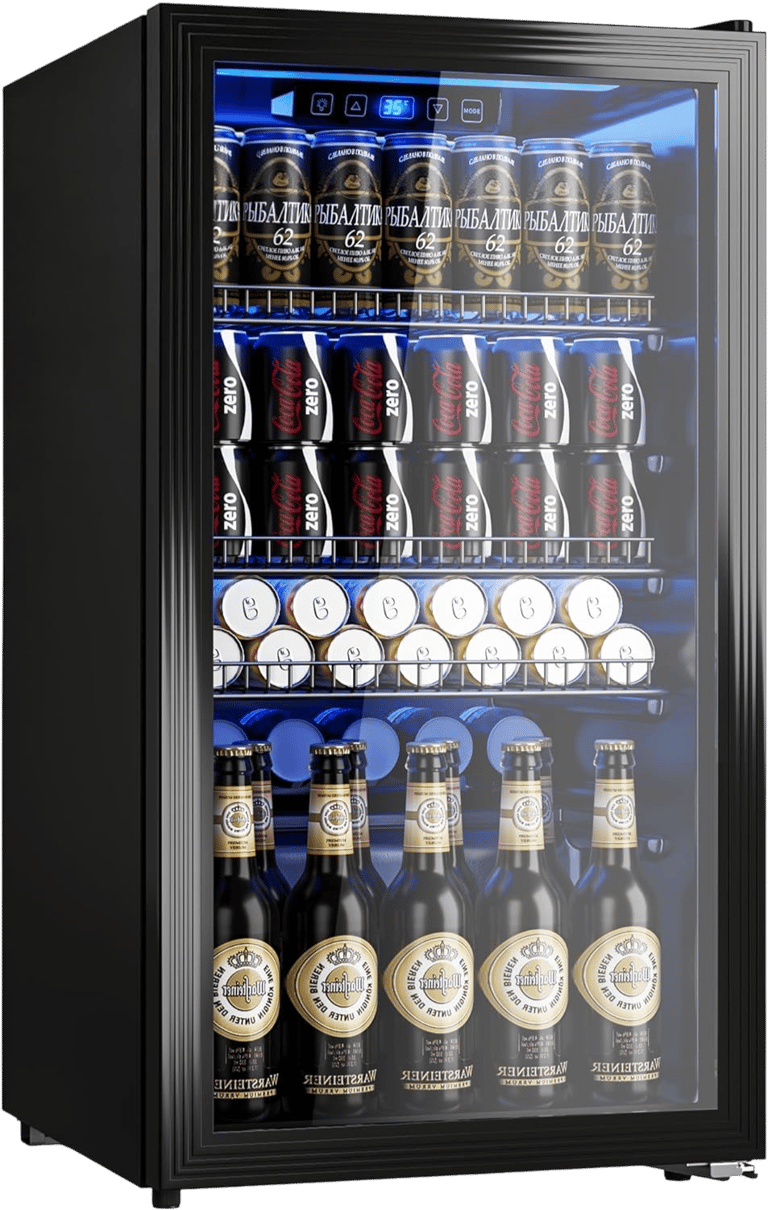
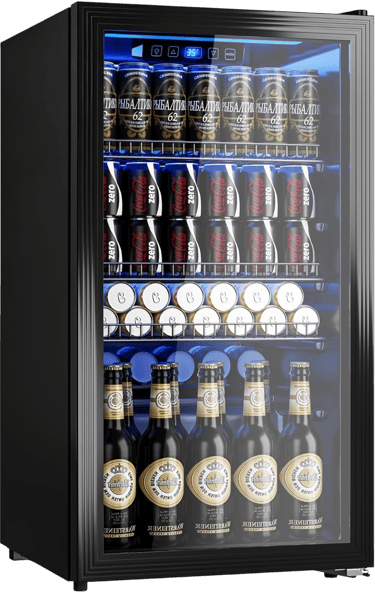
The Manastin Beverage Refrigerator offers impressive value for buyers who simply want cold drinks without spending premium money. Despite its budget-friendly price, it still packs in room for up to 130 cans, adjustable shelving, and a digital temperature display.
Its freestanding design makes installation simple, whether you're adding it to a game room, office, dorm, or basement bar setup. The blue LED lighting and glass door help it feel more upscale than its price suggests.
Best For
Budget buyers
Dorm rooms
Game rooms
Small apartments
Beer and soda storage
Specs (Quick Breakdown)
Width: 17.5 inches
Capacity: 130 cans
Temperature Range: 35°F–65°F
Shelves: Adjustable
Installation: Freestanding
Lighting: Blue LED
Door: Glass door
Why This Wins
The Manastin delivers tremendous value by combining one of the lowest prices in the category with one of the highest can capacities.
👉 This is the better choice if affordability matters most.
BUZZ'S TOP PICK
Manastin Beverage
Best Budget
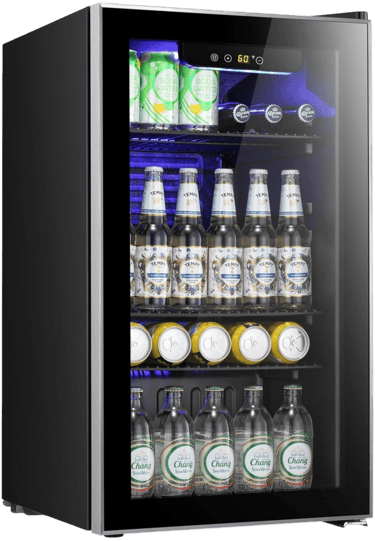
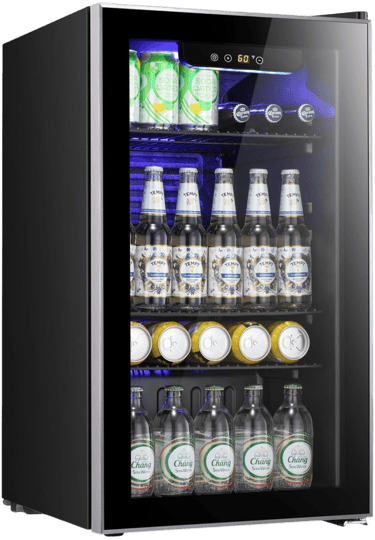
Antarctic Star Beverage Refrigerator
Best Compact Beverage Fridge
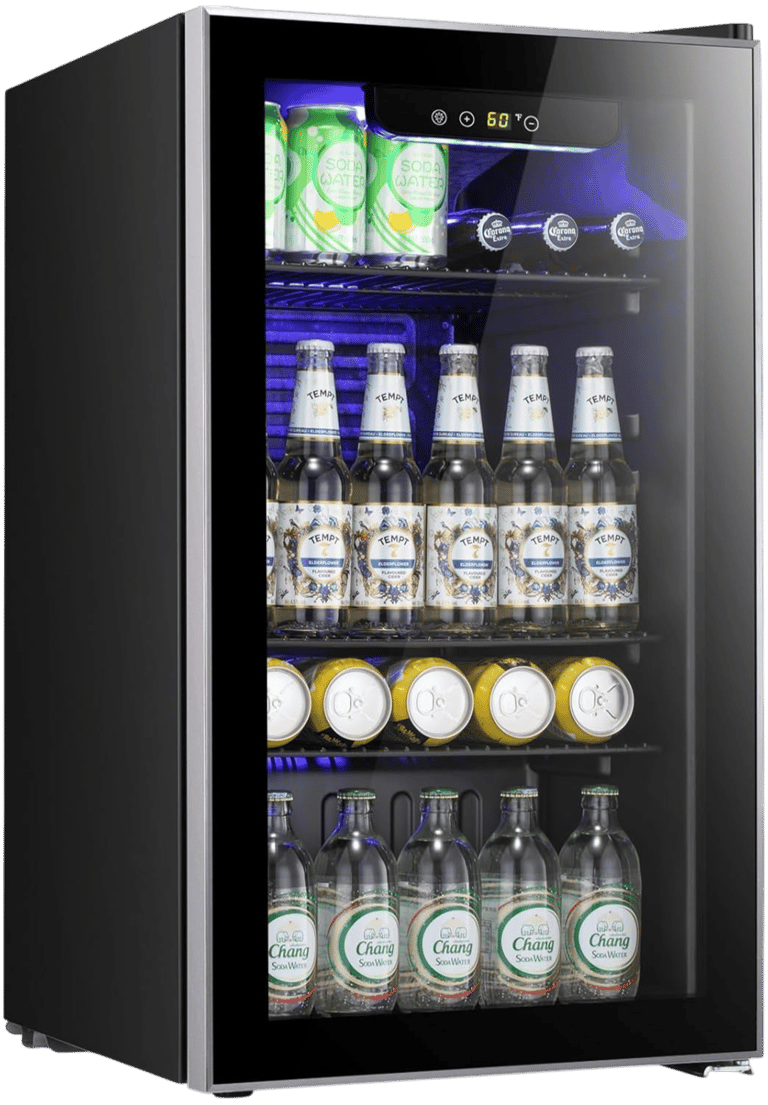
The Antarctic Star Beverage Refrigerator focuses on maximizing storage in the smallest footprint possible. At just over 19 inches wide, it offers room for up to 130 cans while remaining compact enough for bedrooms, offices, and smaller entertainment areas.
The adjustable shelving system makes it easy to store cans and bottles of different sizes, while the double-pane glass door and soft blue lighting give it a clean, modern appearance.
Best For
Bedrooms
Offices
Apartments
Compact spaces
Casual entertaining
Specs (Quick Breakdown)
Width: 19.3 inches
Capacity: 130 cans
Temperature Range: 40°F–61°F
Shelves: Adjustable
Installation: Freestanding
Lighting: Blue LED
Door: Double-pane glass
Why This Wins
The Antarctic Star earns its spot by packing a surprising amount of storage into a compact footprint that fits almost anywhere.
👉 This is the best option if space is limited.
BUZZ'S TOP PICK
Antarctic Star
Best Compact
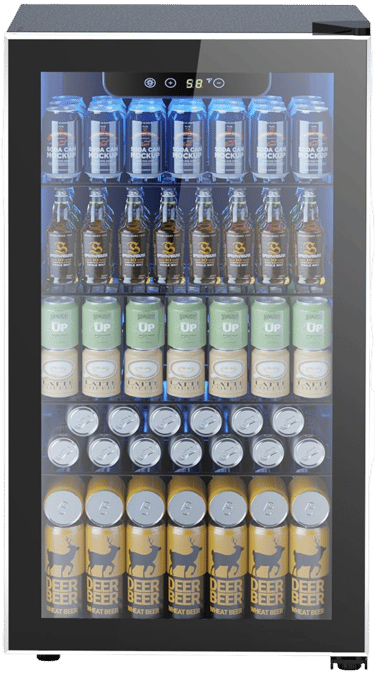
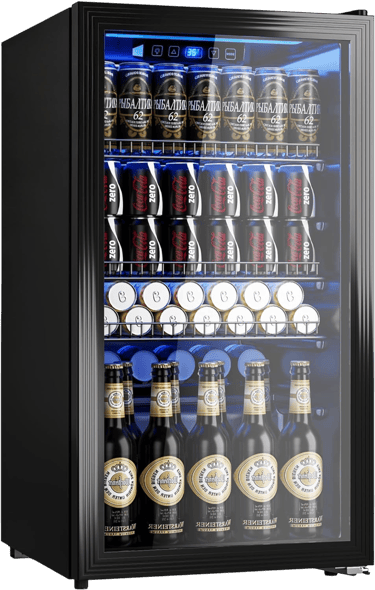
Electactic Mini Beverage Refrigerator
Best High-Capacity Beverage Fridge
The Electactic Mini Beverage Refrigerator takes a straightforward approach: maximize storage. With room for 130 standard cans and four adjustable wire shelves, it offers enough space to handle parties, family gatherings, and serious soda or beer collections.
Touch controls, compressor cooling, and bright interior lighting help separate it from many entry-level beverage coolers. Its larger footprint makes it especially appealing for garages, rec rooms, and dedicated beverage stations.
Best For
Large drink collections
Garages
Family rooms
Entertainment spaces
Frequent hosts
Specs (Quick Breakdown)
Width: 17.3 inches
Capacity: 130 cans
Temperature Range: 32°F–61°F
Shelves: Four adjustable shelves
Installation: Freestanding
Controls: Touch controls
Lighting: LED interior lighting
Why This Wins
The Electactic stands out because it prioritizes storage capacity without becoming bulky or expensive.
👉 This is the better choice if maximum can storage is your top priority.
BUZZ'S TOP PICK
Electactic Mini
Best High-Capacity
Best 24-Inch Under-Counter Beverage Fridges
Twenty-four-inch beverage refrigerators are the standard size for built-in bars, outdoor kitchens, entertainment spaces, and premium home setups. Compared to compact beverage coolers, they offer significantly more storage, stronger cooling systems, and cleaner built-in installation options while still fitting beneath most standard countertops.
For buyers replacing an existing under-counter refrigerator, width is often the most important measurement. Most 24-inch beverage fridges can hold between 140 and 180 cans, making them ideal for large families, home bars, game rooms, and anyone who entertains regularly. These are the best 24-inch beverage refrigerators available right now.
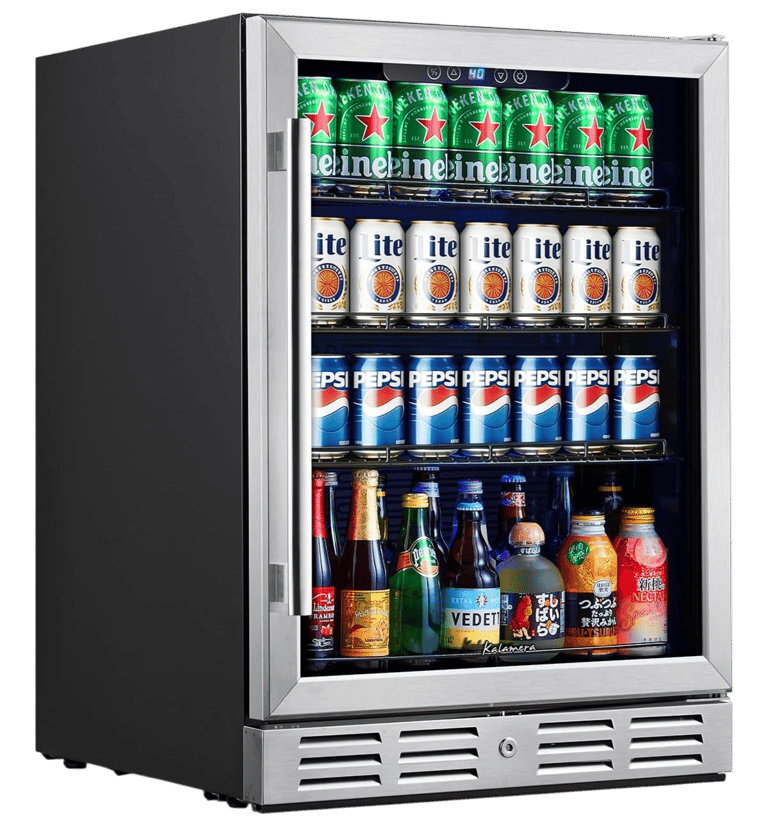
Kalamera 24-Inch Beverage Refrigerator
Best Overall 24-Inch Beverage Fridge
The Kalamera 24-Inch Beverage Refrigerator delivers the best combination of capacity, value, and installation flexibility in the category. With room for up to 164 cans, adjustable shelving, and support for both built-in and freestanding installation, it fits almost any home bar or entertainment space.
Its stainless-steel construction, front-venting system, and reversible door make it a true under-counter appliance rather than a simple freestanding cooler. Memory temperature settings and compressor cooling help maintain stable temperatures even after power interruptions.
Best For
Built-in home bars
Basements
Entertainment rooms
Beer and soda collections
Everyday use
Specs (Quick Breakdown)
Width: 22.4 inches
Capacity: 164 cans
Temperature Range: 38°F–65°F
Shelves: Adjustable
Installation: Built-in or freestanding
Door: Reversible glass door
Cooling: Compressor system
Why This Wins
The Kalamera wins because it offers premium under-counter features without the premium price tag, making it the easiest recommendation for most buyers.
👉 This is the best choice if you want the strongest all-around value.
BUZZ'S TOP PICK
Kalamera 24-Inch
Best Overall
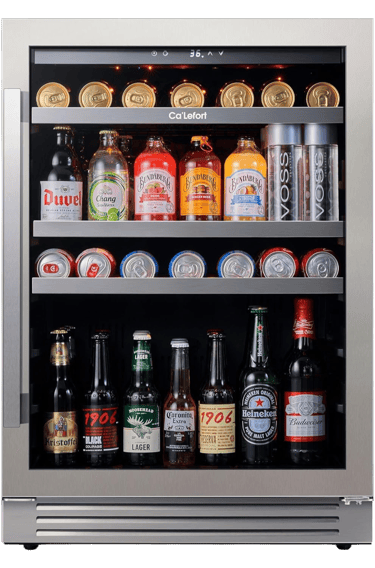
Ca'Lefort 24-Inch Beverage Refrigerator
Best Large-Capacity Beverage Fridge
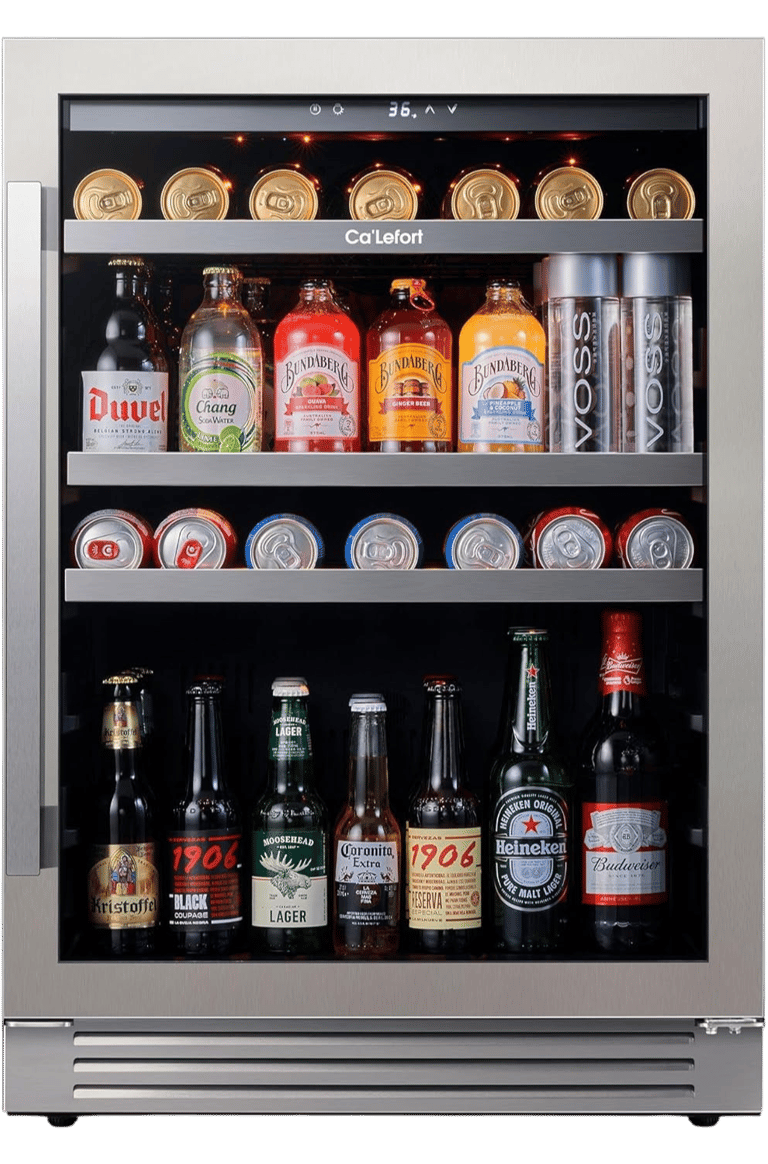
The Ca'Lefort 24-Inch Beverage Refrigerator is built for homeowners who never want to run out of cold drinks. Its spacious interior holds up to 180 cans, giving it one of the largest capacities in the category.
Three adjustable shelves and triple-color LED lighting allow users to customize both storage and appearance. The built-in memory function restores previous settings after outages, while the double-glazed glass door helps maintain consistent temperatures.
Best For
Large families
Frequent entertainers
Home bars
Game rooms
Mixed beverage collections
Specs (Quick Breakdown)
Width: 23.4 inches
Capacity: 180 cans
Temperature Range: 34°F–54°F
Shelves: Three adjustable shelves
Installation: Built-in or freestanding
Lighting: Amber, blue, and white LEDs
Cooling: 360° air circulation
Why This Wins
The Ca'Lefort stands out because it offers one of the largest storage capacities available in a standard 24-inch footprint.
👉 This is the better choice if maximum storage is your priority.
BUZZ'S TOP PICK
Ca'Lefort 24-Inch
Best Large-Capacity
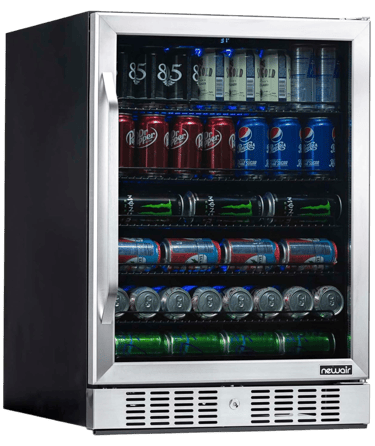
NewAir Beverage Refrigerator
Best Premium Beverage Fridge
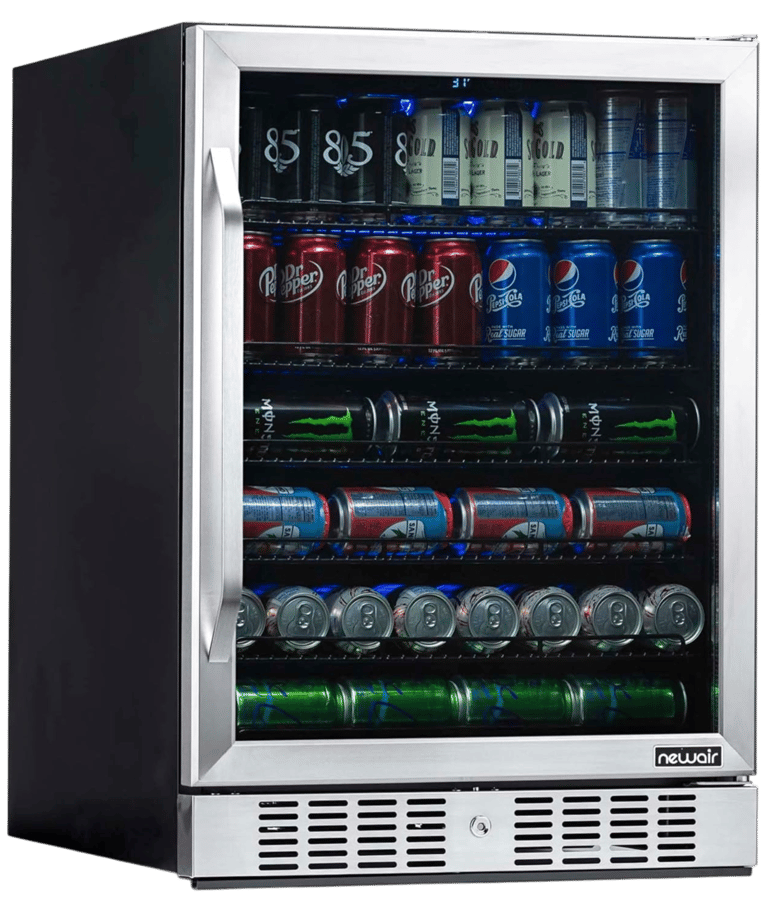
The NewAir Beverage Refrigerator combines premium materials with excellent storage capacity, making it a strong choice for upscale kitchens and home bars. It holds up to 177 cans while adding features like a lock, stainless-steel trim, and blue LED lighting.
Its front-venting design supports seamless built-in installation, while the quiet compressor system keeps drinks cold without becoming distracting in entertainment spaces.
Best For
Luxury home bars
Modern kitchens
Wine and beer collections
Built-in installations
Upscale entertainment spaces
Specs (Quick Breakdown)
Width: 23.4 inches
Capacity: 177 cans
Temperature Range: 37°F–64°F
Shelves: Adjustable
Installation: Built-in
Features: Lock and key
Lighting: Blue LED
Why This Wins
The NewAir earns its place by delivering premium construction, strong cooling performance, and upscale styling.
👉 This is the better choice if appearance matters as much as performance.
BUZZ'S TOP PICK
NewAir Beverage
Best Premium
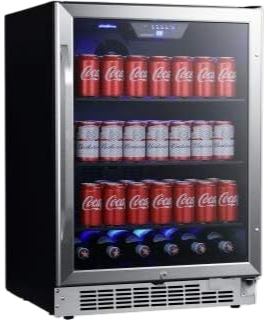
EdgeStar CBR1502SG Beverage Cooler
Best High-End Under-Counter Beverage Fridge
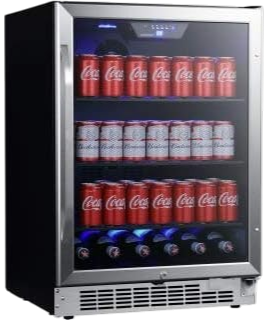
The EdgeStar CBR1502SG is designed for buyers who want a true appliance-grade beverage refrigerator. With room for 142 cans, stainless-steel construction, and automatic defrost, it brings premium kitchen quality into bars, patios, and entertainment areas.
Although it offers slightly less storage than some competitors, EdgeStar's reputation for reliability and under-counter performance makes it a favorite for long-term installations.
Best For
Permanent installations
Luxury kitchens
Outdoor entertainment areas
Built-in bars
Long-term use
Specs (Quick Breakdown)
Width: 23.5 inches
Capacity: 142 cans
Installation: Built-in or freestanding
Defrost: Automatic
Finish: Stainless steel
Door: Tinted glass
Lighting: LED interior lighting
Why This Wins
The EdgeStar focuses on build quality and reliability rather than chasing the highest can count.
👉 This is the better choice if you want a premium appliance built to last.
BUZZ'S TOP PICK
EdgeStar CBR1502SG
Best High-End
Types of Beverage Centers
Built-In Under-Counter Units
These are typically paired with permanent layouts outlined in Home Bar Appliances: Plan This Before You Build Anything.
Flush Cabinet Installation
Front-venting design allows seamless integration under countertops.
Best For:
Permanent home bars
Renovations
Basement lounge builds
Freestanding Beverage Centers
Flexible Placement
Rear-vent models designed for standalone placement.
Best For:
Apartments
Garage bars
Non-renovation installs
Built-in units represent the Professional tier.
Freestanding units represent Essential/Refined tiers.
What to Look for in a Quality Beverage Center
Temperature Range
Look for:
34°F–50°F range
Digital thermostat
Even airflow distribution
Too cold → carbonation loss
Too warm → flat mixers
Ventilation Type
Rear Vent → Freestanding only
Front Vent → Built-in capable
Installing incorrectly reduces efficiency and lifespan. Ventilation and airflow mistakes here are the same ones that cause long-term issues covered in Home Bar Appliances: Plan This Before You Build Anything.
Shelf Structure
Look for:
Adjustable shelves
Reinforced metal racks
Removable shelf layout
Flexibility improves storage efficiency.
Noise Level
Beverage centers often sit near seating areas.
Look for:
Low decibel compressor
Minimal vibration
Insulated door seals
Capacity
Common ranges:
60–100 cans
3–5 cubic feet
24-inch built-in format
Choose based on hosting frequency.
Beverage Center vs Wine Fridge
A wine fridge:
Optimized for 45°F–65°F
Designed for humidity stability
Rack-oriented
A beverage center:
Optimized for 34°F–50°F
Built for cans and bottles
Higher cycling tolerance
No humidity focus
If wine is your priority → wine fridge.
If mixers, soda, beer, and ready-to-serve drinks dominate → beverage center.
Most serious home bars eventually need both. If you're deciding between storage priorities, it helps to understand how different cooling approaches impact drink prep—similar to the breakdown in Best Beverage Fridges for Home Bars.
Size Recommendations by Bar Type
Casual Entertaining
60–80 can capacity
Compact freestanding
Limited built-in integration
Active Host
80–120 can capacity
Built-in or convertible
Adjustable shelving
Dedicated Bar Build
24-inch built-in
Front vent
High-capacity storage
Digital precision control
Capacity planning should align with how you serve drinks, especially when factoring in dilution and ice usage covered in How Ice Shape Controls Dilution Rate.
Common Mistakes to Avoid
Look for:
Energy Star rating
Auto-defrost functionality
LED interior lighting
Tight door seals
Beverage centers run continuously — efficiency matters.
Energy & Efficiency Considerations
• Installing rear-vent models inside cabinetry
• Overcrowding shelves
• Setting temperature too low
• Ignoring airflow clearance
• Using beverage centers for long-term wine aging
Planning prevents premature wear.
Quick Picks for Your
15-Inch Beverage Fridge
Icyglee
15-Inch
Affordable built-in cooler with 126-can capacity


BUZZ PICK
Ca'Lefort
15-Inch
Balanced capacity and premium built-in design
BUZZ PICK
Ca'Lefort
15-Inch
Stylish beverage cooler with customizable storage
BUZZ PICK
Zephyr Brisas
15-Inch
Premium slim cooler for upscale home bars
BUZZ PICK
Quick Picks for Your
18-Inch Beverage Fridge
Manastin
Beverage
Budget-friendly cooler with surprising capacity
BUZZ PICK
Antarctic Star
Beverage
Compact footprint with room for 130 cans
BUZZ PICK
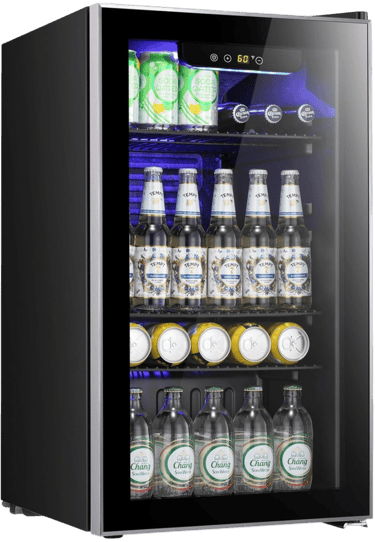
Electactic
Mini
Spacious beverage storage for busy households
BUZZ PICK
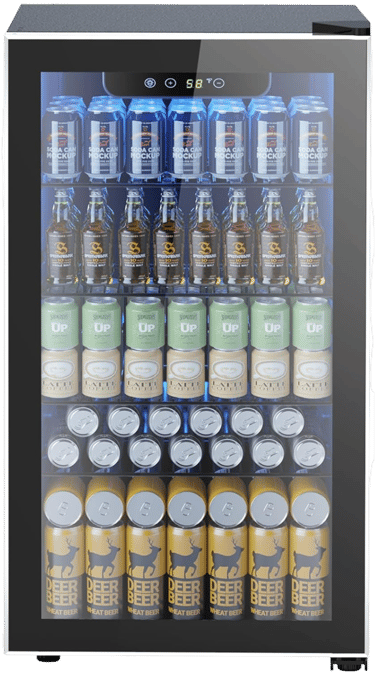
Feelfunn
Beverage
Versatile cooler with excellent value and space
BUZZ PICK
Quick Picks for Your
24-Inch Beverage Fridge
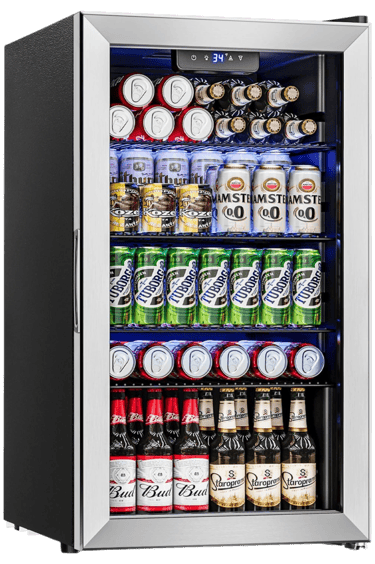
Kalamera
24-Inch
Premium performance at a mid-range price
BUZZ PICK
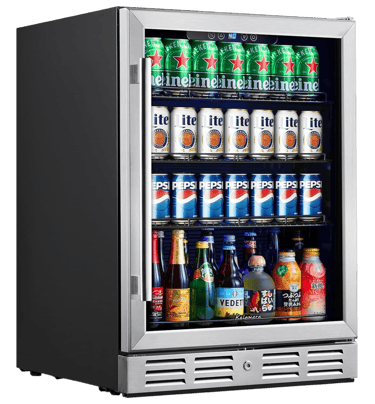
Ca'Lefort
24-Inch
Massive storage for serious entertainers
BUZZ PICK
NewAir
Beverage
Stylish built-in cooler with premium features
BUZZ PICK
EdgeStar
CBR1502SG
Appliance-grade cooler built for longevity
BUZZ PICK
Frequently Asked Questions
Can they store bottled beer?
Yes. Most accommodate standard 12 oz and 22 oz bottles with adjustable shelving.
What size beverage center fits under a counter?
Standard built-in models are 24 inches wide.
Are glass doors insulated?
Most quality units include double-pane tempered glass for insulation and UV reduction.
Do beverage centers require maintenance?
Minimal. Clean coils annually and ensure ventilation clearance.
Can beverage centers replace a kegerator?
No. They cannot maintain pressurized draft systems.
What temperature should a beverage center be set to?
Most operate best between 36°F–40°F for mixers and canned beverages.
Can beverage centers store wine?
Short term, yes. Long term, a dedicated wine fridge is better for humidity and vibration control.
Are built-in beverage centers worth it?
For permanent home bars, yes. They provide structural integration and cleaner aesthetics.
How long do beverage centers last?
Quality units typically last 8–15 years with proper ventilation and maintenance.
Do beverage centers use a lot of electricity?
Modern compressor systems are energy efficient and comparable to compact refrigerators.
Building Intelligently: Integrating Beverage Centers Into Your Bar
Pair it with:
Best Wine Fridges for Home Bars for bottle preservation
Best Freezers for Home Bars for ice staging
Automatic Clear Ice Systems for cocktail control
Best Kegerators for draft service
Best Home Bar Cabinets for concealed storage
Best Back Bar Shelving Systems for display
A temperature-controlled bar includes:
Draft control
Mixer refrigeration
Beverage centers reduce kitchen dependence and improve workflow efficiency during hosting.
Where Do You Want to Go Next?
Choose your path based on what you need right now.
You don’t need a complicated ice setup to improve your drinks. Better cubes, slower dilution, and proper chilling solve most home bar problems without overcomplicating your workflow.
Start with the fundamentals, then build around how you actually drink and entertain.
Explore Everything
Not all clear ice machines solve the same problem. Some focus on speed and output, while others prioritize clarity, presentation, or slower dilution for whiskey and cocktail use.
Comparing them side-by-side makes it easier to choose the right fit for your setup and drinking style.
Compare Before You Buy
If you want a beverage fridge that simply works, start with the Kalamera 24-Inch Beverage Refrigerator. It combines a built-in design, adjustable shelving, and room for up to 164 cans without pushing into premium pricing.
Just Get It Done
© 2026 Barkeepers Buzz. All rights reserved.
Barkeepers Buzz
Master cocktails, spirits, and bar knowledge with clarity and precision. Built for serious home enthusiasts.
Crafted with respect for the culture — and the responsibility that comes with it.
For educational purposes only. Intended for legal drinking age audiences. Please drink responsibly.
General Inquiries: