
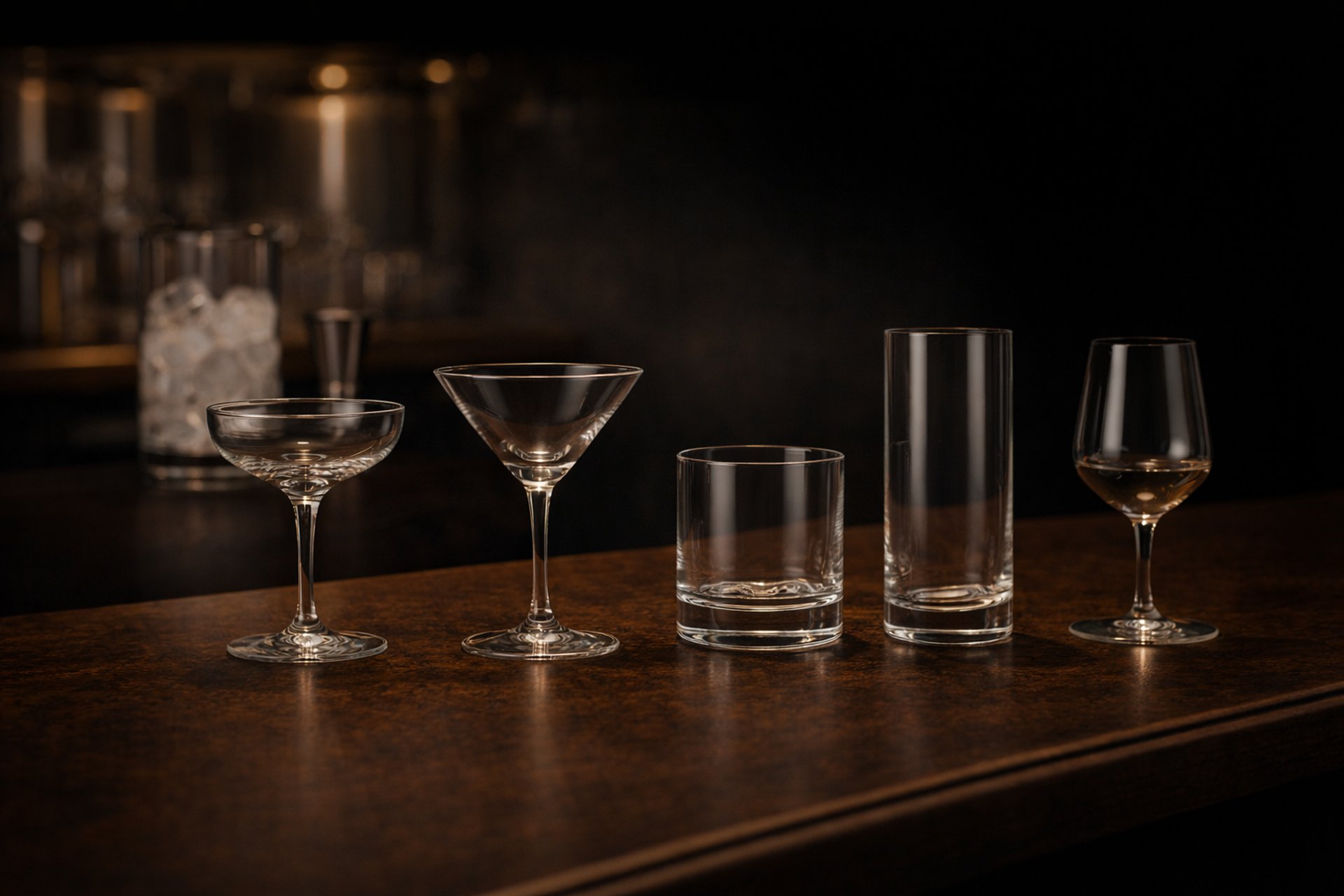
Best Martini Glasses
The martini glass is iconic.
Its sharp V-shaped bowl and long stem create visual drama and aromatic exposure. However, its structure also demands balance, stability, and proportion.
This guide evaluates:
Bowl angle
Stem strength
Rim thickness
Capacity
Durability
Versatility
No exaggerated oversized bowls.
No fragile ultra-thin stems.
Only well-proportioned designs built for real use.
BEST Essential
Essential Martini Glass
Best for: Most Home Bars
$$
BEST Refined
Refined Martini Glass
Best for: Frequent Use
$$ - $$$
BEST PREMIUM
Pro Martini Glass
Best for: Long-Term Build
$$$
Transparency Note: We may earn a commission from qualifying purchases. Product selections are made independently and are not influenced by manufacturers.
What Defines a Martini Glass?
A proper martini glass typically features:
V-shaped bowl
Long stem
Capacity of 6–8 oz
Wide aromatic surface
Its design promotes:
Immediate aromatic release
Elegant presentation
Visual clarity
However, its wide opening increases spill risk compared to a coupe.
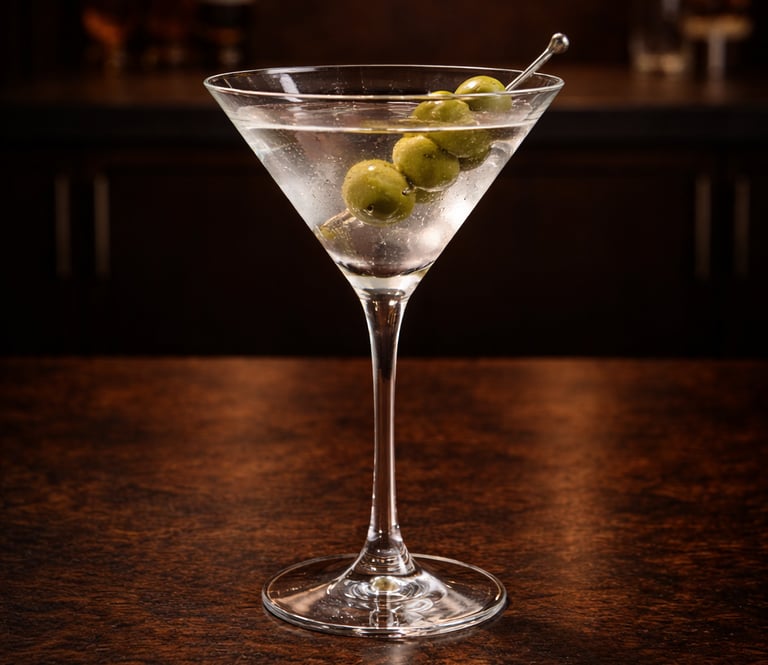
Martini Glass vs Coupe
Martini Glass:
Sharp V-shape
More surface exposure
More visually dramatic
Coupe:
Rounded bowl
More stable
More versatile
For everyday functionality, many prefer coupes.
For visual impact, martini glasses remain iconic.
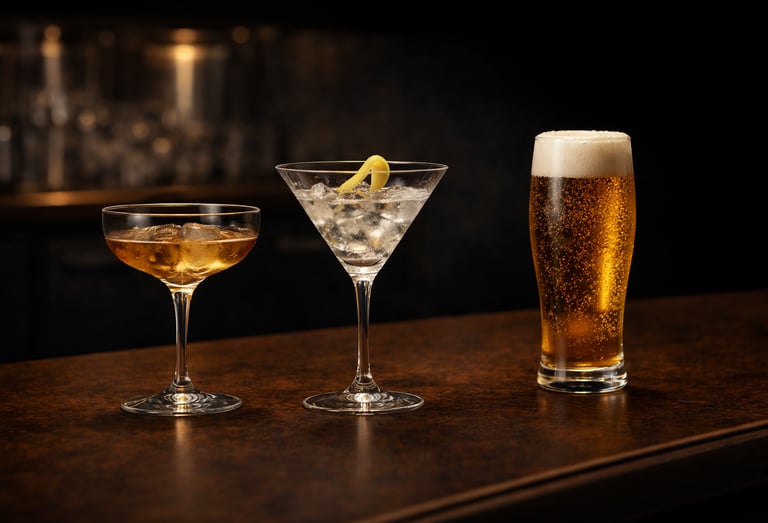
Many refined home bars include both.

What to Look For
Prioritize:
Stable, reinforced stem
Smooth rim finish
Balanced bowl depth
Capacity between 6–8 oz
Dishwasher-safe durability (if used frequently)
Avoid:
Oversized novelty bowls
Ultra-fragile stems
Extremely thin bases
Structural proportion determines usability.

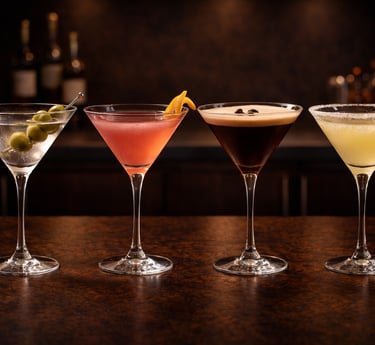
Capacity Considerations
6–8 oz is optimal.
Larger bowls encourage over-pouring.
Smaller bowls limit flexibility for espresso martinis or shaken variations.
Balanced sizing supports:
→ Proper dilution
→ Controlled temperature
→ Clean presentation
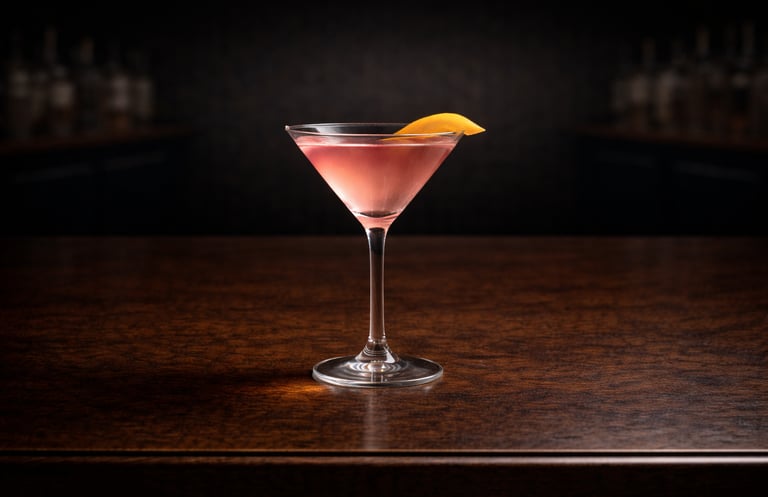

Practicality & Handling
Martini glasses require:
Careful transport
Stable surface placement
Minimal movement once served
For entertaining-heavy setups, coupes may offer greater stability.
For classic presentation, martini glasses remain unmatched.
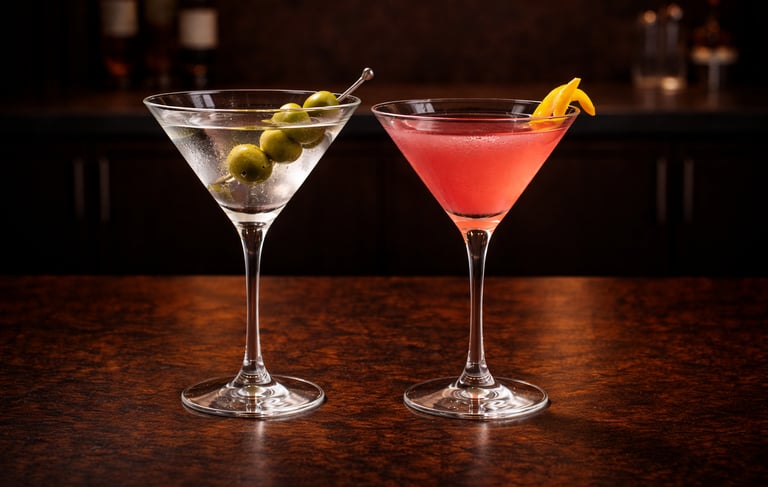
Choosing the Right Martini Glass
Essential · Standard Martini
The Essential tier prioritizes defined V-shape geometry and structural durability.
These glasses provide balanced bowl angle, stable stem proportion, and controlled presentation for classic martini service.
Defined V-shaped bowl
Moderate rim diameter
Reinforced stem and base
Reliable everyday durability
Designed for foundational martini service and consistent daily use.
Best suited for traditional martini builds and spirit-forward cocktails.
Refined · Precision Martini
The Refined tier improves bowl angle control and rim finesse.
Sharper geometry enhances aromatic projection while maintaining improved balance during service.
Balanced V-angle design
Thinner, laser-cut rim
Improved stem proportion
Enhanced presentation control
Built for structured cocktail programs and intentional service environments.
Recommended for refined martini execution and elevated presentation.
Professional · Service Martini
The Professional tier emphasizes engineered bowl angle and durability under repetition.
Precise rim cut, optimized stem balance, and reinforced base support sustained high-volume service.
Engineered V-geometry
Ultra-thin precision rim
Balanced center of gravity
Commercial-grade durability
Designed for disciplined cocktail programs and advanced service standards.
Built for maximum aromatic projection and controlled repetition.
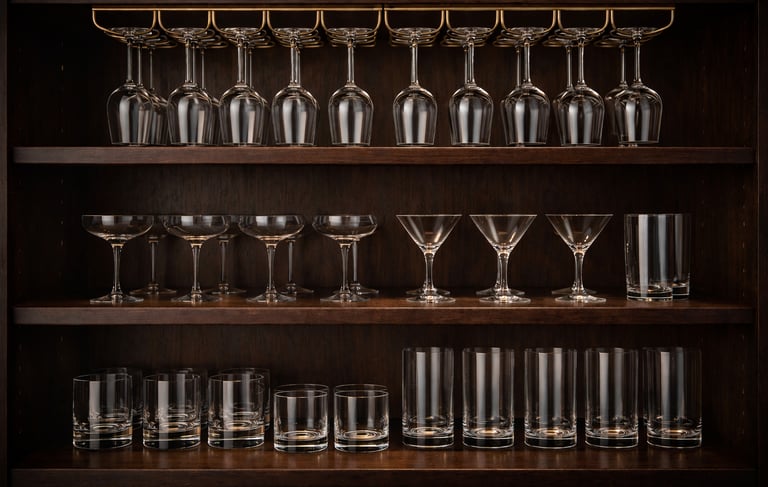
A martini glass is engineered for chilled, spirit-forward cocktails served without ice.
Its angular bowl increases surface exposure and aromatic projection. The rim diameter influences spill sensitivity. Stem proportion determines temperature stability and service control.
Performance is defined by geometry — not aesthetic sharpness.
Below is a structural breakdown of the tiers that matter most.
The following selections represent the strongest structural examples within each tier.
Essential Martini
Glass
BEST FOR: CLASSIC MARTINI SERVICE
Built for defined bowl angle, stable stem proportion, and clean presentation of chilled, spirit-forward cocktails.
TYPE
Standard Martini
RIM PROFILE
Standard Cut
PROPORTION
Wide V-Shape
DURABILITY
Reinforced Glass
WHY IT WINS Essential
Defined aromatic exposure
Stable stem and base
Reliable for classic service
USE CASE
Martini
Gibson
Spirit-forward stirred drinks
8.5
OVERALL SCORE
Refined Martini
Glass
BEST FOR: STRUCTURED SPIRIT SERVES
Built for controlled bowl diameter, improved aromatic lift, and thinner rim delivery in chilled, up-style drinks.
TYPE
Precision Martini
RIM PROFILE
Laser-Cut Thin
PROPORTION
Balanced V
DURABILITY
Refined Strength
WHY IT WINS Refined
Cleaner sip delivery
Improved aromatic framing
Better hand balance
USE CASE
Structured martinis
Spirit-forward shaken builds
Intentional cocktail service
8.9
OVERALL SCORE
Pro/Service
Coupe Glass
BEST FOR: SERVICE ENVIRONMENTS
Built for engineered bowl angle, ultra-thin rim precision, and structural durability under sustained cocktail service.
TYPE
Service Martini
RIM PROFILE
Ultra-Thin Laser Cut
PROPORTION
Engineered V
DURABILITY
Commercial Strength
WHY IT WINS Pro
Optimized aromatic release
Balanced stem geometry
Built for repetition
USE CASE
High-volume bars
Advanced cocktail programs
Precision martini service
9.3
OVERALL SCORE
How We Evaluate Martini Glasses
1. Bowl Angle & Surface Exposure
The defining feature of a martini glass is its V-shaped bowl.
Steeper angles increase surface exposure and aromatic lift but also accelerate temperature change. Excessively wide angles increase spill risk during transport.
We assess:
Bowl angle consistency
Rim diameter
Depth-to-width ratio
Surface area exposure
Geometry must balance aroma with control.
2. Rim Thickness & Edge Precision
Rim profile directly influences sip flow and tactile perception.
Thin, laser-cut rims provide cleaner delivery and reduce interruption. Thick rolled rims alter mouthfeel and reduce perceived refinement.
We assess:
Rim thickness
Edge smoothness
Uniformity around circumference
Long-term durability
Rim precision affects delivery more than visual sharpness.
3. Stem Proportion & Temperature Control
Martinis are served without ice.
Stem length and rigidity determine how well the drink remains insulated from hand heat.
We assess:
Stem rigidity
Length relative to bowl size
Center-of-gravity balance
Resistance to flex
Proper stem proportion improves both temperature stability and service control.
4. Stability & Spill Resistance
Martini glasses are inherently more prone to spill than coupes or Nick & Nora glasses.
We evaluate:
Base diameter
Weight distribution
Slosh resistance during moderate movement
Stability on flat surfaces
Structural balance must offset the wide rim.
5. Material Durability & Clarity
Martini glasses are frequently handled and washed.
We assess:
Resistance to rim chipping
Stem strength
Optical clarity
Performance through repeated wash cycles
Refinement must coexist with structural durability.
What We Do Not Consider
Decorative etching
Vintage aesthetic appeal
Brand prestige
Color tinting
Packaging presentation
A martini glass is evaluated on how its geometry manages aroma, temperature, and service control — not how dramatic its silhouette appears.
Structure determines quality.
A martini glass is designed for chilled, spirit-forward cocktails served without ice.
Its angular bowl increases surface exposure and aromatic projection while also increasing spill sensitivity and temperature shift. We evaluate martini glasses based on geometry, rim precision, stem balance, and service stability — not decorative sharpness.
Martini Glass Frequently Asked Questions
1. What makes a martini glass different from a coupe?
A martini glass uses a sharper V-shaped bowl with greater surface exposure.
A coupe has a curved bowl with more depth and improved spill resistance.
Geometry determines performance and service style.
2. Why are martini glasses more prone to spilling?
The wide rim and shallow depth increase surface movement during transport.
Even minor lateral motion can cause slosh. Bowl angle and base stability reduce risk but do not eliminate it.
3. Does a wider martini glass improve aroma?
Wider bowls increase aromatic projection due to greater surface exposure.
However, excessive width accelerates temperature shift and increases spill sensitivity.
Balance is critical.
4. What is the ideal size for a martini glass?
Most structured martinis perform best in the 6–8 ounce range.
Oversized glasses increase surface exposure and temperature change without improving control.
5. Does rim thickness matter in a martini glass?
Yes.
Thin, precision-cut rims provide cleaner sip flow and improved tactile perception. Thick rolled rims can dampen refinement.
Rim precision influences delivery.
6. Are martini glasses suitable for carbonated cocktails?
Generally, no.
The wide surface area accelerates carbonation loss. Carbonated drinks perform better in narrower, taller vessels.
Martini glasses favor still cocktails.
7. Does stem length affect temperature control?
Yes.
Longer stems reduce heat transfer from the hand into the bowl, helping maintain chill.
Stem proportion is structural, not decorative.
8. Is crystal necessary for a high-quality martini glass?
Not inherently.
Crystal can allow thinner construction and greater clarity, but bowl geometry and rim precision determine performance more than material label.
9. Why do some bartenders prefer Nick & Nora glasses?
Nick & Nora glasses offer narrower openings and deeper bowls, improving spill resistance and temperature control.
They sacrifice some surface exposure for stability.
10. How durable should a quality martini glass be?
A well-constructed martini glass should maintain rim integrity, stem strength, and optical clarity through repeated use and washing.
Fragility is not refinement.
Building Intelligently
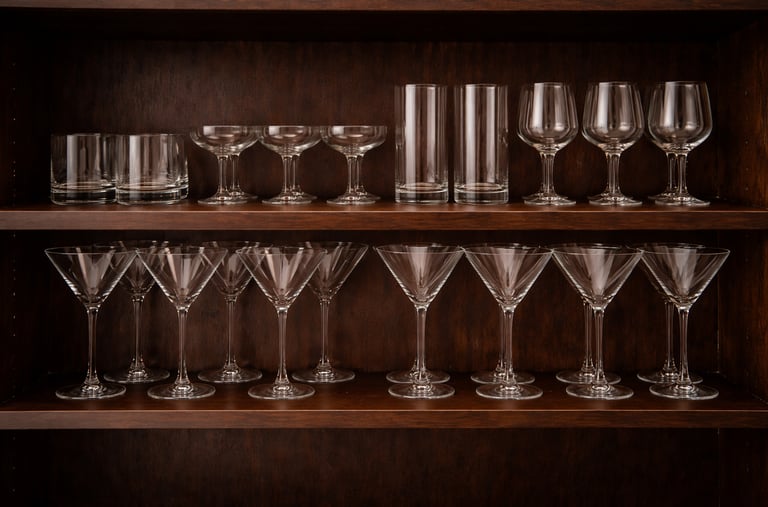
A functional home bar may include:
2–4 martini glasses
4 coupes
From there, expansion becomes aesthetic preference.
Martini glasses integrate directly with:
→ Types of Cocktail Glassware
→ Essential Tools for a Home Bar
→ Techniques & Professional Skills
→ Ice & Temperature Control
They are presentation architecture.
© 2026 Barkeepers Buzz. All rights reserved.
Barkeepers Buzz
Master cocktails, spirits, and bar knowledge with clarity and precision. Built for serious home enthusiasts.
Crafted with respect for the culture — and the responsibility that comes with it.
For educational purposes only. Intended for legal drinking age audiences. Please drink responsibly.
General Inquiries: