
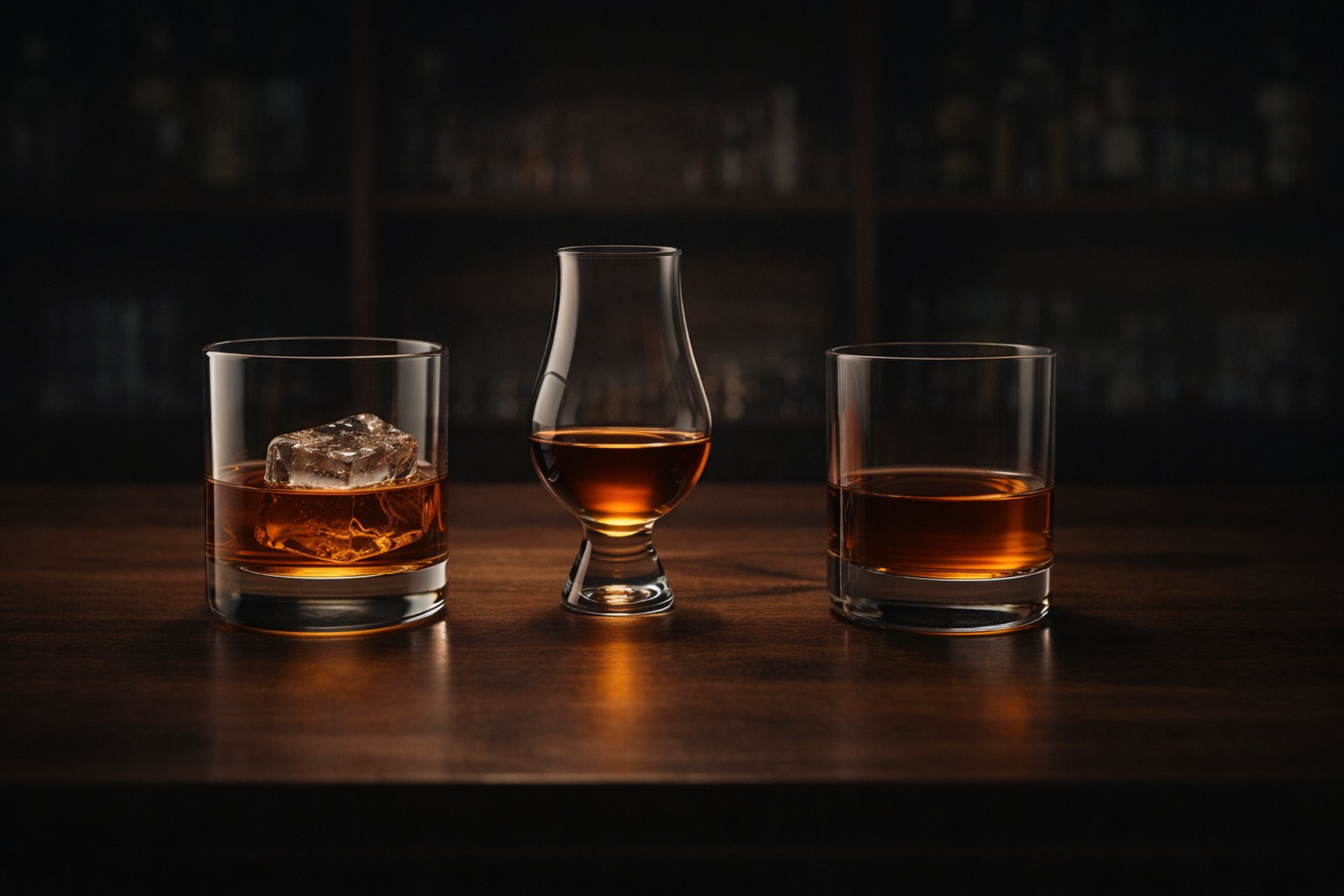
Best Whiskey Glasses for Tasting
Glassware shapes how whiskey is experienced.
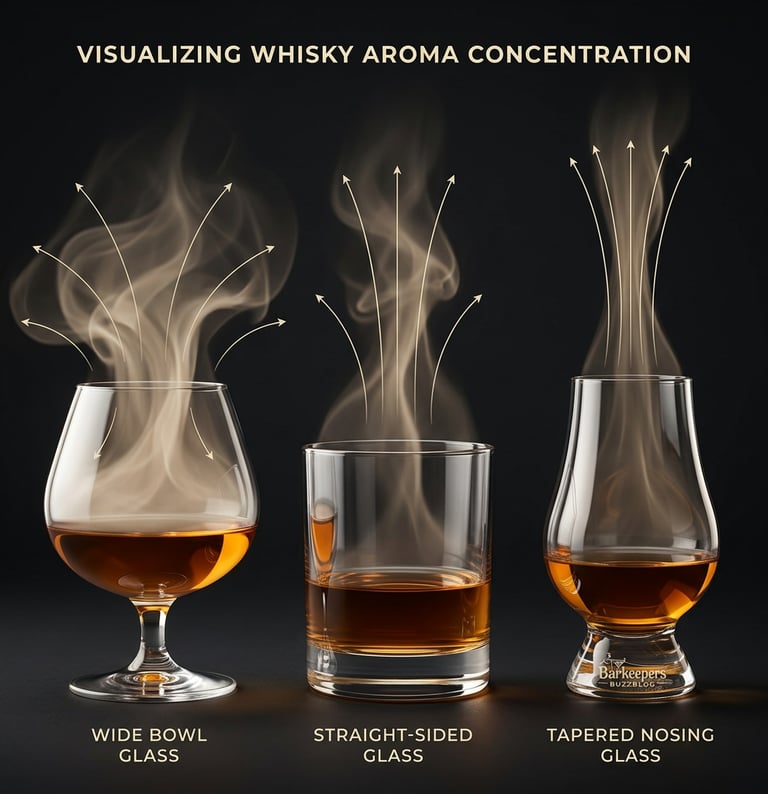
A wide bowl releases aroma.
A narrow rim concentrates it.
Glass thickness affects mouthfeel.
Form determines how ethanol presents on the nose.
The right tasting glass doesn’t change the whiskey — it controls how you perceive it.
This guide focuses on:
Aroma concentration
Ethanol control
Rim precision
Real-world usability
No novelty designs.
No decorative distractions.
Only functional performance.
If you want to see how different designs actually perform across setups, start with the Glassware breakdown.
Transparency Note: We may earn a commission from qualifying purchases. Product selections are made independently and are not influenced by manufacturers.
Quick Verdict
If you're choosing quickly:
Want the most balanced experience overall → Libbey Signature Kentucky Bourbon Glass
Want maximum aroma precision → Glencairn Crystal Glass
Want a modern engineered design → Norlan Whisky Glass
Want a premium crystal feel with versatility → Spiegelau Willsberger
Most home bar setups perform best with:
2 tasting glasses
2 rocks glasses
Beyond that, expansion becomes preference-driven.
How Tasting Glasses Actually Work
Bowl Shape Controls Aroma
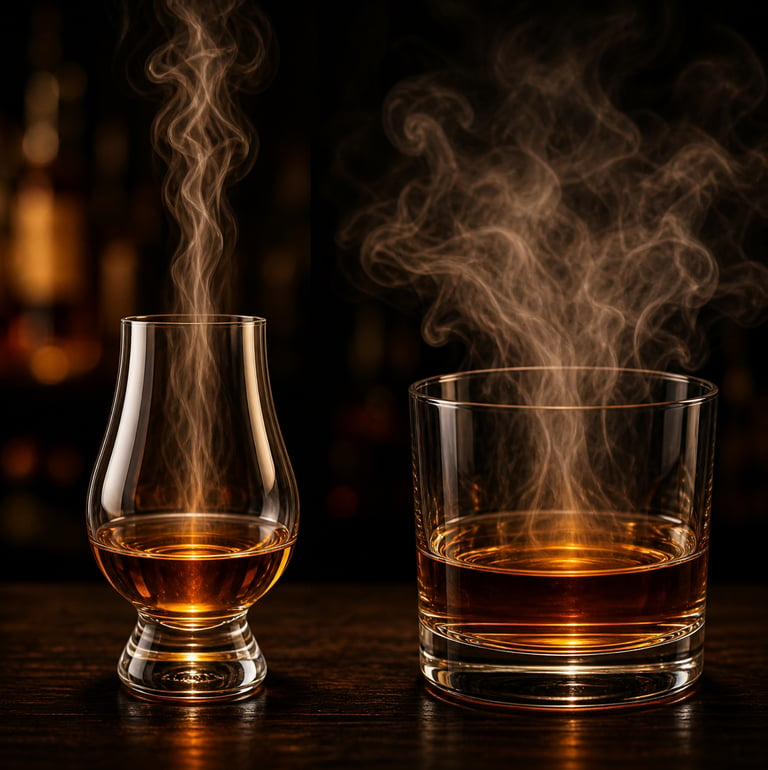
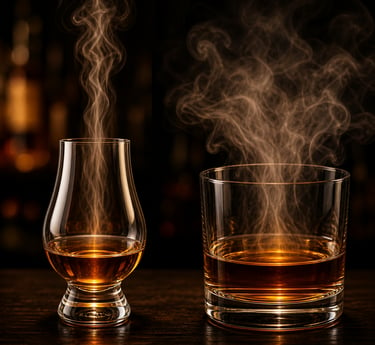
Bowl shape is the single biggest factor in how whiskey presents on the nose. A wider bowl allows the liquid to spread out, increasing surface area and encouraging more volatile compounds to release. That’s what “opens up” a whiskey. The problem is what happens next—if the rim stays wide, those aromas disperse too quickly and you lose structure.
A proper tasting glass solves this with taper. The bowl gives the whiskey room to breathe, while the inward curve concentrates aroma toward the nose. Push that too far, though, and ethanol builds up faster than the flavor compounds, creating a sharp, aggressive profile.
The goal isn’t maximum concentration—it’s controlled concentration. That balance is what separates a usable tasting glass from one that feels harsh or flat.
If you want the full breakdown behind this behavior, Why Tasting Glasses Improve Whiskey Flavor explains what’s happening at a deeper level.
Rim Design Affects Flavor Entry
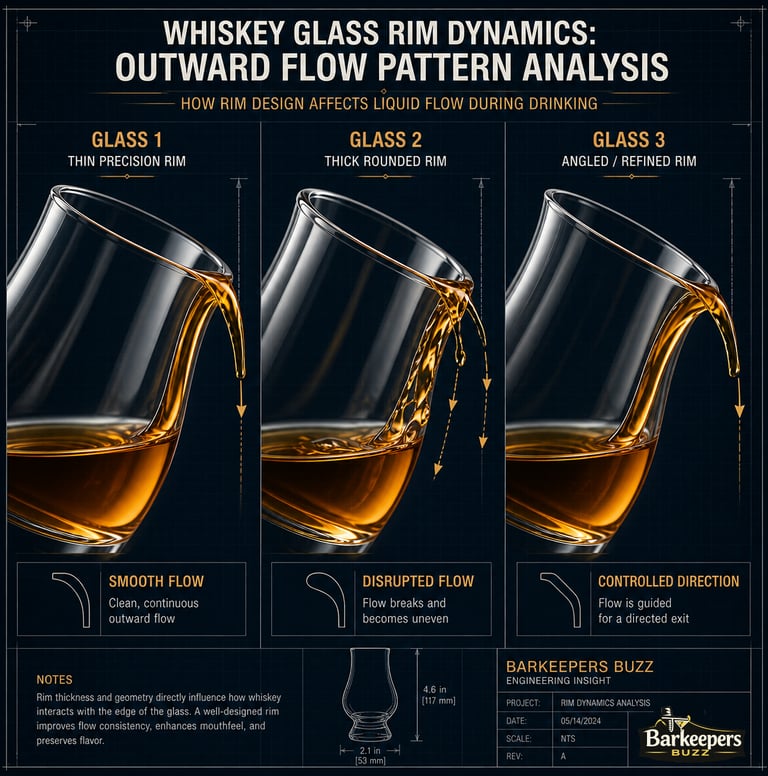
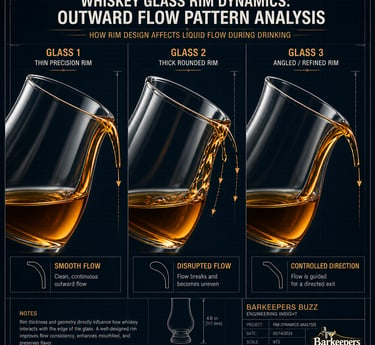
Rim design doesn’t get talked about enough, but it directly affects how whiskey lands on your palate. It’s not just thickness—it’s how the edge and angle guide the liquid as you drink. A thin, clean-cut rim allows whiskey to flow smoothly and evenly, which helps preserve texture and keeps the transition from nose to palate consistent.
Thicker or poorly finished rims interrupt that flow. They cause the liquid to break slightly as it enters the mouth, which can flatten perceived complexity and make the sip feel less refined than it actually is. That’s why two glasses with similar shapes can still taste different.
Precision matters here. A well-finished rim doesn’t just feel better—it preserves the structure of the whiskey as you drink it.
That difference is exactly why some glasses feel aggressive while others stay smooth—something Best Whiskey Glasses for Aroma explores in more detail.
Glass Size Changes Perception
Glass size influences both how you pour and how the whiskey behaves once it’s in the glass. Smaller tasting glasses naturally limit volume, which keeps pours tighter and aroma more concentrated. This makes it easier to control the experience, especially when evaluating different bottles or comparing notes side by side.
Larger glasses introduce more space and flexibility, but they also reduce intensity. With more air volume inside the glass, aromas spread out instead of focusing, which softens the overall profile. That can be a good thing for casual drinking, but it works against precision tasting.
This is why most dedicated tasting glasses stay compact. They’re not designed for versatility—they’re designed for control. And control is what makes differences between whiskies easier to pick up.
If you compare this against more casual drinking setups, Types of Whiskey Glasses Explained shows where these differences start to matter.
Libbey Signature Kentucky Bourbon Glass
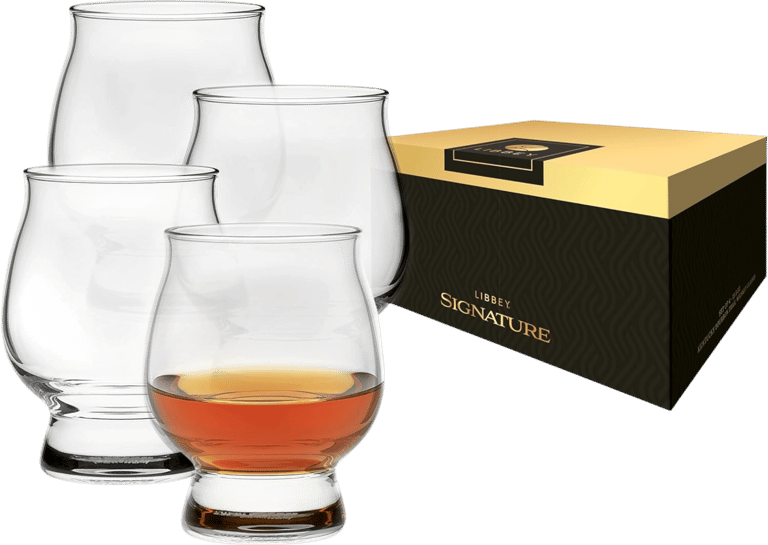
When most people think of a “tasting glass,” they picture something narrow, delicate, and highly specialized. That works in controlled environments—but it doesn’t always translate well to real use. The Libbey Signature Kentucky Bourbon Glass takes a more balanced approach.
The bowl is wide enough to let whiskey open up naturally, while the taper is subtle enough to guide aroma without forcing it. That means you still get structure and clarity, but without the sharp ethanol spike that tighter glasses can create. It’s also noticeably more stable than traditional tasting glasses, which matters more than people think once you start using it regularly.
Where it really stands out is consistency. It performs well across different pours, proof levels, and styles without needing adjustment. You don’t have to “work around” it—it just works.
Specs (Quick Breakdown)
Capacity: ~13.5 oz
Material: Lead-free crystal glass
Rim: Thin, smooth-cut edge
Shape: Wide bowl with soft inward taper
Base: Thick, weighted for stability
Dishwasher Safe: Yes
Use Case: Neat pours, light evaluation, everyday drinking
Why This Wins
The Libbey delivers balance without overcorrecting.
It controls aroma without amplifying ethanol, stays stable in hand, and works across different pours without adjustment.
👉 It’s not the most technical option—it’s the one most people will actually use consistently.
This is why it works so well across real-world use, especially when compared against more specialized setups in Essential Whiskey Glasses for a Home Bar Setup.
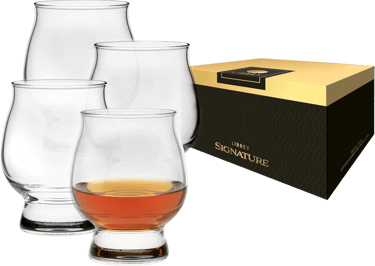
BUZZ'S TOP PICK
Libbey Signature Kentucky
Best for Overall
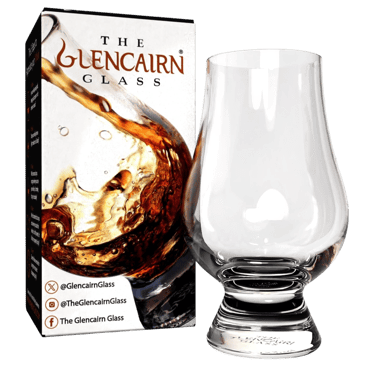
Glencairn Crystal Whiskey Glass
If your goal is to actually understand a whiskey—not just drink it—this is still the benchmark.
The Glencairn is built around one idea: concentrate everything. The wide base allows the whiskey to open slightly, but the aggressive inward taper quickly pulls aroma into a tight column. That concentration makes it easier to pick out subtle notes, especially when you’re comparing pours or evaluating something new.
That precision is exactly what makes it valuable—and also what limits it.
Because everything is concentrated, ethanol builds faster. Slightly larger pours or higher proof bottles can feel sharper than intended, and the experience becomes less forgiving the longer you sit with it. It’s also not a glass most people naturally reach for when they just want to relax.
👉 This is a tool, not a daily driver.
Use it when you want clarity—not comfort.
Specs (Quick Breakdown)
Capacity: ~6–7 oz
Material: Lead-free crystal
Rim: Narrow, tapered opening
Shape: Tulip-style (wide base → tight rim)
Base: Short stem with stable foot
Dishwasher Safe: Yes
Use Case: Neat pours, tastings, comparisons
Why This Wins
The Glencairn delivers unmatched aroma focus and tasting precision. It isolates notes better than any other glass here—but at the cost of comfort and versatility.
👉 When accuracy matters, this is still the standard.
If you’re deciding whether this level of precision is worth it, NORLAN Whisky Glass vs Waterford Markham DOF helps clarify when this kind of control actually matters.
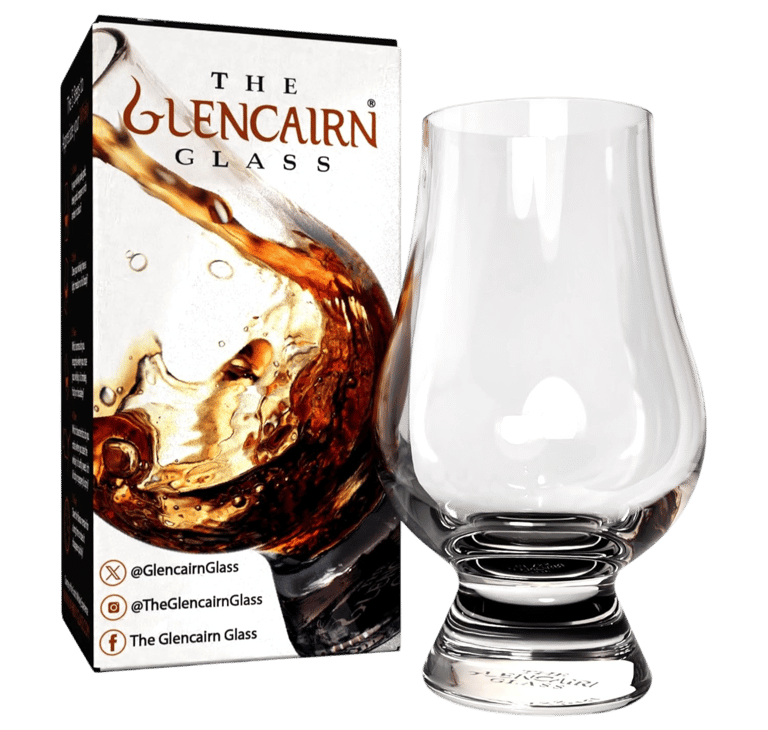
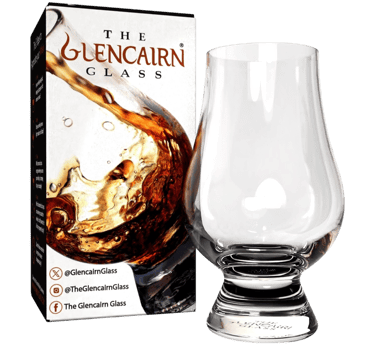
BUZZ'S TOP PICK
Glencairn Crystal Whiskey Glass
Best for Precision
Norlan Whisky Glass
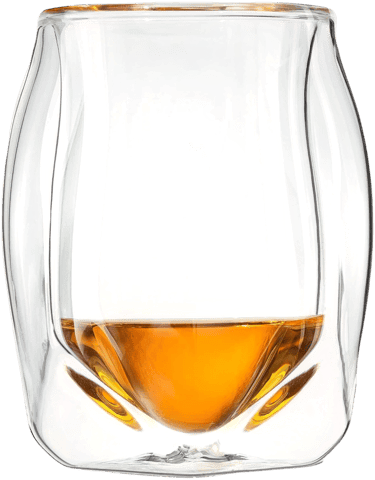
Norlan doesn’t try to refine the traditional tasting glass—it redesigns the experience entirely.
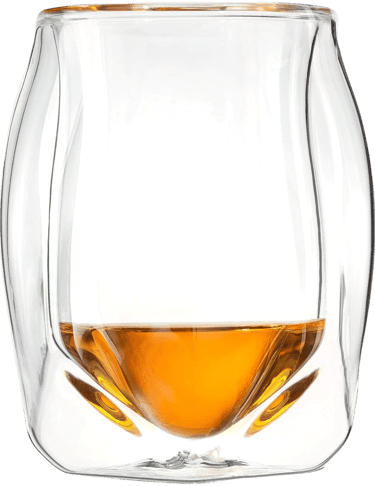
Instead of relying on a tight rim to force aroma upward, it uses a double-wall construction with an internal contour that separates ethanol from the rest of the vapor. The result is a smoother, more controlled nose that feels noticeably less aggressive, especially with higher-proof pours. You’re still getting the core notes, but without the sharp edge that more concentrated glasses can create.
That shift changes how you drink. You can spend more time with a pour without palate fatigue, and the experience stays consistent instead of intensifying.
The tradeoff is precision. You won’t get the same level of sharp, isolated detail as a Glencairn—but that’s not the point.
👉 This is built for drinking sessions, not analysis.
Specs (Quick Breakdown)
Capacity: ~6.9 oz
Material: Double-wall borosilicate glass
Rim: Slightly tapered, open feel
Shape: Internal nosing chamber design
Base: Lightweight, balanced
Dishwasher Safe: No (hand wash recommended)
Use Case: Neat pours, longer sessions, smoother sipping
Why This Wins
Norlan reduces ethanol burn without flattening the experience.
It trades a bit of precision for a smoother, more approachable sip that holds up over time.
👉 If you want performance without harshness, this is the better choice.
This sits in that middle ground between precision and comfort, which is where comparisons like Best Whiskey Glasses for Large Ice Cubes start to highlight different priorities.
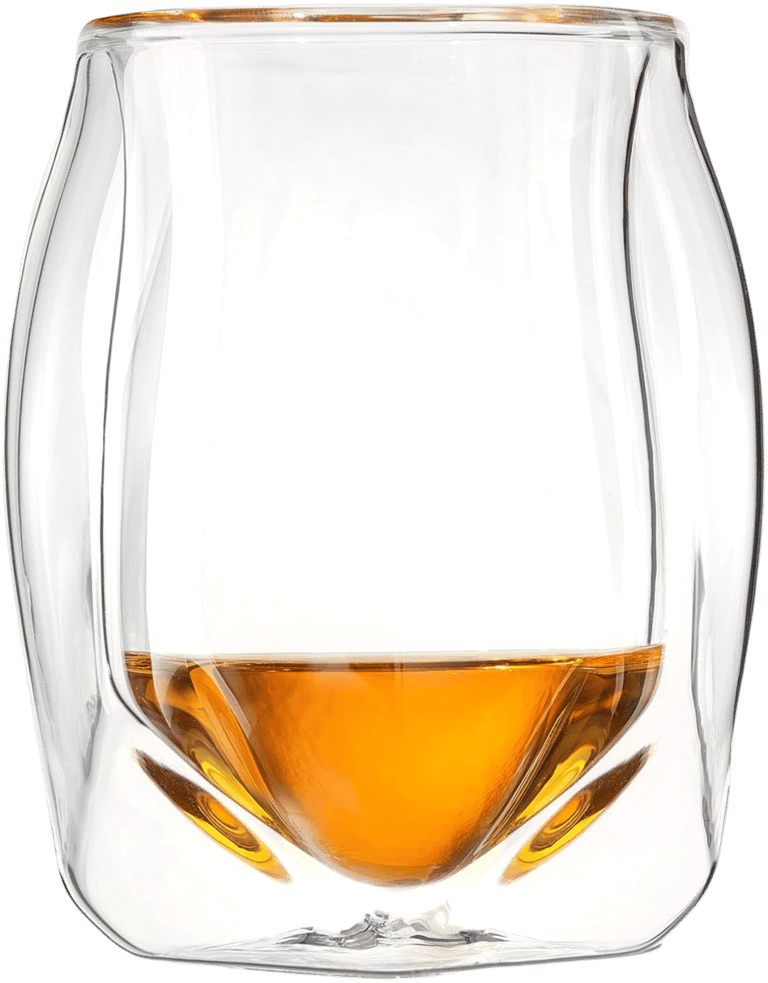
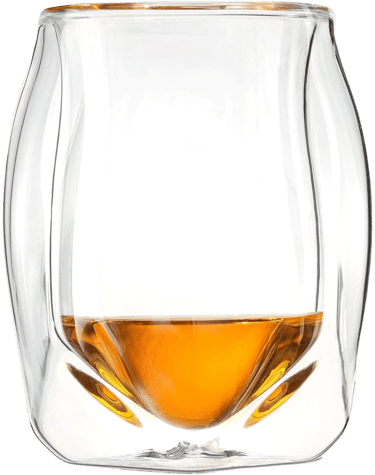
BUZZ'S TOP PICK
Norlan Whisky Glass
Best for Premium
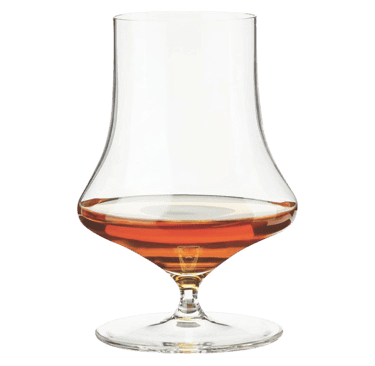
Spiegelau Willsberger Whiskey Glass
Not every tasting glass needs to feel like a tool.
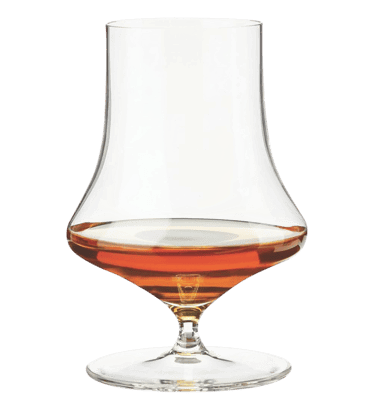
The Spiegelau Willsberger sits in a different lane—one that prioritizes balance, clarity, and overall drinking experience without forcing precision. The bowl is more open than a traditional tasting glass, which softens how aroma builds and makes the nose feel less aggressive. At the same time, the thin, well-finished rim keeps the sip clean and controlled, so you’re not sacrificing structure.
What stands out most is how natural it feels to use. It doesn’t demand careful pours or specific conditions to perform well. You can evaluate a whiskey if you want to—but you can also just enjoy it without adjusting how you drink.
👉 This is a glass that stays out of the way—and that’s exactly why it works.
Specs (Quick Breakdown)
Capacity: ~13 oz
Material: Lead-free crystal
Rim: Thin, precision-cut edge
Shape: Open bowl with gentle taper
Base: Stemmed, balanced footing
Dishwasher Safe: Yes
Use Case: Neat pours, casual tasting, versatile use
Why This Wins
Spiegelau balances clarity, comfort, and presentation without forcing precision. It’s more forgiving than strict tasting glasses while still delivering a clean, controlled sip.
👉 If you want a premium glass that doesn’t feel technical, this is the better choice.
If you want something that balances usability and performance, this lines up closely with how setups evolve in the Whiskey Glassware Guide for Home Bars.
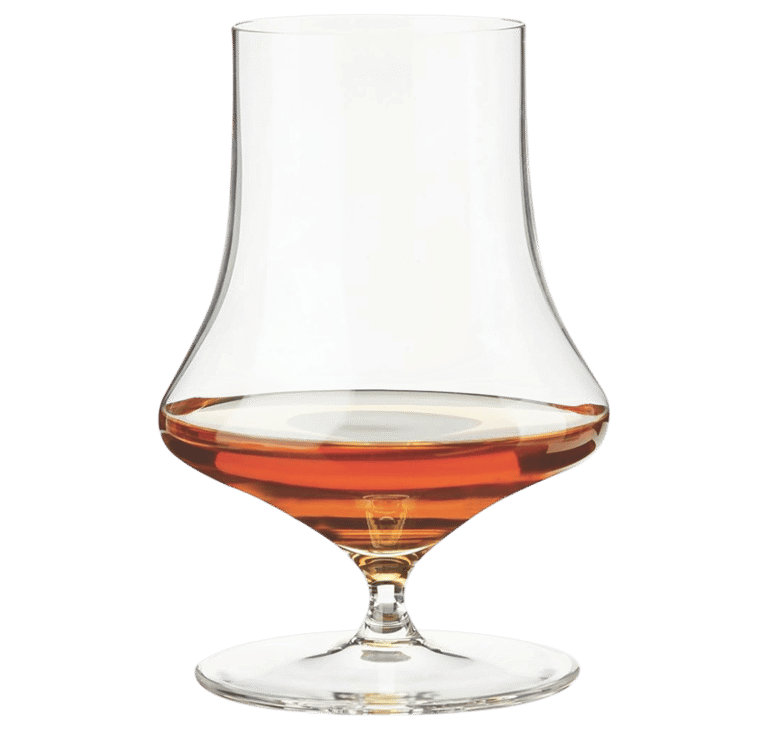
BUZZ'S TOP PICK
Spiegelau Willsberger Whiskey
Best Crystal
The Right Glass Depends on How You Actually Drink
Most people choose based on what sounds “correct.”
That’s the mistake.
Here’s how it actually breaks down:
You sip casually, multiple pours → Libbey
You analyze new bottles → Glencairn
You want smoother sessions → Norlan
You want one glass that does most things well → Spiegelau
The goal isn’t to pick the best glass.
It’s to pick the one you’ll keep reaching for.
Most people miss that the wrong glass choice often comes down to dilution and balance, which is exactly what Do Whiskey Glasses Affect Ice Melt Speed? ties back into.
Why People End Up Buying the
Wrong Tasting Glass
Most buying advice pushes extremes.
“Get the narrowest glass possible”
“Crystal is always better”
“Use what distilleries use”
That leads to bad picks.
What actually happens:
Ultra-narrow glasses → overwhelming nose
Premium crystal → better feel, not always better function
Distillery glasses → optimized for evaluation, not enjoyment
The best glass isn’t the most technical.
It’s the one that matches your drinking style.
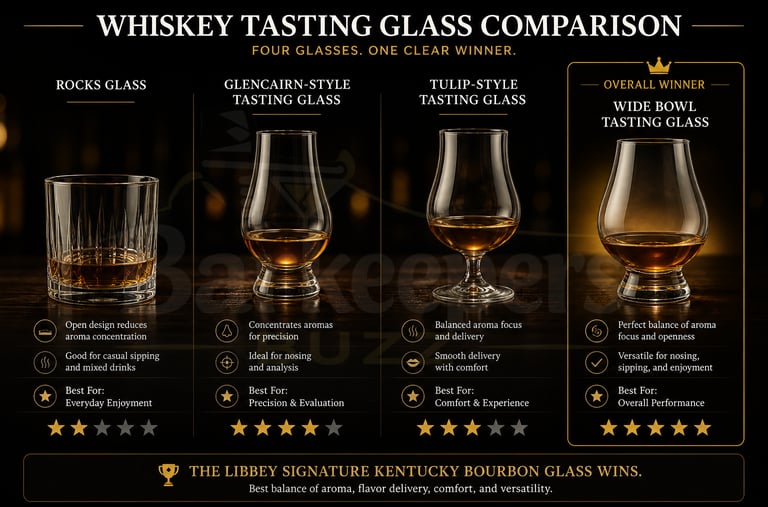
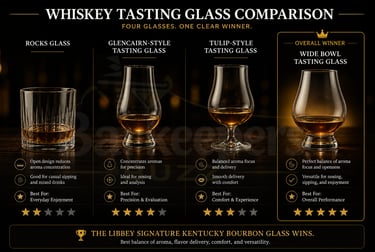
Rocks vs Tasting Glass —
Which Should You Choose?
They’re not interchangeable.
Use a tasting glass when:
drinking neat
evaluating aroma
trying new bottles
Use a rocks glass when:
adding ice
drinking casually
making cocktails
Most setups should include both.



Quick Picks for Your Setup
If you want this simple:
Best Overall → Libbey Signature Kentucky Bourbon Glass
Best for Precision → Glencairn Crystal Glass
Best Premium → Norlan Whisky Glass
Best All-Around Feel → Spiegelau Willsberger
Pick based on how you drink—not what sounds the most “expert.”
Quick Picks for Your Home Bar
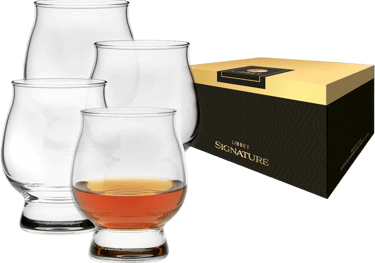
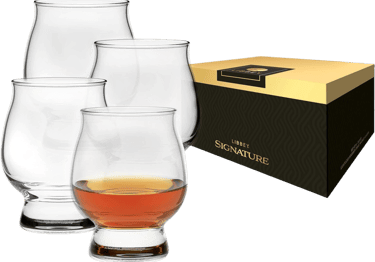
Libbey Signature
Kentucky Bourbon
Balanced aroma control with everyday usability and stability


BUZZ PICK – Best Overall
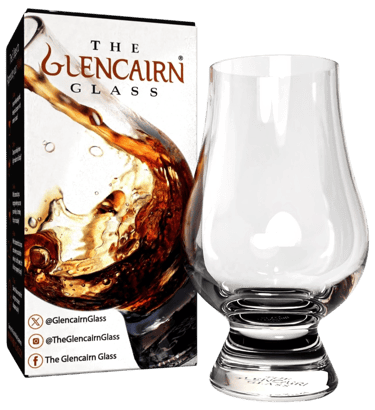
Glencairn Crystal
Whiskey Glass
Maximum aroma concentration for detailed whiskey evaluation
BUZZ PICK – Best Precision
Norlan
Whisky Glass
Engineered design reduces burn for smoother tasting sessions
BUZZ PICK – Best Premium
Spiegelau Willsberger
Whiskey Glass
Refined feel with balanced performance and versatile use
BUZZ PICK – Best Crystal
Whiskey Glass Frequently Asked Questions
Does the shape of a whiskey glass really make a difference?
Yes—and it’s not subtle.
Shape controls how aroma concentrates and how ethanol presents. A tight rim focuses everything upward, which can improve detail but also amplify burn. A wider opening softens the experience but loses some structure.
That’s why different glasses feel so different—even with the same whiskey. You’re not changing the liquid, you’re changing how it reaches your nose and palate.
Why does whiskey sometimes smell harsher in certain glasses?
It usually comes down to over-concentration.
Narrow, tapered glasses trap aroma—and ethanol—in a tighter space. That can sharpen the nose, but it can also make the alcohol feel more aggressive, especially with higher-proof pours or larger servings.
More open designs allow ethanol to dissipate slightly, which makes the experience smoother, but less precise.
It’s always a tradeoff between clarity and comfort.
Is a Glencairn glass actually better than other whiskey glasses?
It’s better for one specific purpose: precision.
If you’re evaluating whiskey—breaking down aroma, comparing bottles—it’s hard to beat. But that same design makes it less forgiving for casual drinking.
Most people don’t need maximum concentration all the time.
That’s why more balanced glasses often get used more, even if they’re technically less precise.
Are expensive whiskey glasses worth it?
Only if they improve how you actually drink.
Higher-end glasses usually offer:
thinner rims
better clarity
more refined shaping
But performance comes from design—not price alone.
A well-designed mid-range glass can outperform a premium one if it fits your drinking style better.
Can you use one glass for everything?
You can—but it won’t be perfect.
Some glasses balance performance well enough to cover most situations, especially for neat pours. But once you add ice or move into cocktails, different shapes start to matter more.
Most setups work best with:
1–2 tasting glasses
2–4 rocks glasses
That covers almost everything.
Why do some people avoid using tasting glasses regularly?
Because they can feel restrictive.
Tasting glasses are designed for controlled pours and focused aroma. That’s great for analysis, but it’s not always how people want to drink. They require a bit more attention, and they can amplify ethanol if you’re not careful.
For everyday use, many people prefer something more forgiving—even if it’s slightly less precise.
Where Do You Want to Go Next?
Choose your path based on what you need right now.
You don’t need a shelf full of specialty glassware—just a setup that works consistently. A solid rocks glass, a proper tasting glass, and good ice will cover most situations without overcomplicating things.
Build from there based on how you actually drink, not what looks impressive.
Explore Everything
Different glasses solve different problems. Some focus on precision, others on comfort, and some try to balance both.
Seeing them side-by-side makes those tradeoffs clear and helps you avoid picking something that doesn’t fit your style.
Compare Before You Buy
If you don’t want to overthink it, don’t.
Libbey Signature
Kentucky Bourbon
Start with a glass that performs consistently across different pours and situations. It’ll give you a better experience right away without needing to adjust how you drink.
Just Get It Done
© 2026 Barkeepers Buzz. All rights reserved.
Barkeepers Buzz
Master cocktails, spirits, and bar knowledge with clarity and precision. Built for serious home enthusiasts.
Crafted with respect for the culture — and the responsibility that comes with it.
For educational purposes only. Intended for legal drinking age audiences. Please drink responsibly.
General Inquiries: