
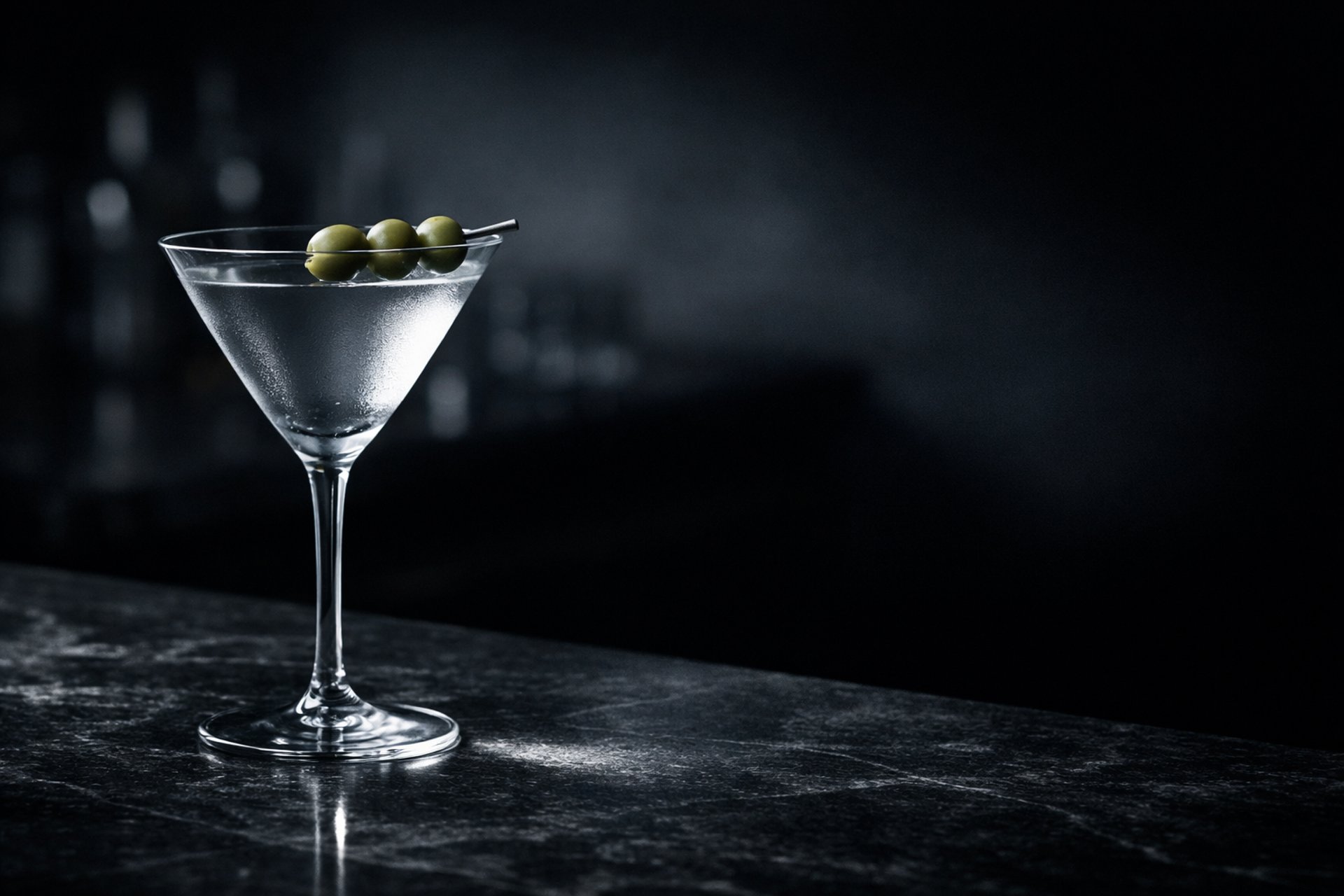
The Martini Family
Spirit and vermouth. Defined by temperature and precision.
SPIRIT + DRY VERMOUTH + DILUTION
Clarity without distraction.
The Architecture of Restraint
The Martini is built on subtraction — not addition.
It is not sweetened.
It is not brightened with citrus.
It is not layered with modifiers.
There is:
• No sugar
• No juice
• No aromatic distraction
Only spirit and fortified wine.
Balance lives entirely in proportion and temperature defines expression — a principle explored further in our guide to Stirring Cocktails Properly.
Temperature defines expression.
This is a drink that exposes imbalance immediately.
Precision is not optional — especially when understanding Stirred vs Shaken.
Every variation remains anchored here.
Understanding the Ratio
Core Structural Baseline:
2½ oz Spirit
½ oz Dry Vermouth
Stirred over dense ice.
Strained into a chilled glass.
Why It Works
• Spirit defines structure
• Vermouth softens and extends botanicals
• Stirring integrates without aeration
• Cold suppresses volatility
Dilution is deliberate.
Too warm, and alcohol dominates.
Too diluted, and texture collapses.
The Martini lives inside a narrow window.
Technique determines whether it holds.
Stirring as Integration
The Martini is stirred.
Not for tradition’s sake.
For texture.
Shaking introduces:
• Micro-aeration
• Clouding
• Excess dilution
Stirring preserves:
• Clarity
• Silk texture
• Botanical precision
The goal is integration — not agitation.
A Martini should appear still.
Not turbulent.
Ice determines dilution speed. Dilution determines structure — which is why The Dilution Curve is foundational reading.
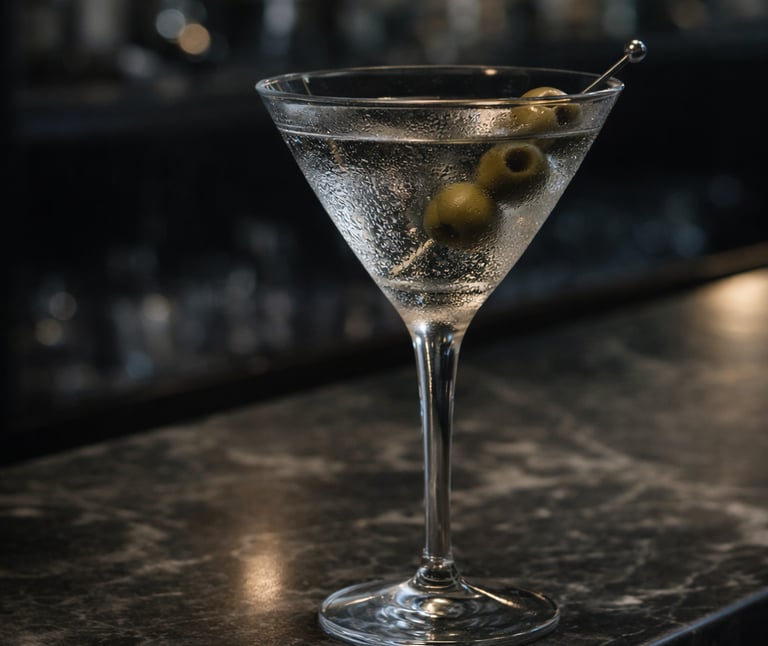
Ice Discipline
• Dense, cold cubes
• Minimal fracturing
• No wet or melting ice
Ice determines dilution speed.
Dilution determines structure.
Temperature target at service: 28–32°F (-2 to 0°C)
The Martini lives at the edge of freezing.
Glassware Discipline
• Thin-stemmed martini or coupe
• Fully chilled bowl
• No thick decorative glass
The stem prevents heat transfer.
The bowl directs aromatics upward.
The glass reinforces austerity.
The stem prevents heat transfer — making proper glass selection essential. See our breakdown of Martini Glass vs Coupe: When Each Wins.
A Note on Shaken Martinis
Shaking is not wrong. It is structural change.
It produces:
• Colder temperature
• Higher dilution
• Slight lift in texture
But clarity softens. Choose intentionally.
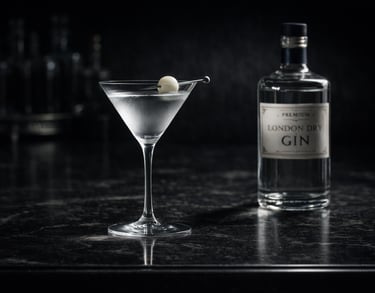
Gin Martini
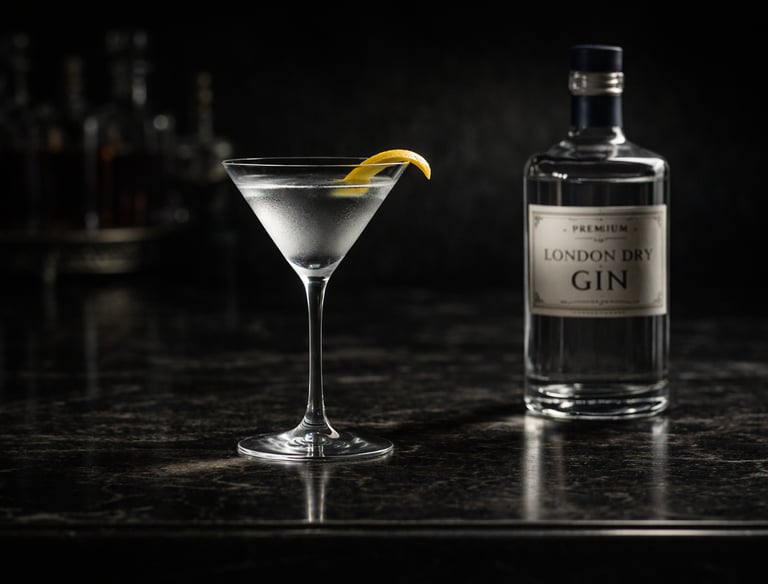
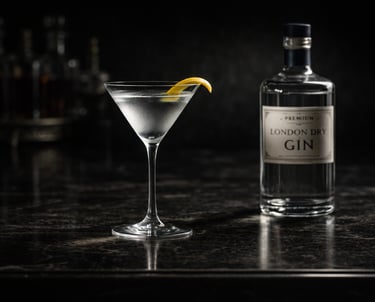
The structural benchmark.
Botanicals defined through cold precision.
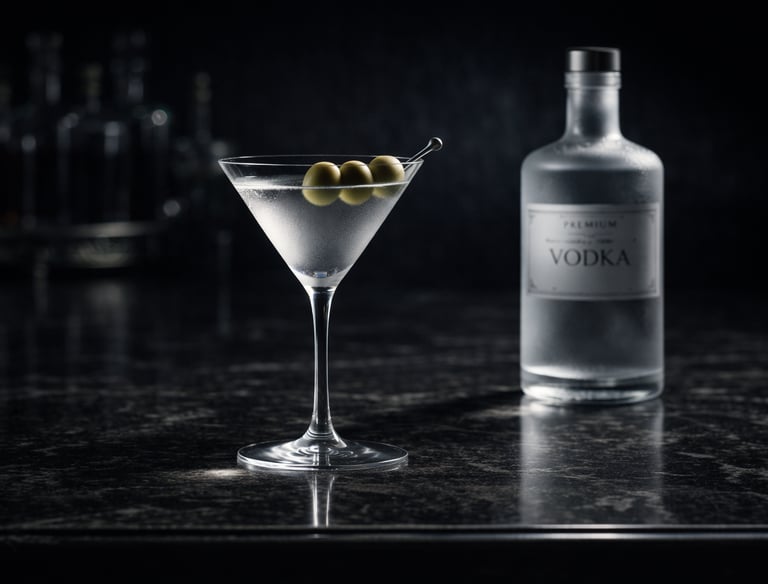
Vodka Martini
Neutral spine.
Texture and dilution become the focal point.
Aromatic restraint.
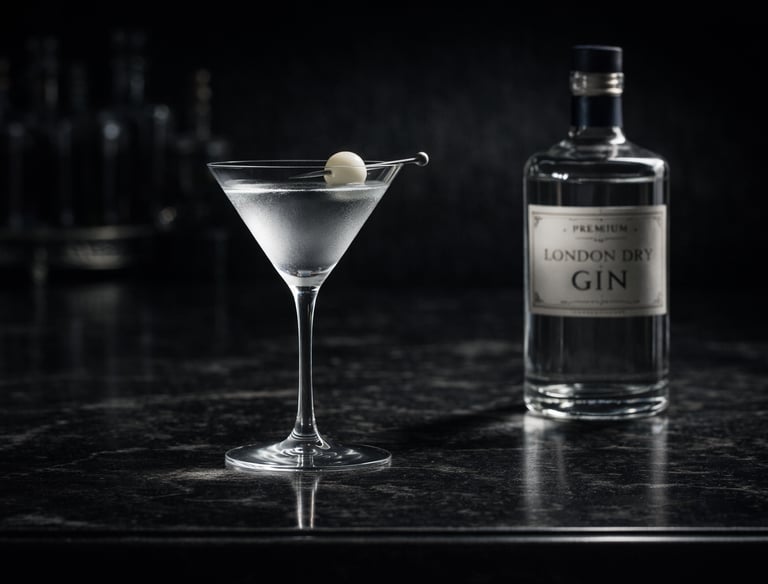
Onion garnish alters perception without altering structure.
Gibson
Each variation preserves the framework — interpreted with precision.
Profile: Linear. Botanical. Controlled.
Defined spirit character supported by dry vermouth integration.
Clarity preserved. Dilution calibrated. Temperature held within a narrow window.
Nothing is hidden. Nothing is sweetened.
2½ oz London Dry Gin · ½ oz Dry Vermouth
Garnish: 1–2 cocktail onions (drained)
Stirred 30 seconds over dense ice for calibrated dilution.
Strained into a fully chilled martini or coupe.
Savory aromatic shift without structural change.
Dry finish with subtle umami lift.
Service: 28–32°F (-2 to 0°C)
Gibson
2½ oz Vodka · ½ oz Dry Vermouth
Garnish: 3 olives or lemon twist
Stir for integration and clarity — or shake for colder temperature and higher dilution.
Strain into a fully chilled martini glass.
Neutral structure. Texture forward.
Finish restrained and dry.
Service: 28–32°F (-2 to 0°C)
Vodka Martini
2½ oz London Dry Gin · ½ oz Dry Vermouth
Garnish: Expressed lemon twist
Stirred 25–35 seconds over dense, cold ice for controlled dilution.
Strained into a fully chilled, thin-stemmed martini glass.
Clarity preserved. Botanicals precise.
Juniper leads. Finish clean and linear.
Service: 28–32°F (-2 to 0°C)
Gin Martini
For ideal clarity and aromatics, explore our guide to Best Martini Glasses.
ADVANCED STRUCTURAL VARIATIONS
Structure remains constant. Expression shifts through proportion.
Ratio Adjustments
5:1 — Classic Balance
Vermouth present. Botanicals integrated.
6:1–8:1 — Dry Shift
Spirit dominance increases. Structure sharpens.
3:1 — Wet Martini
Vermouth expands. Texture softens. Aromatics widen.
Ratio alters perceived dryness more than garnish.
Vermouth Selection
French Dry
Lean. Herbal. Linear.
Blanc / Bianco
Subtle sweetness. Softer mid-palate.
Aged / Oxidized
Rounder integration. Deeper finish.
The fortified wine defines mid-palate structure.
Controlled Salinity
Olive brine — ≤¼ oz
Savory lift without collapse.
Saline solution — 2–3 drops
Enhances perceived dryness without clouding.
Salinity must support — never dominate.

EXPLORE MARTINI FAMILY DRINKS
The Martini family is built on precision, balance, and restraint. While the classic Martini remains one of the most recognizable cocktails in the world, modern variations have expanded the family far beyond its original gin-and-vermouth foundation.
Small adjustments to spirit selection, vermouth ratios, garnishes, and supporting ingredients can dramatically alter aroma, texture, and flavor. Some martinis emphasize dryness and botanical complexity, while others introduce coffee, citrus, fruit, or dessert-inspired elements.
Explore these classic and modern Martini family cocktails to discover how a simple framework continues to evolve while maintaining its reputation as one of the most iconic cocktail styles ever created.

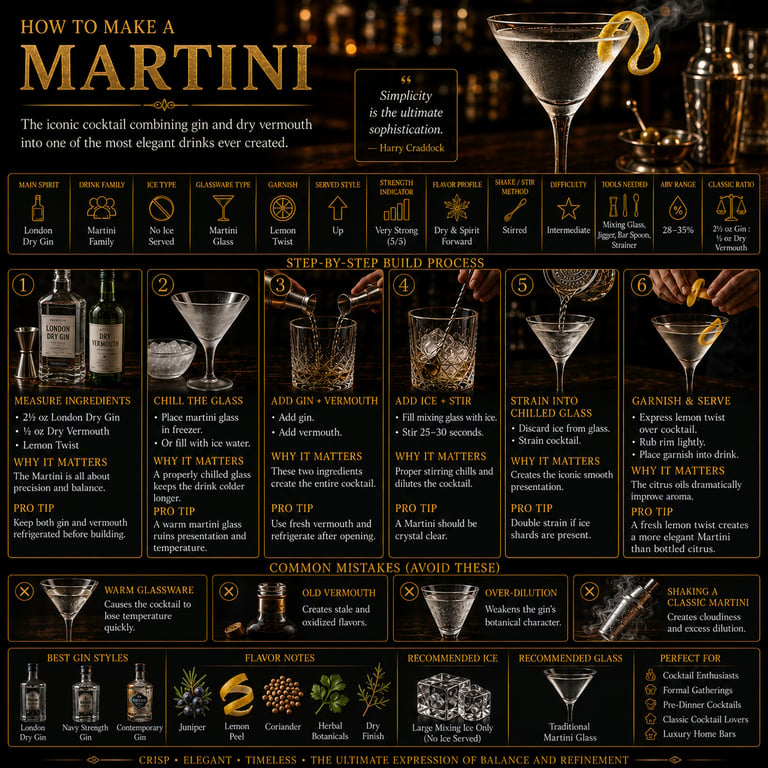
MARTINI
The classic Martini is one of the most influential cocktails ever created. Built with gin and dry vermouth, it showcases clarity, balance, and precision while allowing the botanicals of the gin to remain the focus.
Ice Type: None
Glassware Type: Martini Glass
Garnish: Olive or Lemon Twist
Served Style: Served Up
Strength Indicator: ★★★★★ (Very High)
Flavor Profile: Crisp, Dry, Botanical
Main Spirit: Gin
Shake / Stir Method: Stirred
Difficulty: Intermediate
Tools Needed: Mixing Glass, Bar Spoon, Jigger, Strainer
Internal Link: How to Make a Martini
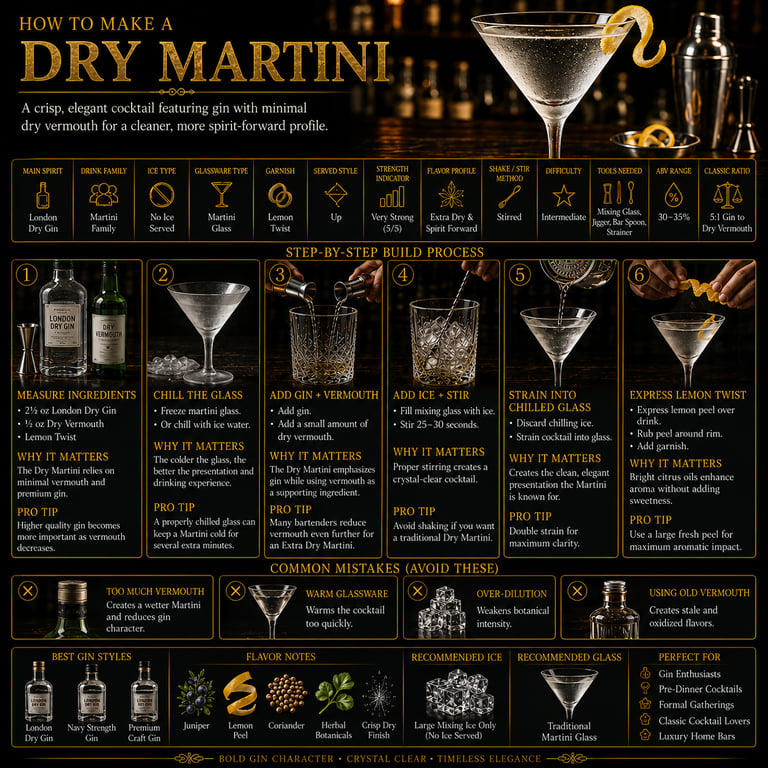
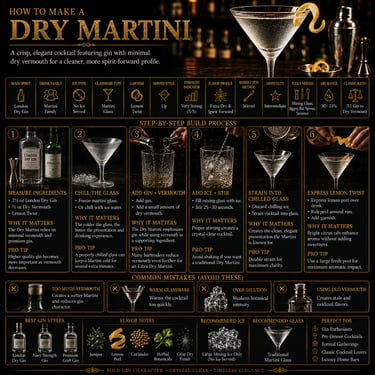
DRY MARTINI
The Dry Martini reduces the amount of vermouth, creating a cleaner and more spirit-forward profile that emphasizes the botanical complexity of the gin.
Ice Type: None
Glassware Type: Martini Glass
Garnish: Lemon Twist
Served Style: Served Up
Strength Indicator: ★★★★★ (Very High)
Flavor Profile: Dry, Crisp, Botanical
Main Spirit: Gin
Shake / Stir Method: Stirred
Difficulty: Intermediate
Tools Needed: Mixing Glass, Bar Spoon, Jigger, Strainer
Internal Link: Dry Martini Recipe
DIRTY MARTINI
The Dirty Martini introduces olive brine to the traditional recipe, creating a savory and slightly salty variation that remains one of the most popular modern martinis.
Ice Type: None
Glassware Type: Martini Glass
Garnish: Olives
Served Style: Served Up
Strength Indicator: ★★★★★ (Very High)
Flavor Profile: Savory, Briny, Crisp
Main Spirit: Gin or Vodka
Shake / Stir Method: Stirred
Difficulty: Beginner
Tools Needed: Mixing Glass, Bar Spoon, Jigger, Strainer
Internal Link: Dirty Martini Recipe


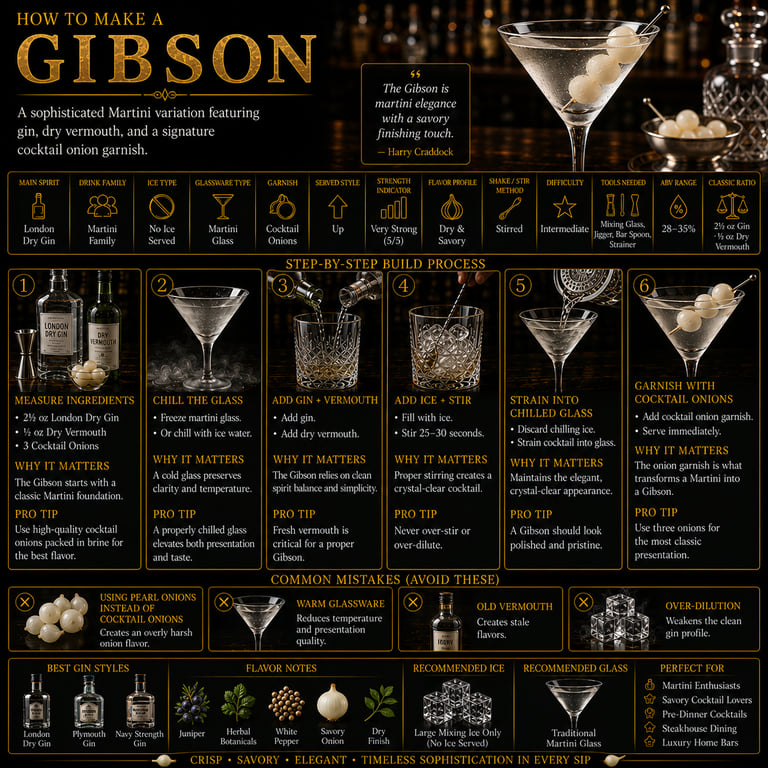
GIBSON
The Gibson follows the Martini formula but replaces olives or citrus with cocktail onions, creating a uniquely savory and aromatic profile.
Ice Type: None
Glassware Type: Martini Glass
Garnish: Cocktail Onion
Served Style: Served Up
Strength Indicator: ★★★★★ (Very High)
Flavor Profile: Dry, Savory, Aromatic
Main Spirit: Gin
Shake / Stir Method: Stirred
Difficulty: Intermediate
Tools Needed: Mixing Glass, Bar Spoon, Jigger, Strainer
Internal Link: Gibson Recipe
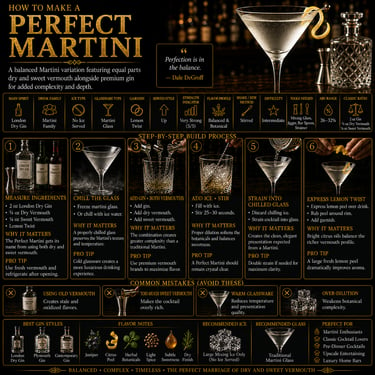
PERFECT MARTINI
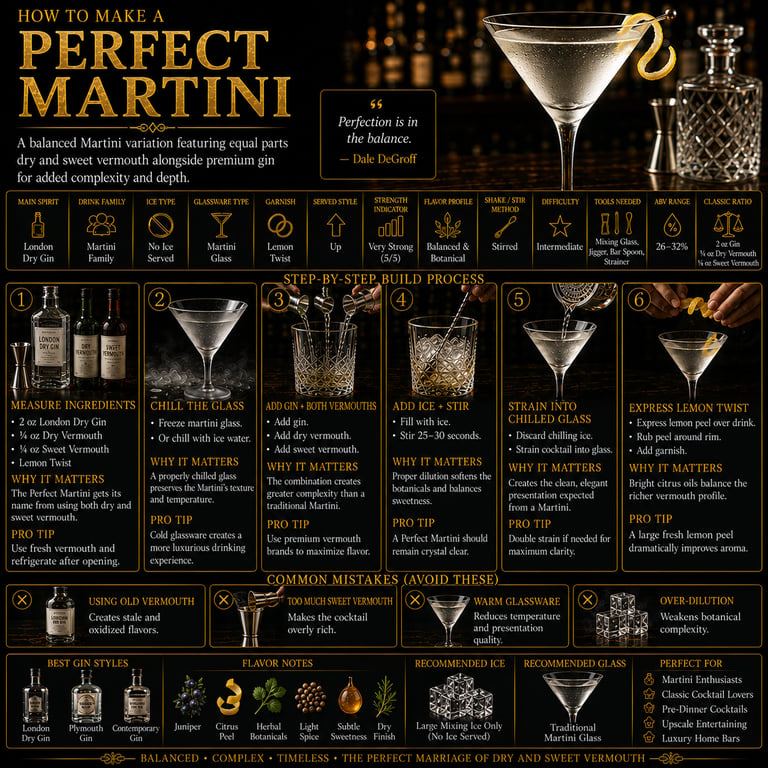
The Perfect Martini uses equal parts sweet and dry vermouth, creating greater complexity and subtle sweetness while maintaining the elegance of the original.
Ice Type: None
Glassware Type: Martini Glass
Garnish: Lemon Twist
Served Style: Served Up
Strength Indicator: ★★★★★ (Very High)
Flavor Profile: Balanced, Herbal, Complex
Main Spirit: Gin
Shake / Stir Method: Stirred
Difficulty: Intermediate
Tools Needed: Mixing Glass, Bar Spoon, Jigger, Strainer
Internal Link: Perfect Martini Recipe
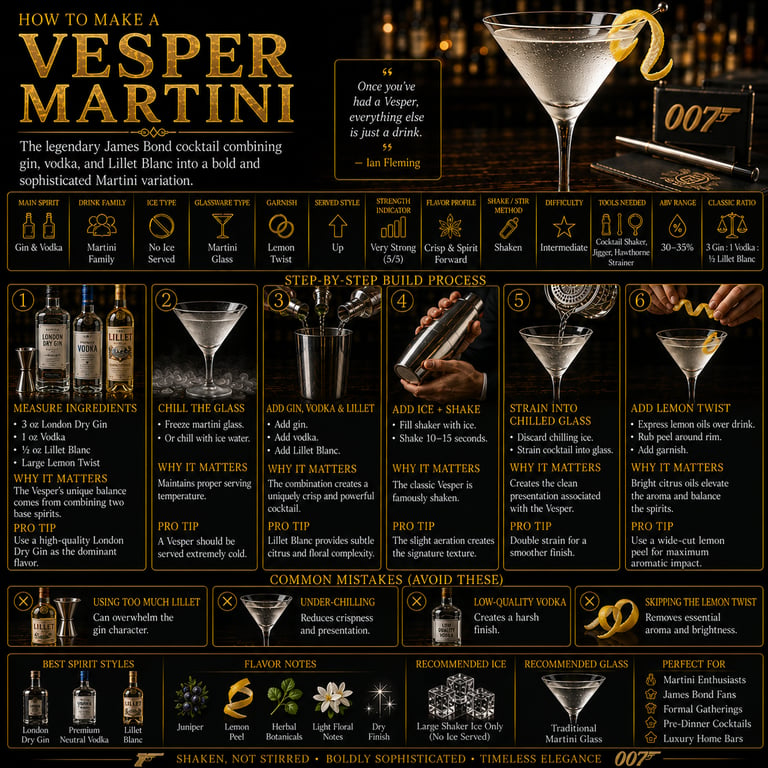
VESPER MARTINI
Popularized by James Bond, the Vesper combines gin, vodka, and Lillet Blanc to create a stronger and more aromatic variation of the traditional Martini.
Ice Type: None
Glassware Type: Martini Glass
Garnish: Lemon Twist
Served Style: Served Up
Strength Indicator: ★★★★★ (Very High)
Flavor Profile: Citrus, Botanical, Powerful
Main Spirit: Gin and Vodka
Shake / Stir Method: Shaken
Difficulty: Intermediate
Tools Needed: Cocktail Shaker, Jigger, Strainer
Internal Link: Vesper Martini Recipe
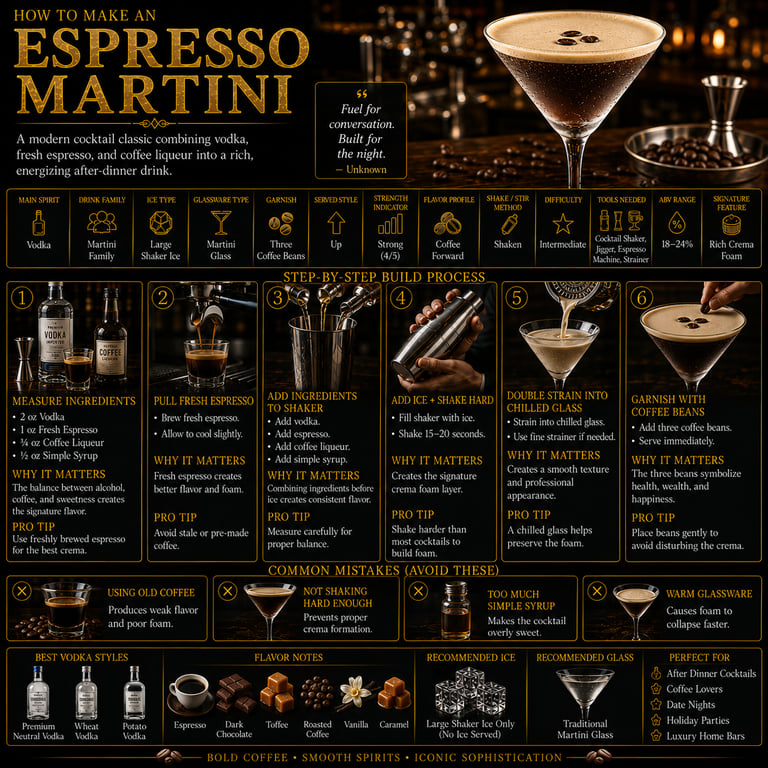
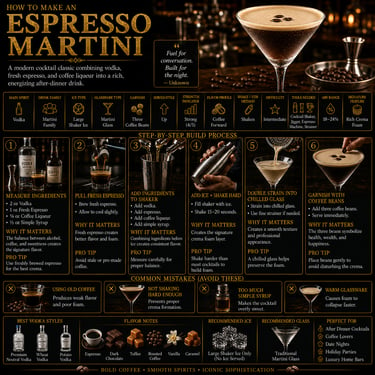
ESPRESSO MARTINI
The Espresso Martini blends vodka, espresso, and coffee liqueur to create a rich, caffeinated cocktail that has become one of the world's most popular modern martinis.
Ice Type: None
Glassware Type: Martini Glass
Garnish: Three Coffee Beans
Served Style: Served Up
Strength Indicator: ★★★★☆ (High)
Flavor Profile: Coffee, Rich, Slightly Sweet
Main Spirit: Vodka
Shake / Stir Method: Shaken
Difficulty: Intermediate
Tools Needed: Cocktail Shaker, Jigger, Strainer
Internal Link: Espresso Martini Recipe
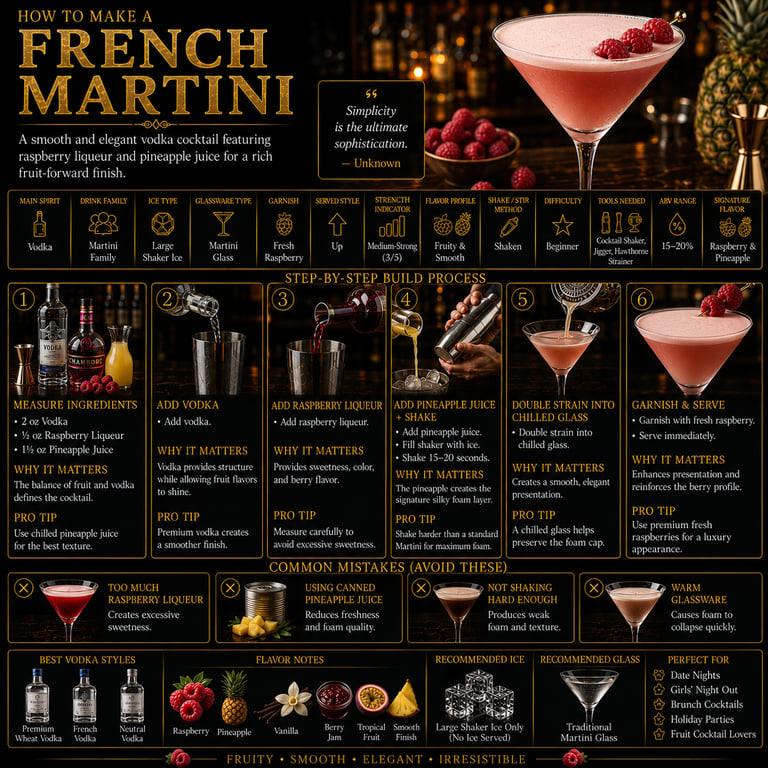
FRENCH MARTINI
The French Martini combines vodka, pineapple juice, and raspberry liqueur to create a smooth, fruit-forward cocktail with a creamy texture and vibrant aroma.
Ice Type: None
Glassware Type: Martini Glass
Garnish: Raspberry
Served Style: Served Up
Strength Indicator: ★★★★☆ (High)
Flavor Profile: Fruity, Smooth, Sweet
Main Spirit: Vodka
Shake / Stir Method: Shaken
Difficulty: Beginner
Tools Needed: Cocktail Shaker, Jigger, Strainer
Internal Link: French Martini Recipe
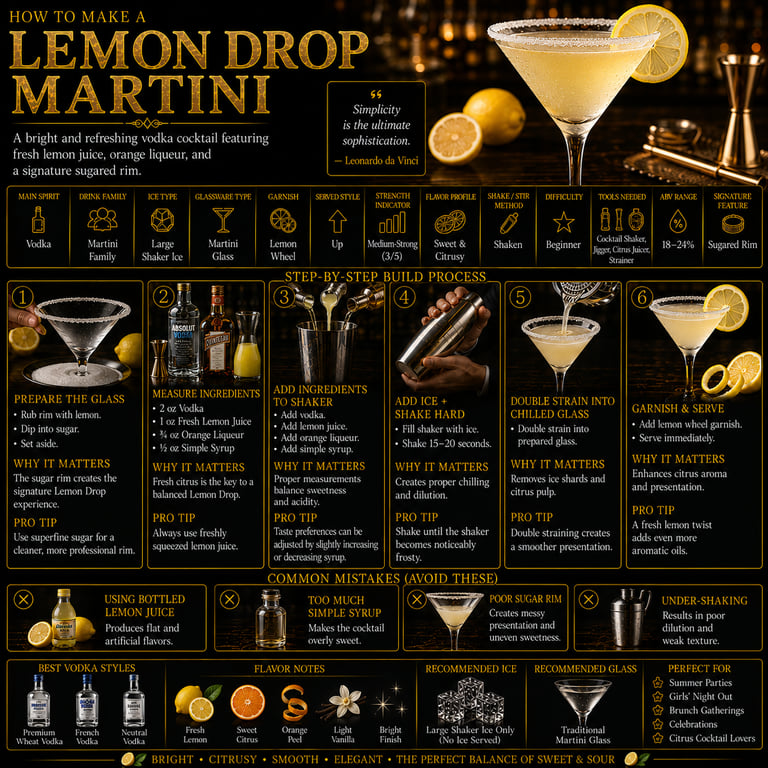
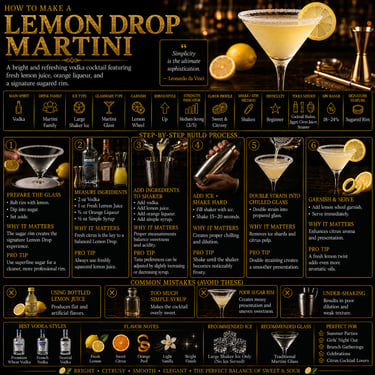
LEMON DROP MARTINI
The Lemon Drop Martini balances vodka, lemon juice, and orange liqueur to create a bright and refreshing citrus-forward cocktail.
Ice Type: None
Glassware Type: Martini Glass
Garnish: Lemon Twist
Served Style: Served Up
Strength Indicator: ★★★★☆ (High)
Flavor Profile: Citrusy, Bright, Refreshing
Main Spirit: Vodka
Shake / Stir Method: Shaken
Difficulty: Beginner
Tools Needed: Cocktail Shaker, Jigger, Strainer
Internal Link: Lemon Drop Martini Recipe
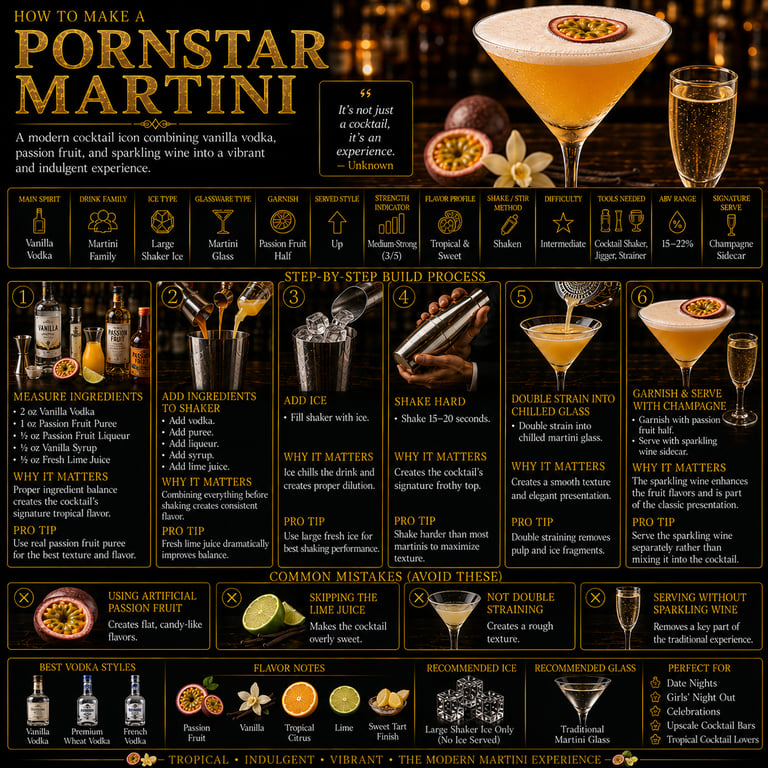
PORNSTAR MARTINI
One of the most famous modern martinis, the Pornstar Martini combines vanilla vodka, passionfruit, and sparkling wine to create a vibrant and indulgent cocktail.
Ice Type: None
Glassware Type: Martini Glass
Garnish: Passionfruit Half
Served Style: Served Up
Strength Indicator: ★★★★☆ (High)
Flavor Profile: Tropical, Sweet, Vibrant
Main Spirit: Vanilla Vodka
Shake / Stir Method: Shaken
Difficulty: Intermediate
Tools Needed: Cocktail Shaker, Jigger, Strainer
Internal Link: Pornstar Martini Recipe
VODKA MARTINI
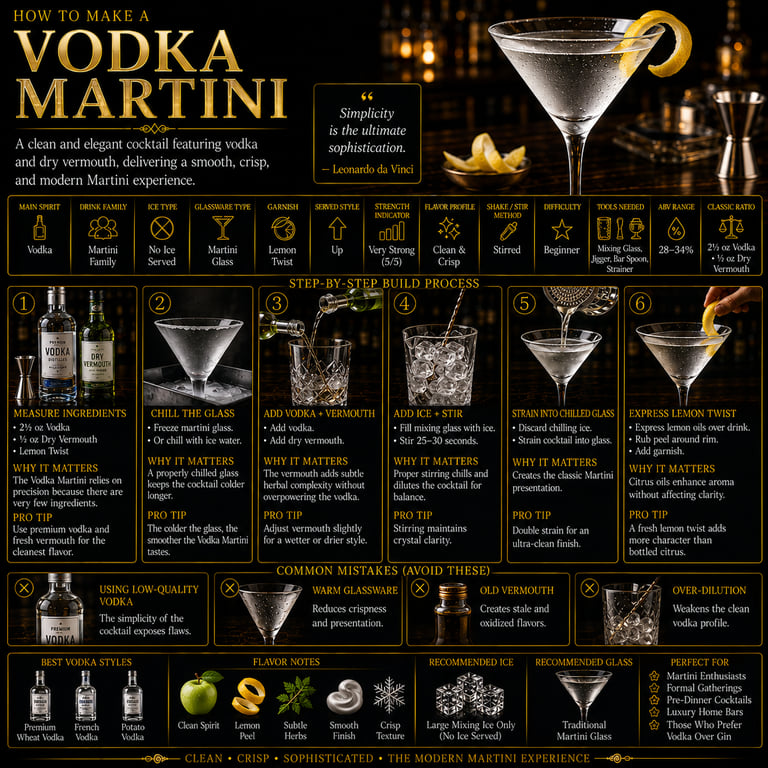
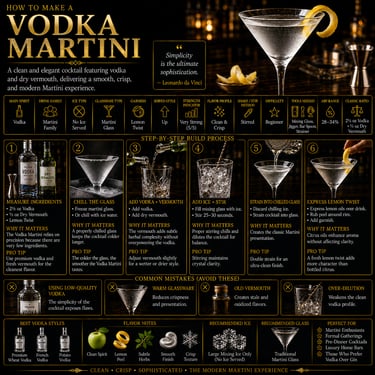
The Vodka Martini replaces gin with vodka, creating a cleaner and more neutral profile that emphasizes smoothness over botanical complexity. While traditionalists often favor gin, the Vodka Martini remains one of the most popular variations in modern cocktail culture.
Ice Type: None
Glassware Type: Martini Glass
Garnish: Olive or Lemon Twist
Served Style: Served Up
Strength Indicator: ★★★★★ (Very High)
Flavor Profile: Clean, Crisp, Smooth
Main Spirit: Vodka
Shake / Stir Method: Stirred or Shaken
Difficulty: Beginner
Tools Needed: Mixing Glass or Cocktail Shaker, Jigger, Strainer
Internal Link: Vodka Martini Recipe
APPLETINI
The Appletini became one of the most recognizable martini variations during the cocktail boom of the 1990s and early 2000s. Built around vodka, sour apple liqueur, and citrus, it delivers a bright green appearance and a sweet-tart flavor profile.
Ice Type: None
Glassware Type: Martini Glass
Garnish: Apple Slice
Served Style: Served Up
Strength Indicator: ★★★★☆ (High)
Flavor Profile: Sweet, Tart, Apple-Forward
Main Spirit: Vodka
Shake / Stir Method: Shaken
Difficulty: Beginner
Tools Needed: Cocktail Shaker, Jigger, Strainer
Internal Link: Appletini Recipe

CHOOSING THE RIGHT MARTINI VARIATION
The Martini family demonstrates how small changes in ingredients, ratios, and garnishes can completely transform a cocktail while preserving its elegant foundation. From the crisp simplicity of the classic Martini to modern fruit-forward interpretations, every variation reflects a different approach to balance, aroma, and texture.
If you enjoy traditional botanical character and spirit-forward cocktails, the Classic Martini and Dry Martini remain timeless choices. Their restrained profiles highlight the gin while showcasing the precision that made the Martini famous.
Those who enjoy savory flavors often gravitate toward the Dirty Martini or Gibson. Olive brine and cocktail onions introduce entirely different aromatic experiences while preserving the drink's clean structure.
For greater complexity, the Perfect Martini and Vesper Martini introduce additional layers of herbal, citrus, and fortified wine character. These variations remain closely connected to the classic formula while offering more depth and intensity.
Modern Martini variations take the framework in entirely new directions. The Espresso Martini delivers rich coffee flavor and energy, the French Martini emphasizes fruit and smooth texture, the Lemon Drop Martini highlights bright citrus balance, and the Pornstar Martini showcases tropical sweetness and vibrant presentation.
Ultimately, the best Martini variation depends on personal preference. Whether you prefer dry and spirit-forward, savory and briny, or sweet and fruit-driven, the Martini family offers a style for nearly every palate while remaining one of the most recognizable cocktail families in the world.
OTHER FOUNDATIONAL FAMILIES


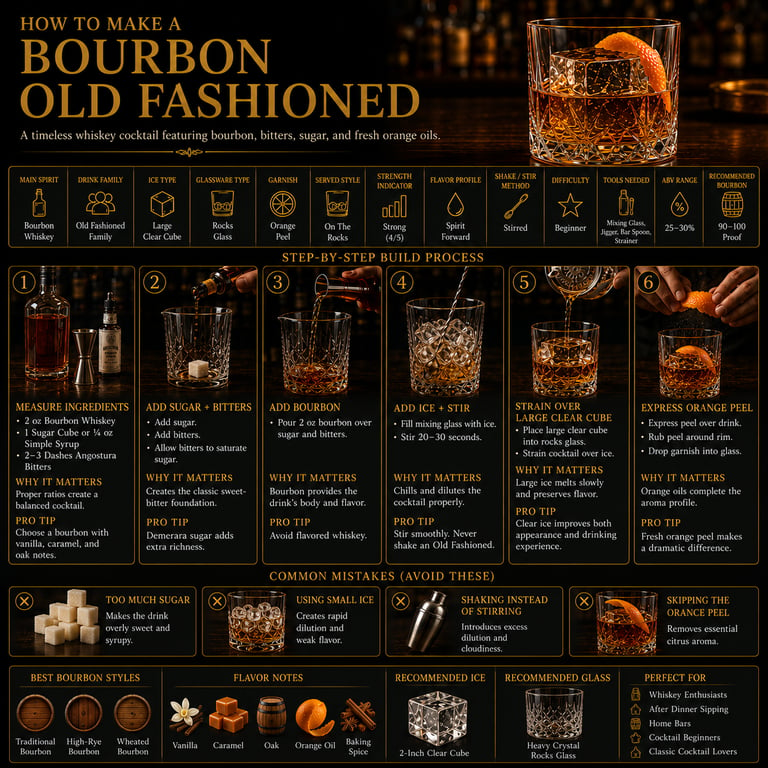
Old Fashioned Family
Rich. Direct. Structured.
Sour Family
Bright. Acid-driven. Balanced.
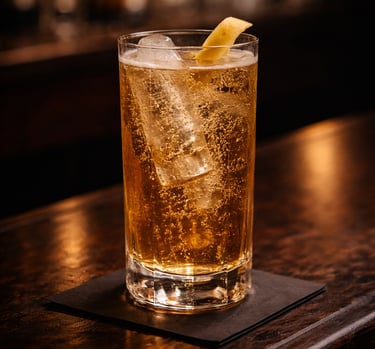
Highball Family
Effervescent. Precise. Refreshing.
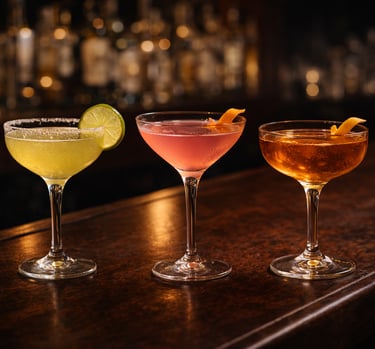
Daisy Family
Vibrant. Layered. Expressive.
© 2026 Barkeepers Buzz. All rights reserved.
Barkeepers Buzz
Master cocktails, spirits, and bar knowledge with clarity and precision. Built for serious home enthusiasts.
Crafted with respect for the culture — and the responsibility that comes with it.
For educational purposes only. Intended for legal drinking age audiences. Please drink responsibly.
General Inquiries: