
Stirred vs Shaken: How Ice Changes the Outcome
Discover how ice impacts cocktail quality by affecting dilution, texture, and clarity in stirred versus shaken drinks for better home bartending.
ICE & TEMP GUIDES
Barkeepers BuzzBlog Editorial Team - Led by AJ “Buzz” Eichman
2/27/20265 min read
When mixing cocktails, the stirred vs shaken debate is almost as classic as the drinks themselves. While recipes and flavors get most of the attention, I’ve found that the way ice interacts during mixing is a huge factor in how the final drink turns out. Ice is not just frozen water—it’s about clarity, how much it breaks up, how fast it melts, and how it keeps the drink cold over time. All these affect your cocktail’s texture, aroma, look, and taste.
In this post, I wanted to dig into the science of ice in stirred vs shaken cocktails, clear up some myths, and share practical tips for when ice really makes a difference behind your home bar. Ice is not just frozen water—it’s about clarity… (learn more about clear ice vs cloudy ice here).
Quick Verdict
- Shaking breaks ice into shards, chilling drinks quickly but diluting more, creating a frothy, cloudy texture.
- Stirring keeps ice intact, letting drinks chill slower with less dilution, resulting in a smooth, clear, spirit-focused cocktail.
- Clear ice melts more slowly since it has fewer trapped air bubbles and impurities, helping keep temperature steady.
- Shaking is great for aerating ingredients like juice or egg white, while stirring is ideal for gentle spirit blends.
The Science of Ice: Dilution, Nucleation, and Temperature Stability
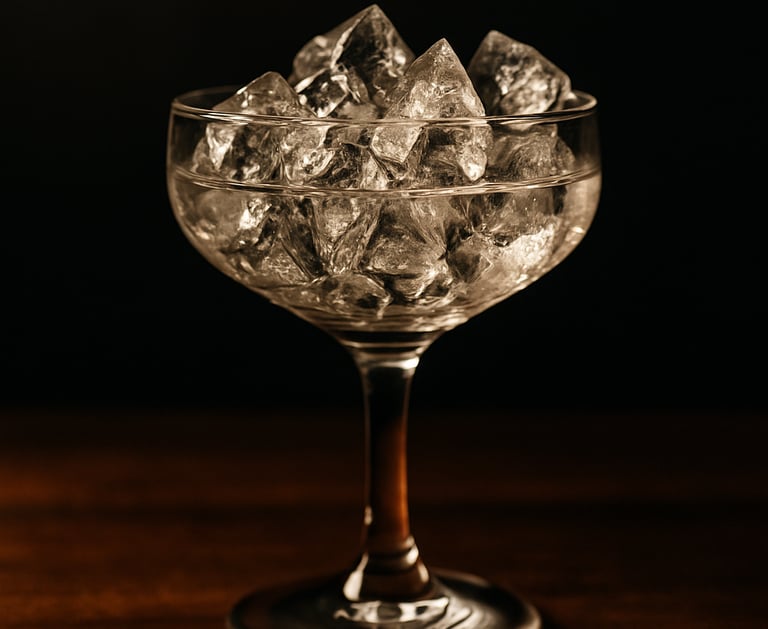
Ice clarity actually plays a bigger role than I expected in cocktail quality. Clear ice freezes slowly, trapping fewer air bubbles or minerals. Because of this, it has fewer nucleation points—these are spots where ice starts melting. Less melting means clearer, more stable ice that chills longer without watering your drink too fast.
- Dilution Rate: Cloudy ice melts faster because it has more nucleation points, which speeds up water seeping into your cocktail.
- Temperature Stability: Denser, clear ice keeps your drink cold longer without over-diluting.
- Texture Impact: Shaking breaks bigger cubes into shards, increasing the surface area and speeding chilling and dilution.
Understanding these properties helps explain why slower dilution is key for spirit-forward cocktails—keeping balance and clarity, especially when you consider the full dilution curve and why ice shape matters.
Shaken Cocktails: Ice Shards, Aeration, and Dilution
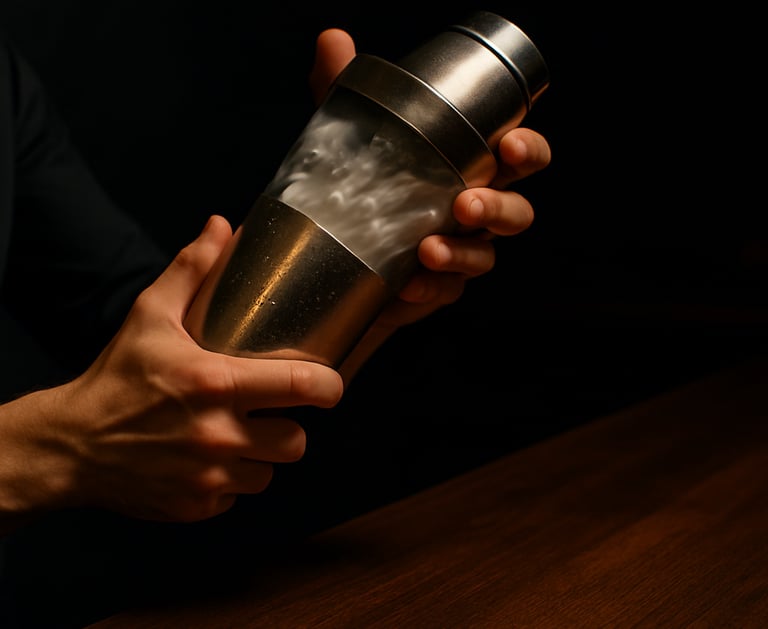
When you shake, the ice inside the shaker gets knocked around hard and breaks into smaller shards. From what I tested over a few shifts, this creates:
- More ice surface area in contact with the liquid, which cools the cocktail faster but also dilutes it more.
- Tiny air bubbles mixed in (aeration), which gives drinks like Margaritas or cocktails with egg white a light, frothy texture.
- A cloudy appearance caused by microscopic ice shards suspended in the drink.
Shaken cocktails usually hit the right dilution and chill in about 12–20 seconds, especially when using the best ice for shaken cocktails, which is faster than stirring. The texture felt notably different—brighter and more mixed, but definitely a bit more diluted. This makes shaking the better method when your cocktail has citrus, dairy, or ingredients that benefit from thorough emulsification.
After shaking, using a proper cocktail strainer is important to catch those ice shards and keep the pour clean.
Stirred Cocktails: Clarity and Controlled Dilution
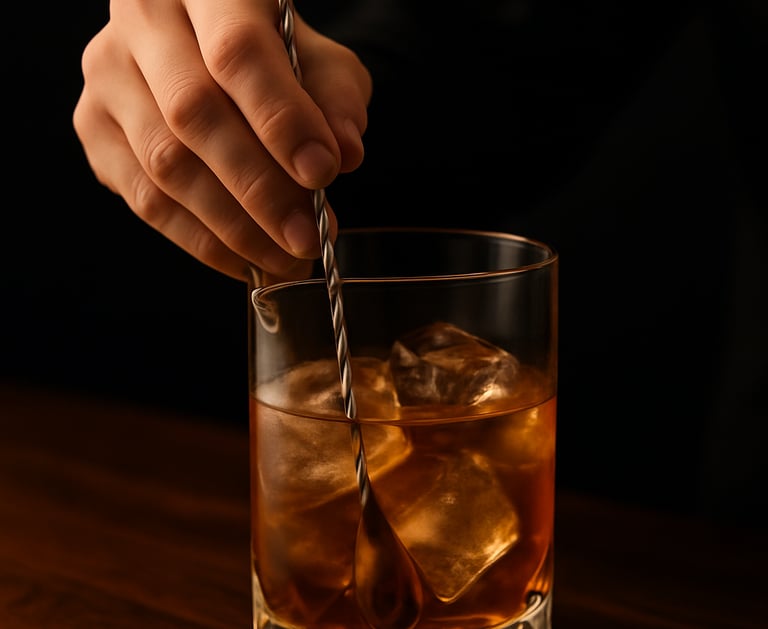
Stirring is a quieter process. Instead of smashing ice to bits, you gently move the liquid over intact cubes and let them melt gradually. From my experience experimenting with this:
- Dilution happens slowly and predictably, maintaining a good alcohol balance.
- Drinks stay clear and transparent, free from ice shards in suspension.
- The texture is smooth and velvety, allowing subtle spirit flavors to really shine.
Mixing glasses often use large, clear ice cubes that melt slowly, keeping drinks cold without watering them down too quickly. That’s why stirring suits spirit-forward cocktails like Martinis or Manhattans, where clarity and aroma are priorities.
Mixing glasses often use large, clear ice cubes or spheres that melt slowly—something you’ll notice when comparing nugget ice vs cubes vs spheres for different drink styles.
Ice's Role in Texture and Aroma Perception
Ice impacts more than just temp and dilution—it subtly affects how you experience texture and aroma too.
- Texture: Shaken drinks have that light, frothy mouthfeel from aeration, while stirred drinks come across silkier and more substantial.
- Aroma: Quickly chilling with ice shards can mute some aromas, while the gentle approach of stirring preserves more of the volatile flavor compounds.
Realizing this helped me adjust the method depending on what side of the flavor and aroma spectrum I wanted to highlight.
Classic Examples: Why Some Cocktails Are Shaken or Stirred
- Martini: Usually stirred to keep it crystal clear, avoid cloudy ice shards, and highlight the spirit’s character.
- Margarita and Daiquiri: Shaken to mix citrus thoroughly and achieve that desirable frothy texture, where a bit of cloudiness isn’t a dealbreaker.
Common Mistakes with Ice in Mixing
- Shaking spirit-only cocktails: This can actually overdilute and cloud drinks meant to stay clear and strong.
- Stirring drinks with egg whites or citrus: Stirring won’t emulsify properly, leading to separation.
- Overstirring: Dilutes your drink past the sweet spot—usually aim for 30–45 seconds.
- Shaking carbonated mixers: This is risky and can cause the shaker to explode.
- Using warm or low-quality ice: It melts too fast and may introduce off-flavors.
Practical Takeaways for Home Bartenders
- Use clear, large ice cubes in your mixing glass for stirred cocktails—this helps control temperature and dilution more precisely.
- Shake cocktails with juice, dairy, or egg whites for 12–20 seconds to chill and aerate properly.
- Always strain shaken drinks well to remove ice shards with a good cocktail strainer.
- Avoid shaking carbonated drinks—they just don’t mix safely that way.
- Invest in solid tools like Boston shakers and quality mixing glasses to get better results.
- Keep your ice fresh and cold; warm or cloudy ice can ruin drink quality quickly, which is why knowing how to store ice without ruining clarity or flavor matters.
FAQ
Should a Martini be shaken or stirred?
Traditionally stirred to keep it clear, smooth, and focused on the spirit without unnecessary dilution or ice shards.
How does ice affect dilution in shaken vs stirred drinks?
Shaking breaks ice into tiny shards, speeding up dilution by increasing surface area. Stirring melts ice slowly and steadily, controlling dilution better.
What is clear ice and why does it matter?
Clear ice freezes slowly and traps fewer air bubbles and impurities, making it melt slower and keep your drink colder longer with less dilution. If you want to improve clarity from the start, proper freezer planning for clear ice production makes the process more consistent.
Why do shaken drinks often look cloudy?
The ice breaks into tiny shards and air bubbles get mixed in during shaking, scattering light and causing cloudiness.
Can you shake carbonated cocktails?
No, shaking carbonated mixers builds pressure dangerously and can cause accidents.
How long should you stir or shake a cocktail?
Stirring usually takes 30–45 seconds for gradual dilution. Shaking is quicker but more vigorous, around 12–20 seconds.
What tools improve ice control for cocktails?
Quality mixing glasses, Boston shakers, and cocktail strainers all help manage ice interaction and elevate your final drink.
Ice might seem simple, but it’s a powerful factor in cocktail quality. Whether you stir or shake, how the ice behaves changes dilution, texture, clarity, and aroma. Getting a grip on the science behind ice helped me make better choices—and I hope it does the same for you as you step up your home bartending game.
Cheers to mixing smarter and mastering how ice shapes your cocktails!
© 2026 Barkeepers Buzz. All rights reserved.
Barkeepers Buzz
Master cocktails, spirits, and bar knowledge with clarity and precision. Built for serious home enthusiasts.
Crafted with respect for the culture — and the responsibility that comes with it.
For educational purposes only. Intended for legal drinking age audiences. Please drink responsibly.
General Inquiries: