
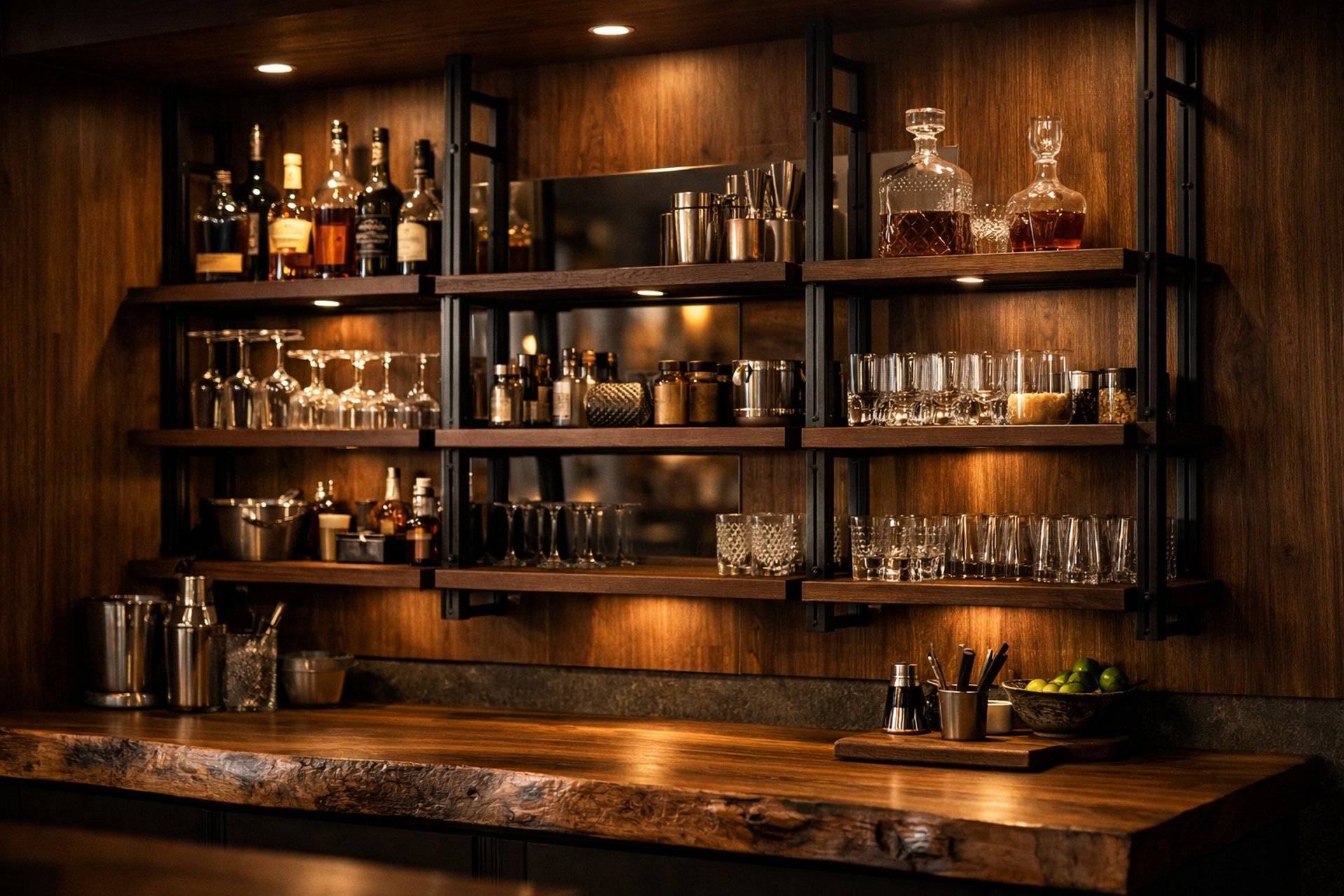
Best Back Bar Shelving Systems for Home Bars
Structured Display. Reinforced Storage. Architectural Presence.
A serious home bar is not only about storage.
It is about presentation and accessibility.
Back bar shelving determines:
Bottle visibility
Glassware access
Lighting integration
Weight distribution
Structural balance
Without proper shelving, a bar becomes cluttered.
With structured shelving, a bar becomes intentional.
Back bar shelving is not décor.
It is infrastructure for organization and presentation.
Transparency Note: We may earn a commission from qualifying purchases. Product selections are made independently and are not influenced by manufacturers.
What Is Back Bar Shelving?
Back bar shelving refers to the shelving system installed behind a bar counter to display and store:
Liquor bottles
Wine bottles
Glassware
Bar tools
Decorative elements
Unlike general wall shelves, back bar systems are:
Designed for weight-bearing
Often reinforced with metal framing
Built for repeated access
Frequently integrated with lighting
They must handle:
Dense bottle weight
Daily movement
Visual exposure
Function before aesthetics.
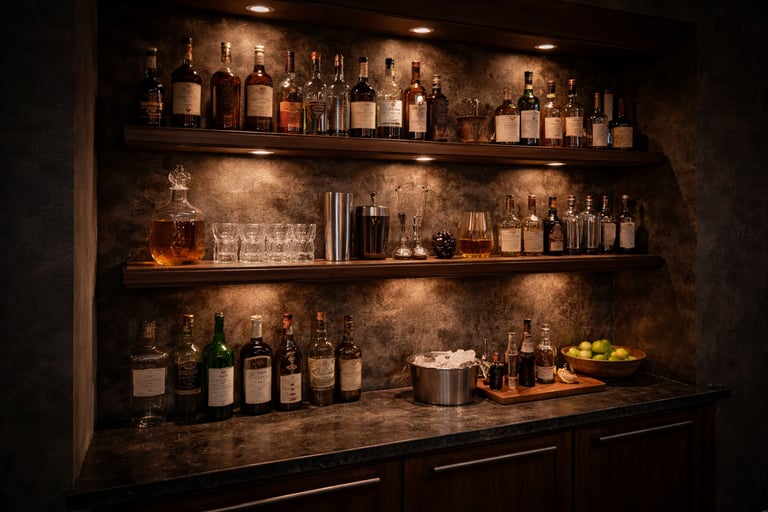
Why Shelving Structure Matters
A standard 750ml liquor bottle weighs approximately 2.5–3 pounds.
A fully stocked back bar with 25 bottles:
75+ pounds of static weight.
Add glassware and accessories:
Weight increases rapidly.
Weak shelving:
Warps
Sags
Pulls anchors from drywall
Becomes unsafe
Reinforcement is not optional.
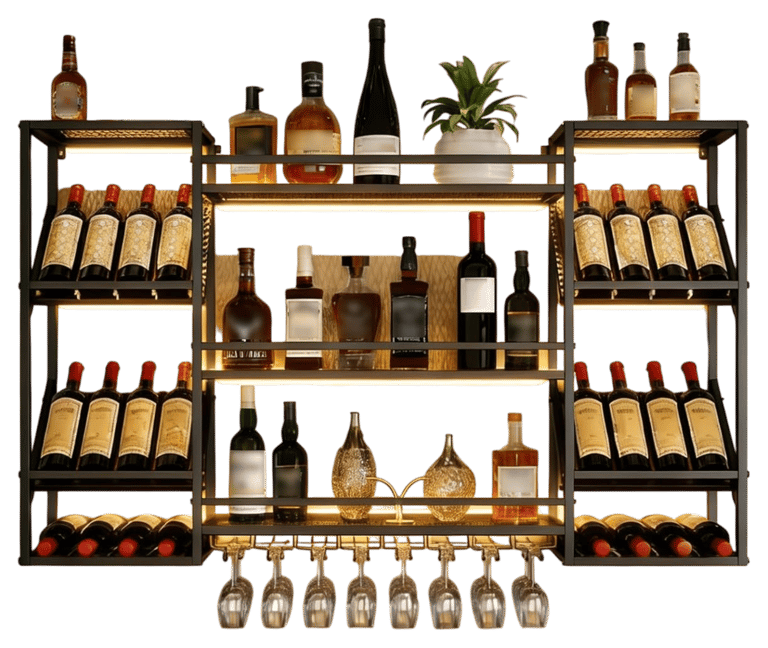
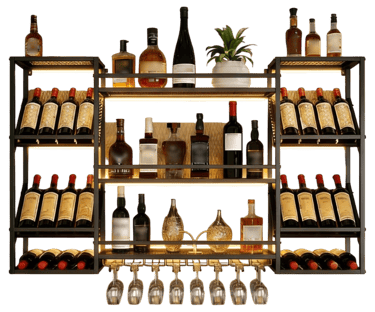
GFFQLXHT Wall Mounted Bar Rack
The GFFQLXHT Wall Mounted Bar Rack strikes one of the best balance points in this category because it delivers the look of a full back bar display system without becoming oversized, overly decorative, or difficult to integrate into a real home bar setup.
What makes this rack stand out is usability. The 9.8-inch depth gives it enough space for full liquor bottles, decanters, and glassware without feeling cramped, while the vertical wall-mounted layout creates a true “back bar” presentation that works especially well in basement bars, whiskey rooms, and entertainment spaces.
The iron construction also gives it a more substantial feel than many lightweight floating shelves. It leans into a modern-industrial style without becoming too commercial or too minimalist, which makes it easier to pair with:
walnut bars
black cabinetry
LED lighting
speakeasy-inspired setups
golf simulator lounges
Specs (Quick Breakdown)
Material: Iron
Style: Modern / Industrial
Mount Type: Wall Mounted
Dimensions: 39.37"W x 9.8"D x 35.43"H
Weight: 33 lbs
Finish: Black
Best Use Case: Whiskey displays and modern home bars
Why This Wins
The GFFQLXHT works because it balances presentation, storage, and usability better than most back bar shelving systems in this price range.
Unlike ultra-thin floating shelves, the deeper design actually accommodates real bottle storage comfortably while still maintaining a clean display-focused layout.
It also creates a much stronger “finished bar” appearance than simple floating shelves or countertop organizers.
👉 It is not the largest system here—but it is one of the easiest to integrate into a real home bar without overwhelming the space.
BUZZ'S TOP PICK
GFFQLXHT Wall Mounted Rack
Best for Overall
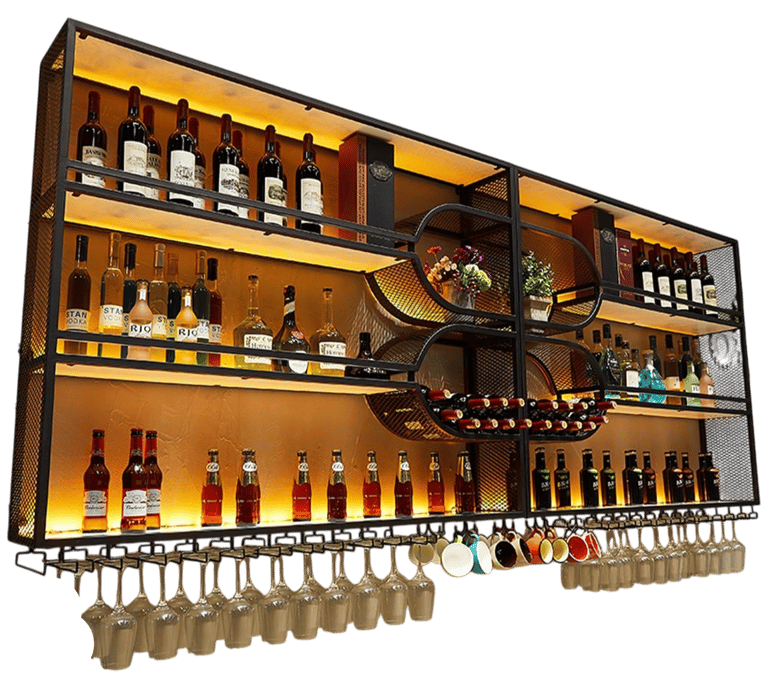
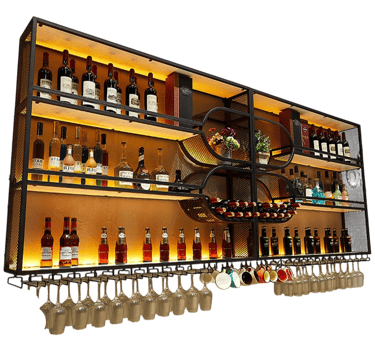
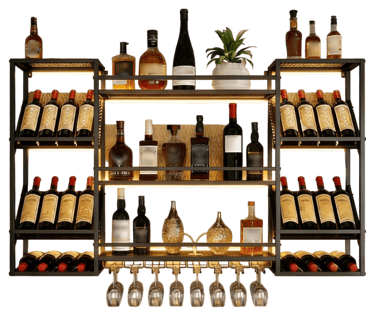
Dawselod 94.5" Wall Mounted Rack with LED
The Dawselod LED Wall Mounted Rack is built to become the centerpiece of the room. This is less of a simple shelving system and more of a full visual back bar display designed around lighting, presentation, and atmosphere.
The integrated LED lighting dramatically changes how bottles and glassware look once installed. Warm backlighting adds depth to whiskey bottles, improves glass reflections, and gives the entire room a more upscale cocktail-bar feel without requiring additional accent lighting.
At roughly 55 inches wide and 50 inches tall, the system creates a true feature wall effect that works especially well in:
larger home bars
basement lounges
golf simulator spaces
speakeasy-style entertainment rooms
Specs (Quick Breakdown)
Material: Iron
Style: Modern
Mount Type: Wall Mounted
Dimensions: 55"W x 9.8"D x 50"H
Weight: 80 lbs
Lighting: Integrated LED display lighting
Best Use Case: Large statement back bars
Why This Wins
The Dawselod succeeds because it transforms the visual atmosphere of the room more than any other shelving system in this group.
The combination of:
vertical presentation
integrated lighting
oversized structure
black metal framing
creates a true cocktail-lounge aesthetic that standard floating shelves simply cannot match.
👉 This is one of the strongest options for people who want their back bar to become part of the room design instead of just storage.
BUZZ'S TOP PICK
Dawselod LED Wall Rack
Best Statement Piece
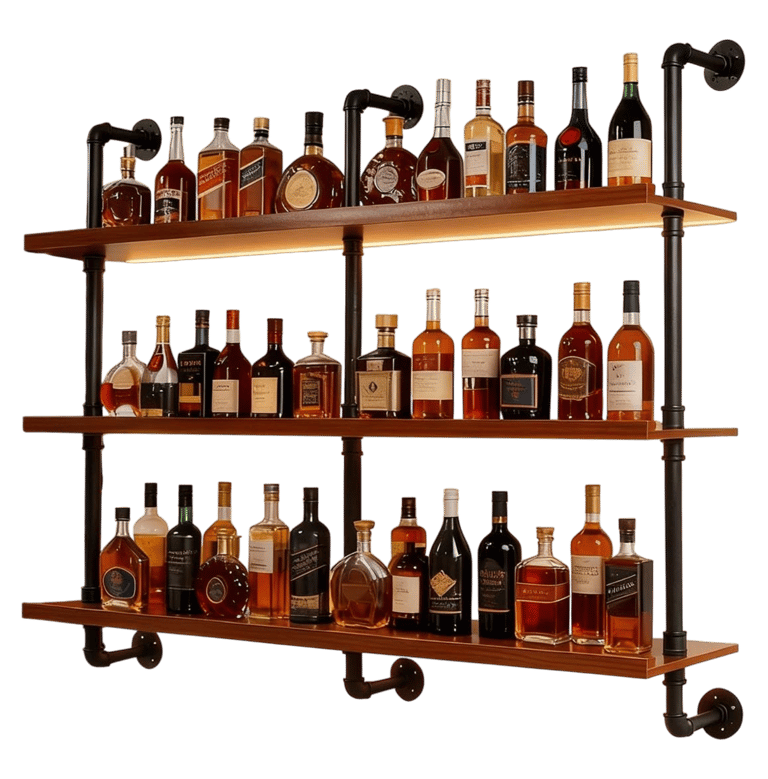
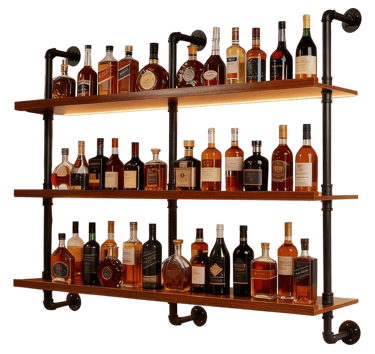
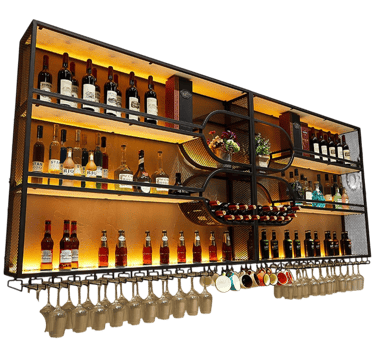
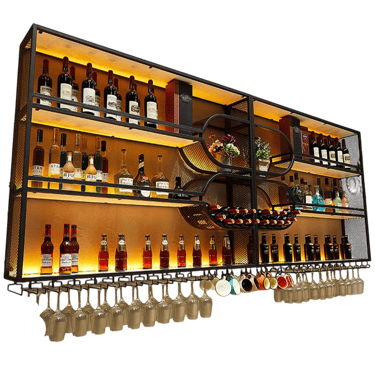
55" Modern Wall Mounted Wine Rack with LED
The 55" Modern Wall Mounted Wine Rack with LED takes a cleaner, more contemporary approach to back bar shelving. Compared to larger industrial systems, this setup focuses more on sleek presentation, integrated lighting, and modern wall styling.
The LED lighting helps create a softer ambient glow that works particularly well with:
whiskey bottles
decanters
glassware
mood lighting
without requiring a massive wall installation.
Its more compact footprint also makes it easier to integrate into:
condos
apartments
smaller basement bars
modern entertainment spaces
where oversized shelving can quickly overwhelm the room.
Specs (Quick Breakdown)
Material: Engineered wood and metal
Style: Modern LED display
Mount Type: Wall Mounted
Dimensions: 55"W x 8.6"D x 47"H
Weight: Approx. 22 lbs
Lighting: Integrated LED lighting
Best Use Case: Modern compact back bars
Why This Wins
This system works because it delivers the visual impact of illuminated back bar shelving without requiring the size and installation commitment of larger industrial-style systems.
The slimmer design feels cleaner and more modern while still providing enough room for:
bottle presentation
decorative styling
glassware display
ambient lighting
👉 It is one of the easiest LED back bar systems to integrate into smaller modern spaces.
BUZZ'S TOP PICK
55" LED Back Bar Rack
Best Modern Design
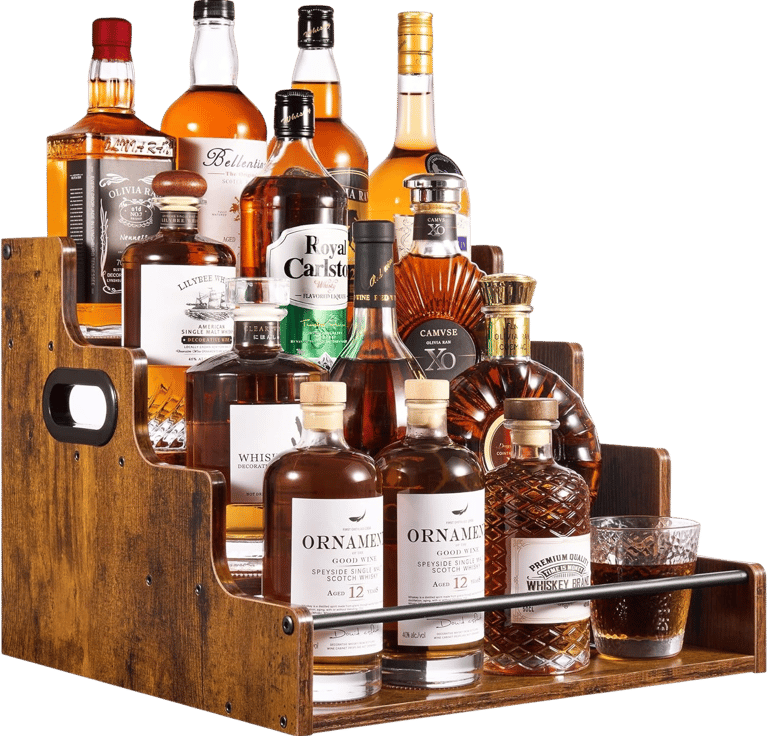
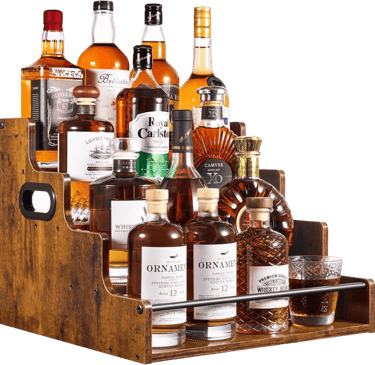
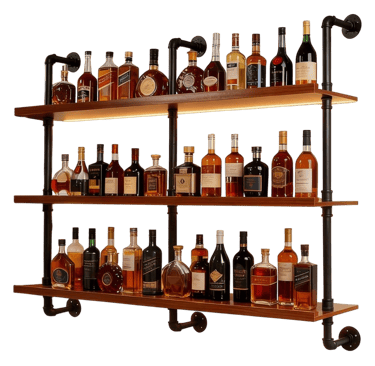
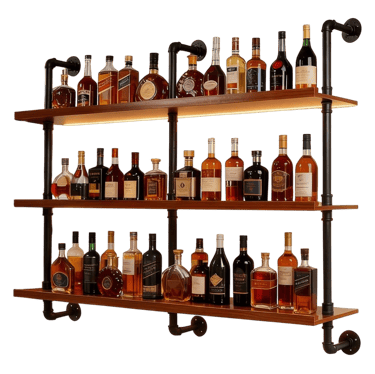
YQBRAO 4-Tier Tiered Liquor Bottle Display
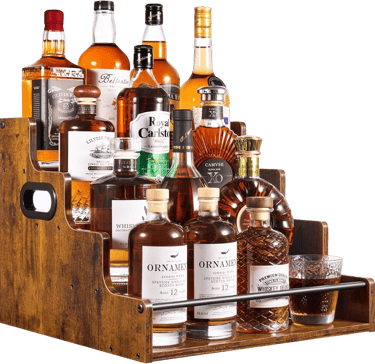
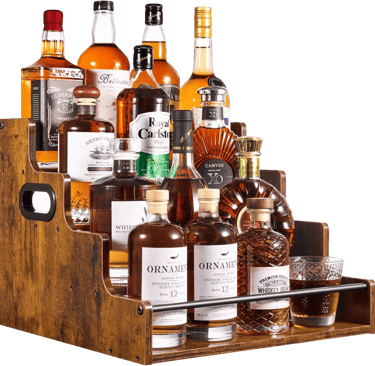
The YQBRAO 4-Tier Display takes a completely different approach from traditional wall-mounted back bar shelving. Instead of acting as a permanent display wall, it focuses on countertop organization, visibility, and easy bottle access in smaller spaces.
The stepped tiered layout is the biggest advantage. By elevating bottles in layers, the display improves visibility and label readability while keeping frequently used bottles easier to access during entertaining or cocktail prep.
This style works especially well for:
smaller home bars
apartment setups
secondary whiskey displays
coffee syrup organization
countertop liquor stations
where full wall shelving may not be practical.
Specs (Quick Breakdown)
Material: Wood and metal
Style: Rustic industrial
Layout: 4-tier stepped display
Capacity: Approx. 16 bottles
Placement: Countertop
Weight: Approx. 6.5 lbs
Best Use Case: Small-space liquor organization
Why This Wins
The YQBRAO succeeds because it maximizes bottle visibility without requiring wall installation or large-scale shelving systems.
The stepped display layout keeps bottles easy to see, easy to access, and visually organized while maintaining a relatively compact footprint.
👉 This is one of the better options for people who want cleaner liquor organization without committing to full back bar construction.
BUZZ'S TOP PICK
YQBRAO 4-Tier Display
Best Small Space
Types of Back Bar Shelving Systems
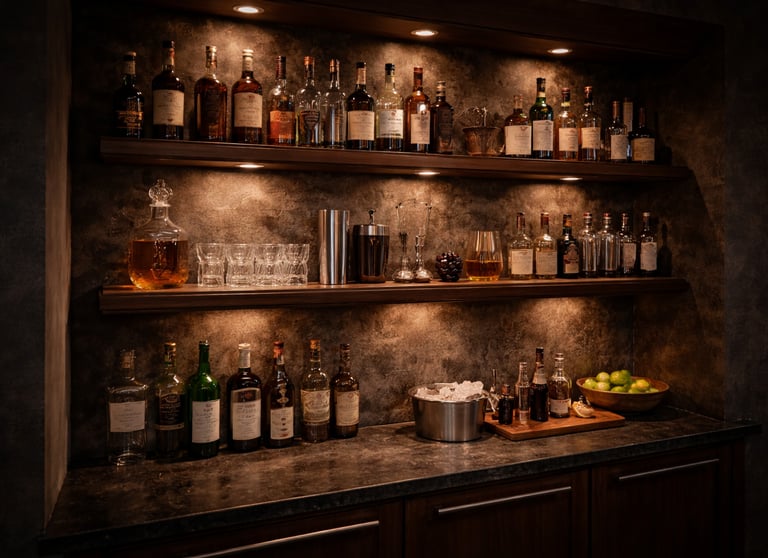
Floating Shelves
Minimalist & Modern
Floating shelves create a clean, open look.
Best For:
Modern bar builds
Minimal bottle collections
Decorative displays
Advantages:
Clean aesthetic
Flexible spacing
Visual openness
Limitations:
Must be anchored into studs
Lower weight capacity unless reinforced
Floating shelves are design-forward but require structural discipline.
Bracket-Supported Shelving
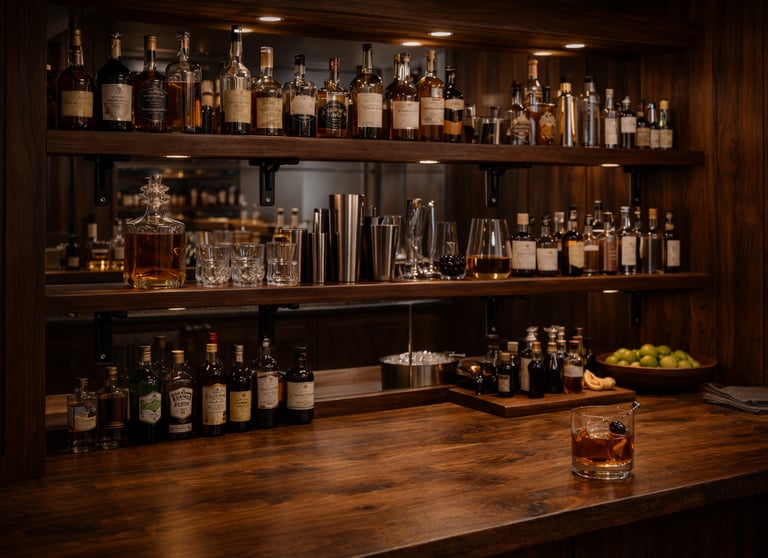
Reinforced & Practical
Shelves supported by visible metal brackets.
Best For:
Heavy bottle collections
Industrial design builds
Basement lounge bars
Advantages:
Higher weight capacity
Easier installation
Adjustable height
Limitations:
Visible hardware
For serious bottle weight, brackets outperform minimal systems.
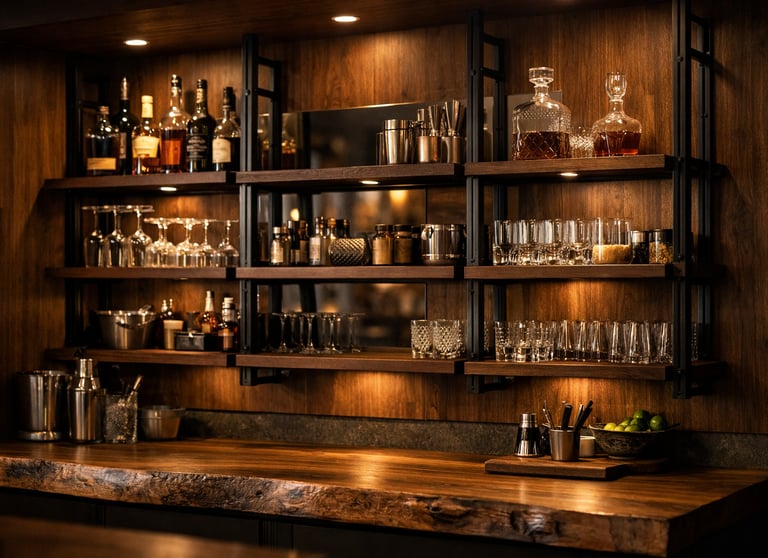
Modular Back Bar Systems
Structured Multi-Tier Installations
Full multi-level shelving systems often include:
Metal framing
Integrated lighting
Adjustable shelf heights
Best For:
Permanent installations
High-volume bottle storage
Design-focused builds
These systems move into architectural territory.
Materials Matter
Material selection affects both durability and appearance.
Metal Framing
High strength.
Industrial look.
Excellent weight-bearing capacity.
Glass Shelves
Visual lightness.
Best for lighter loads.
Requires tempered glass.
For serious hosting and bottle density → wood + metal reinforcement is optimal.
Solid Wood
Strong.
Traditional.
Warm aesthetic.
Must be sealed to resist moisture.
Engineered Wood (MDF)
More affordable.
Less moisture-resistant.
Lower long-term durability.
What to Look for in Quality Back Bar Shelving
Shelf Thickness
Thin shelves warp.
Look for:
1–1.5 inch thickness minimum for wood.
Lighting Compatibility
Backlighting enhances:
Bottle presentation
Depth
Visual hierarchy
Look for systems compatible with:
LED strip lighting
Under-shelf lighting
Lighting elevates perceived build quality.
For serious hosting and bottle density → wood + metal reinforcement is optimal.
Weight Capacity
Check rated load capacity.
Minimum recommendation:
40–75 pounds per shelf.
Anchor System
Use:
Stud anchoring
Heavy-duty wall anchors
Toggle bolts for drywall (if necessary)
Never rely solely on drywall screws.
Shelf Depth
Standard bottle depth:
3–4 inches.
Ideal shelf depth:
10–12 inches minimum.
Too shallow limits flexibility.
Size Recommendations by Bar Type
Mid-Size Dedicated Bar
Three-tier bracket-supported system
Reinforced mounting
Mixed bottle and glass storage
Compact Bar Setup
Two floating shelves
10–12 inch depth
Limited bottle display
Full Bar Installation
Multi-level modular system
Integrated lighting
Architectural framing
Heavy-duty anchors
Back Bar Shelving vs Cabinets
Cabinets:
Conceal bottles
Reduce dust exposure
Hide clutter
Shelving:
Displays collection
Improves accessibility
Elevates visual presence
Most serious bars use both.
Display primary bottles.
Store backups inside cabinets.
Common Mistakes to Avoid
• Using decorative shelves not rated for weight
• Failing to anchor into studs
• Choosing insufficient shelf depth
• Ignoring bottle height clearance
• Overcrowding shelves
Plan spacing around actual bottle dimensions.
Quick Picks for Your Home Bar
GFFQLXHT Wall Mounted Bar Rack
Industrial wall-mounted shelving with balanced storage and display


BUZZ PICK – Best Overall
Dawselod LED Wall Mounted Rack
Large LED back bar shelving built for dramatic bottle displays
BUZZ PICK – Best Statement
55" Modern Wall Mounted Rack with LED
Clean LED shelving with a sleek modern back bar aesthetic
BUZZ PICK – Best Modern
YQBRAO 4-Tier Liquor Bottle Display
Compact tiered bottle display designed for smaller home bars
BUZZ PICK – Best Small
Frequently Asked Questions
How much weight can back bar shelves hold?
Quality shelves should support at least 40–75 pounds per shelf when properly anchored.
Do shelves need to be anchored into studs?
Yes. Stud anchoring dramatically increases safety and longevity.
What is the ideal shelf depth for liquor bottles?
10–12 inches accommodates most standard bottles comfortably.
Are floating shelves strong enough for liquor bottles?
Yes, if properly reinforced and anchored into studs.
Should shelves include lighting?
Integrated LED lighting enhances visibility and elevates presentation quality.
How many shelves should a home bar have?
Most dedicated bars benefit from 2–4 tiers depending on ceiling height.
Is wood better than metal?
Wood offers warmth and aesthetic appeal. Metal increases structural strength. Combination systems work best.
Can glass shelves hold liquor bottles?
Tempered glass shelves can, but load ratings must be confirmed.
Should bottles be stored horizontally?
Spirits should be stored upright to prevent cork degradation.
Do shelves increase home value?
Well-designed bar shelving can enhance perceived value in finished basement installations.
Building Intelligently:
Integrating Shelving Into Your Bar System
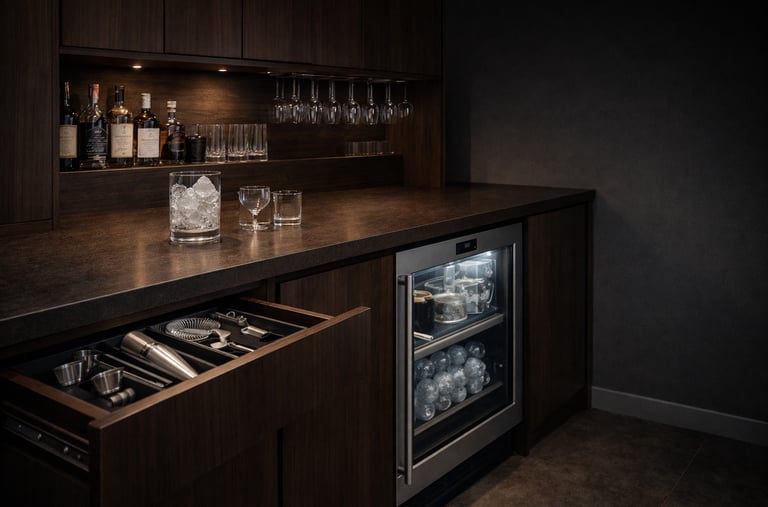
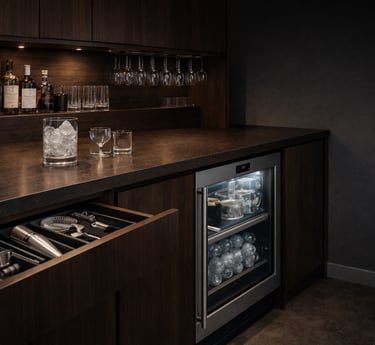
Back bar shelving should integrate into a complete infrastructure build.
Pair with:
Best Home Bar Cabinets for concealed storage
Best Under-Counter Beverage Centers for cold storage
Best Wine Fridges for Home Bars for bottle preservation
Best Kegerators for draft integration
Best Wet Bar Sinks for workflow support
Best Bar Lighting Systems for presentation enhancement
A serious home bar includes:
Reinforced shelving
Water access
Shelving is visual infrastructure.
It defines layout, flow, and identity.
Where Do You Want to Go Next?
Choose your path based on what you need right now.
You don’t need to build your home bar one piece at a time with no plan. A good setup starts with the layout, storage, appliances, lighting, and serving flow working together.
Start here if you want the full home bar framework before choosing more equipment.
Explore Everything
Before you buy more furniture or appliances, make sure the full setup makes sense. Placement, power, storage, refrigeration, lighting, and workflow all matter more than people expect.
Use this if you’re still mapping out the room before committing to gear.
Compare Before You Buy
If you don’t want to overthink it, don’t.
The YQBRAO 4-Tier Display keeps bottles visible, easy to access, and organized while fitting naturally onto smaller home bar counters and cabinets.
Start with a cart that performs well immediately and fits naturally into the room.
Just Get It Done
© 2026 Barkeepers Buzz. All rights reserved.
Barkeepers Buzz
Master cocktails, spirits, and bar knowledge with clarity and precision. Built for serious home enthusiasts.
Crafted with respect for the culture — and the responsibility that comes with it.
For educational purposes only. Intended for legal drinking age audiences. Please drink responsibly.
General Inquiries: