
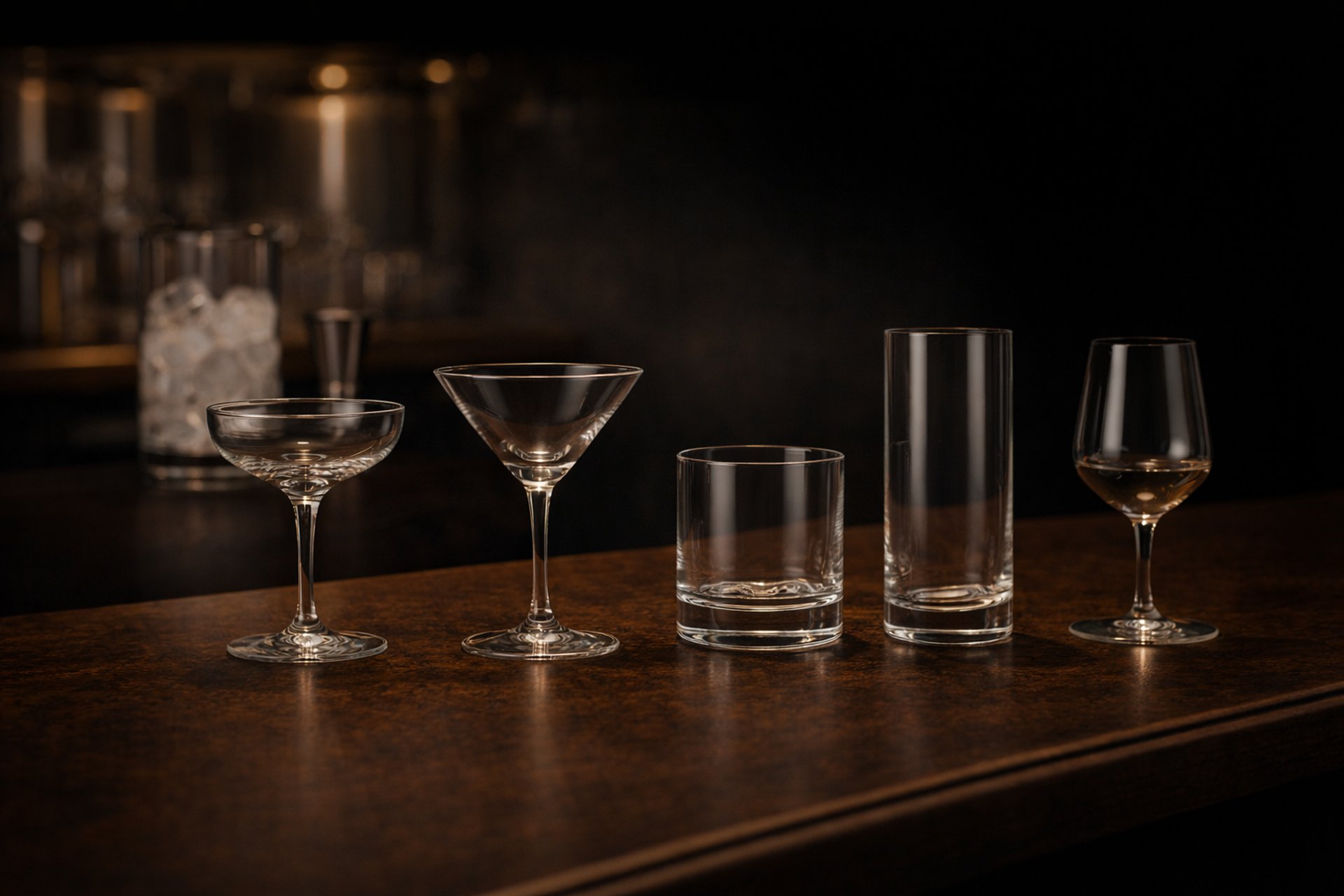
Best Highball Glasses
Tall drinks require structural control.
Carbonation retention, ice volume, dilution rate, and grip stability all depend on glass shape and proportion.
A proper highball glass should:
Preserve carbonation
Allow adequate ice volume
Maintain temperature
Feel balanced in hand
This guide evaluates height-to-diameter ratio, rim thickness, base stability, durability, and versatility.
No novelty curves.
No ultra-thin fragile cylinders.
Only functional architecture.
BEST Essential
Essential Highball Glass
Best for: DAILY MIXED DRINKS
$$
BEST Refined
Refined Highball Glass
Best for: LONG DRINKS
$$ - $$$
BEST PREMIUM
Pro Highball Glass
Best for: SERVICE ENVIRONMENTS
$$$
Transparency Note: We may earn a commission from qualifying purchases. Product selections are made independently and are not influenced by manufacturers.
What Defines a Highball Glass?
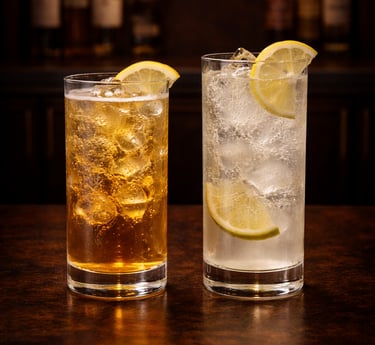
A true highball glass:
Holds 10–14 oz
Has a tall, straight-sided structure
Provides vertical space for ice and carbonation
Maintains a moderate diameter
Its height preserves effervescence by reducing surface area exposure.
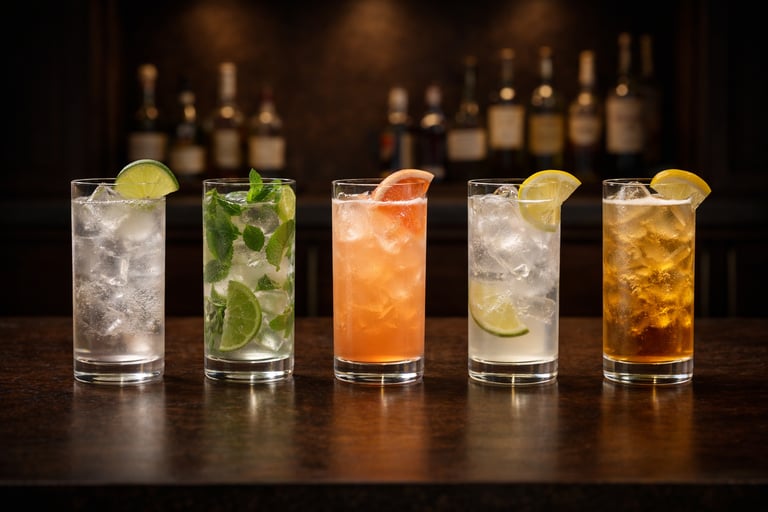
Ideal for:
Gin & Tonic
Mojito
Paloma
Tom Collins
Whiskey Highball
Highball vs Collins Glass
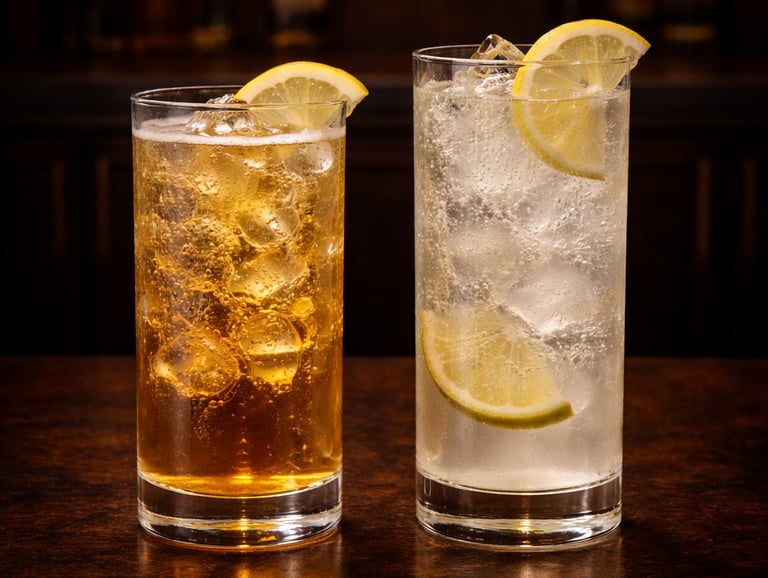
These are often used interchangeably, but subtle differences exist.
Highball:
Slightly shorter
Broader diameter
More versatile
Collins:
Taller and narrower
Designed for longer mixed drinks
For most home bars, a properly proportioned highball performs both roles effectively.
What to Look For
Prioritize:
Stable base thickness
Smooth rim finish
Straight, symmetrical walls
Dishwasher-safe durability
Comfortable grip width
Avoid:
Extremely thin glass prone to chipping
Decorative heavy etching
Excessively wide diameters that reduce carbonation control
Proportion controls function.
Choosing the Right Highball Glass
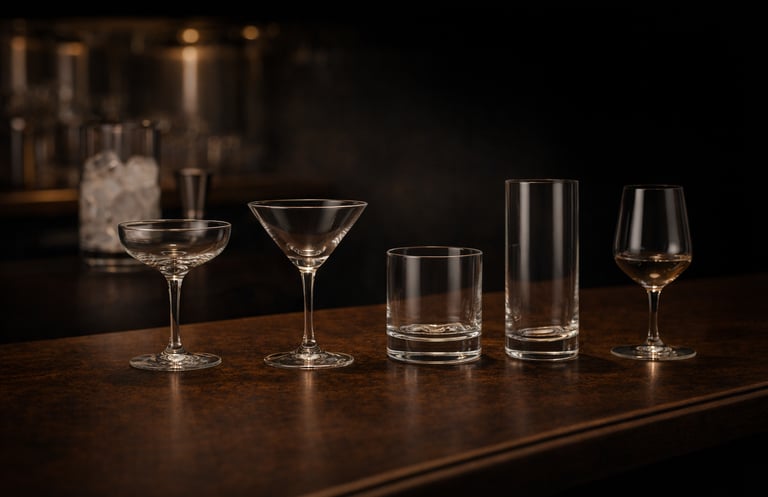
Essential · Standard Highball
The Essential tier prioritizes balanced height and durability.
These glasses provide stable base weight, moderate diameter, and reliable performance for everyday mixed drinks.
Balanced vertical proportion
Standard rim cut
Reinforced base
Compatible with common ice formats
Designed for consistent daily use and foundational bar setups.
Best suited for routine mixed drinks and carbonated builds.
Refined · Precision Highball
The Refined tier improves diameter control and rim precision.
Narrower profiles slow carbonation loss and enhance sip delivery while maintaining structural balance.
Taller, narrower profile
Thinner, cleaner rim cut
Improved weight distribution
Enhanced carbonation retention
Built for structured highballs and intentional mixed service.
Recommended for focused cocktail programs and refined home bars.
Professional · Service Highball
The Professional tier emphasizes engineered vertical geometry and durability under repetition.
Structural proportion, rim finesse, and base reinforcement are optimized for sustained service.
Engineered tall profile
Ultra-thin precision rim
Balanced service weight
Commercial-grade durability
Designed for high-volume environments and advanced mixed drink programs.
Built for disciplined service and carbonation-forward builds.
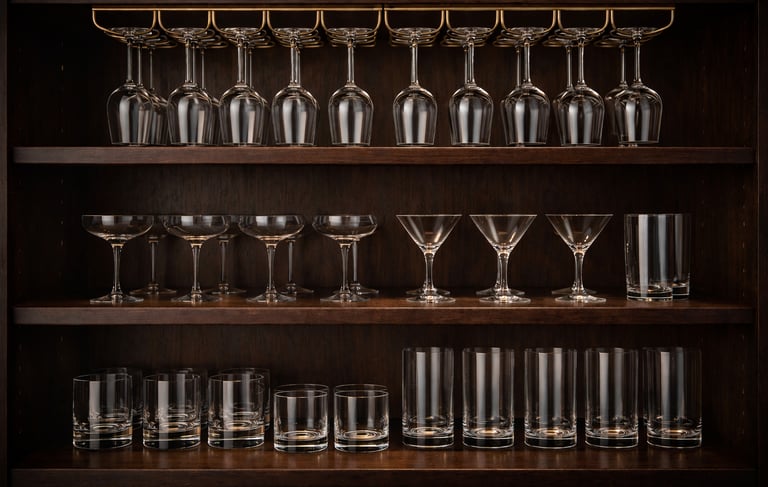
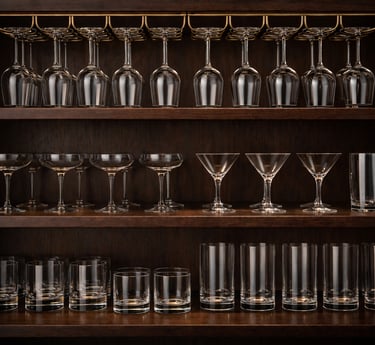
A highball glass is engineered for lengthened drinks and controlled dilution.
Its vertical geometry influences carbonation retention, ice stacking, and sip flow. Diameter affects bubble escape. Height determines dilution pacing. Base weight stabilizes tall builds.
Performance is defined by proportion — not decorative cut.
Below is a structural breakdown of the tiers that matter most.
The following selections represent the strongest structural examples within each tier.
Essential Highball
Glass
BEST FOR: DAILY MIXED DRINKS
Built for balanced height, stable base weight, and consistent carbonation retention during everyday mixed drinks.
TYPE
Standard Highball
RIM PROFILE
Standard Cut
PROPORTION
Balanced Vertical
DURABILITY
Reinforced Glass
WHY IT WINS Essential
Stable with standard ice formats
Maintains carbonation during service
Durable for daily use
USE CASE
Gin & Tonic
Whiskey Highball
Everyday carbonated builds
8.5
OVERALL SCORE
Refined Highball
Glass
BEST FOR: STRUCTURED LONG DRINKS
Built for narrower diameter control, improved carbonation retention, and cleaner rim delivery in long drinks.
TYPE
Precision Highball
RIM PROFILE
Laser-Cut Thin
PROPORTION
Tall / Narrow
DURABILITY
Refined Strength
WHY IT WINS Refined
Slower carbonation loss
Cleaner sip flow
Improved hand balance
USE CASE
Structured highballs
Premium tonics & sodas
Intentional mixed service
8.9
OVERALL SCORE
Pro/Service
Highball Glass
BEST FOR: SERVICE ENVIRONMENTS
Built for engineered vertical geometry, carbonation control, and structural durability under sustained service cycles.
TYPE
Service Highball
RIM PROFILE
Ultra-Thin Laser Cut
PROPORTION
Engineered Tall
DURABILITY
Commercial Strength
WHY IT WINS Pro
Optimized carbonation retention
Balanced service weight
Built for repetition
USE CASE
High-volume bars
Advanced mixed programs
Carbonation-forward builds
9.3
OVERALL SCORE
How We Evaluate Highball Glasses
1. Vertical Proportion & Diameter
Height and width directly affect carbonation behavior.
Narrower diameters slow bubble escape. Excessively wide glasses accelerate carbonation loss. Height determines dilution pacing and visual balance.
We assess:
Height-to-diameter ratio
Internal volume distribution
Compatibility with standard ice formats
Stability under full liquid load
Proportion determines drink performance.
2. Rim Thickness & Cut Precision
Rim profile affects sip flow and tactile perception.
Thin, precision-cut rims provide cleaner delivery and reduce interruption during carbonation-forward drinks. Thick rolled rims can disrupt flow and slightly dampen perception.
We assess:
Rim thickness consistency
Edge smoothness
Structural durability over time
Rim design influences delivery more than appearance.
3. Base Weight & Structural Stability
Highball glasses are tall. Stability matters.
A properly weighted base prevents tipping, especially with large-format ice or extended service use.
We assess:
Base thickness
Weight distribution
Center-of-gravity balance
Resistance to lateral instability
A tall glass must remain structurally grounded.
4. Ice Interaction & Displacement
Ice geometry affects dilution and carbonation movement.
A well-proportioned highball glass allows ice to stack vertically without excessive lateral movement or choke points.
We assess:
Ice stacking behavior
Vertical clearance
Dilution pacing under standard stir conditions
Glass structure must support ice mechanics.
5. Material Durability & Clarity
Highballs are frequently used and often washed repeatedly.
We evaluate:
Resistance to chipping
Clarity retention over time
Structural strength under temperature variation
Dishwasher durability (when applicable)
Refinement must coexist with durability.
What We Do Not Consider
Decorative cut patterns
Color tinting
Brand prestige
Logo placement
Packaging presentation
A highball glass is evaluated on how its structure manages carbonation, dilution, and stability — not how it appears on a shelf.
Structure determines quality.
A highball glass is designed to support carbonated and lengthened drinks over time.
Its structure influences bubble retention, ice movement, dilution rate, and sip control. We evaluate highball glasses based on proportion, material integrity, and performance during real-world service — not decorative styling.
Building Intelligently
You do not need multiple tall glass shapes.
You need:
Balanced height
Stable base
Controlled diameter
Durable construction
From there, variation becomes aesthetic preference rather than necessity.
Highball glasses are everyday architecture.
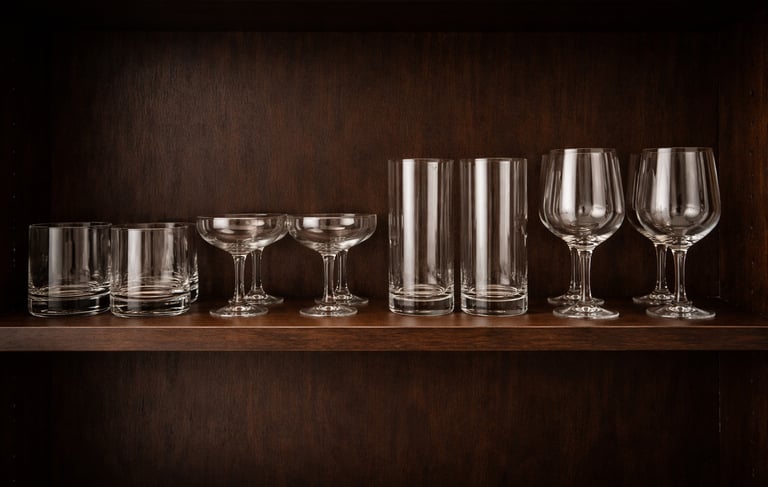
Highball Glass Frequently asked questions
1. Does glass shape affect carbonation retention?
Yes.
Narrower diameters reduce surface area exposure, slowing bubble escape. Wider glasses allow carbonation to dissipate more quickly.
Proportion directly influences carbonation behavior over time.
2. Is taller always better for a highball?
Not automatically.
Height must be balanced with diameter and base weight. Excessive height without structural stability increases tipping risk and uneven dilution.
Geometry must remain controlled.
3. What is the ideal size for a highball glass?
Most structured highballs perform best between 10–14 ounces.
This range supports proper ice stacking, carbonation retention, and balanced dilution pacing without excessive liquid volume.
4. Does thicker glass improve performance?
Thicker glass improves durability and stability but does not significantly enhance carbonation retention.
Performance is driven primarily by proportion, not wall thickness alone.
5. Are cut crystal highballs better?
Not inherently.
Cut patterns may alter grip but do not improve carbonation management or dilution control.
Structural geometry matters more than decorative treatment.
6. Does rim thickness affect the drinking experience?
Yes.
Thinner rims provide cleaner sip flow and less tactile interruption, especially in carbonation-forward drinks.
Rim precision influences delivery more than most expect.
7. Can one highball glass work for all long drinks?
A balanced universal highball can perform well across most carbonated builds.
However, extremely wide or narrow profiles may favor specific styles depending on dilution pacing and bubble retention goals.
8. Does ice format matter in a highball glass?
Yes.
Large-format ice slows dilution and reduces agitation, while smaller cubes increase surface contact and accelerate dilution.
Glass proportion must accommodate intended ice format without vertical stacking instability.
9. Are stemmed highball glasses practical?
For structured mixed drinks, no.
Stems reduce structural stability and increase fragility. Highballs are designed for grounded balance and controlled weight distribution.
10. How long should a quality highball glass last?
A well-constructed glass should maintain clarity, rim integrity, and base stability through repeated washing and handling.
Durability is determined by material strength and structural proportion — not brand positioning.
Capacity & Practicality
A set of:
4–6 highball glasses
supports most entertaining scenarios.
Highballs pair naturally with:
→ Best Ice Molds
→ Essential Tools for a Home Bar
→ Types of Cocktail Glassware
→ Techniques & Professional Skills
They are one of the most frequently used glasses in a working home bar.
© 2026 Barkeepers Buzz. All rights reserved.
Barkeepers Buzz
Master cocktails, spirits, and bar knowledge with clarity and precision. Built for serious home enthusiasts.
Crafted with respect for the culture — and the responsibility that comes with it.
For educational purposes only. Intended for legal drinking age audiences. Please drink responsibly.
General Inquiries: