
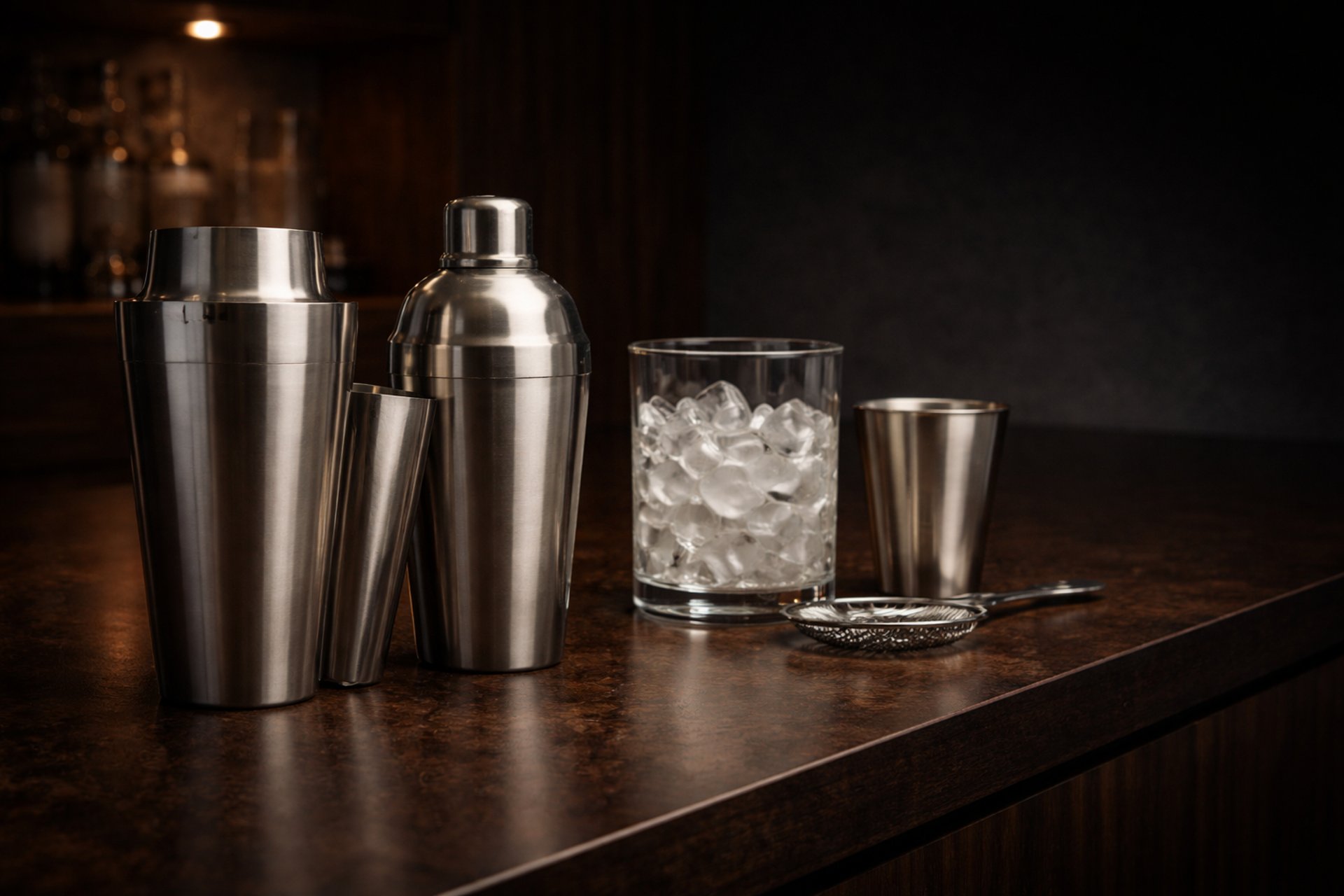
Best Cocktail Shakers
A cocktail shaker is not simply a container.
It is a temperature control system.
It introduces rapid chilling, controlled dilution, and aeration — all within seconds. The quality of the seal, weight of the metal, and construction integrity determine whether shaking is efficient or frustrating.
This guide evaluates construction quality, balance, material durability, and long-term reliability.
No novelty finishes.
No decorative kits.
Only functional tools.
BEST OVERALL
Essential Cobbler Shaker
Best for: CONTROLLED HOME USE
$$
BEST Refined
Refined Boston Shaker
Best for: REPEATED USE
$$ - $$$
BEST PREMIUM
Pro Weighted Tin Set
Best for: SERVICE ENVIRONMENTS
$$$
Transparency Note: We may earn a commission from qualifying purchases. Product selections are made independently and are not influenced by manufacturers.
Types of Cocktail Shakers
Before choosing a model, understand the structure.
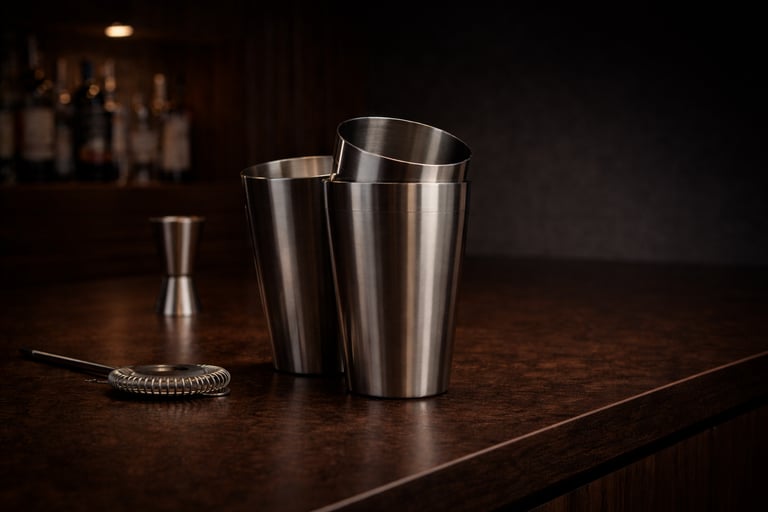
Boston Shaker
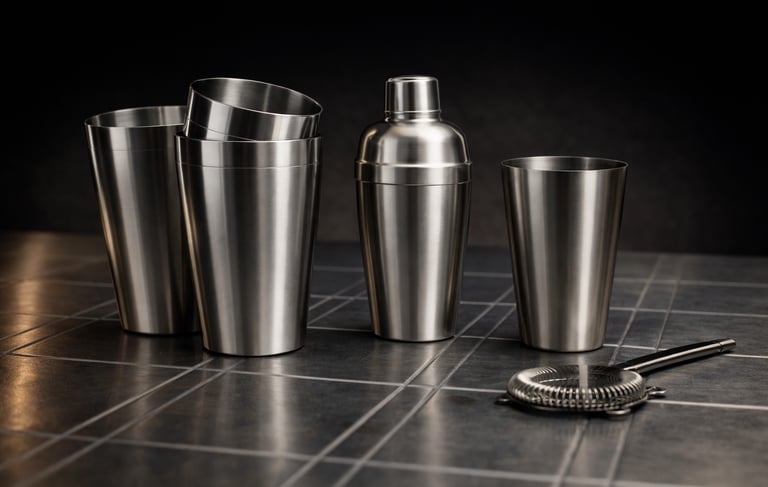
Two-piece system (metal tin + metal or glass tin).
Pros:
Strong seal when used correctly
Fast chilling
Preferred in professional environments
Boston shakers are commonly paired with a Hawthorne strainer for controlled separation after shaking.
Cons:
Requires proper strainer
Learning curve for beginners
Best for: Serious enthusiasts and long-term use.
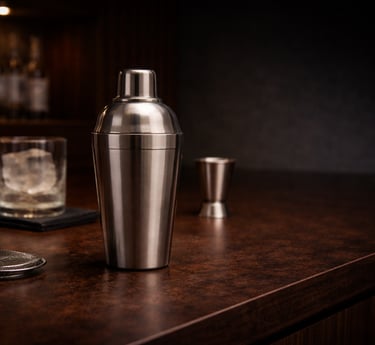
Cobbler Shaker
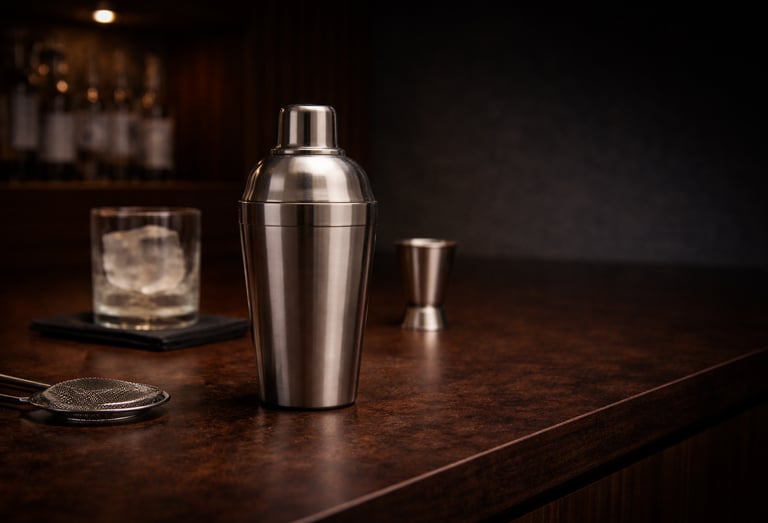
Three-piece system (tin, lid, built-in strainer).
Pros:
Beginner-friendly
All-in-one construction
Cons:
Built-in strainers can clog
Seals may stick when over-chilled
Best for: Casual or entry-level setups.
Cobbler shakers integrate a built-in strainer, making them approachable for beginners building a first home bar.
French Shaker
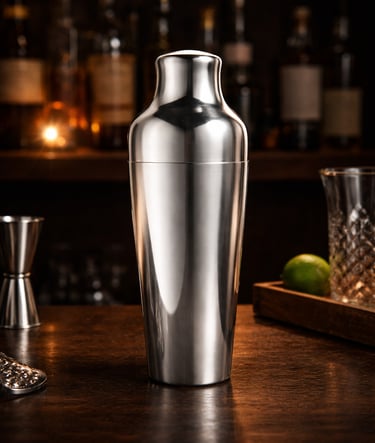
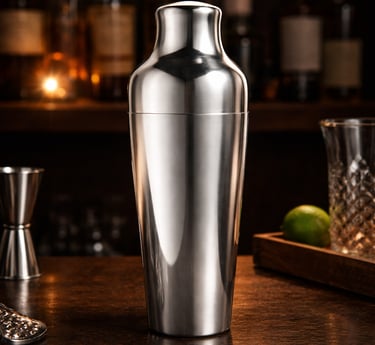
Two-piece metal construction without built-in strainer.
Pros:
Minimal design
Elegant appearance
Cons:
Requires separate strainer
Less common availability
Best for: Design-focused setups.
French shakers combine the clean form of a cobbler with the two-piece function of a Boston system.
What to Look For
A well-built shaker should have:
18/8 or 18/10 stainless steel
Proper weight and balance
Tight but releasable seal
No sharp interior welds
Dishwasher-safe construction
Avoid:
Thin stamped metal
Painted finishes that chip
Oversized novelty designs
Weight matters. Thin tins lose temperature control quickly.
Weight and material thickness directly affect chilling speed during shaking.
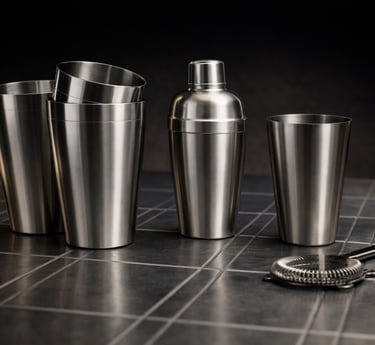
Recommended Cocktail Shakers
Essential · Cobbler Shaker
The Essential tier prioritizes simplicity and integrated control.
Its three-piece construction includes a built-in strainer and cap, making it approachable and mechanically forgiving for daily home use.
3-piece integrated design
Moderate seal engagement
Built-in strainer top
Controlled aeration
Suitable for low-to-moderate repetition
Best suited for structured home use and controlled shaking technique.
Refined · Standard Boston Shaker
The Refined tier improves seal strength and thermal transfer.
Two-piece construction increases chilling speed and aeration control while maintaining reliable release.
Tin + glass or light tin pairing
Friction seal engagement
Faster chill rate
Cleaner separation after shake
Improved structural balance
Recommended for frequent cocktail preparation and technique development.
Boston systems are widely used by bartenders focused on speed and consistency.
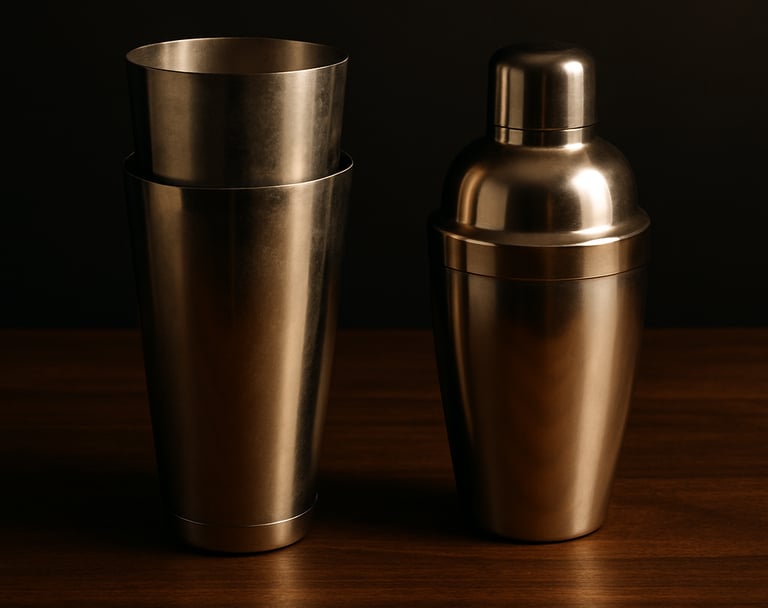
Service Grade · Weighted Tin-on-Tin Set
The Service Grade tier emphasizes structural durability and rapid thermal transfer under repetition.
Heavier gauge stainless steel and precise fit tolerance support consistent performance in high-volume environments.
Tin-on-tin construction
Heavy gauge stainless steel
Strong friction seal
Fastest chill performance
Commercial durability standards
Built for high-volume service and advanced aeration control.
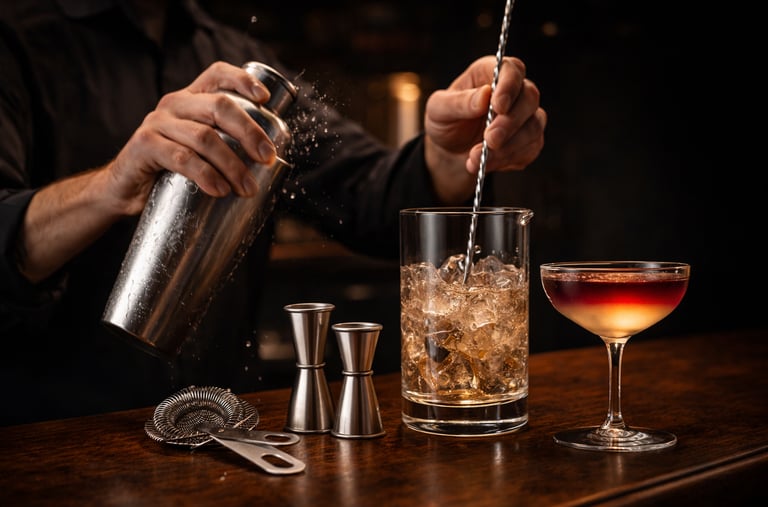
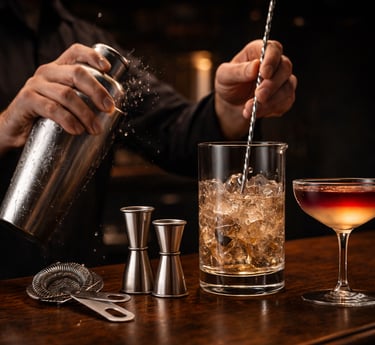
The following selections represent the strongest structural examples within each tier.
The Service Grade tier emphasizes structural durability and rapid thermal transfer under repetition.
Heavier gauge stainless steel and precise fit tolerance support consistent performance in high-volume environments.
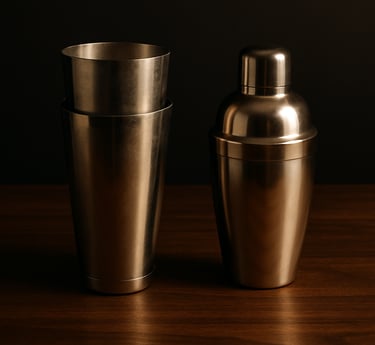
Essential Boston
Shaker
BEST FOR: CONTROLLED HOME USE
Built for faster chill and improved aeration control. The goal isn’t decoration — it’s structural balance and consistent seal release.
TYPE
2-Piece Boston
THERMAL TRANSFER
Standard
SEAL INTEGRITY
Moderate
RELEASE CONTROL
Slower
WHY IT WINS Essential
Faster temperature drop
Cleaner break after shake
Improved balance during motion
USE CASE
Daily home cocktails
Controlled shaking
Entry-level bar workflow
8.4
OVERALL SCORE
Refined Cobbler
Shaker
BEST FOR: REPEATED USE
Built for ease and contained aeration. The goal isn’t speed — it’s simplicity, integrated filtration, and stable seal engagement.
TYPE
Cobbler · Tin + Glass
THERMAL TRANSFER
Fast
SEAL INTEGRITY
Strong
RELEASE CONTROL
Reliable
WHY IT WINS Refined
Forgiving seal engagement
Integrated strainer control
Minimal technique requirement
USE CASE
Frequent cocktail builds
Entertaining
Technique development
8.9
OVERALL SCORE
Pro Weighted
Tin Set
BEST FOR: SERVICE ENVIRONMENTS
Built for rapid thermal transfer and durability under repetition. The goal isn’t aesthetics — it’s seal precision and mechanical consistency.
TYPE
Boston · Tin-on-Tin
THERMAL TRANSFER
Maximum
SEAL INTEGRITY
Commercial Grade
RELEASE CONTROL
Precision
WHY IT WINS Pro
Fastest chill rate
Predictable release under pressure
Withstands repeated service cycles
USE CASE
High-volume environments
Advanced aeration control
Professional workflow
9.3
OVERALL SCORE
How We Evaluate Cocktail Shakers
4. Release Control & Pressure Management
Rapid chilling causes contraction.
Internal pressure increases during aggressive shaking.
A well-constructed shaker separates cleanly with controlled force. Poor construction leads to binding or sudden release.
We assess:
Break predictability
Required release force
Safety under rapid temperature shifts
5. Balance & Ergonomics Under Motion
Shaking is dynamic.
Weight distribution affects control, fatigue, and aeration consistency.
We assess:
Balance between tins
Hand fit and grip security
Stability during aggressive shaking patterns
What We Do Not Consider
Decorative finishes
Brand prestige
Color coatings
Packaging
Marketing claims
A shaker is evaluated on mechanical consistency under repetition.
Structure determines quality.
A cocktail shaker is a kinetic tool.
Its performance is defined by seal integrity, thermal transfer speed, structural durability, and release consistency under pressure.
We evaluate shakers based on repeatable mechanical performance — not finish, color, or branding.
1. Seal Integrity & Fit Tolerance
A shaker must create a secure friction seal during agitation without permanent binding.
Loose seals leak.
Overly tight seals delay release and disrupt workflow.
Seal strength is one of the primary differences between Boston and Cobbler shaker systems.
We assess:
Precision of tin fit
Consistency of seal engagement
Leak resistance under full ice load
Break reliability after temperature contraction
2. Thermal Transfer Speed
Shaking is designed to chill rapidly.
Material thickness, contact surface area, and metal conductivity determine how quickly temperature drops during a standard 10–15 second shake cycle.
We assess:
Chill rate under controlled timing
Exterior frost development
Internal dilution consistency
Performance across repeated builds
3. Structural Rigidity & Material Gauge
Thin metal flexes under pressure.
Excess flex weakens seals and shortens lifespan.
Heavier gauge stainless steel improves structural stability and maintains fit tolerance over time.
We assess:
Metal thickness
Resistance to deformation
Edge strength at impact points
Long-term structural consistency
Cocktail Shaker FAQ
What is the difference between a Boston and Cobbler shaker?
A Boston shaker is a two-piece system (tin + tin or tin + glass) that relies on friction seal engagement. It chills faster and separates more cleanly under repetition.
A Cobbler shaker is a three-piece system with an integrated strainer and cap. It is mechanically forgiving but slower to chill and more prone to cap binding.
Format determines performance.
Why do professional bars prefer tin-on-tin shakers?
Tin-on-tin systems create stronger, more predictable friction seals and provide faster thermal transfer.
They are also more durable under repeated impact and temperature cycling compared to glass components.
Consistency under repetition is the primary reason.
Does heavier stainless steel improve performance?
Yes.
Heavier gauge steel improves structural rigidity, maintains seal tolerance over time, and resists deformation from impact.
It also enhances thermal mass slightly, contributing to stable chill performance during repeated use.
Why does my shaker get stuck after shaking?
Rapid chilling causes metal contraction while internal pressure increases during agitation.
If the fit tolerance is tight or the metal gauge is thin, separation may require controlled force.
Proper seal engagement — not excessive force — reduces binding.
How long should you shake a cocktail?
Typically 10–15 seconds with solid ice.
The goal is rapid chilling and controlled dilution — not extended agitation.
Over-shaking increases dilution without meaningful temperature improvement.
Does shaker type affect dilution?
Yes.
Seal strength, internal volume, and metal thickness influence both chill speed and aeration pattern.
Tin-on-tin systems generally produce faster chill rates and more consistent dilution curves compared to Cobbler systems.
However, technique remains the dominant variable.
Can a Boston shaker leak?
If properly sealed, no.
Leaks occur when:
The tins are misaligned
The seal is too shallow
The metal has warped
Ice load disrupts engagement
Seal integrity is structural, not aesthetic.
Does shaking add air to a cocktail?
Yes.
Shaking introduces aeration, creating texture and micro-foam in citrus and protein-based drinks.
The degree of aeration depends on shake intensity, internal space, and ice format.
A shaker supports aeration — it does not determine it alone.
Is glass in a Boston shaker a weakness?
In high-volume environments, yes.
Glass is more vulnerable to impact fractures and thermal stress compared to stainless steel.
For controlled home use, glass can perform adequately — but durability under repetition is lower.
How long should a quality shaker last?
A structurally sound stainless steel shaker should withstand years of repeated temperature cycling and impact without warping, seal failure, or structural fatigue.
Longevity is determined by material gauge and fit precision — not branding.
Boston vs Cobbler — Which Should You Choose?
If building a serious home bar:
Choose Boston.
If prioritizing convenience and simplicity:
Choose Cobbler.
Long-term, most enthusiasts transition to a Boston system due to seal reliability and flexibility.
If you need more help with your choice, visit: Boston vs Cobbler Page
Professional bartenders favor Boston systems for speed and workflow consistency.
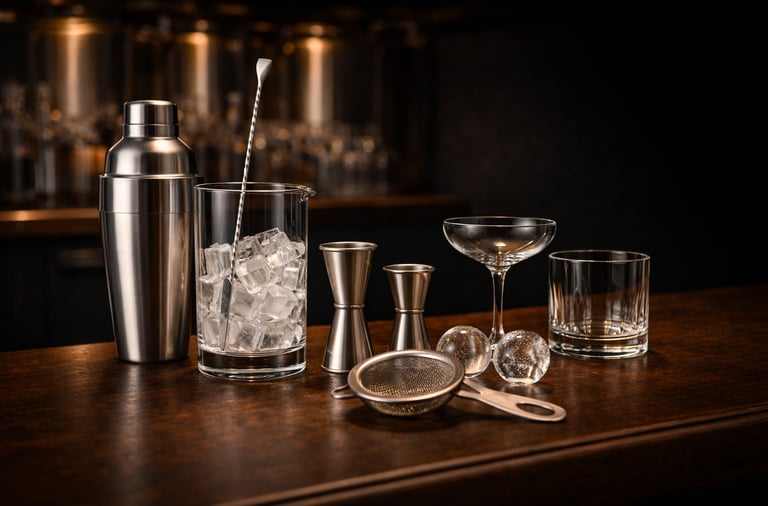
Building Intelligently
You do not need multiple shakers.
You need one that:
Seals reliably
Feels balanced
Withstands repeated chilling cycles
Cleans easily
A well-chosen shaker can last for years.
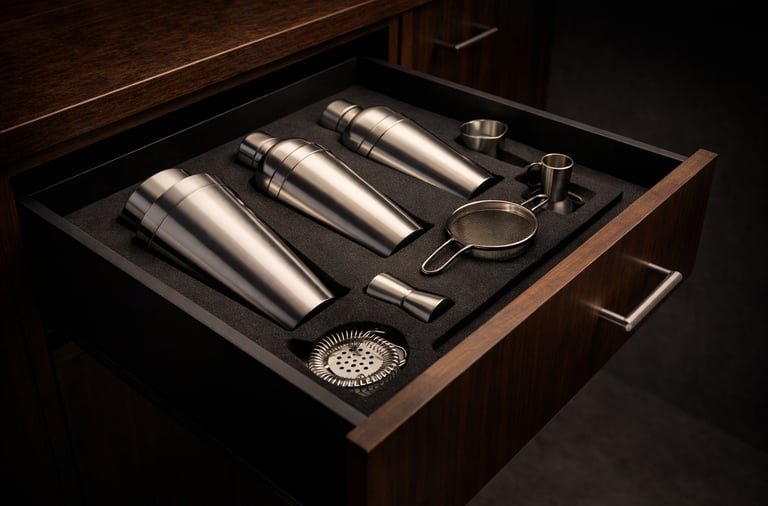
Pair this with:
→ Best Jiggers
→ Best Cocktail Strainers
→ Essential Tools for a Home Bar
→ Bar Tools
And you have a complete foundational system.
© 2026 Barkeepers Buzz. All rights reserved.
Barkeepers Buzz
Master cocktails, spirits, and bar knowledge with clarity and precision. Built for serious home enthusiasts.
Crafted with respect for the culture — and the responsibility that comes with it.
For educational purposes only. Intended for legal drinking age audiences. Please drink responsibly.
General Inquiries: