
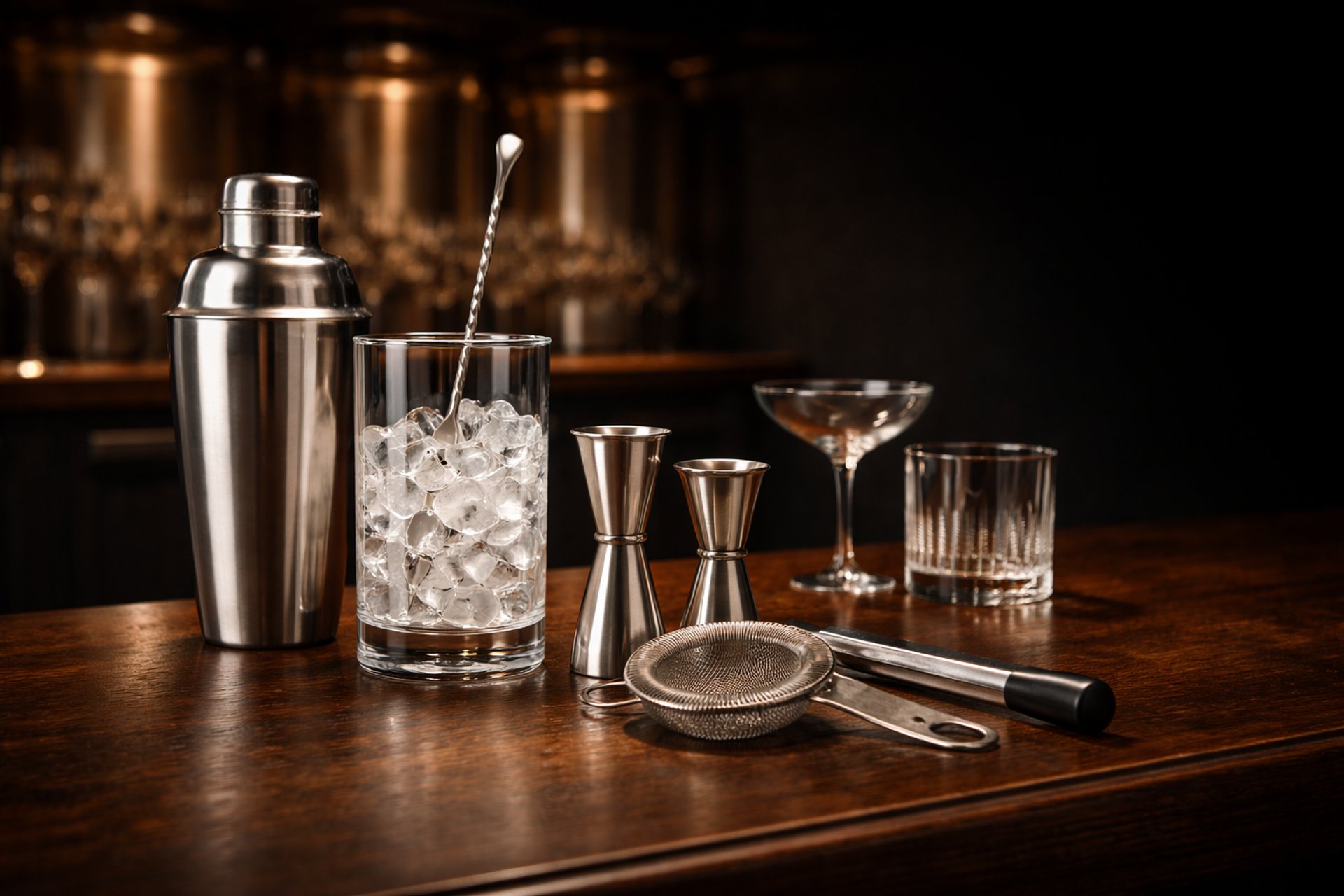
Hawthorne vs Julep Strainer
When it comes to straining cocktails, two tools dominate behind the bar: the Hawthorne strainer and the Julep strainer. While both serve the same purpose—separating liquid from ice and ingredients—they differ in design, technique, and ideal use cases.
The Hawthorne strainer is the standard for shaken cocktails, while the Julep strainer is traditionally used for stirred drinks. Understanding how each works helps you choose the right tool for your mixing style.
If you're building your setup, it’s worth exploring how strainers fit into the full Bar Tools system or your complete Home Bar setup.
Transparency Note: We may earn a commission from qualifying purchases. Product selections are made independently and are not influenced by manufacturers.
Key Differences
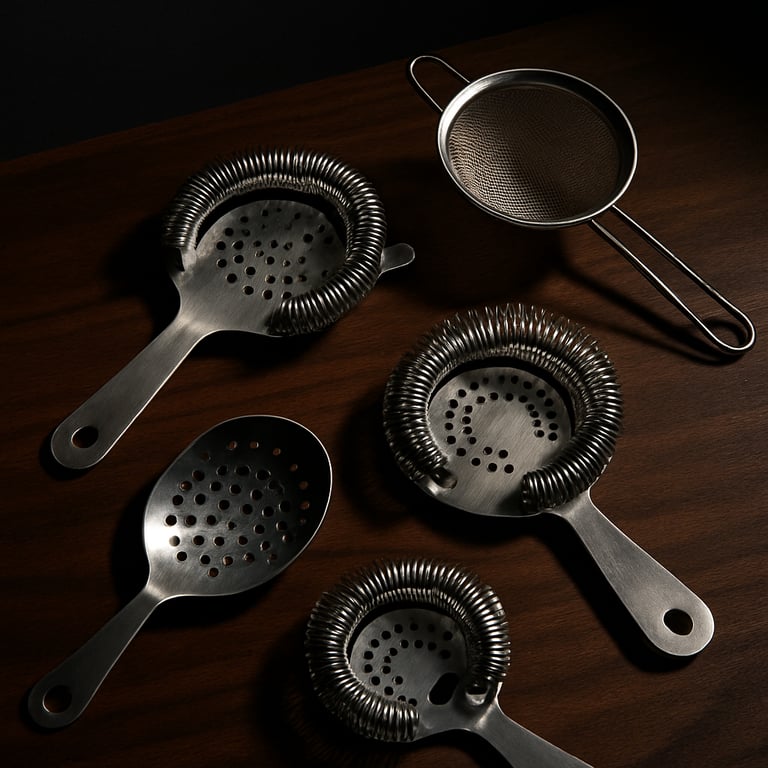
The main difference between Hawthorne and Julep strainers comes down to design and application.
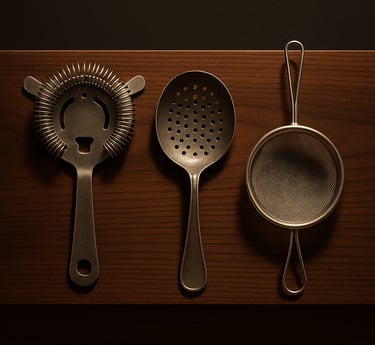
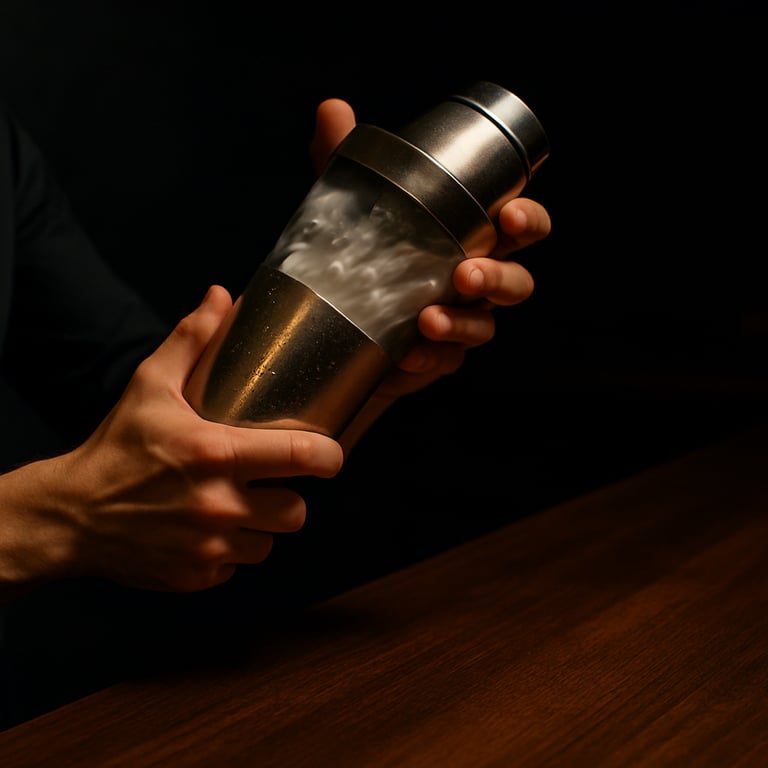
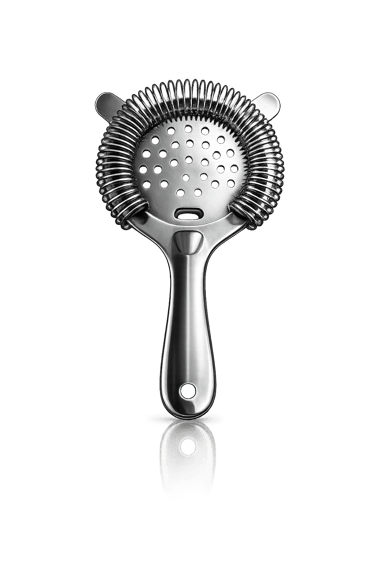
Hawthorne strainers use a flexible spring coil that sits over a shaker tin, allowing for fast, controlled pours while catching ice and larger particles.
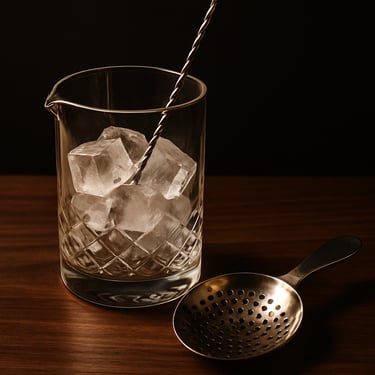
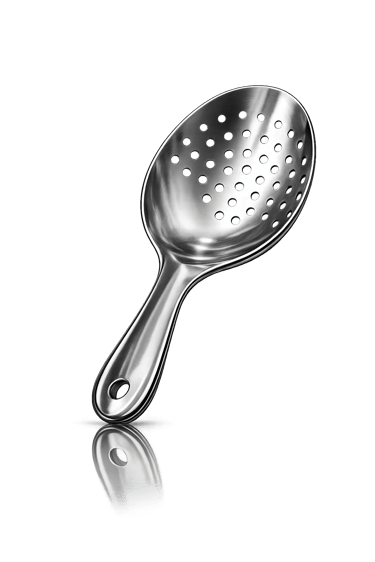
Julep strainers, on the other hand, are perforated metal spoons designed to fit inside a mixing glass. They provide a smoother, more controlled strain—ideal for spirit-forward cocktails.
These differences impact everything from speed to clarity and even how your drink feels in the glass.
To understand where each fits in a broader setup, see Cocktail Strainer Types Explained.
Design Comparison
Julep Strainer
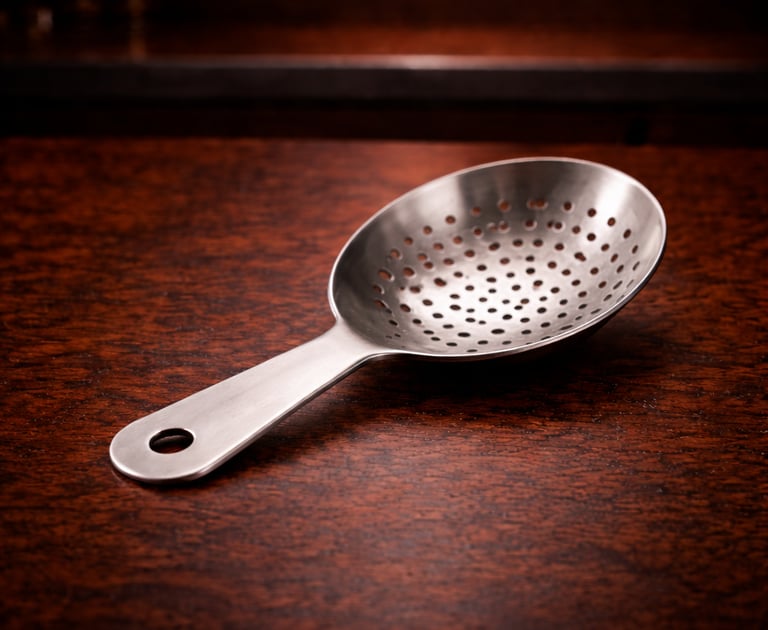
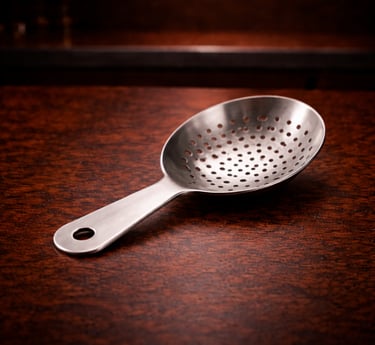
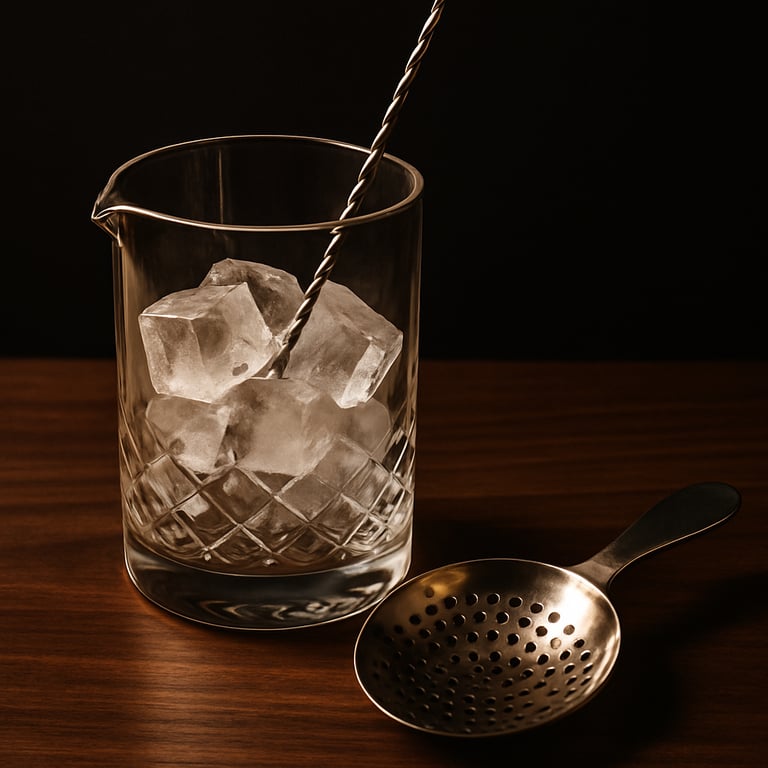
The Julep strainer has a more traditional, minimalist design. It resembles a large spoon with evenly spaced perforations that control the flow of liquid.
Instead of sitting on top of a shaker, it rests inside a mixing glass, held at an angle to strain the drink smoothly.
This design prioritizes control and elegance over speed. Many bartenders prefer Julep strainers for stirred cocktails where clarity and presentation matter most.
If you want to understand when to use it, check out When to Use a Julep Strainer.
Hawthorne Strainer
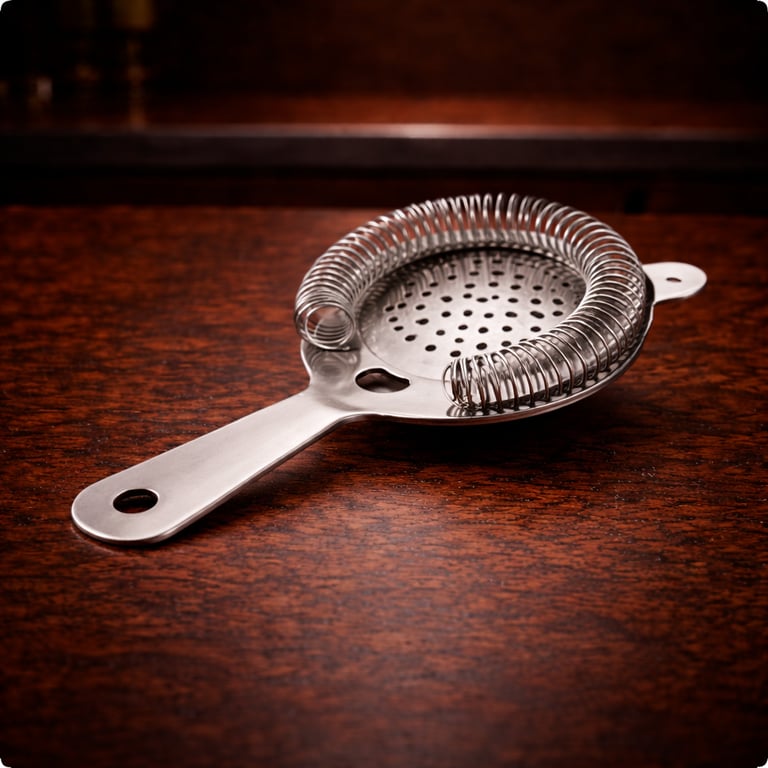
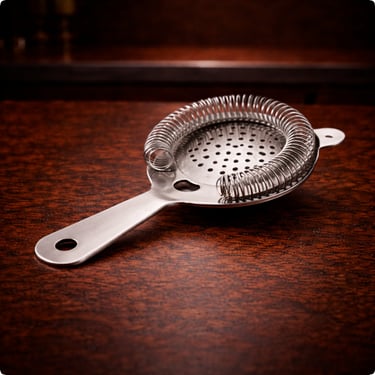
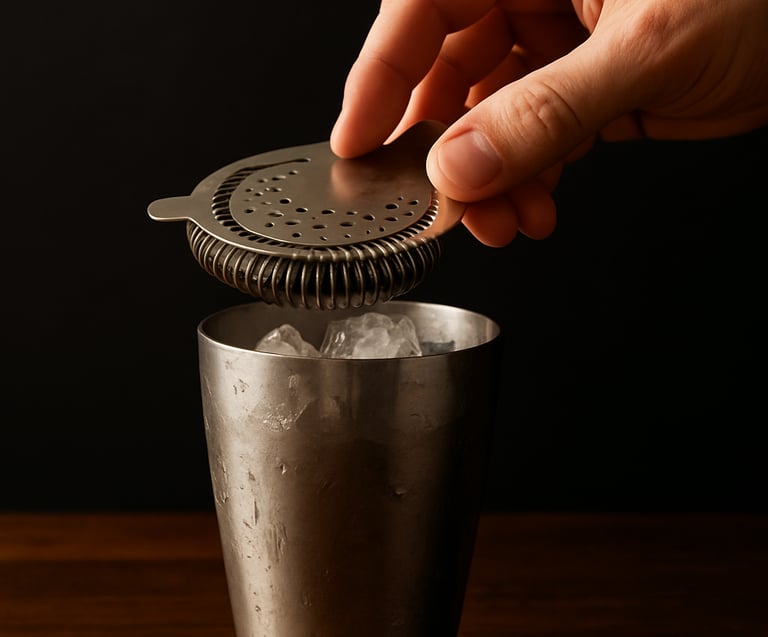
The Hawthorne strainer features a flat metal plate with a tightly coiled spring around its edge. This spring adapts to different shaker sizes, creating a secure fit and effective seal during pouring.
Because it sits on top of the shaker, it’s easy to use and allows for quick, one-handed operation. This makes it ideal for high-volume environments or fast-paced bartending.
The spring also acts as a first level of filtration, catching ice and larger ingredients while allowing liquid to pass through efficiently.
For deeper insight into how the spring works, see Why Hawthorne Strainers Have Springs.
What to Look For
Build Quality
Choose:
Stainless steel construction
Smooth edges and polished finish
Durable spring (for Hawthorne strainers)
Avoid:
Weak springs that lose tension
Thin metal that bends easily
Fit & Control
A good Hawthorne strainer should sit snugly on your shaker without slipping.
A Julep strainer should match the curve of your mixing glass and allow for controlled pouring without splashing.
Filtration Performance
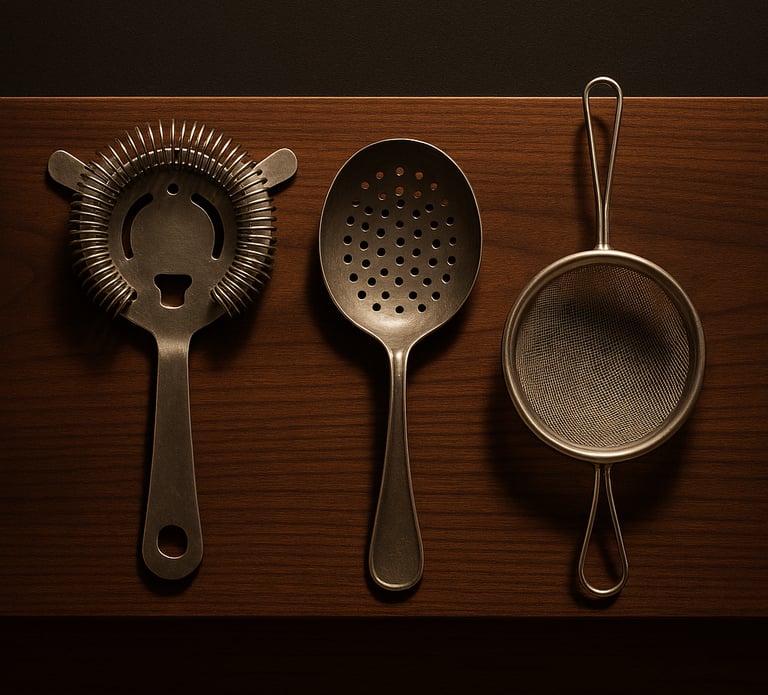
Hawthorne strainers handle larger particles well but are often paired with fine strainers for extra clarity.
Julep strainers provide a naturally smoother pour but may still require fine straining depending on the cocktail.
To refine your technique, explore How to Double Strain Cocktails.
Performance Comparison
Speed
Hawthorne strainers are faster and better suited for shaken cocktails where efficiency matters.
Julep strainers are slower but provide greater control during pouring.
Ease of Use
Hawthorne strainers are beginner-friendly and easy to learn.
Julep strainers require a bit more technique but offer better finesse once mastered.
Drink Clarity
Both strainers can produce clean cocktails, but clarity depends heavily on technique.
For ultra-smooth results, bartenders often combine a Hawthorne strainer with fine straining techniques.
Learn more in Fine Straining Cocktails.
Who Each Strainer Is For
Choosing between these two designs often comes down to experience level and personal preference.
Julep Strainer
Best for:
stirred cocktails
spirit-forward drinks
refined bartending techniques
traditional bar setups
The Julep strainer appeals to bartenders who value precision and presentation.
Hawthorne Strainer
Best for:
beginners learning cocktail basics
shaken cocktails
fast-paced bartending
general-purpose use
The Hawthorne strainer is the most versatile option and is often the first strainer bartenders add to their setup.
Common Problems and Mistakes
Many issues with strainers come from technique rather than the tool itself.
Common mistakes include:
not sealing a Hawthorne strainer properly
pouring too aggressively
using the wrong strainer for the method
skipping fine straining when needed
These mistakes can lead to cloudy drinks, uneven texture, and inconsistent results.
To avoid these issues, review Cocktail Straining Mistakes.




THE SHOWDOWN
Hawthorne Strainer
Julep Strainer

✓ Fast and Efficient
✓ Flexible Spring Fit
✓ Easy to Use
✓ Smooth, Controlled Pour
✓ Ideal for Stirred Drinks
✓ Great for Precision
Final Recommendation
Both Hawthorne and Julep strainers are essential tools, but they serve different purposes.
If you’re just starting out, the Hawthorne strainer is the better choice due to its versatility and ease of use. It handles most cocktails and works seamlessly with standard shaker setups.
As you refine your skills, adding a Julep strainer allows for more control and a more polished presentation—especially for stirred drinks.
For most home bartenders, the ideal setup includes both.
If you're ready to upgrade your tools, explore our picks for the best cocktail strainers or complete setups in the best bar tool sets.
© 2026 Barkeepers Buzz. All rights reserved.
Barkeepers Buzz
Master cocktails, spirits, and bar knowledge with clarity and precision. Built for serious home enthusiasts.
Crafted with respect for the culture — and the responsibility that comes with it.
For educational purposes only. Intended for legal drinking age audiences. Please drink responsibly.
General Inquiries: