
Common Cocktail Straining Mistakes and How to Avoid Them
Discover common cocktail straining mistakes and learn how to avoid them to improve flavor, texture, and presentation in every drink you make.
BAR TOOL GUIDES
Barkeepers BuzzBlog Editorial Team - Led by AJ “Buzz” Eichman
3/29/20264 min read
Straining isn’t just a step between mixing and serving a cocktail — it’s crucial for transforming a good drink into a great one. Yet, it’s one of those areas lots of bartenders and home mixologists underestimate.
I wanted to dig into the common cocktail straining mistakes we all make, from the tools we pick to how we actually pour. Over a few shifts testing different strainers and techniques, I saw how small tweaks can really improve speed, texture, and presentation.
Whether you’re shaking sours with egg white or muddling fruit at home, paying attention to straining will smooth out your drinks—not just literally but in flavor and mouthfeel too.
Quick Verdict
Double straining is key for cocktails with pulp, crushed ice, or egg whites
Using the right strainer for the cocktail ingredients makes a big difference
Straining slowly and close to the glass improves presentation
Cleaning strainers regularly prevents off-flavors
Why Straining Matters in Cocktail Making
At first, straining might seem like it’s just about keeping ice out of the glass—but it goes much deeper.
Straining removes unwanted solids like crushed ice shards, pulp, seeds, and egg white curds. This directly impacts mouthfeel and flavor clarity, giving you a smoother and more balanced drink.
For muddled or shaken cocktails, this becomes even more important. Understanding how different strainers work is key to getting this right, which is covered in cocktail strainer types explained.
Even spirit-forward cocktails benefit from proper straining to avoid dilution chunks or stray ice fragments.
Common Types of Cocktail Strainers and When to Use Them
Three strainers stand out:
Hawthorne Strainer
The most common option. It uses a spring coil to filter out ice cubes and fruit pieces, making it ideal for shaken cocktails.
Learn more about how it works in why Hawthorne strainers have springs.
Fine Mesh Strainer
Used as a second step, this catches finer particles like pulp, ice shards, or egg white curds.
This technique is essential when fine straining cocktails or creating ultra-smooth drinks.
Julep Strainer
Designed for stirred cocktails, it filters out larger ice pieces but lets smaller particles pass through.
If you’re unsure when to use it properly, see when to use a julep strainer.
Top Cocktail Straining Mistakes and How to Avoid Them
1. Not Double Straining When Needed
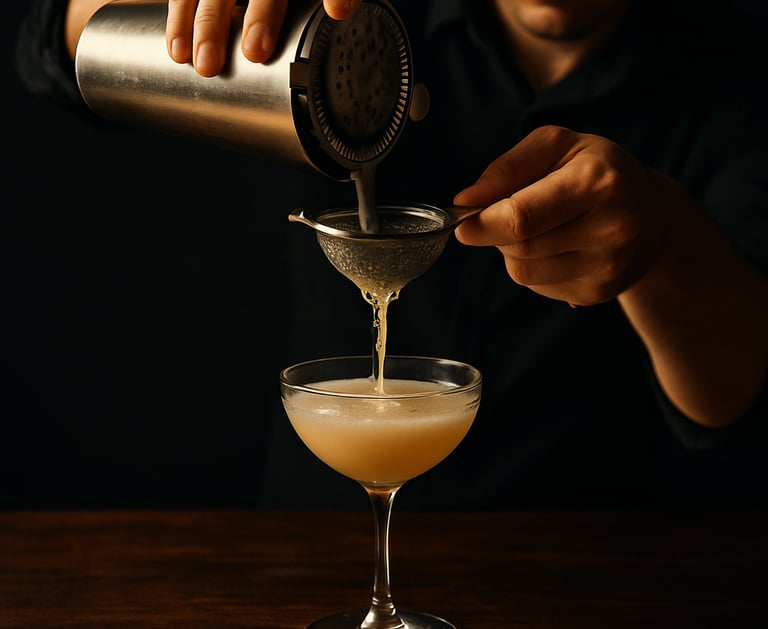
If your cocktail includes muddled fruit, crushed ice, or egg whites, using only a Hawthorne strainer will leave unwanted bits behind.
Adding a second step dramatically improves texture. Learn the full method in how to double strain cocktails.
2. Using the Wrong Strainer for the Cocktail
Each strainer has a specific role. Using a julep strainer for shaken drinks or skipping a mesh strainer when needed leads to poor results.
If you’re comparing your options, check out Hawthorne vs. julep strainer.
3. Rushing the Straining Process
Pouring too fast leads to splashing, uneven flow, and messy presentation. Slower, controlled pours give you better results.
4. Neglecting Strainer Cleaning
Dirty strainers can introduce off-flavors. Residue buildup—especially in mesh or coils—affects both taste and performance.
Avoid this by following proper cleaning habits and learning from bartending mistakes and the gear that fixes them.
5. Overfilling the Shaker
Too much liquid and ice reduces control and pushes solids through the strainer. Leave room for proper mixing and flow.
6. Pouring with Too Large a Gap
Holding the strainer too far from the glass creates splashing and uneven pours. Keep it close to the rim for a clean finish.
Double Straining: When and How to Do It
Double straining involves using both a Hawthorne strainer and a fine mesh strainer.
The Hawthorne catches larger solids, while the mesh filters out finer particles.
From testing drinks like Whiskey Sours and muddled berry cocktails, the difference is clear—double straining creates smoother texture and better presentation.
If you want to master this technique, review how to double strain cocktails.
Cleaning and Maintaining Your Strainers for Best Results
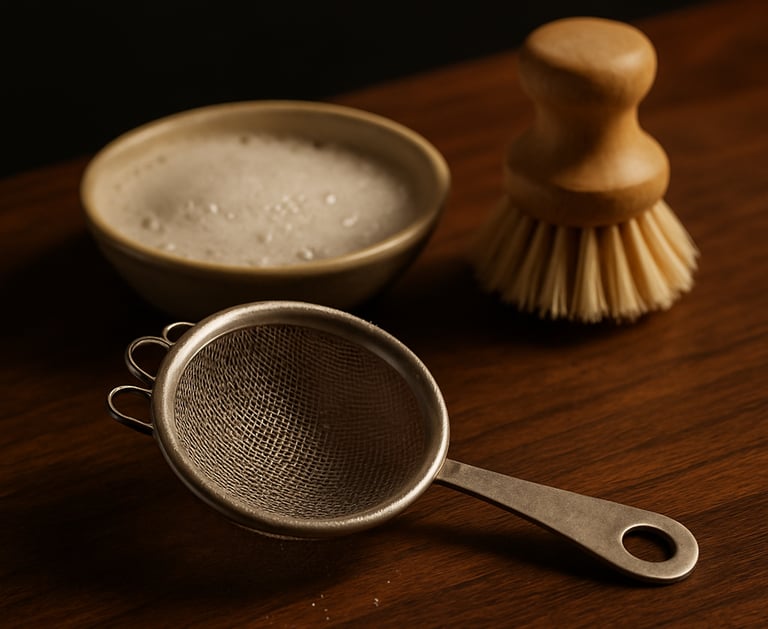
Rinse between cocktails
Soak mesh strainers after service
Use a brush for trapped pulp
Air dry completely
Proper maintenance prevents buildup and keeps flavors clean.
Bartender Tips: Straining for Speed and Precision
Keep strainers and glasses close together
Control flow with angle and positioning
Use the Hawthorne spring for a tighter seal
Pour steadily—not quickly
Keep tools clean between rounds
Improving these habits ties directly into overall performance—see techniques & professional skills.
Improving Cocktail Texture and Presentation
Good straining ensures your drink is clean, smooth, and visually appealing.
It eliminates floating debris, reduces cloudiness, and enhances the overall drinking experience.
If you’re building your setup, the right tools make all the difference.
Common Cocktail Straining Mistakes
Skipping double straining when needed
Using the wrong strainer type
Pouring too quickly
Forgetting cleaning
Overfilling shaker tins
Holding the strainer too far from the glass
FAQ
What is the best strainer to use for different cocktails?
Use a Hawthorne for shaken drinks, a julep for stirred cocktails, and a fine mesh for double straining.
Why is double straining important?
It removes fine solids that affect texture and mouthfeel.
How do I avoid ice shards in my cocktail?
Use a fine mesh strainer and pour slowly.
Can I strain without a Hawthorne strainer?
Yes, but it’s less efficient than using one designed for the task.
How do I clean strainers properly?
Rinse, soak, scrub, and dry thoroughly after use.
What’s the difference between strainer types?
Hawthorne uses a spring, julep uses perforations, and mesh filters finer particles.
Conclusion
Straining might seem like a small step, but it has a huge impact on cocktail quality. Avoiding these common mistakes improves texture, presentation, and overall drinking experience.
As you refine your technique, understanding when to use each strainer—and how to use it properly—will elevate every drink you make.
If you want to keep improving, explore bar tools, compare options in Hawthorne vs. julep strainer explained, and find top gear in best cocktail strainers or best bar tool sets.
© 2026 Barkeepers Buzz. All rights reserved.
Barkeepers Buzz
Master cocktails, spirits, and bar knowledge with clarity and precision. Built for serious home enthusiasts.
Crafted with respect for the culture — and the responsibility that comes with it.
For educational purposes only. Intended for legal drinking age audiences. Please drink responsibly.
General Inquiries: