
Hawthorne vs Julep Strainer Explained
Explore the differences between Hawthorne and Julep cocktail strainers to choose the right tool for perfectly textured and clear drinks every time.
BAR TOOL GUIDES
Barkeepers BuzzBlog Editorial Team - Led by AJ “Buzz” Eichman
3/1/20266 min read
Choosing the right cocktail strainer plays a big role in controlling your drink’s texture, clarity, and overall look — especially within a well-built bar tools setup. The Hawthorne and Julep strainers are two common picks you’ll find in most bars, but they aren’t exactly interchangeable—they each have specific strengths. I tested both over a few shifts and put together this guide to help you understand their key differences and when it makes sense to use each one. Strainer choice directly affects dilution and mouthfeel — core elements of refined cocktails and mixed drinks technique.
Quick Verdict
- Hawthorne strainer is my preferred choice for shaken cocktails because its spring fits tightly, catching ice shards and pulp effectively.
- Julep strainer is better suited for stirred drinks from a mixing glass, giving a clean pour without ice bits.
- Hawthornes tend to be more versatile, which is why many bartenders lean on them for a variety of drinks.
- For maximum smoothness, pairing a Hawthorne strainer with a fine mesh strainer really improves clarity.
What is a Hawthorne Strainer?
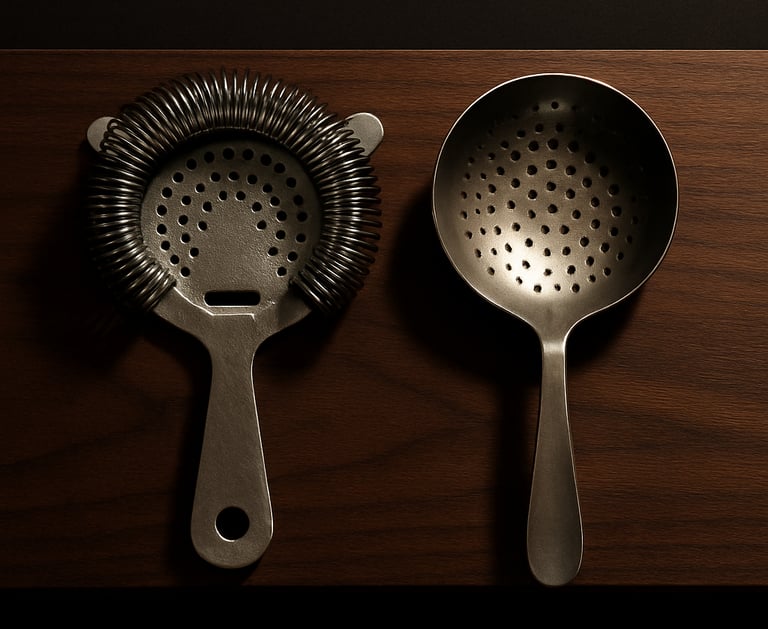
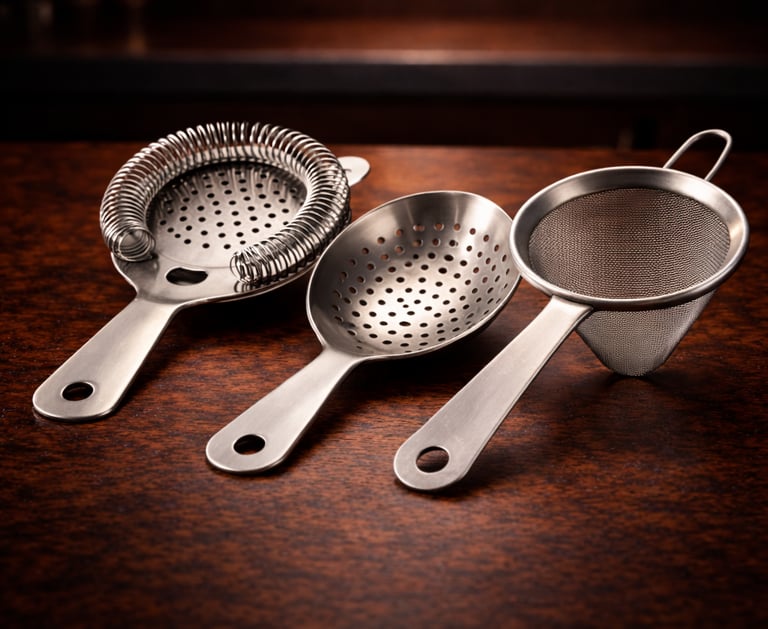
The Hawthorne strainer is basically a flat, perforated metal disc with a spring around the edge. This spring compresses to fit securely inside cocktail shakers or mixing glasses, creating a tight seal to trap ice shards and fruit pulp as you pour. Since Boston shakers don’t include built-in strainers, this tool becomes essential — something we cover in Boston vs Cobbler Shakers.
I noticed that the spring’s flexibility is great for catching even the smallest bits, making it ideal whenever I shake cocktails with crushed ice or fresh ingredients. It also has a finger rest or tab that helps keep it steady during pouring. Most Hawthorne strainers are stainless steel, so they hold up well and clean up without much trouble.
What is a Julep Strainer?
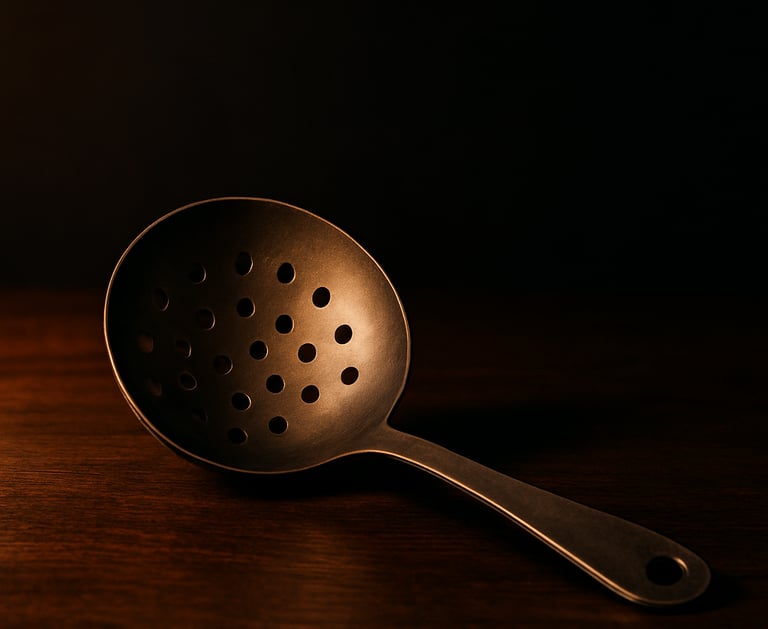
The Julep strainer looks quite different: it’s got a bowl shape with large holes and a long handle, but no spring. It sits inside a mixing glass to strain liquids away from the ice.
I tested this strainer mostly on stirred cocktails like Manhattans and Negronis. It works well for these because it lets the liquid flow freely while keeping back the bigger ice chunks, which means no tiny shards in the final drink. It’s lighter and simpler in design, so it’s easier to clean too.
Key Differences: Design, Use Cases, and Performance
When comparing a Hawthorne strainer and a Julep strainer, the differences come down to design, filtration level, and how each fits into your workflow behind the bar. Filtration level also ties into proper ice and temperature control, since ice shards and dilution affect texture.
Hawthorne Strainer
Design:
A flat, perforated metal disc with a tightly coiled spring wrapped around the edge.
Typical Use:
Best for shaken cocktails poured from a Boston shaker or cobbler shaker.
Filtration Level:
Fine filtration. The spring traps small ice chips, citrus pulp, and finer solids.
Fit Compatibility:
The coiled spring expands slightly, allowing it to fit snugly over shakers and even certain mixing glasses.
Handling:
Usually includes a finger tab for precise control while pouring.
Cleaning:
Requires a bit more attention since pulp and residue can get trapped in the spring.
Julep Strainer
Design:
A bowl-shaped piece of metal with perforations and no spring.
Typical Use:
Primarily used for stirred cocktails strained from a mixing glass.
Filtration Level:
Coarser filtration. It blocks large ice cubes but allows finer liquid movement.
Fit Compatibility:
Designed to sit inside a mixing glass rather than latch onto a shaker.
Handling:
Features a longer handle that provides leverage and control when straining.
Cleaning:
Simpler to clean since there’s no spring to trap debris.
When to Use Each Strainer
Hawthorne Strainer
- I reach for this with shaken cocktails that include crushed ice and bits of fruit pulp, like Daiquiris or Margaritas.
- It helps avoid tiny ice shards or pulp getting into the glass.
- If you want one strainer that covers most shaking situations, start here.
Julep Strainer
For a deeper breakdown of why stirred drinks demand clarity, see our guide on stirred vs shaken.
- Best for stirred cocktails made in a mixing glass, such as Martinis, Manhattans, or Old Fashioneds.
- Use it when you want a smooth, clear drink with no ice shards.
- Gives a classic, elegant feel if your bar focuses on stirred drinks over shaking.
Pros and Cons Comparison
Hawthorne Pros
- Very versatile.
- Spring traps tiny particles well.
- Fits a wide variety of shaker sizes.
Hawthorne Cons
- The spring can trap residue if not cleaned properly.
- Slightly trickier to clean.
Julep Pros
- Simple and lightweight.
- Easy to clean.
- Great for clear, spirit-forward cocktails.
Julep Cons
- Larger holes let small ice chips slip through.
- Not ideal for use with cocktail shakers—mostly for mixing glasses.
Common Mistakes to Avoid
- Using a Julep strainer with a shaker: because it doesn’t seal well and the holes are bigger, it lets ice shards through.
- Skipping double straining on shaken cocktails that have pulp or egg white—follow your Hawthorne strainer with a fine mesh strainer if smoothness matters.
- Choosing a Hawthorne with loose or wide coils: these allow more debris to pass.
Practical Tips and Testable Takeaways
- Test how your Hawthorne strainer fits your shaker by filling the shaker with ice and flipping it upside down—it should stay snug without slipping.
- Pour a stirred cocktail through both strainers to compare: the Julep will give a cleaner pour, whereas a loose Hawthorne spring might let some shards through.
- For the smoothest finish—think citrusy sours—double strain with a fine mesh strainer after using your Hawthorne.
Buying Guide and Recommendations
If you’re building or upgrading your bar gear, start with one of the best cocktail strainers that features a firm spring and solid construction. Add a fine mesh strainer for those citrus-heavy or shaken cocktails needing extra filtration.
Consider adding a Julep strainer if you often serve stirred cocktails from a mixing glass—it enhances clarity and presentation with a traditional touch.
For more balanced setups, check out complementary tools like the best cocktail shakers and best mixing glasses, which fit nicely alongside your strainers.
Precision tools like the best jiggers complement proper straining by keeping ratios consistent before filtration even begins.
If you’re assembling everything at once, our breakdown of essential tools for a home bar shows how strainers fit into the full workflow.
FAQ
Do I need both Hawthorne and Julep strainers?
Not always. If you mostly shake cocktails, a Hawthorne with a fine mesh strainer generally covers all your needs. If you lean more toward stirred drinks, having a Julep adds precision and style.
Can I use a Hawthorne strainer on a mixing glass?
Yes, you can. It might not fit as snugly as on a shaker because of the spring, and may let small ice chips pass compared to a Julep.
What is the advantage of double straining?
Using a Hawthorne first and then a fine mesh sieve helps catch pulp, tiny ice shards, and solids, resulting in a smoother, clearer cocktail.
Are there alternatives to Hawthorne and Julep strainers?
There are—like fine mesh and specialty strainers—but between these two you’ve got most bases covered for both home and professional bars.
How often should I clean my strainers?
Clean them carefully after every use, especially the Hawthorne’s spring, to avoid buildup that could trap debris or mold.
Can style or material affect strainer performance?
Stainless steel is the norm for durability and hygiene. Some strainers come with copper or gold finishes for aesthetics, but the metal should still be high quality to maintain performance.
What if I only have a Julep strainer?
It's great for stirred drinks, but not ideal for shaken cocktails because it won’t filter smaller ice shards or pulp effectively.
For a deeper look at cocktail strainers beyond Hawthorne and Julep—including mesh strainers and specialty options—check out our main guide on [best cocktail strainers](/best-cocktail-strainers/).
This comparison helped me clarify how the Hawthorne and Julep strainers differ functionally. Picking the right one can really influence your cocktail’s texture, clarity, and presentation. By understanding these nuances and common pitfalls, you can better tailor your bar setup whether you prefer shaken or stirred drinks.
© 2026 Barkeepers Buzz. All rights reserved.
Barkeepers Buzz
Master cocktails, spirits, and bar knowledge with clarity and precision. Built for serious home enthusiasts.
Crafted with respect for the culture — and the responsibility that comes with it.
For educational purposes only. Intended for legal drinking age audiences. Please drink responsibly.
General Inquiries: