
Boston vs Cobbler Shakers: Which Is Better?
Explore the pros and cons of Boston shakers versus cobbler shakers to find the best fit for your cocktail style and needs. Learn which shaker suits pros or beginners.
BAR TOOL GUIDES
Barkeepers BuzzBlog Editorial Team - Led by AJ “Buzz” Eichman
3/1/20265 min read
Cocktail enthusiasts and home bartenders often find themselves deciding between a Boston shaker and a cobbler shaker. Both are classic cocktail tools but deliver quite different experiences behind the bar — especially when building out a serious bar tools setup. I spent some time testing both to understand their unique features, advantages, and limitations, so you can figure out which shaker fits your style and needs best. Choosing the right shaker also affects drink balance and aeration — core elements of proper cocktail technique.
Quick Verdict
- Boston shaker tends to be favored by professional bartenders for its larger capacity, versatility, and precise control.
- Cobbler shaker is beginner-friendly with an all-in-one design that includes a built-in strainer, great for casual home use.
- Boston shakers need a separate strainer but give you more control over filtering drinks.
- Cobbler shakers have smaller volume and can be trickier to clean because of their multiple pieces.
What Is a Boston Shaker?
The Boston shaker is a two-piece set: a large metal tin paired with a smaller metal or glass mixing glass. Since it doesn’t have a built-in strainer, you’ll need a separate one — usually a Hawthorne — like those featured in our best cocktail strainers guide.
Many bartenders pair Boston tins with one of the best mixing glasses when switching between shaking and stirring.
Key Characteristics of Boston Shakers
- Capacity: Generally larger, letting you shake two cocktails at once or use plenty of ice.
- Seal and Shaking: The two parts create a reliable pressure seal, which takes some practice but works well once you’ve got it down.
- Straining: Requires a dedicated strainer, which gives you more precise filtration options.
- Ease of Cleaning: Simple two-piece design means it’s straightforward to clean compared to cobbler shakers.
After testing Boston shakers over several shifts, I’ve seen why pros stick with them — they offer speed, reliability, and solid control over mixing.
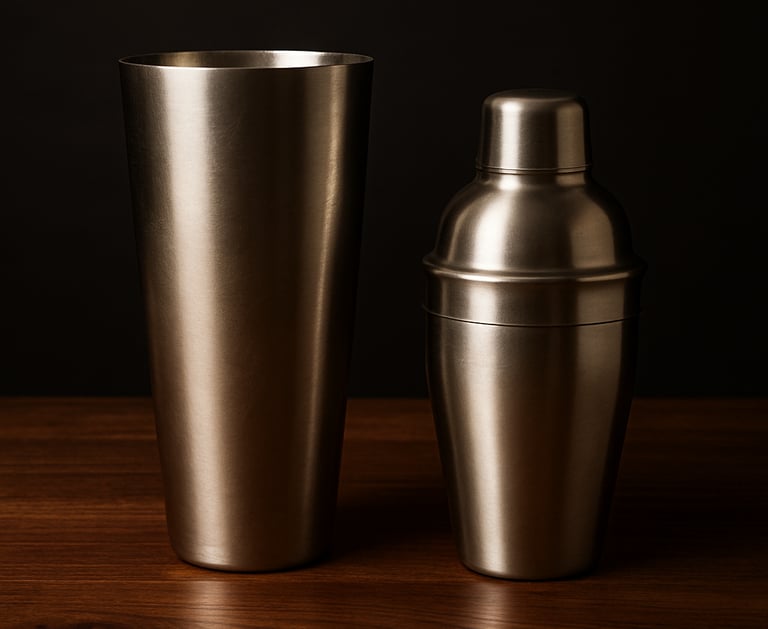
What Is a Cobbler Shaker?
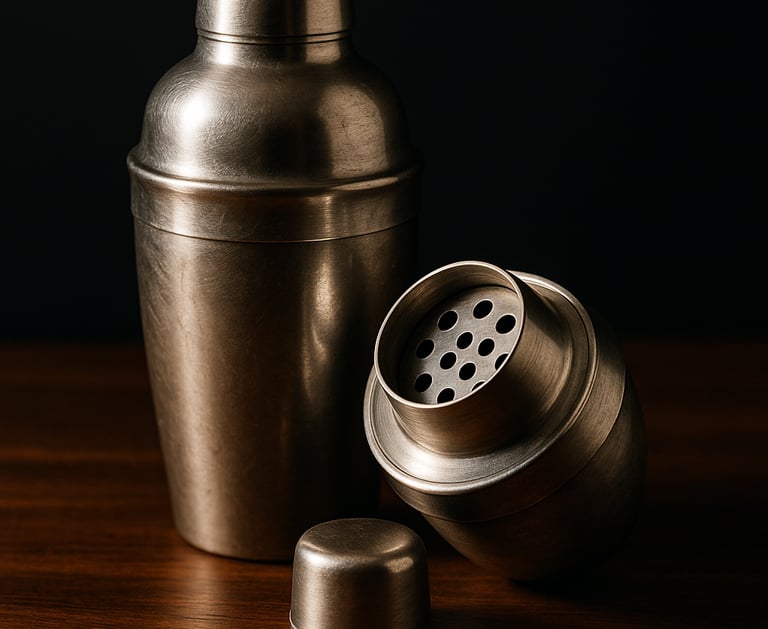
The cobbler shaker is a three-piece shaker: a metal tin, a built-in strainer, and a cap. The integrated strainer means you don’t need a separate tool for filtering, making it convenient.
Key Characteristics of Cobbler Shakers
- Built-in Strainer: Part of the lid, simplifying the straining process for beginners.
- Smaller Capacity: Holds less liquid, which can limit making multiple drinks at once.
- Ease for Beginners: Straightforward design with fewer moving parts.
- Cleaning Challenges: The multiple pieces, including the built-in strainer and cap, trap residue and take more effort to clean properly.
- Potential to Freeze Up: Metal contraction in the cold makes the parts stick together tightly after shaking, which can be frustrating.
From my tests, cobbler shakers work well for casual drink-makers who want convenience over volume or precision.
Capacity and Volume Considerations
If you plan to make several cocktails in a session or like using lots of ice, the Boston shaker’s larger size stands out. There’s more room for ingredients to move — and for proper ice and temperature control during vigorous shakes.
On the other hand, cobbler shakers are smaller and better for single drinks or straightforward recipes since their limited size restricts volume and chilling.
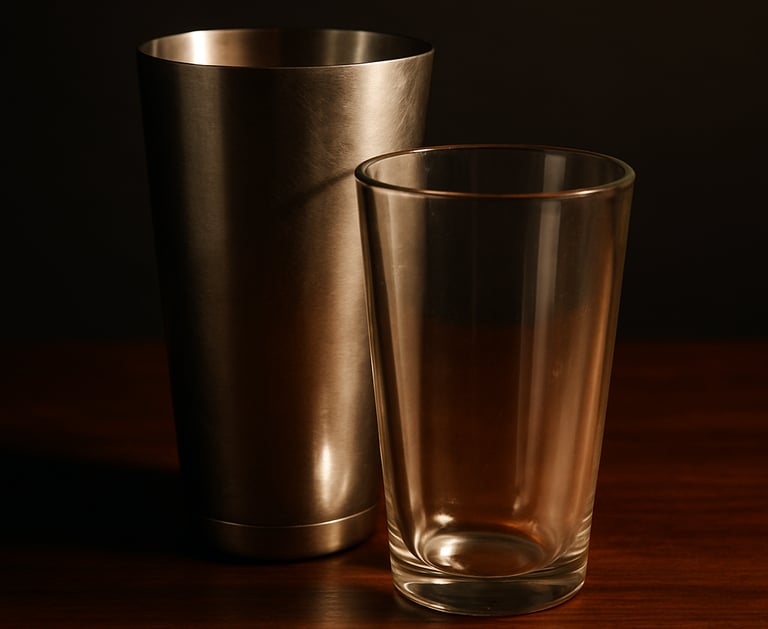
Straining Precision and Drink Quality
Here’s something I didn’t anticipate: the Boston shaker’s need for a separate Hawthorne strainer turns out to be a big plus. Those strainers have finer holes and a spring, holding back tiny ice shards, muddled herbs, or fruit bits better.
Cobbler shakers, with their larger built-in holes, can let small pieces slip into your drink. It’s subtle but noticeable, especially in cocktails where clarity and smooth texture matter. This becomes even more noticeable when comparing shaken drinks to stirred ones — something we break down in stirred vs shaken.
For drinks where finesse is key, the Boston shaker system really has the edge.
Ease of Use and Maintenance
Boston Shaker
- Takes some practice to get sealing and unsealing right.
- Easy to clean thanks to just two parts.
- Durable and straightforward, so it lasts.
Cobbler Shaker
- Very user-friendly with fewer juggling parts while shaking.
- Can get stuck shut due to cold metal contracting — something to watch for.
- Multiple parts mean more spots for sticky residue, so cleaning takes more care.
Professional vs. Home Use
From what I’ve seen, Boston shakers dominate professional bars because of their size, speed, and precision. They keep up well with fast-paced environments and complex drinks.
Home bartenders often lean towards cobbler shakers for their simple, all-in-one convenience. That said, as home bartenders get more confident, many move on to Boston shakers for better control and capacity.
Price and Investment
Both shaker types come in a range of prices, from budget-friendly to premium.
With Boston shakers, remember you’ll need to budget for a good-quality Hawthorne strainer separately. Cobbler shakers often come as all-in-one sets, sometimes bundled with extras like a jigger or bar spoon — nice for beginners.
If you’re upgrading tools, pairing your shaker with one of the best jiggers improves consistency more than most realize.
Common Mistakes When Choosing or Using Cocktail Shakers
- Assuming the cobbler shaker’s built-in strainer works as well as professional strainers — it usually doesn’t, which can affect the drink quality.
- Overlooking how small cobbler shaker capacity is when you want to make multiple drinks.
- Struggling to pry apart a cobbler shaker that’s frozen shut after shaking.
- Using cobbler shakers for cocktails needing fine straining of muddled ingredients.
- Forgetting to get a quality separate strainer when buying a Boston shaker.
Practical Tips for Home Bartenders
- If you’re often serving guests or into cocktails needing clarity and aeration, the Boston shaker plus a Hawthorne strainer is the way to go.
- For casual or occasional drinking, especially simple cocktails, a cobbler shaker offers easy, no-fuss use.
- Spend some time mastering how to break the seal on a Boston shaker — it speeds up your flow and avoids spills.
- Clean cobbler shakers carefully after sticky or thick liquids to prevent buildup.
- If you’re building from scratch, our guide to essential tools for a home bar walks through what actually matters.
Conclusion
Picking the right cocktail shaker really depends on your experience, what drinks you like, and how often you make cocktails. The Boston shaker is the pro’s choice — bigger, more precise, and easier to clean, but with a bit of a learning curve and the need for an extra strainer. The cobbler shaker is a solid intro tool — simple and convenient, though less precise and sometimes trickier to maintain.
For a detailed look at cocktail shaker options, check out our full guide on best cocktail shakers.
You might also want to explore best bar tool sets to round out your bar setup.
FAQ
Which shaker is better for beginners?
The cobbler shaker is usually better for beginners thanks to its built-in strainer and simple design.
Can I make multiple cocktails at once?
Boston shakers hold more volume, making it easier to shake multiple drinks or larger mixes. Cobbler shakers are smaller and more limited.
Why do cobbler shakers freeze up?
Cold metal contracts during shaking, causing the parts to stick tightly together, which can make them hard to open.
Do I need a separate strainer with a Boston shaker?
Yes. Boston shakers need a Hawthorne or fine strainer to effectively separate ice and solids from the final cocktail.
Which shaker produces better foam in egg-white cocktails?
The Boston shaker’s larger volume helps build more air and creates fluffier egg white foam than cobbler shakers.
Are cobbler shakers harder to clean?
Yes, their multi-piece design with built-in strainers traps residue and requires more thorough cleaning.
Can I use a Boston shaker without a glass component?
Yes. Some Boston shakers use two metal tins or a metal and glass combo, but all-metal tins are common in professional bars.
© 2026 Barkeepers Buzz. All rights reserved.
Barkeepers Buzz
Master cocktails, spirits, and bar knowledge with clarity and precision. Built for serious home enthusiasts.
Crafted with respect for the culture — and the responsibility that comes with it.
For educational purposes only. Intended for legal drinking age audiences. Please drink responsibly.
General Inquiries: