
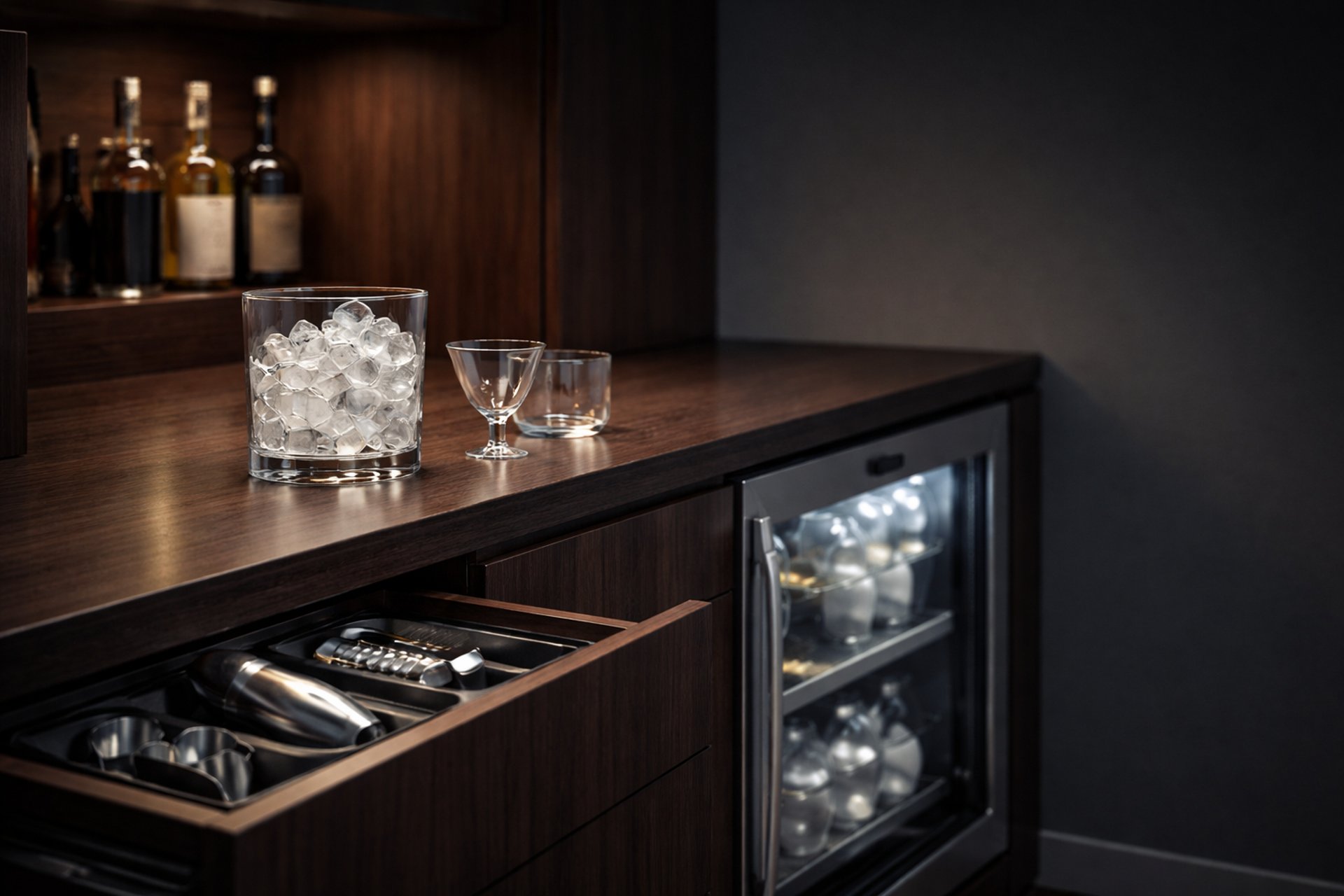
Home Bar Appliances:
Plan This Before You Build Anything
The Mistake Everyone Makes
Most people build the bar first… then try to fit appliances into it.
That’s backwards.
On paper, everything looks simple. A “24-inch fridge” should fit a 24-inch opening. An ice maker should slide right in. You measure, build, and move on.
Then the appliance shows up.
Now it’s too deep. The door won’t clear. It needs airflow you didn’t account for. Or worse—it technically fits, but runs hot because it can’t breathe.
I’ve seen it too many times. You end up trimming cabinets, reworking faceplates, or living with something that never quite fits right.
If you want your home bar to actually function like it should, you don’t build around guesses—you build around the appliances.
Why Appliance Dimensions Lie (Kind Of)
Manufacturers aren’t lying… but they’re also not telling the full story.
That “24-inch fridge” usually means:
Rough body width
Not including hinges
Not including door swing
Not including airflow clearance
Same thing with depth:
Add the door
Add handle clearance
Add space behind for ventilation
All of a sudden, your “perfect fit” is off by an inch or two—and that’s all it takes to cause problems.
Real-world installs almost never match spec sheets exactly.
That’s why guessing measurements before you have the appliance in hand is where things go sideways—especially when comparing setups like Beverage Center vs Beverage Fridge.
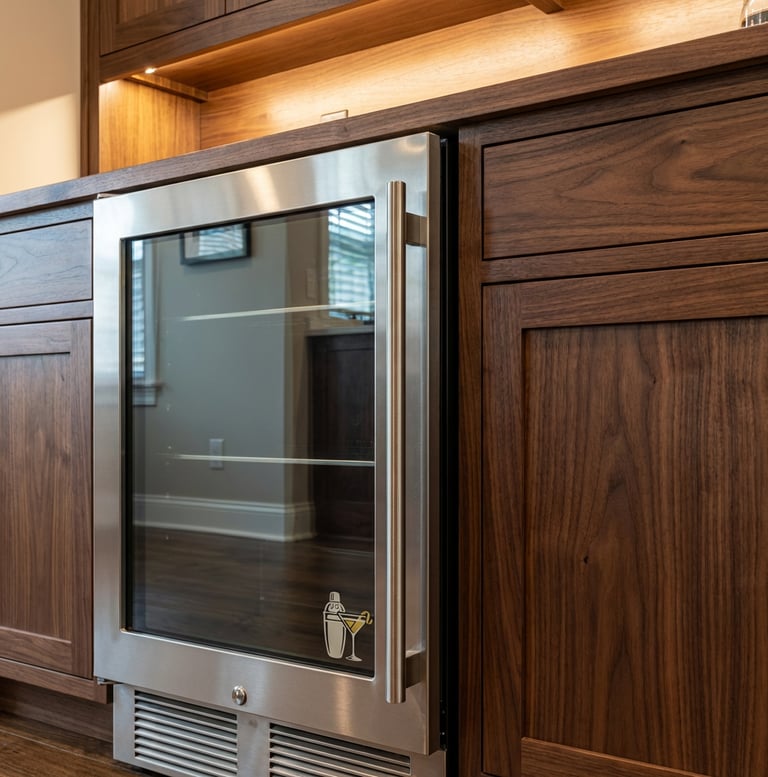
Build Around the Appliance
(Not the Other Way Around)
If there’s one rule that will save you headaches, it’s this:
Order your appliances first. Then build around them.
Not:
“I’ll order it later”
“They’re all standard size”
“It should fit”
Actually get it in your hands.
Measure it yourself.
Check the real depth.
Open the door.
See how much space it actually needs.
Any time I’ve built a home bar, I’ve made the cabinet faceplate adjustable for this exact reason. Appliances are goofy with dimensions, and if you don’t give yourself wiggle room, you’re asking for problems. Furthermore - If you need to repair or access later down the road, you can remove the faceplates and gain easier access.
his is exactly why the full layout matters, not just the equipment—something covered in Home Bar Setup when everything starts working together as a system.
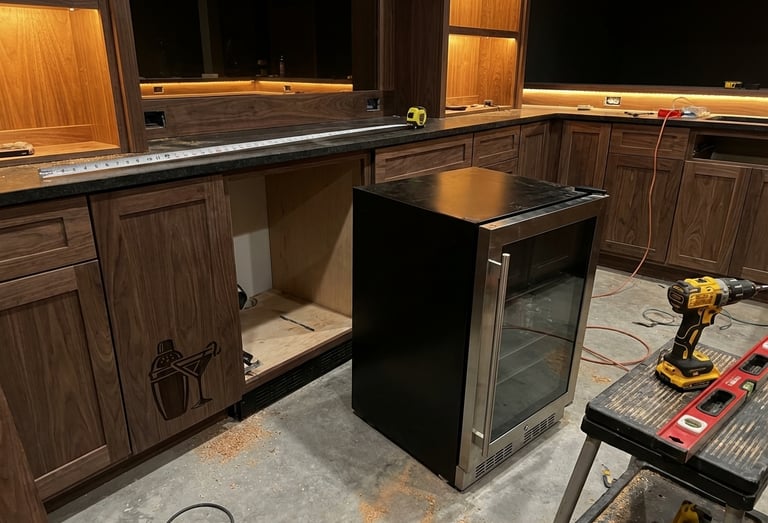
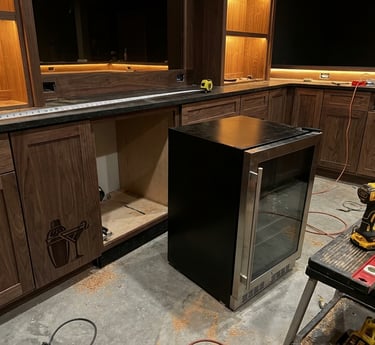
Appliance Types You Should Plan For
Before you even think about layout, you need to know what’s going into the bar.
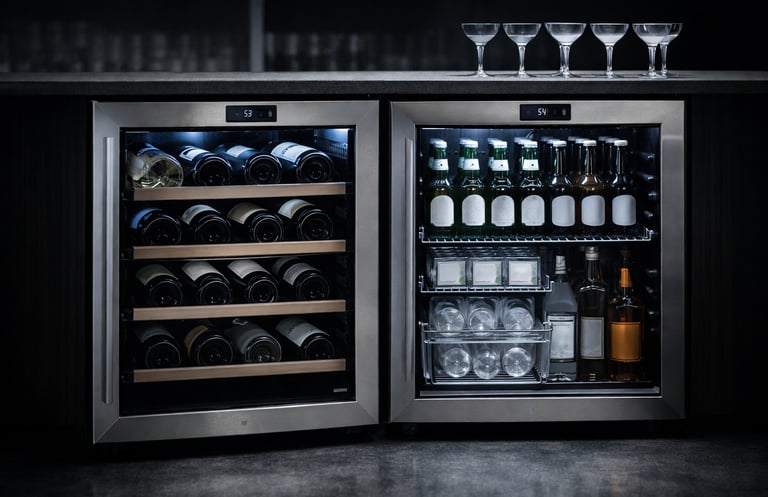
Beverage / Wine Fridges
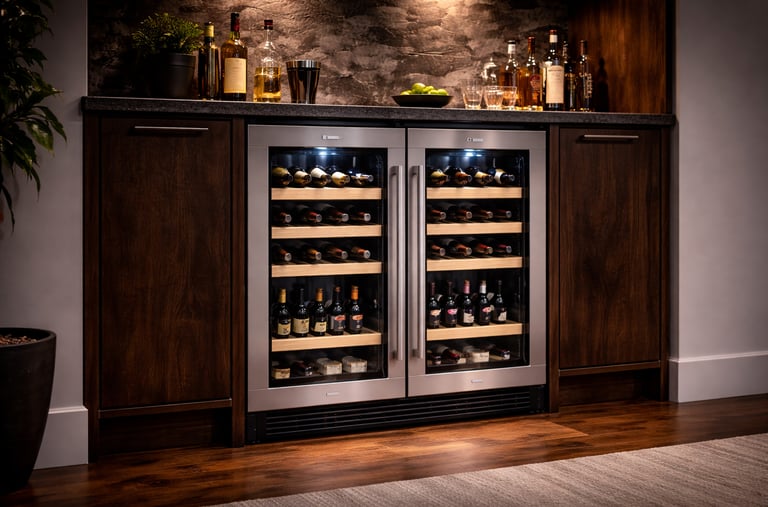
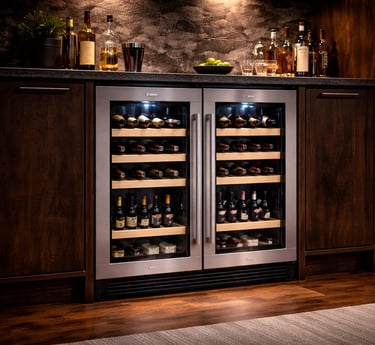
These seem simple, but they’re one of the biggest offenders for bad fits. If you’re still deciding what fits your build best, looking through real options like Best Beverage Fridges for Home Bars gives you a much clearer picture than spec sheets alone.
Common issues:
Deeper than expected
Need ventilation space
Door swing hitting cabinets or walls
Undercounter models especially need room to breathe, or they’ll run hot and wear out faster.
Ice Makers & Nugget Ice Machines
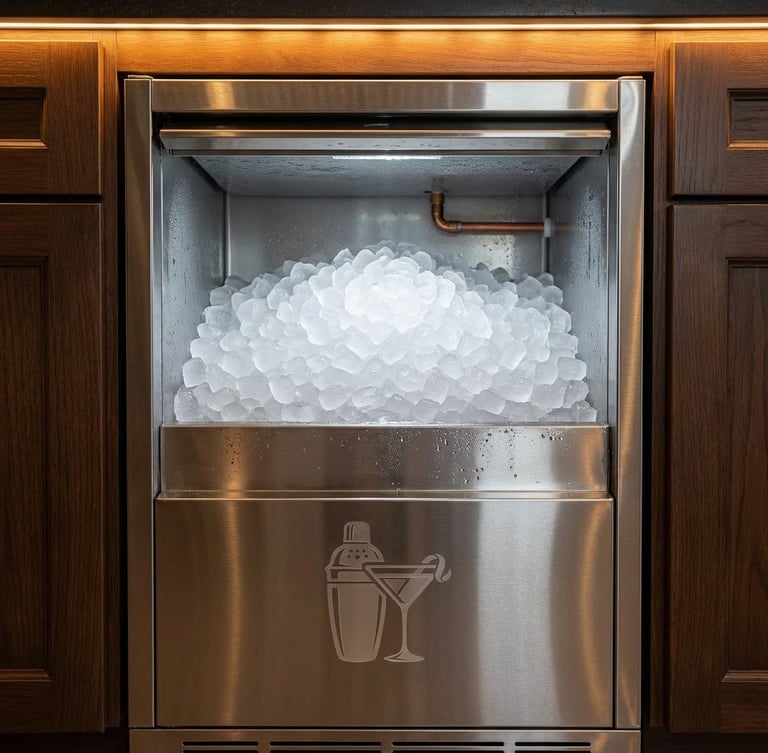
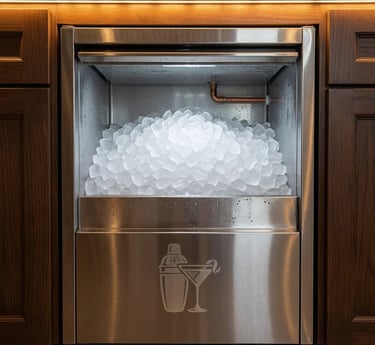
These change your build more than people expect. This also ties into how ice behaves in drinks—especially when comparing formats like Clear Ice vs Regular Ice, where melt rate and clarity completely change the outcome.
Things most people miss:
Some require a drain
Some need a water line
They generate heat
They run more often than a fridge
If you’re planning to use one regularly, it’s not just “drop it in and go”—it affects layout, airflow, and electrical. This becomes even more important when working with dedicated systems like Best Automatic Clear Cube & Sphere Systems, where placement and airflow directly affect performance.
Freezers (For Ice Systems)
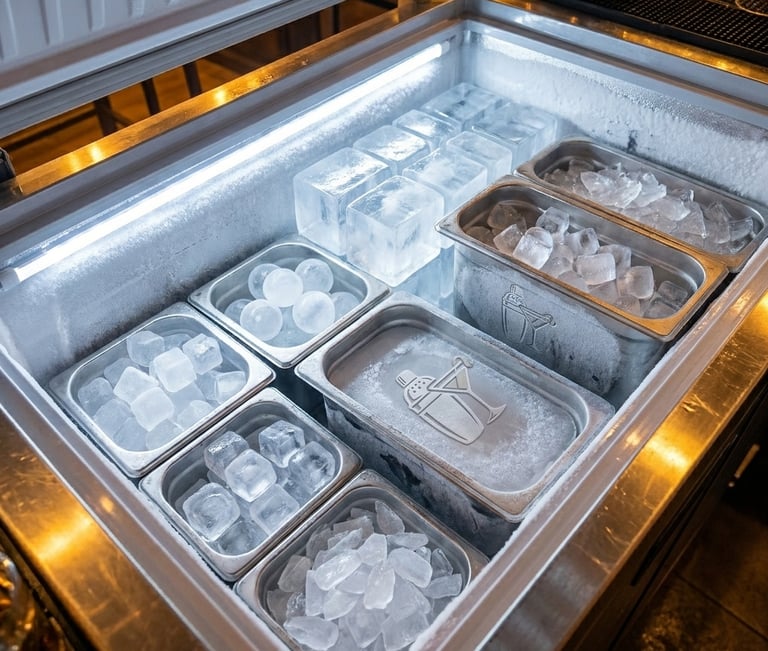
If you’re doing clear ice or bulk ice storage, a freezer becomes part of your system.
Now you’re planning for:
Space
Access
Storage capacity
Workflow
This is where your Ice & Temperature Control setup really starts to matter. Once you start storing ice long-term, things like airflow and sealing matter more than people expect, especially if you’ve ever dealt with issues like Why Ice Clumps in the Freezer.
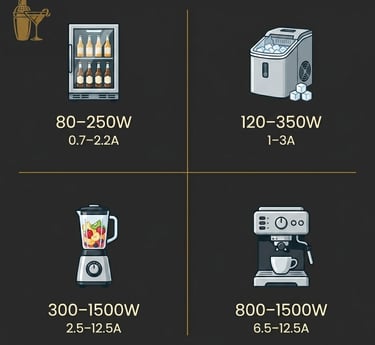
Electrical Planning (Don’t Skip This)
This is the one that bites people after everything is finished.
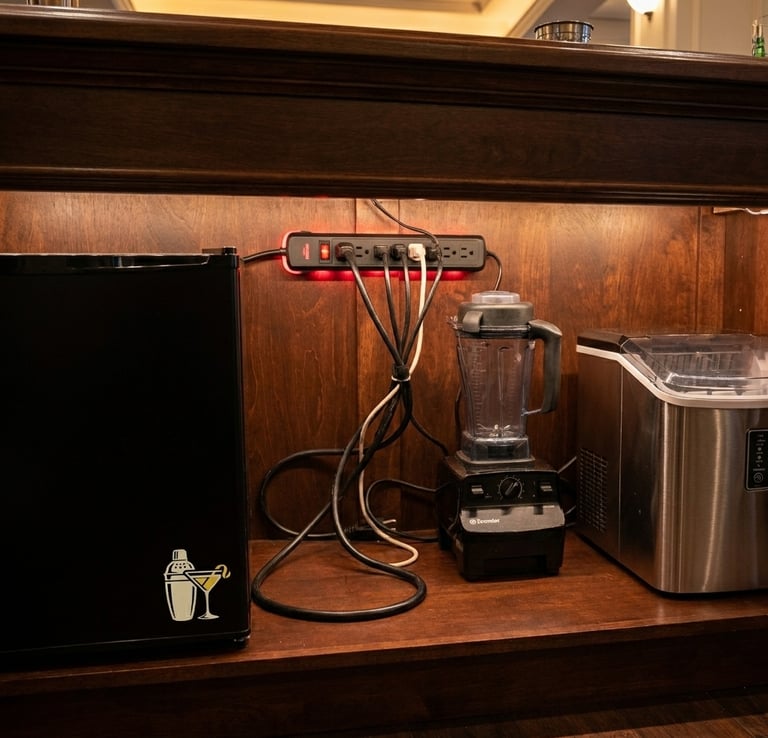
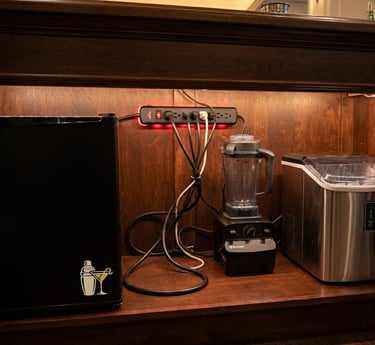
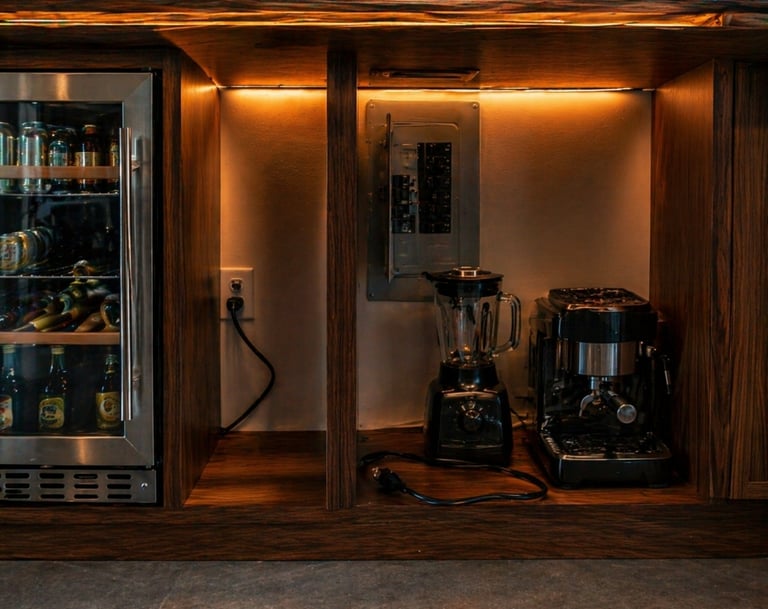
Most people don’t think about electrical until the bar is built. That’s when you find out everything works… just not all at the same time.
Fridge is running.
Ice maker kicks on.
You turn on a blender or coffee machine…
👉 breaker trips.
I’ve seen it happen. A full basement bar build—looked great, everything installed—and then they realized they couldn’t run appliances together without killing power. Ended up tearing into finished work just to run a new circuit.
That’s a brutal fix for something that’s easy to plan upfront.
Dedicated Circuits Matter
Planning power correctly becomes even more important when running multiple systems together, especially in setups similar to Home Bar Ice Systems Setup where appliances run constantly.
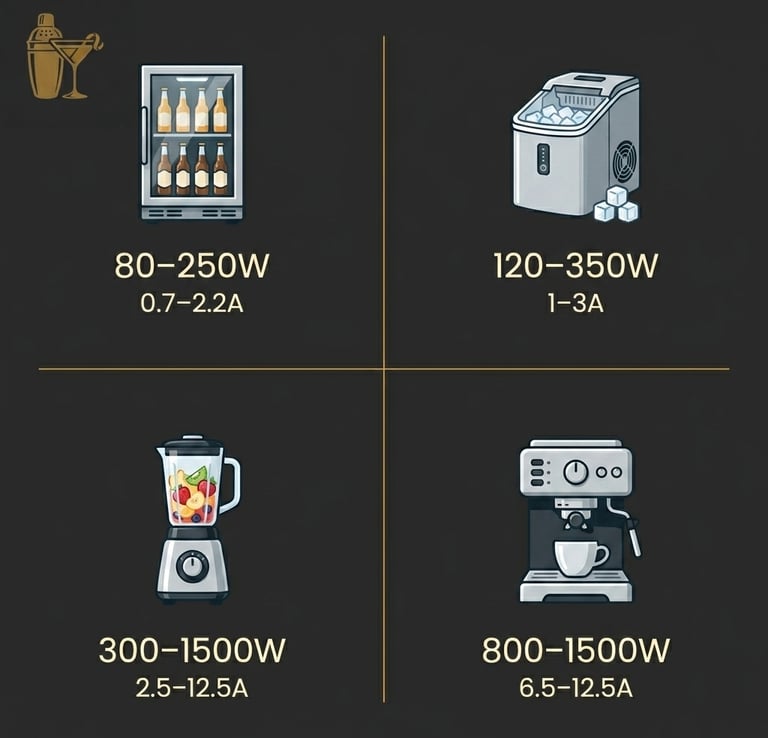
Appliances like:
Beverage fridges
Ice makers
Nugget machines
They don’t just run occasionally—they cycle constantly.
Stack those on one line with:
Blenders
Coffee machines
Food processors
You’re going to run into problems.
The 20-Amp Reality
Most home bars with multiple appliances should be planning around at least one dedicated 20-amp circuit.
Not because it’s overkill—because it’s realistic.
It’s not about one device.
It’s about everything running at once.
Plan It Before the Build
Run circuits early
Add more outlets than you think you need
Leave room for future upgrades
It’s way easier to run a line before drywall and cabinets are finished than after everything is installed.
Layout Considerations That Actually Matter
This is where everything comes together.
Airflow
Appliances need space to breathe. If you box them in too tight, they overheat and wear out faster. Poor airflow doesn’t just affect performance—it can lead to long-term issues like those explained in How to Prevent Fridge Condensation.
Access
You need to be able to:
Open doors fully
Pull units out if needed
Actually use them comfortably
Placement decisions also impact usability, especially when figuring out Where Should You Place a Beverage Center in a Home Bar.
Power
Outlets need to be:
In the right place
On the right circuits
Easy to access
Drainage (If Applicable)
Ice makers especially—if they need a drain and you didn’t plan for it, you’re in for a bad time.
Noise & Heat
Appliances generate both.
Putting everything in a tight, enclosed space can turn your bar into a warm, noisy corner if you’re not careful.
Where Appliances Fit Into Your Setup
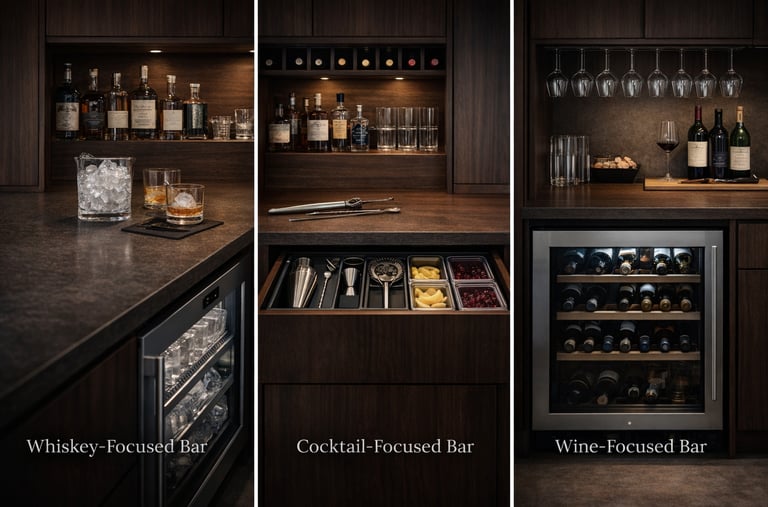
Appliances don’t live in isolation—they tie into everything else.
They affect:
Ice and temperature control
Drink consistency
Workflow behind the bar
Storage and access
If your appliances are off, everything else feels off—even if the rest of your setup is solid.
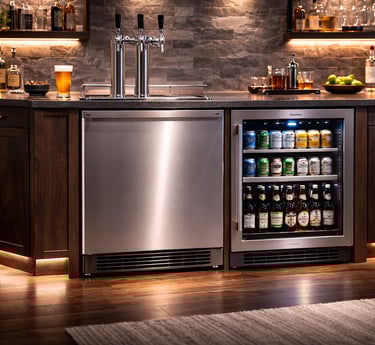
Recommended Appliance Paths
You don’t need everything—but you do need the right pieces.
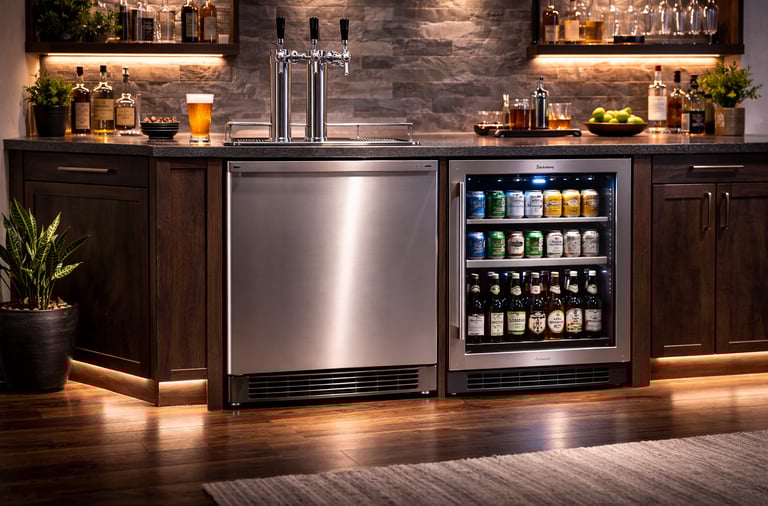
A simple path:
Beverage fridge for general storage
Ice system (depending on how serious you are)
Optional freezer for bulk ice
From there, you build based on how you actually use your bar.
The Bigger Picture
Most home bar issues don’t come from bad materials or bad tools.
They come from planning mistakes.
Guessing measurements
Ignoring airflow
Skipping electrical planning
Trying to make appliances fit after the fact
Get the appliances right first, and everything else gets easier.
Build around reality—not assumptions—and your setup will actually work the way you expect it to.
© 2026 Barkeepers Buzz. All rights reserved.
Barkeepers Buzz
Master cocktails, spirits, and bar knowledge with clarity and precision. Built for serious home enthusiasts.
Crafted with respect for the culture — and the responsibility that comes with it.
For educational purposes only. Intended for legal drinking age audiences. Please drink responsibly.
General Inquiries: