
Where Should You Place a Beverage Center in a Home Bar?
Discover practical tips for optimal beverage center placement in your home bar to enhance workflow, guest interaction, and overall functionality.
HOME BAR GUIDES
Barkeepers BuzzBlog Editorial Team - Led by AJ “Buzz” Eichman
2/27/20265 min read
When designing a home bar, the placement of the beverage center is a pivotal decision. This choice transcends mere aesthetics—its location dictates workflow efficiency, guest engagement, noise management, and overall functionality. A strategically placed beverage center elevates entertainment, harmonizes with your home’s layout, and underpins your bar’s purpose. This guide offers measured insights and practical direction on beverage center placement in home bars, grounded in thoughtful home bar setup principles.
Quick Verdict
- Position the beverage center near primary entertainment zones such as living or family rooms to facilitate easy guest access and natural social interaction.
- Maintain visual connectivity with guests while establishing acoustic separation from noisy kitchen appliances.
- Avoid interrupting main traffic or circulation paths to preserve seamless movement.
- Employ architectural details, furniture, or layered lighting to define the beverage center as a dedicated space.
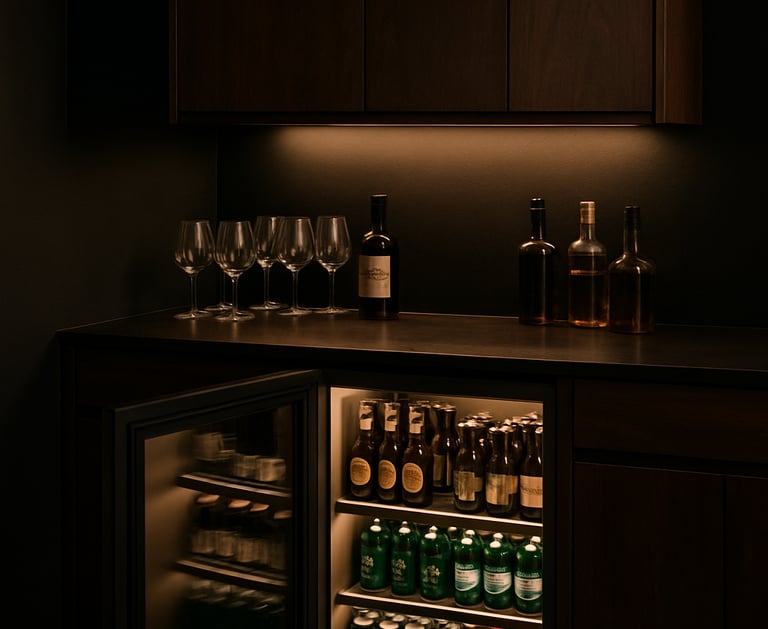
Ideal Location Characteristics for Beverage Centers
Selecting the correct site for your beverage center requires a balance among proximity, discretion, and practicality.
- Adjacent to main entertainment areas: Situate the beverage station close to guest gathering points—living rooms, family rooms, or finished basements—to foster social interaction.
- Accessible without overcrowding: The spot should allow reach without impeding busy kitchen zones or key entryways.
- Near necessary infrastructure: Availability of electrical outlets, refrigeration, and preferably water supply is essential for beverage preparation and upkeep.
Thoughtful placement also depends on understanding broader home bar refrigeration and beverage storage considerations.
Strategic Positioning Relative to Entertainment Spaces
In a well-functioning home bar, hosts and bartenders maintain visual engagement with guests. Placing the beverage center so the bartender faces the main seating area encourages seamless interaction and sustains an engaging atmosphere.
Standalone beverage centers in open-plan kitchens often perform best near the kitchen’s edge adjoining the living room. This location supports smooth circulation between food preparation and entertaining without isolating the bartender. If you're deciding between integrated cooling options, review the differences in beverage center vs beverage fridge configurations.
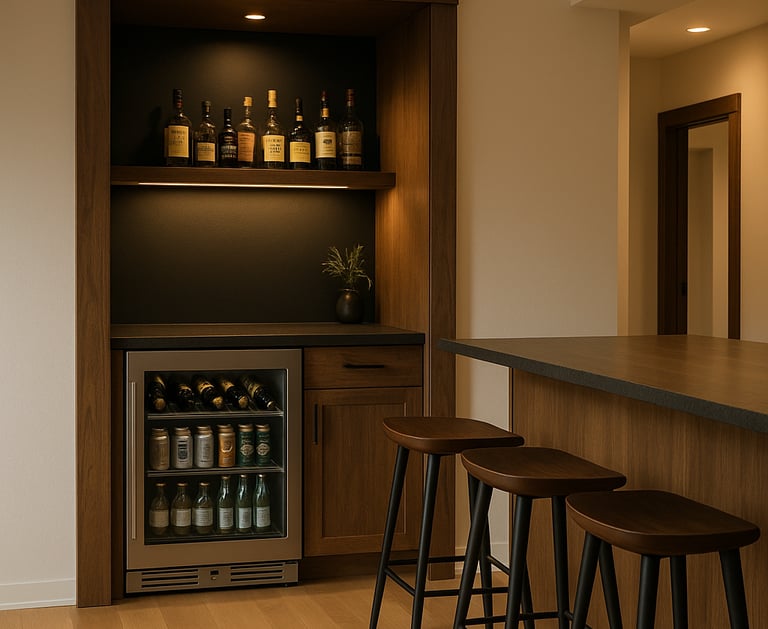
Spaces like dedicated alcoves, rooms adjacent to social hubs, or peninsula counters extending into gathering areas efficiently establish beverage zones with clear boundaries.
Acoustic and Visual Considerations
While maintaining sightlines is crucial, reducing disruptive noise from blenders, ice makers, or dishwashers—common in kitchen spaces—is equally important. Acoustic separation achieved through partial walls, glass partitions, or architectural elements such as columns or soffits confines operational noise without sacrificing openness. For deeper guidance on managing appliance hum in entertaining areas, see how to reduce noise from home bar refrigeration.
Lighting subtly reinforces the beverage center’s identity. Pendant fixtures, under-cabinet lighting, or sconces delineate the bar area with an inviting warmth that integrates smoothly into the overall design.
Traffic Flow and Circulation Planning
Proper beverage center placement avoids obstructing key circulation routes. The center should not block doorways, hallways, or kitchen aisles to prevent congestion. Instead, situate it within alcoves, peninsulas, or dedicated bar rooms that encourage natural gathering.
Consider guest movement patterns during gatherings. Clear, unobstructed paths enhance comfort and ease of use. Those incorporating draft systems should also consider kegerator vs keezer placement before finalizing layout.
Creating Defined Boundaries and Spatial Identity
Defining the beverage center as a distinct zone, even within larger rooms, elevates both function and visual coherence. Employ material transitions—such as contrasting flooring or backsplash tiles—architectural framing like archways or columns, and furniture elements such as bar stools to visually anchor the space.
A deliberately outlined wet or dry bar signals its purpose clearly and invites guests to linger without confusion.
Practical Infrastructure Requirements
Beyond location, several infrastructure factors demand early consideration:
- Water access: For wet bars, integrating a sink and running water streamlines drink preparation and cleanup.
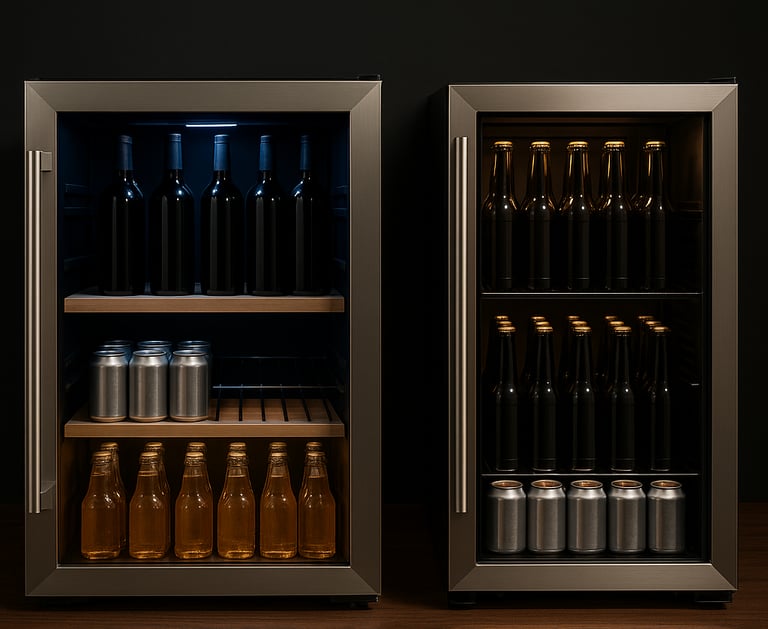
- Refrigeration: Dedicated under-counter beverage centers chill drinks independently of the kitchen fridge. [Under-counter beverage centers](/under-counter-beverage-centers/) remain a favored solution.
- Electrical outlets: Essential for appliances including blenders, coffee machines, or specialized lighting.
Planning these utilities from the outset avoids disruptive and costly alterations later.
Common Mistakes in Beverage Center Placement
- Positioning the beverage center too close to the main cooking zone, resulting in congestion and interference with kitchen workflow.
- Overlooking acoustic separation, allowing bar equipment noise to intrude on conversations and meal preparation.
- Blocking primary circulation routes, which causes bottlenecks and guest discomfort.
- Neglecting to define the beverage center’s boundaries, causing it to blend indistinctly with kitchen elements rather than establish presence.
- Disregarding infrastructure needs such as water, power, and refrigeration before finalizing placement.
- Designing an overly busy or loud visual aesthetic that overwhelms the room's atmosphere.
Practical Examples and Tools
- Beverage refrigerators: Provide precise temperature control separate from the kitchen fridge. Explore our guide to best beverage fridges for home bars.
- Bar carts: Highly adaptable and portable, best bar carts suit smaller spaces or act as supplementary beverage stations.
- Glass cabinetry or open back-bar shelving: Elegantly display bottles and glassware while emphasizing the bar’s identity. Bar back shelving systems deliver both function and refined appeal.
- Wet bar sinks: A small sink reduces trips to the kitchen for wet bars. Selecting from best wet bar sinks support both utility and style.
- Custom cabinetry: Thoughtfully organizes supplies and integrates under-counter beverage centers into efficient storage solutions.
Summary
The placement of your beverage center within a home bar strongly influences usability and atmosphere. The correct location supports unimpeded traffic flow, encourages social engagement, minimizes disruptive noise, and integrates essential utilities gracefully. Deliberate spatial definition and considered lighting further enhance the bar’s refined presence. Whether incorporating a compact under-counter fridge or a fully equipped wet bar, applying these principles ensures the beverage center functions and presents with quiet authority.
FAQ
Can I fit a beverage center in a small kitchen?
Yes. In compact spaces, standalone beverage centers, bar carts, or custom cabinet inserts create effective beverage zones without overcrowding.
Should a beverage center be in an open or closed space?
This depends on your home's layout. Open plans encourage social interaction, yet some acoustic separation—such as alcoves or partial enclosures—mitigates noise while maintaining connection.
How far should a beverage center be from the cooking zone?
Ideally, the beverage center is close enough for convenience but far enough to avoid crowding and disrupt kitchen workflows.
Is water access necessary for a beverage center?
Water is indispensable for wet bars with sinks but unnecessary for dry bars focused solely on storage and display.
What lighting works best for beverage centers?
Layered lighting—pendants, under-cabinet LEDs, and accent sconces—provides ambiance and visual distinction without overpowering the space.
Can beverage centers be retrofitted into existing homes?
Often, yes. Adding beverage refrigerators, cabinetry, or bar carts works well. Plumbing updates for wet bars require more planning but are achievable.
How does beverage center placement affect drink quality?
While placement alone doesn’t impact drink quality, convenient access and infrastructure like dedicated refrigeration support proper storage and preparation.
© 2026 Barkeepers Buzz. All rights reserved.
Barkeepers Buzz
Master cocktails, spirits, and bar knowledge with clarity and precision. Built for serious home enthusiasts.
Crafted with respect for the culture — and the responsibility that comes with it.
For educational purposes only. Intended for legal drinking age audiences. Please drink responsibly.
General Inquiries: