
Beverage Center vs Beverage Fridge: What’s the Difference?
Discover the key differences between a beverage center and a beverage fridge to choose the right appliance for your drink storage and preserve flavors perfectly.
HOME BAR GUIDES
Barkeepers BuzzBlog Editorial Team - Led by AJ “Buzz” Eichman
2/27/20265 min read
When setting up a home bar or entertainment space, picking the right appliance for your drink storage isn’t just about convenience—it’s about preserving your beverages’ flavor and presentation over time. The terms "beverage center" and "beverage fridge" get tossed around a lot, often like they mean the same thing. But there are subtle design and functionality differences that can change your day-to-day experience. This guide lays out those distinctions clearly, so you can make a smart, practical choice that fits your drink lineup and lifestyle. If you’re comparing all cold storage options for a home bar, our complete guide to home bar refrigeration and beverage storage breaks down how these units fit into a full setup.
Quick Verdict
- Beverage centers and beverage fridges both refer to specialized drink refrigerators.
- Differences usually show up in shelving style, lighting, and how temperature control is handled.
- Dual-zone beverage centers let you store different drinks—like beer and wine—at their ideal temps.
- Knowing what drinks you usually keep helps you avoid common mistakes like wrong temps or unsuitable units.
What Is a Beverage Center?
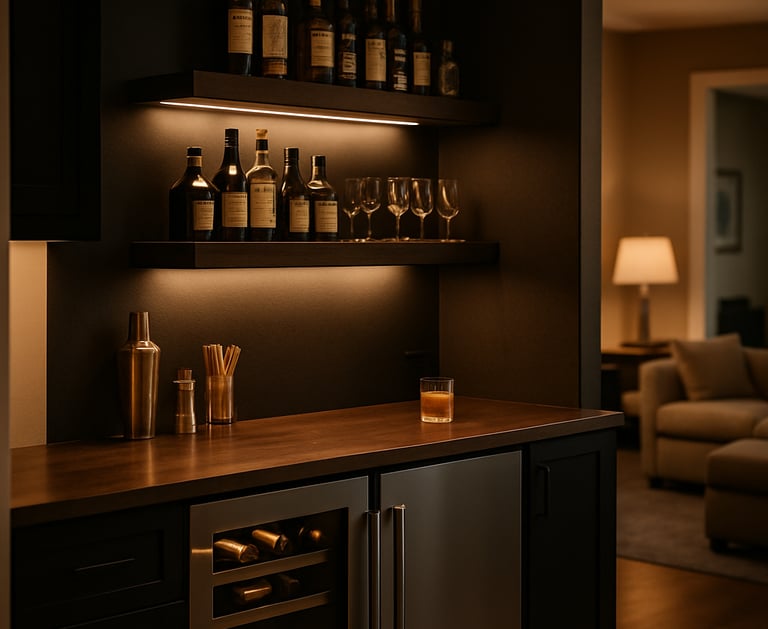
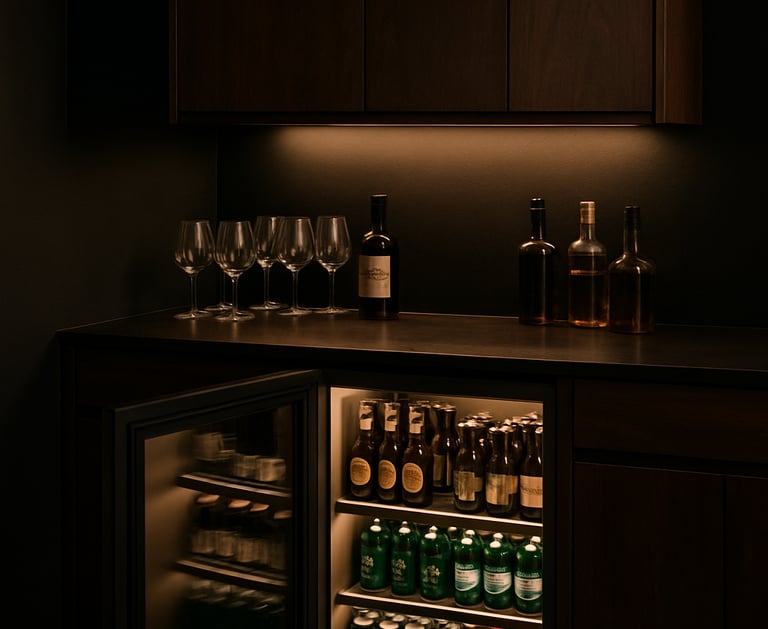
A beverage center is built specifically for drink storage—think beer, soda, water, and often wine. These units usually come with UV-filtered glass doors to shield your drinks from sunlight, flexible shelves that handle a range of bottle and can sizes, and temperature settings anywhere from about 35°F to 65°F.
Unlike wine fridges with their fixed racks, beverage centers focus on shelving that covers the full surface area, so you get versatile space for bottles, cans, and cartons arranged neatly. If wine storage is your main focus, reviewing the best wine fridges can help you decide whether a dedicated unit makes more sense. Design matters here, too—tempered glass doors and LED lighting give these units a sleek look while staying highly functional. You’ll find them available as freestanding or built-in under-counter options, so they fit well whether you’re working in a kitchen or bar area. For compact installations, explore under-counter beverage centers designed to fit standard cabinet dimensions.
What Is a Beverage Fridge?
“Beverage fridge” tends to mean pretty much the same as beverage center—most people use the terms interchangeably. Sometimes, though, beverage fridge implies a simpler, single-zone unit meant mostly for cold beer or soda. That’s not a hard rule, but something to keep in mind.
These fridges share key beverage-friendly features like adjustable shelving, UV-protected glass doors, and cooling designed to keep drinks tasting right. They tend to include quieter operation, humidity control to prevent condensation, and energy-efficient systems despite sometimes being a bit more basic than premium beverage centers.
Key Differences in Design and Features
Even though the terms overlap a lot, some beverage centers bring extra features that might justify spending more:
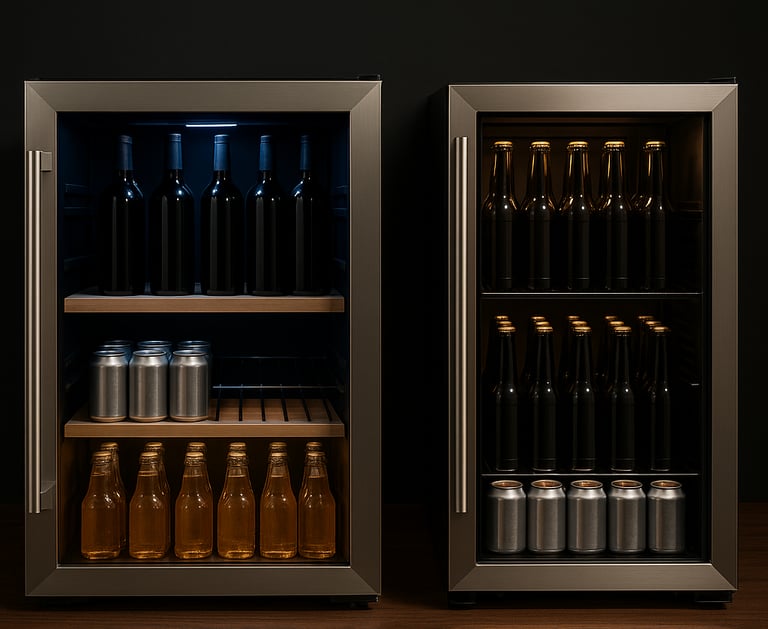
- Dual-Zone Temperature Control: Many beverage centers have two separate cooling zones. This means you can set one zone for beer (around 38°F) and another for red wine (around 55°F), keeping each at its best.
- Shelf Configuration: Beverage centers usually come with adjustable glass shelves you can rearrange for various container sizes—more versatile than traditional wine fridges’ fixed wooden or metal racks.
- Lighting and Display: LED lighting in beverage centers doesn’t just look good; it’s adjustable or can be turned off to protect delicate drinks like wine from light damage.
Temperature Control: Single-Zone vs Dual-Zone
Most beverage fridges and centers come in two flavors:
- Single-Zone Units: These keep a consistent temperature throughout, perfect if you mostly chill beers, sodas, or white wines that share similar cooling needs. Temperature settings often run from 35°F to 50°F.
- Dual-Zone Units: These have two independently controlled compartments, so you can keep beer cold on one side and wine at a warmer temp on the other. It’s a solid choice if your drink collection is more varied.
The choice comes down to your typical drink assortment and how long you plan to keep your collection.
Practical Implications for Drink Quality
Temperature control is hands-down the biggest factor affecting how well your drinks keep in storage.
- Beer Storage: Best served and stored cold, around 38°F to 45°F. Beverage centers hit that sweet spot without freezing or dulling flavors like a freezer might.
- Wine Storage: Wine prefers stable, moderate temps. Too cold stifles flavor; too warm ages it too fast. Dual-zone centers handle this well by separating wines from colder drinks.
- Soda and Water: Less sensitive but want consistent, visible chilling.
- Pairing cold beverage storage with proper ice storage bins keeps both temperature and dilution under control.
- Storage temperature also influences melt behavior, which ties directly into the dilution curve and why ice shape matters.
- Understanding how melt rate impacts flavor is easier when you compare clear ice vs cloudy ice side by side.
- If you serve spirits alongside chilled drinks, using quality cubes from the best ice molds improves presentation and melt control.
Common Mistakes When Choosing Beverage Storage
- Using a Standard Fridge or Freezer: Regular refrigerators are usually too cold for wines and can dry out corks or speed up oxidation. Freezers are risky—they can freeze and ruin drinks. If you’re adding frozen storage to your bar setup, comparing the best freezers for home bars ensures temperature stability without harming beverages.
- Overlooking Ventilation: Built-in units need good airflow for proper cooling. Blocking vents or squeezing them in tight spots spells trouble.
- Picking the Wrong Temperature Setup: Single-zone units force compromises if you have mixed beverage needs, hurting drink quality.
- Ignoring Capacity and Shelf Design: Not accounting for bottle shapes or sizes can mean wasted space or frustration down the line.
Installation and Capacity Options
You’ll find beverage centers and fridges in various sizes—from compact models that slide under counters to larger freestanding units holding 80 to 150 cans or equivalent bottles. Undercounter models match standard cabinet heights, blending neatly into your kitchen or bar.
For premium cocktail service, some homeowners pair refrigeration with automatic clear cube and sphere systems for consistent ice production.
Practical Tips for Home Bar Setup
Placement matters, especially within a larger home bar setup where refrigeration, ice, and mixing space all work together. Organizing bottles, cans, and mixers logically improves your workflow and keeps drinks ready at the right temp.
FAQ
Are beverage centers suitable for wine storage?
Yes, especially those with dual-zone temperature control. They keep wine at ideal serving temps and protect it from light with UV-filtered glass.
Can I store beer and soda in a beverage fridge?
Absolutely. These fridges come with adjustable shelves and temperature ranges designed to keep beers, sodas, and more properly chilled.
What temperature should a beverage fridge be set for beer?
Between 38°F and 45°F is ideal—it keeps flavor and carbonation intact without being excessively cold.
Is a single-zone beverage center enough for mixed drink storage?
If your drinks share similar cooling needs (just beers or sodas), single-zone units work fine. For mixed collections including wine, dual-zone is a smarter choice.
How does UV filtering help in beverage fridges?
It blocks harmful ultraviolet light that can spoil beverages, especially wine, preserving flavor and quality.
Can beverage centers replace traditional refrigerators?
Not really. They’re made for drink storage and don’t handle food the same way. Think of them as a complement, not a replacement.
Do beverage centers require professional installation?
Most freestanding units just need power. Built-in versions might require ventilation planning but usually no specialized installation.
---
This breakdown should clear up the differences between beverage centers and beverage fridges, helping you make a well-informed choice that fits your home bar and drink storage needs.
© 2026 Barkeepers Buzz. All rights reserved.
Barkeepers Buzz
Master cocktails, spirits, and bar knowledge with clarity and precision. Built for serious home enthusiasts.
Crafted with respect for the culture — and the responsibility that comes with it.
For educational purposes only. Intended for legal drinking age audiences. Please drink responsibly.
General Inquiries: