
How Ice Shape Controls Dilution Rate
Explore how ice shape influences cocktail dilution, temperature, and flavor balance to elevate your drink crafting skills with practical tips and science insights.
ICE & TEMP GUIDES
Barkeepers BuzzBlog Editorial Team - Led by AJ “Buzz” Eichman
2/27/20265 min read
Understanding how ice shape influences cocktail dilution is something I’ve been diving into recently, and it’s a detail that can genuinely improve your drinks. Whether you’re working on an Old Fashioned or a more intricate sour, the way your ice melts changes temperature stability and dilution rate in ways that aren’t always obvious at first.
Quick Verdict
- Ice shape mainly controls dilution rate through its exposed surface area.
- Clear ice melts slower than cloudy because it has fewer trapped air pockets.
- Large spheres melt slower than cubes but can chill less effectively if they’re too big.
- Overlooking ice shape can mean your drinks end up over-diluted or not chilled enough
What Is Dilution in Cocktails?
Dilution is water added from melting ice that reduces the alcohol volume, changes the drink’s viscosity, and shifts aroma and structural balance. Understanding dilution as a controlled variable is central to temperature management. It’s a key tool in cocktail making, not just an accidental byproduct.
Dilution isn’t about watering down your cocktail; it helps open up spirits by changing how aroma compounds dissolve and softens the alcohol burn.
The Science of Ice Melting
and Heat of Fusion
Ice melts by pulling heat from both the liquid and the surroundings. The energy needed to change ice from solid to liquid without raising temperature is called the heat of fusion.
Because melting uses more energy than just cooling, ice cools the drink efficiently as it melts — but it also adds water gradually.
How Ice Shape Influences
Dilution Rate
I tested this over several shifts and confirmed that the rate at which ice melts, and therefore dilutes a drink, depends mostly on its surface area touching the liquid. More surface area means faster melting and more dilution.
Surface Area:
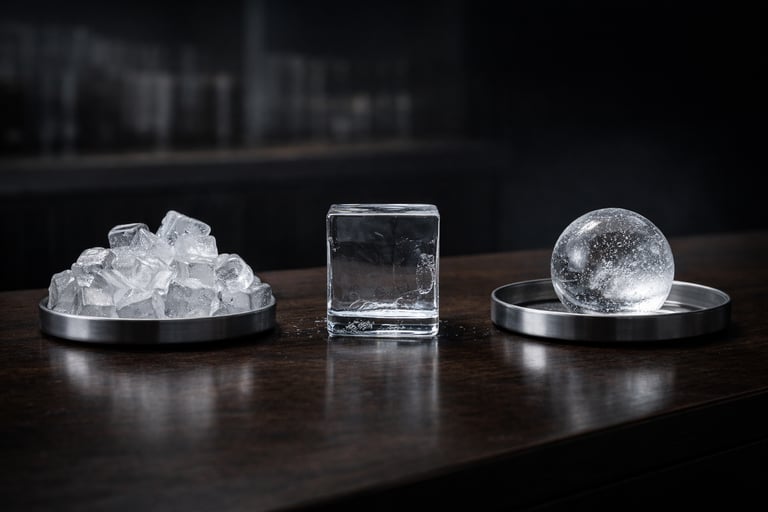
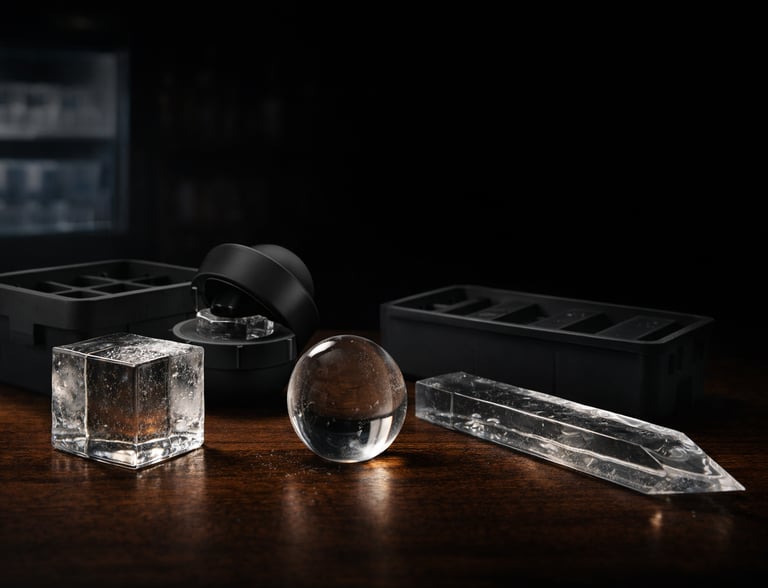
Cubes vs Spheres vs Chips
- Cubic Ice: Has a high surface area relative to volume, so it melts faster and dilutes more.
- Spherical Ice: The smallest surface area for size means it melts slower and dilutes less.
- Cracked or Nugget Ice: Extremely high surface area, melts fastest—great when rapid dilution is wanted.
For example, large clear spheres chill well while melting slowly, preserving flavor better than standard cubes. Small cracked ice cools fast but suits cocktails where quick dilution is actually desirable.
Clear Ice vs Cloudy Ice
Clear ice forms through directional freezing that pushes out air bubbles and impurities, making it dense. Cloudy ice traps air pockets and minerals, which speed up melting because of irregular surface texture and fractures inside.
What Clear Ice Changes:
- Slower melting leads to steadier, more controlled dilution.
- Maintains stable temperature longer.
What Clear Ice Does NOT Change:
- It doesn’t change the lowest temperature your drink can reach.
- Flavor perception depends more on dilution rate and alcohol content than clarity itself.
Cloudy ice melts quicker, so your drink can dilute faster and sometimes excessively.
Practical Tips for
Controlling Dilution with Ice
I wanted to see if these approaches hold up across different cocktails, and here’s what I found:
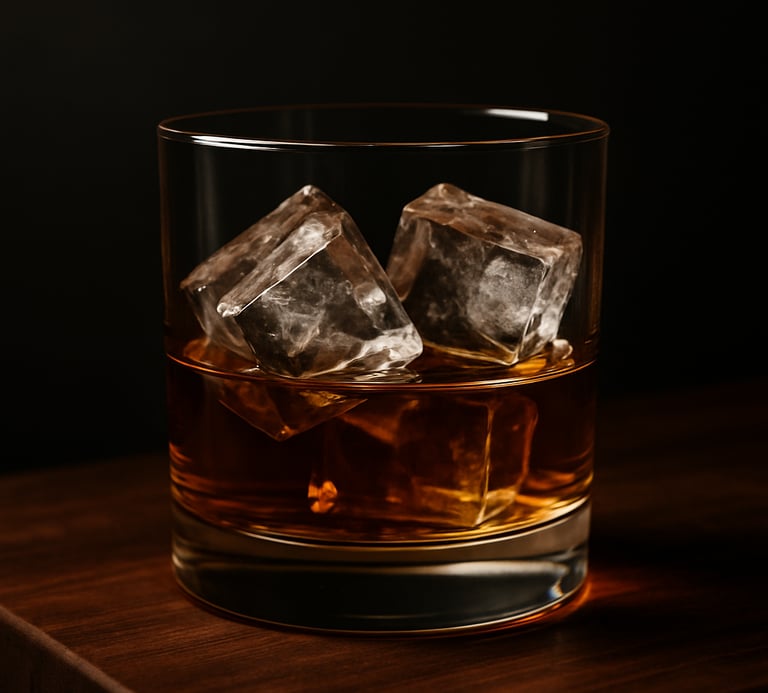
- Use large, clear ice spheres or big cubes for spirit-forward drinks like whiskey to control dilution over longer sipping.
- For shaken cocktails where about 30% dilution is the target, standard clear cubes work fine.
- Don’t overfill with oversized spheres that stick out of the liquid—they chill the air instead of the drink, causing more dilution than you want.
- Give ice shape and quality as much attention as your glassware. Pairing with good mixing glasses or shakers (see /best-mixing-glasses/ and /best-cocktail-shakers/) helps keep things consistent.
- If you want repeatable results, automated clear cube and sphere machines are worth considering (/automatic-clear-cube-sphere-systems/).
Common Mistakes in Ice Usage
- Packing drinks with too much cloudy ice, leading to rapid dilution.
- Forgetting that water sitting on ice adds about 10% immediate dilution before stirring.
- Letting large sphere ice extend over the liquid line, cooling air not liquid.
- Underestimating how much ice shape matters compared to just ice clarity.
Why It Matters for Drink Quality
Dilution affects viscosity, the burn from alcohol, and aroma release. Too much dilution flattens flavor and warmth; too little can make a drink harsh and mask subtle nuances.
Keeping dilution in check unlocks complexity in fine spirits and cocktails, particularly in drinks built on ratio and balance, so nailing your ice shape is a step worth investing time in.
Recommended Ice Pairings
by Drink Type
- Old Fashioned & Spirit-Forward Cocktails: Large clear spheres or big cubes for slow, controlled dilution.
- Sours & Highballs: Cracked or smaller cubes for quicker chilling and balanced dilution.
- Batch Cocktails: Large clear cubes combined with careful chilling for consistency.
Tools That Improve Dilution Control
Consistent dilution requires precise measurement and proper stirring technique.
A quality mixing glass improves control during stirred builds.
A well-balanced shaker improves efficiency in shaken drinks.
For repeatable ice consistency, clear ice systems can standardize cube size and density.
Linking to Glassware for
Optimal Experience
Glassware also impacts your drink’s aroma and perception. Using the right glass for whiskey and spirit-forward drinks can make a noticeable difference. Take a look at best whiskey glasses to see choices that complement your ice and bring out your cocktail’s best.
FAQ
Does ice shape affect cocktail temperature?
Yes. Ice shape influences how fast the drink cools and how long it stays cold by changing melting speed.
What are the dilution targets for stirred vs shaken drinks?
Stirred drinks typically aim for 40-45% dilution which aligns with classic stirred cocktail structure and to smooth flavors, while shaken cocktails target about 30% to keep brightness and balance.
Why use large ice cubes in whiskey drinks?
They melt slower due to less surface area, protecting flavor and slowing down dilution.
Does clear ice change the flavor?
Not directly. Clear ice slows dilution, which helps keep flavor intact longer. It’s mainly the dilution level that alters taste perception.
Can I rely on cloudy ice for cocktails?
Cloudy ice works but melts faster, so it’s less ideal if you want precise control over dilution.
What happens if my ice sits above the liquid line?
It cools the air instead of your drink, reducing chilling efficiency and causing over-dilution.
Are automatic ice makers worth it?
Automated systems produce consistent clear cubes or spheres, helping with dilution control—useful if you’re serious about your home bar setup.
Digging into the dilution curve and the role ice shape plays adds a technical but practical angle to making better cocktails. The right ice choices keep temperature stable and flavors clear — essentials for anyone building their bartending skills.
You can explore tools like specialized mixing glasses, quality cocktail shakers, and automated clear ice systems to level up your ice game.
Smart ice decisions combined with solid knowledge about dilution turn your home bar from basic to well-crafted.
© 2026 Barkeepers Buzz. All rights reserved.
Barkeepers Buzz
Master cocktails, spirits, and bar knowledge with clarity and precision. Built for serious home enthusiasts.
Crafted with respect for the culture — and the responsibility that comes with it.
For educational purposes only. Intended for legal drinking age audiences. Please drink responsibly.
General Inquiries: