
Best Kegerators for Home Bars
Draft Control. Temperature Stability. Structured Pouring.
A serious home bar eventually reaches a decision point:
Bottles — or draft?
Kegerators transform beer service from storage to system.
Instead of refrigeration and manual pouring, you gain:
Controlled temperature
Pressurized draft flow
Carbonation stability
Clean presentation
High-volume service capability
For hosts, entertainers, and dedicated home bar builders, a kegerator is not novelty equipment.
It is service infrastructure.
This guide breaks down the best kegerator types, how to evaluate them properly, and how to integrate draft systems into a structured home bar build.
Transparency Note: We may earn a commission from qualifying purchases. Product selections are made independently and are not influenced by manufacturers.
What Is a Kegerator?
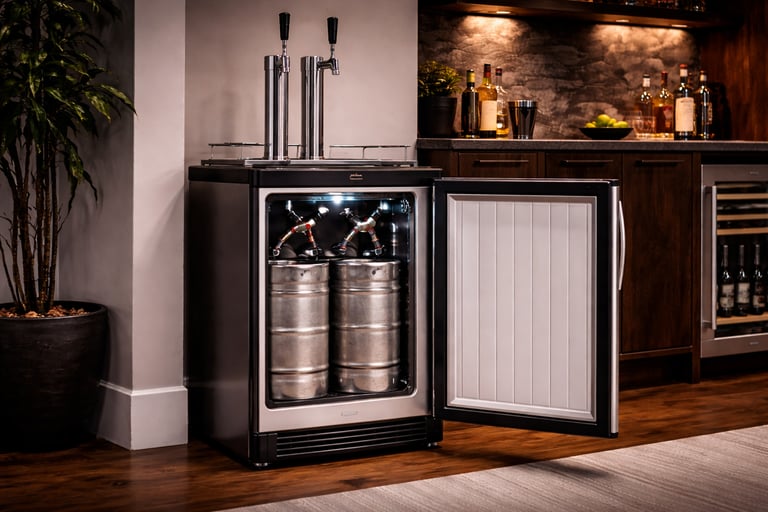
A kegerator is a refrigerated draft beer system that stores a keg at controlled temperature and dispenses beer through a pressurized tap system.
Core components include:
Refrigeration chamber
CO₂ tank
Regulator
Draft tower
Tap faucet
Beer line
Unlike standard refrigerators, kegerators are built specifically for keg storage, temperature stability, and carbonation control.
They are not beer coolers.
They are dispensing systems.
Types of Kegerators
Not all kegerators serve the same purpose.
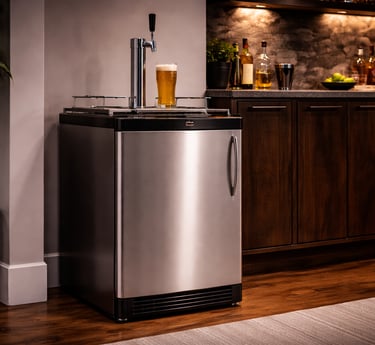
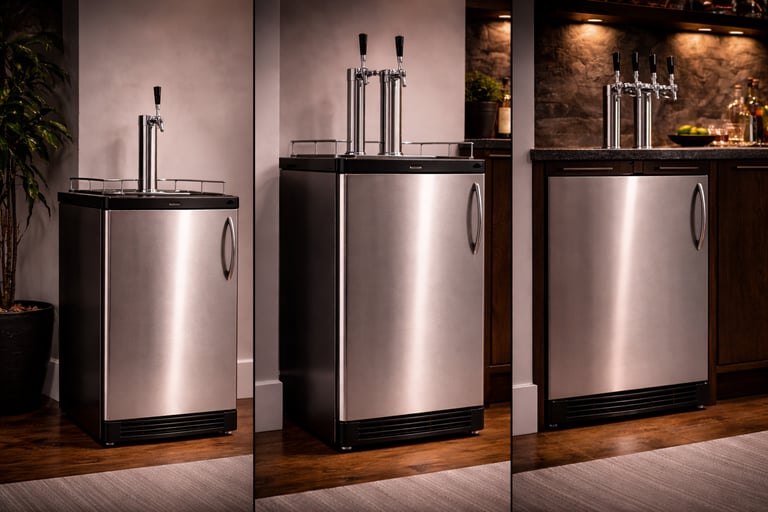
Freestanding Kegerators
Flexible Placement & Entry-Level Installation
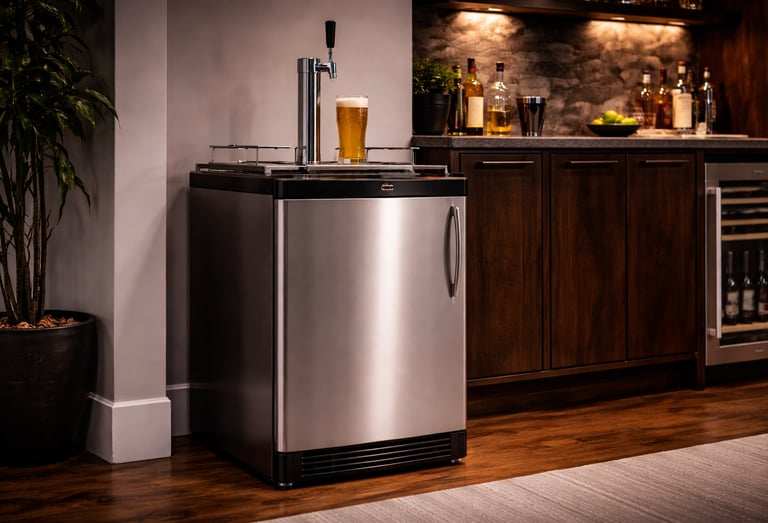
Freestanding units are plug-and-play systems that can sit in:
Garage bars
Basement lounges
Bar corners
Outdoor covered patios
Best For:
Flexible placement
Non-renovation setups
Moderate hosting frequency
Advantages:
Lower upfront cost
Easy setup
Wide product availability
Limitations:
Requires ventilation clearance
Less seamless visually
Freestanding is the Essential tier.
Built-In / Under-Counter Kegerators
Permanent Bar Installation
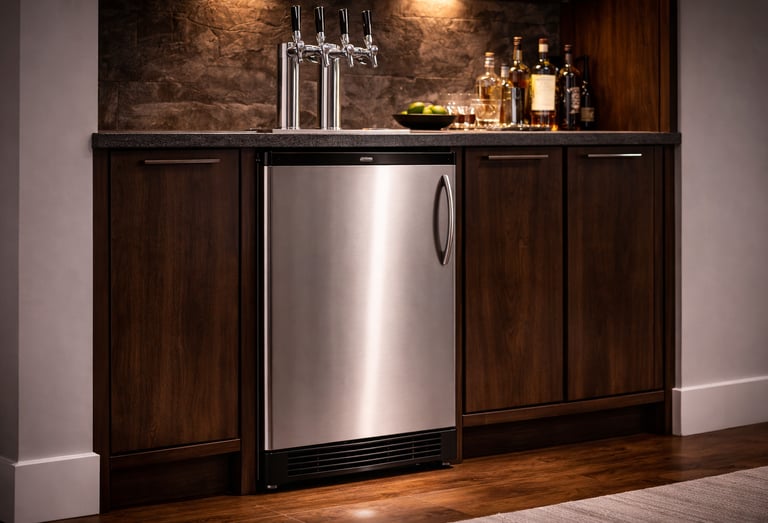
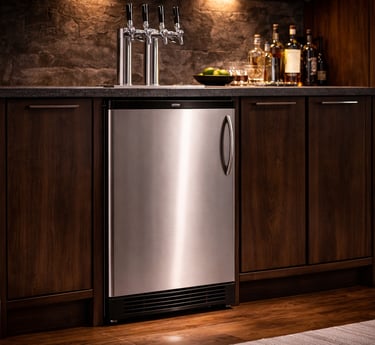
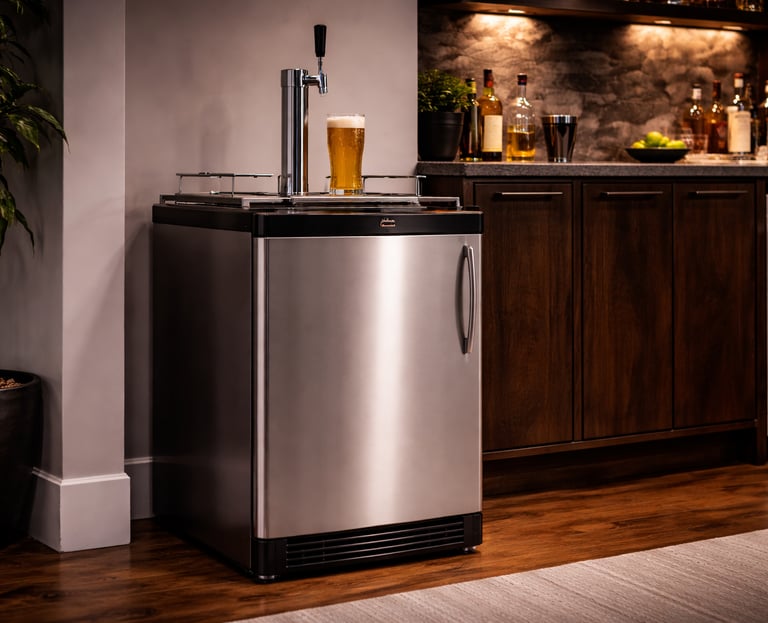
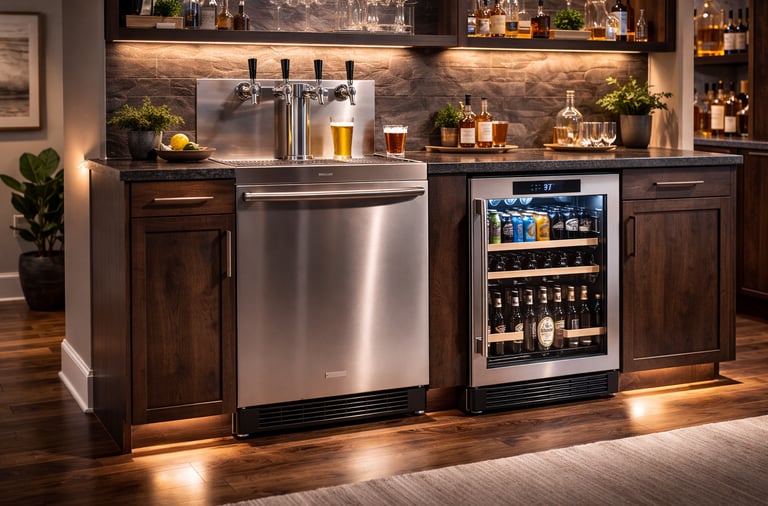
Built-in kegerators vent from the front, allowing flush cabinet integration.
Best For:
Permanent home bar builds
Renovations
Luxury basement installs
Advantages:
Clean cabinetry alignment
Professional visual finish
Structured bar identity
Limitations:
Higher cost
Measurement precision required
This is the Refined-to-Professional tier depending on capacity.
Multi-Tap Kegerators
Scaled Draft Service
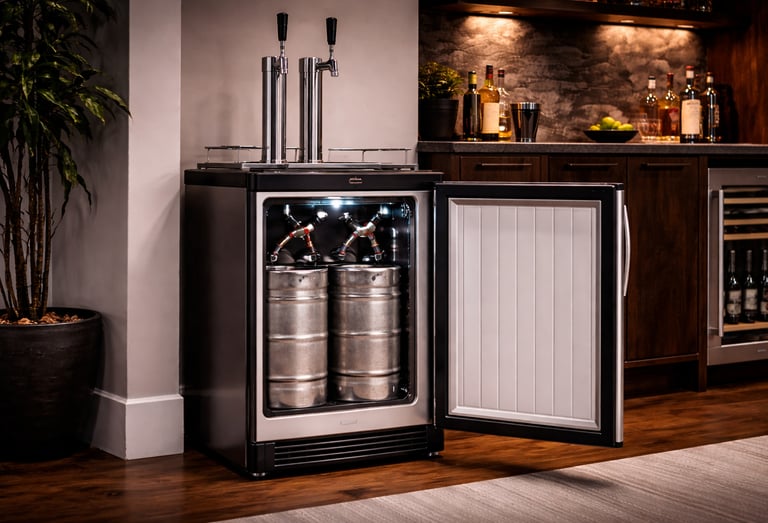
Multi-tap systems allow:
Two or three kegs
Mixed beer styles
Separate pressure regulation
Best For:
Frequent hosting
Beer enthusiasts
Event-scale service
These systems require more space and stronger planning.
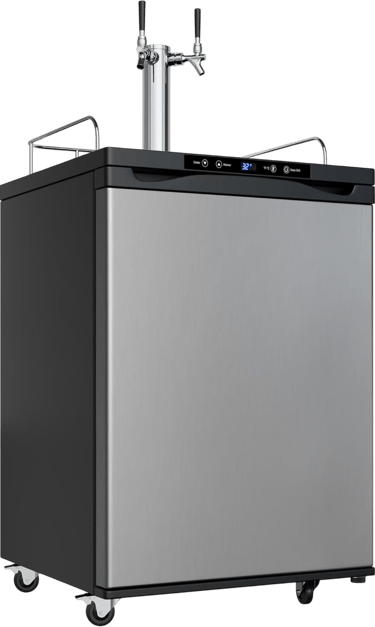
EdgeStar KC3000SSTWIN
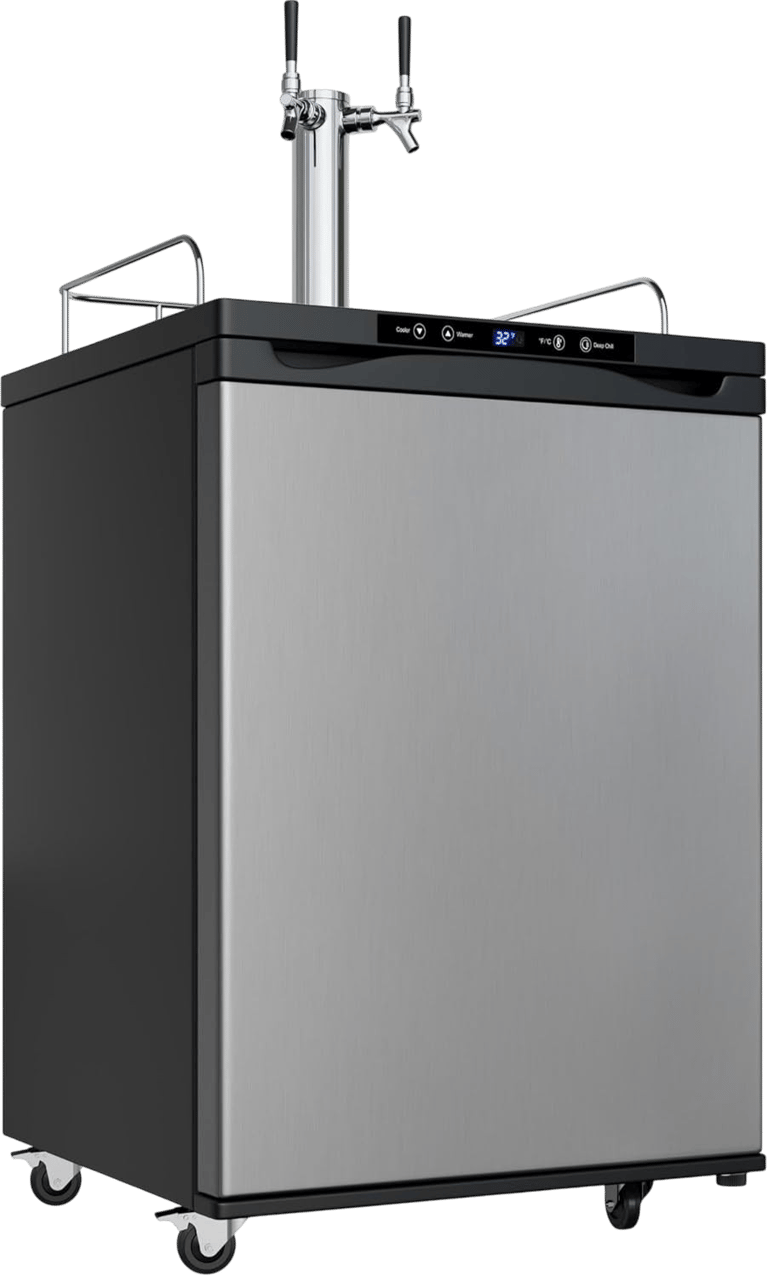
The EdgeStar KC3000SSTWIN hits one of the best balance points in the entire kegerator category. It delivers the flexibility most home bar owners actually need without jumping fully into oversized commercial equipment that can feel excessive for residential use.
What makes this model stand out is how usable it is long term. The oversized interior works with multiple keg formats, the digital controls are easy to manage, and the dual-tap system makes it ideal for people who regularly entertain or rotate between beer styles. It feels purpose-built for serious home bar setups rather than casual once-a-month use.
The cooling system is also more consistent than many lower-tier residential kegerators, which matters more than people think once you start serving regularly. Temperature swings can affect carbonation, foam control, and overall pour quality. The EdgeStar handles that better than most entry-level systems.
Specs (Quick Breakdown)
Capacity: Full-size 1/2 barrel compatible
Tap Configuration: Dual tap
Installation Type: Freestanding
Temperature Control: Digital
Interior Flexibility: Multiple keg configurations
Exterior Finish: Stainless steel
Best Use Case: Serious home bars and entertaining
Why This Wins
The EdgeStar works because it avoids the extremes. It is more refined and capable than budget kegerators, but it still feels approachable for residential use without turning into oversized commercial equipment.
It also offers one of the better combinations of:
cooling consistency
keg flexibility
clean aesthetics
upgrade potential
for the money.
👉 It is not the cheapest option—but it is one of the safest long-term buys for most home bar owners.
The included hardware is solid for most users, though enthusiasts will eventually upgrade faucets and regulators for even better performance.
BUZZ'S TOP PICK
EdgeStar KC3000SSTWIN
Best Overall
Kegco 3PK309SS-2 24″ Dual-Tap
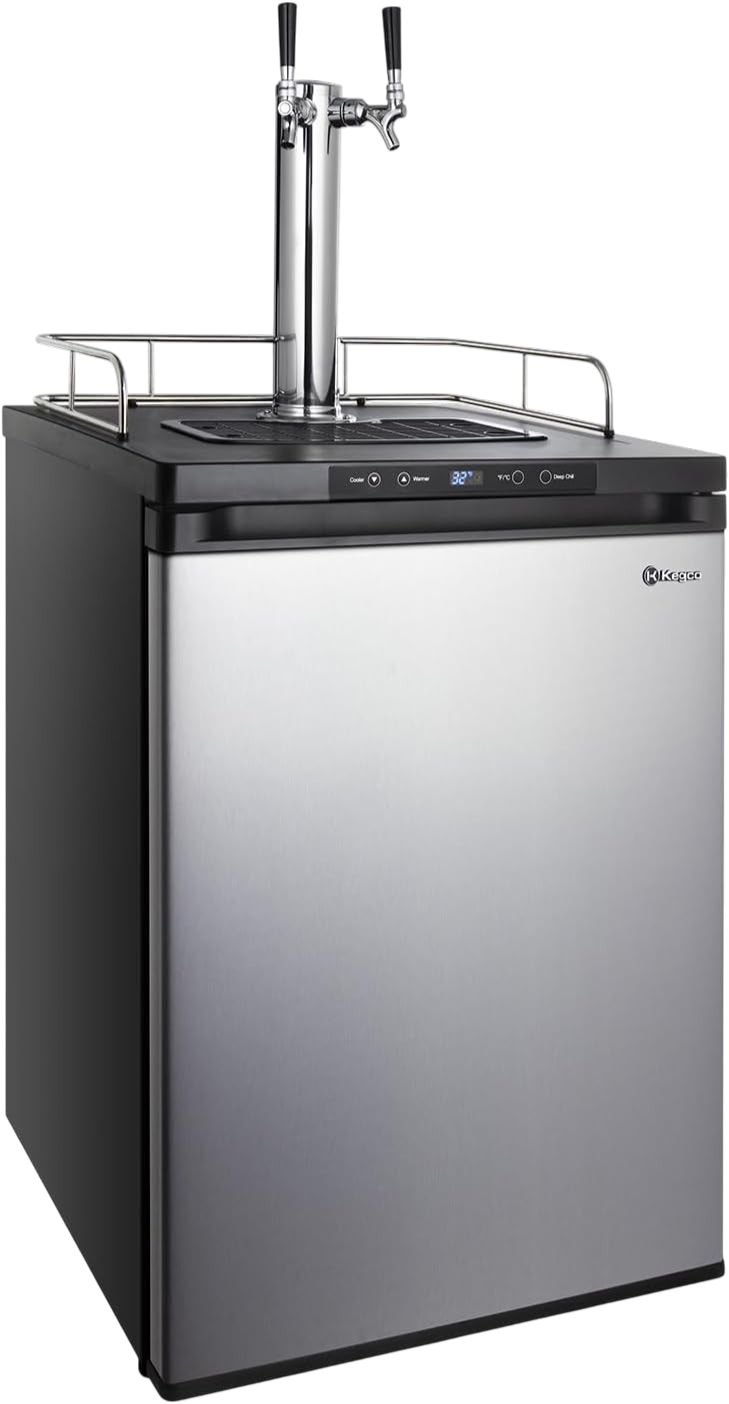
The Kegco 3PK309SS-2 has become popular for one simple reason: it gives enthusiasts a lot of flexibility without pushing into premium pricing territory. It is one of the better value-focused dual-tap kegerators for people who want real draft functionality at home without overspending on commercial-grade systems.
Where this unit really shines is interior versatility. It works well for traditional beer kegs, but it is also highly popular with homebrewers running Cornelius kegs and rotating multiple styles. That makes it especially attractive for people building more personalized draft setups.
The fan-forced cooling system also helps maintain more stable temperatures throughout the cabinet and tower area, which can improve pour consistency compared to simpler budget units.
Specs (Quick Breakdown)
Capacity: Full-size keg compatible
Tap Configuration: Dual tap
Installation Type: Freestanding
Temperature Control: Digital
Cooling Style: Fan-forced
Interior Flexibility: Excellent for homebrew setups
Best Use Case: Homebrewers and value-focused enthusiasts
Why This Wins
The Kegco succeeds because it gives buyers most of the functionality they actually want without dramatically increasing the price.
It is especially strong for:
multi-keg flexibility
homebrew compatibility
DIY upgrades
enthusiast customization
Many owners eventually personalize the system with upgraded faucets, regulators, or tower cooling, which is part of why this model has remained popular among hobbyists.
👉 This is one of the better “grow into it” kegerators for enthusiasts who plan to expand their setup over time.
The included components are functional, though serious draft enthusiasts may eventually upgrade some hardware pieces.
BUZZ'S TOP PICK
Kegco 3PK309SS-2
Best Value
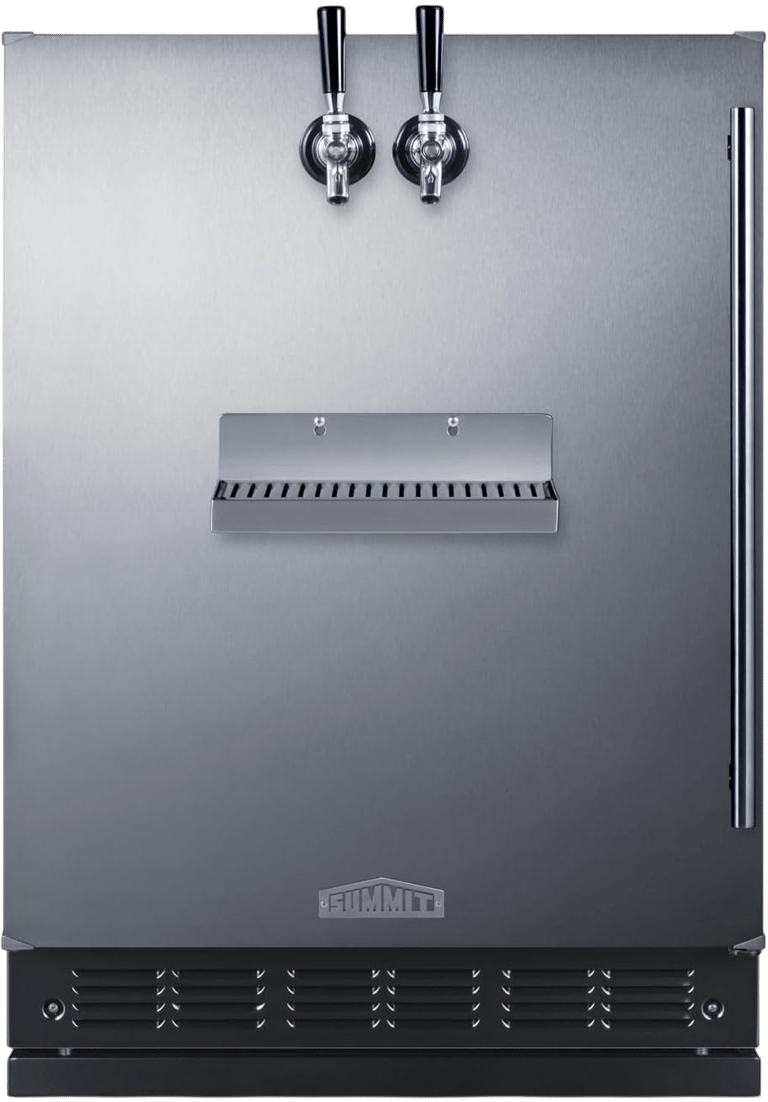
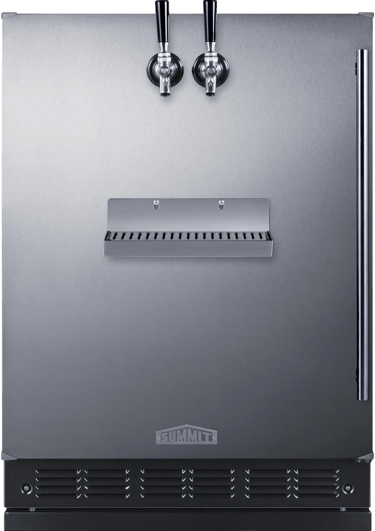
Summit 24" Undercounter Kegerator
The Summit 24" Undercounter Kegerator is designed for buyers who care just as much about integration and aesthetics as they do draft performance. Unlike many freestanding residential units, this style is built to disappear cleanly into a permanent home bar or outdoor kitchen layout.
What separates Summit from many traditional home kegerators is the built-in installation capability. The front-venting design allows it to work inside cabinetry and under counters without overheating, which makes it a far better fit for higher-end renovations and custom bar spaces.
This category is less about maximizing raw keg flexibility and more about creating a polished permanent installation that feels intentional within the space.
Specs (Quick Breakdown)
Capacity: Undercounter keg configuration
Tap Configuration: Dual tap
Installation Type: Built-in / undercounter
Ventilation Style: Front-venting
Exterior Finish: Stainless steel
Footprint: 24-inch class
Best Use Case: Premium built-in home bars
Why This Wins
The Summit stands out because it solves a completely different problem than most residential kegerators. Instead of focusing purely on capacity and affordability, it focuses on clean integration and premium presentation.
This makes it especially appealing for:
luxury home bars
entertainment spaces
outdoor kitchens
custom cabinetry installations
👉 This is one of the strongest options for buyers who want their kegerator to feel like part of the room—not just an appliance sitting beside it.
The biggest tradeoff is price. Built-in systems typically cost more while offering less raw flexibility than larger freestanding models.
BUZZ'S TOP PICK
Summit 24" Undercounter
Best Built-In
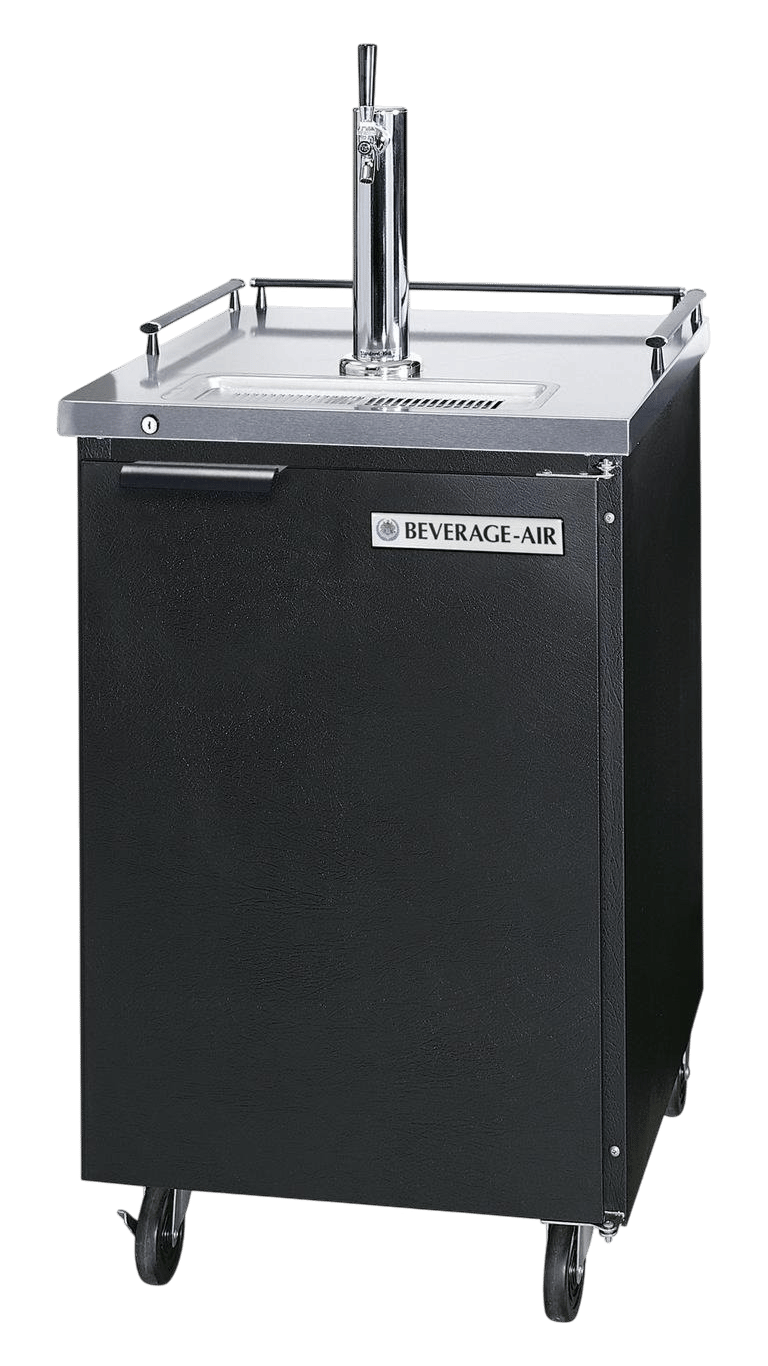
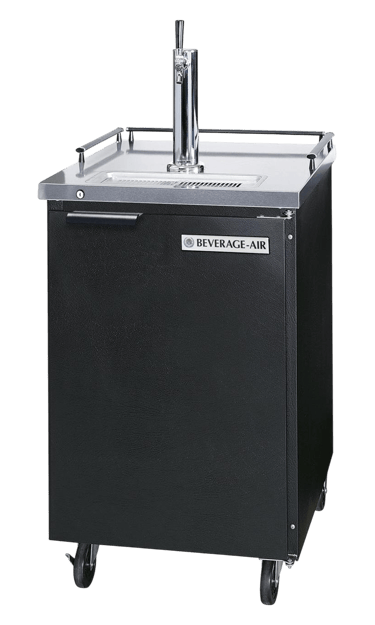
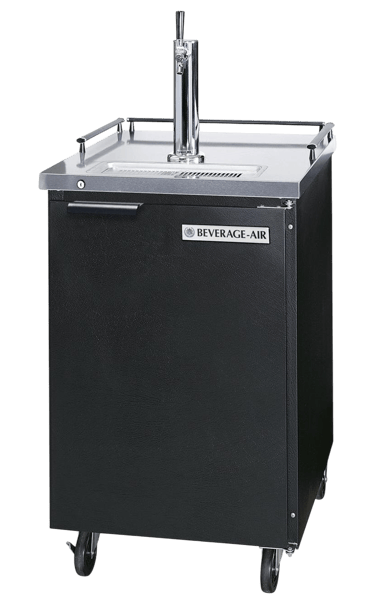
Beverage-Air BM23HC-B
The Beverage-Air BM23HC-B is real commercial bar equipment. Unlike residential kegerators designed mainly for occasional entertaining, this unit is built for durability, serviceability, and continuous heavy use.
Everything about the construction is more industrial. The refrigeration system is stronger, the cabinet structure is reinforced, and the interior materials are designed to survive high-use commercial environments where doors are constantly opening and closing throughout the day.
That durability changes the ownership experience significantly. This is the type of unit buyers choose when they prioritize long-term reliability over luxury styling or residential convenience.
Specs (Quick Breakdown)
Capacity: Commercial keg storage
Tap Configuration: Commercial-ready
Installation Type: Freestanding commercial
Refrigeration Type: Heavy-duty compressor system
Interior Construction: Reinforced commercial materials
Exterior Finish: Black commercial cabinet
Best Use Case: High-volume entertaining or commercial bars
Why This Wins
The Beverage-Air wins because it is built to survive real commercial workloads instead of occasional residential use.
Compared to residential systems, it offers:
stronger refrigeration performance
heavier-duty construction
better long-term durability
more service-friendly components
👉 This is the best option here for buyers who care more about reliability and longevity than polished residential aesthetics.
It is absolutely overkill for casual users—but for serious entertaining setups or commercial environments, that overbuilt construction becomes the entire point.
BUZZ'S TOP PICK
Beverage-Air BM23HC-B
Best Commercial
What to Look for in a Quality Kegerator
Do not evaluate on appearance alone.
Evaluate on system integrity.
Temperature Control
Look for:
Adjustable 32°F–50°F range
Digital thermostat
Stable cycling
Beer temperature affects carbonation and flavor.
CO₂ Regulation
A quality regulator allows:
Adjustable PSI
Stable carbonation pressure
Consistent pour speed
Poor regulation = foam issues.
Draft Tower Insulation
Warm draft towers cause foam.
Better units include:
Tower cooling fans
Insulated beer lines
Stainless steel construction
This matters more than finish color.
Interior Capacity
Common formats include:
Full-size half-barrel (15.5 gal)
Quarter barrel
Sixth barrel
Choose based on hosting frequency.
Build Quality
Look for:
Stainless steel interior floor
Reinforced door hinges
Commercial-grade tap hardware
Avoid thin interior materials.
Draft systems experience weight stress.
Temperature & Carbonation Discipline
Beer carbonation depends on:
PSI
Temperature
Line length
Keg freshness
Typical settings:
38°F storage
10–12 PSI for most ales
Slightly higher for lagers
Precision prevents excessive foam and flat pours.
Why a Kegerator Makes Sense for a Home Bar
A kegerator improves:
Consistency
Entertaining speed
Carbonation retention
Storage efficiency
Per-pour cost
For frequent hosts, draft eliminates:
Bottle clutter
Warm beer cycling
Over-pouring
Repeated fridge access
Draft service also elevates presentation.
Structured bars benefit from structured pouring.
Kegerator vs Beverage Fridge
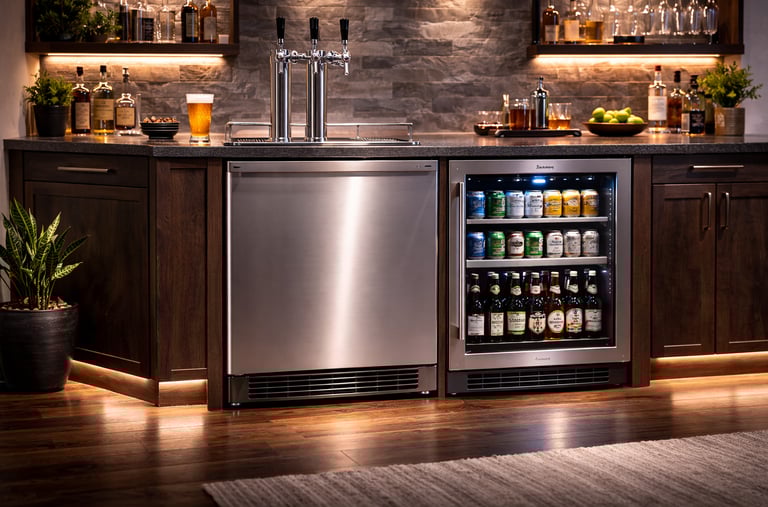
A beverage fridge stores cans and bottles.
A kegerator:
Maintains pressurized carbonation
Dispenses draft
Controls flow
They are complementary systems.
Not interchangeable.
Size Recommendations by Usage
Casual Host (Occasional Parties)
Single-tap freestanding
Holds one full-size keg
Moderate footprint
Active Entertainer
Dual-tap freestanding or built-in
Supports two sixth barrels
Improved draft control
Dedicated Draft Program
Built-in dual or triple tap
Front-venting
Cabinet-integrated
Advanced CO₂ control
Choose based on service frequency.
Energy & Noise Considerations
Kegerators run continuously.
Look for:
Energy-efficient compressors
Quiet cycling
Sealed door gaskets
Adjustable shelving (if convertible)
Placement often occurs in entertaining spaces.
Noise matters.
Common Mistakes to Avoid
• Buying rear-vent models for built-in cabinets
• Ignoring PSI adjustment
• Not cleaning draft lines
• Underestimating keg size
• Placing unit in direct sunlight
Draft systems require maintenance discipline.
Maintenance Requirements
Draft systems must be cleaned regularly.
Line cleaning every 2–4 weeks prevents:
Flavor contamination
Foam instability
Bacterial buildup
Maintenance is part of ownership.
Quick Picks for Your Home Bar
EdgeStar KC3000SSTWIN
Dual taps with balanced cooling and flexible keg support


BUZZ PICK – Best Overall
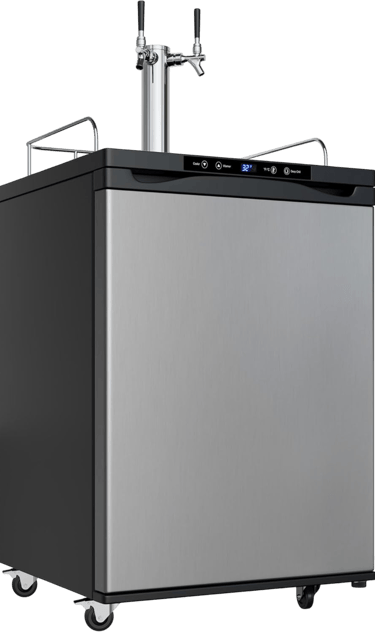
Kegco 3PK309SS-2 24″ Dual-Tap
Strong dual-tap performance for home bars on a budget
BUZZ PICK – Best Value
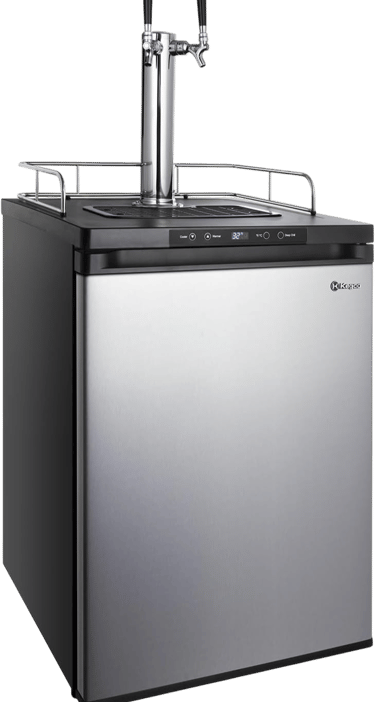
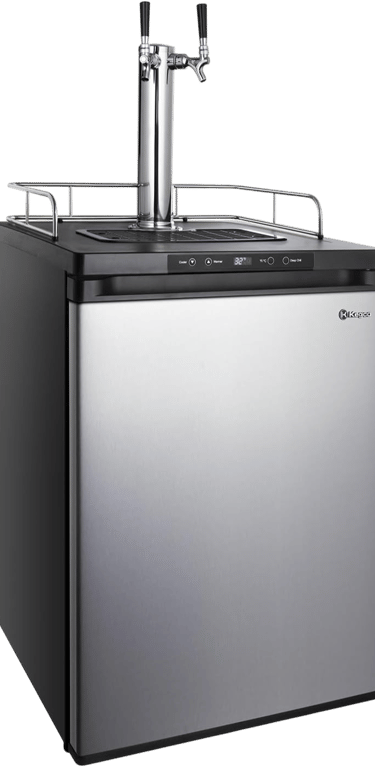
Summit 24" Undercounter Kegerator
Premium undercounter design for clean built-in setups
BUZZ PICK – Best Built-In
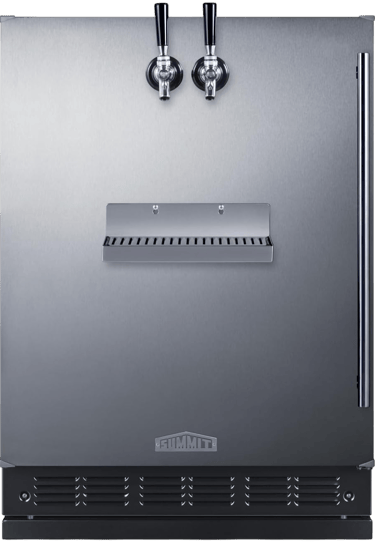
Beverage Air
BM23HC-B 24
Heavy-duty commercial cooling built for long-term use
BUZZ PICK – Best Commercial
Kegerators Frequently Asked Questions
How often do draft lines need cleaning?
Every 2–4 weeks for consistent flavor and foam control.
What size keg fits most kegerators?
Most support one full-size half-barrel or two sixth-barrels.
Do kegerators use a lot of electricity?
Modern compressor systems are relatively efficient, similar to compact refrigerators.
Do kegerators keep beer colder than refrigerators?
They maintain more stable beer-specific temperatures and prevent frequent cycling caused by general fridge use.
How long does a keg last in a kegerator?
Once tapped, 2–6 weeks depending on pressure and cleanliness.
Are built-in kegerators worth it?
For permanent home bar installations, yes. They provide better structural integration and resale appeal.
Can you convert a beverage fridge into a kegerator?
Not reliably. Draft systems require pressure regulation and specific interior dimensions.
Building Intelligently: Integrating Draft Systems into Your Bar
A kegerator should not stand alone.
It integrates into a structured bar system.
Pair with:
Best Wine Fridges for Home Bars for balanced temperature control
Best Beverage Fridges for Home Bars for mixers and cans
Best Home Bar Cabinets for structured storage
Best Back Bar Shelving Systems for glass display
Best Ice Systems for cocktail service alongside draft
Draft adds scale.
But temperature discipline must extend across your entire bar build.
A serious home bar integrates:
Draft systems are part of the larger temperature control ecosystem.
Build deliberately.
Install properly.
Control pressure.
Control temperature.
Control quality.
Where Do You Want to Go Next?
Choose your path based on what you need right now.
You don’t need to build your home bar one piece at a time with no plan. A good setup starts with the layout, storage, appliances, lighting, and serving flow working together.
Start here if you want the full home bar framework before choosing more equipment.
Explore Everything
Before you buy more furniture or appliances, make sure the full setup makes sense. Placement, power, storage, refrigeration, lighting, and workflow all matter more than people expect.
Use this if you’re still mapping out the room before committing to gear.
Compare Before You Buy
If you want a kegerator that simply works, start here.
The EdgeStar KC3000SSTWIN delivers reliable cooling, dual-tap flexibility, and easy everyday usability for most home bar setups.
It is one of the easiest long-term kegerators to recommend for everyday use.
Just Get It Done
© 2026 Barkeepers Buzz. All rights reserved.
Barkeepers Buzz
Master cocktails, spirits, and bar knowledge with clarity and precision. Built for serious home enthusiasts.
Crafted with respect for the culture — and the responsibility that comes with it.
For educational purposes only. Intended for legal drinking age audiences. Please drink responsibly.
General Inquiries: