
Cocktail Strainer Types Explained
A cocktail strainer might seem like a small detail, but it plays a major role in how your drink looks, feels, and tastes. From removing ice shards to controlling texture and clarity, the right strainer helps transform a mixed drink into a polished cocktail.
Professional bartenders rely on a few core strainer types, each designed for a specific purpose. Understanding how they work—and when to use them—can dramatically improve your results behind the bar.
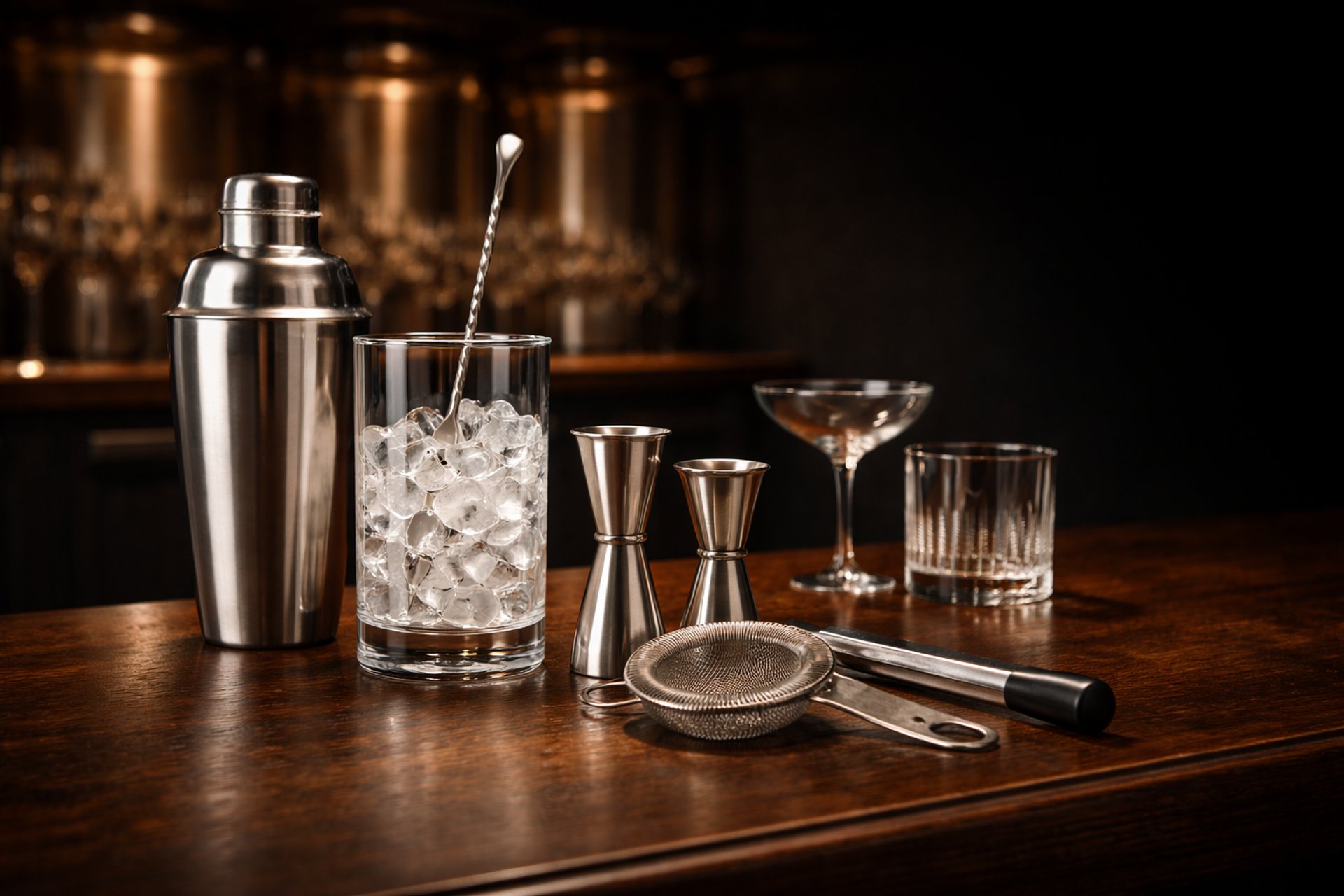
If you're building your setup from scratch, it helps to understand how strainers fit into a complete toolkit alongside other essential tools in the Bar Tools guide or the full Essential Home Bar setup.
Why Cocktail Strainers Matter
Straining is what separates a finished cocktail from the mixing process. After shaking or stirring, ice, herbs, fruit pulp, and small particles need to be removed for a clean final pour.
Without proper straining:
Drinks can become over-diluted
Texture can feel gritty or inconsistent
Presentation suffers
A well-designed strainer gives you control over flow, filtration, and clarity. It’s a small tool that has a direct impact on the quality of every drink you make.
Straining technique is also part of a broader bartending skill set. If you want to refine your process, explore Techniques & Professional Skills or learn common pitfalls in Cocktail Straining Mistakes.
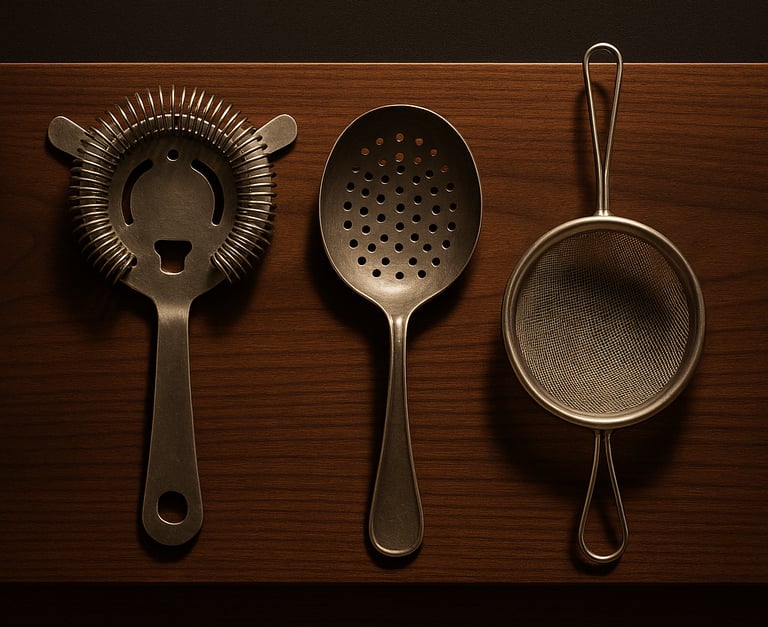
The Three Main Cocktail Shaker Types
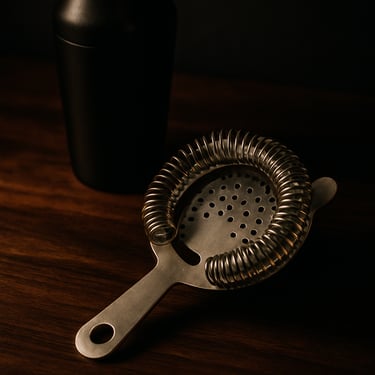
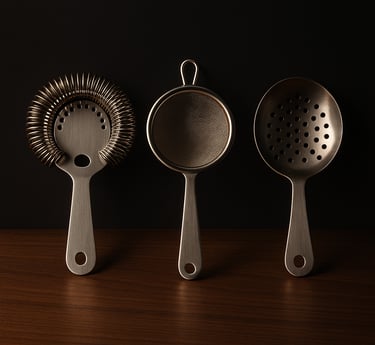
Hawthorne Strainer
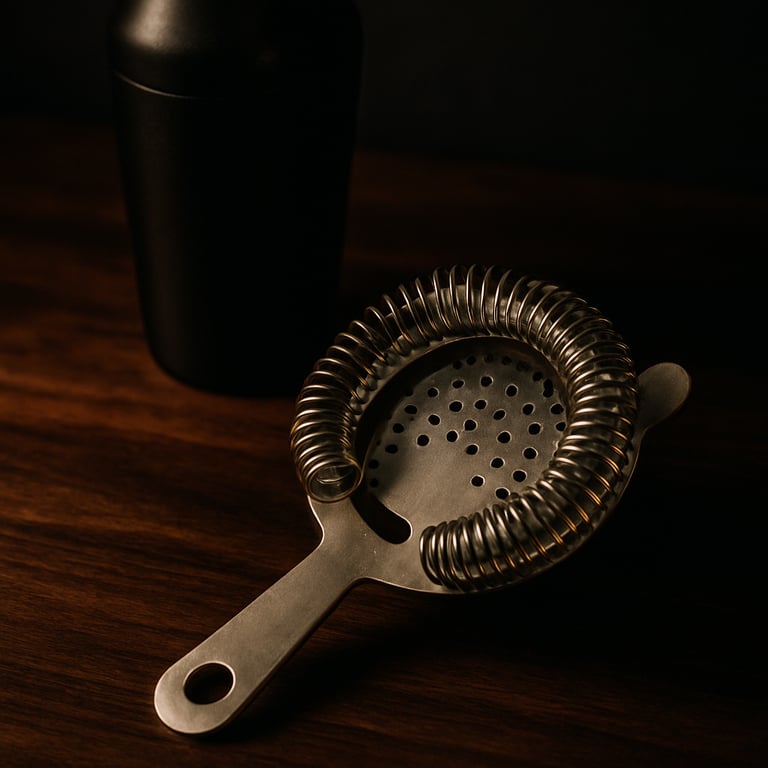
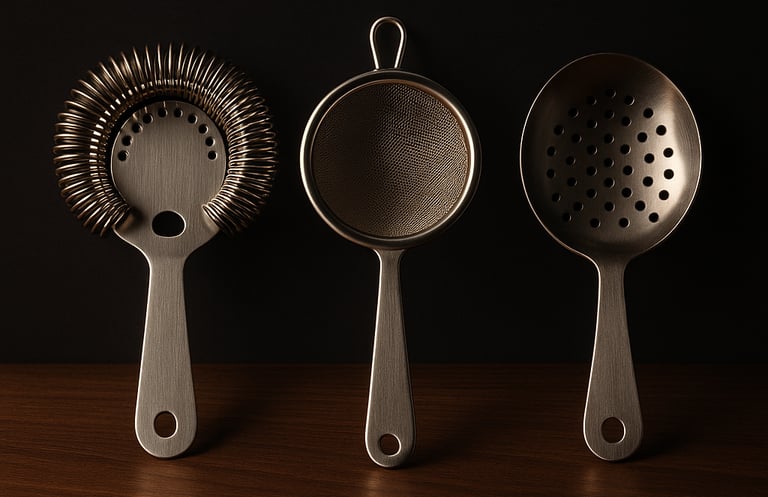
The Hawthorne strainer is the most widely used cocktail strainer, especially when working with a Boston shaker. It features a flat metal disc with a flexible spring coil that fits snugly over a shaker tin.
The spring acts as a filter, catching ice and larger particles while allowing liquid to pass through smoothly. This makes it ideal for shaken cocktails where speed and efficiency matter.
Because of its versatility, the Hawthorne strainer is often the go-to choice for both professionals and home bartenders. It pairs naturally with Boston shakers, which you can explore further in Boston Shaker vs Cobbler Shaker.
To understand why the spring design works so well, check out Why Hawthorne Strainers Have Springs.
Julep Strainer
Fine Mesh Strainer
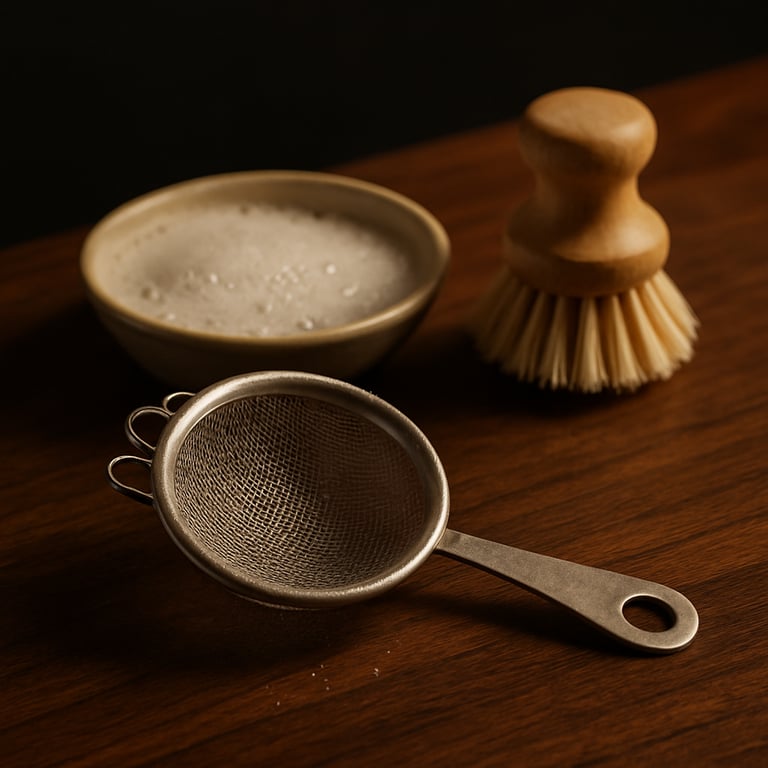
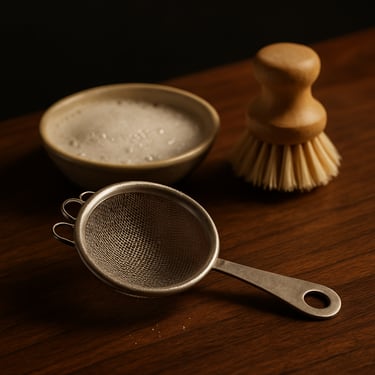
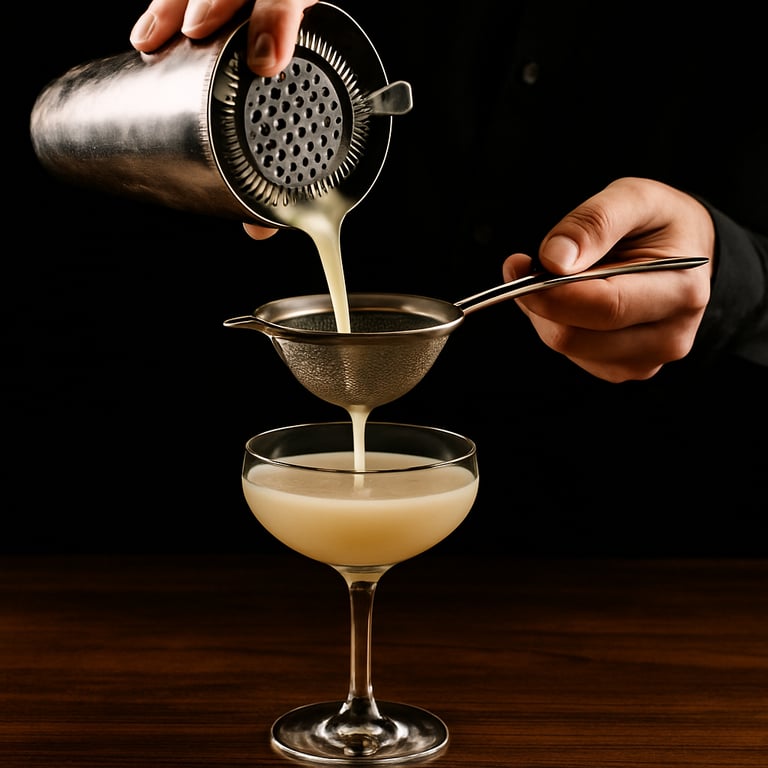
A fine mesh strainer is typically used as a secondary tool rather than a standalone strainer. It’s held over the glass while pouring to catch very small particles like citrus pulp, herbs, or ice shards.
This technique, known as double straining, is essential for achieving a smooth, professional-quality cocktail—especially in shaken drinks with fresh ingredients.
Fine strainers are commonly paired with Hawthorne strainers to refine texture and improve presentation.
To learn this technique properly, check out How to Double Strain Cocktails or dive deeper into Fine Straining Cocktails.
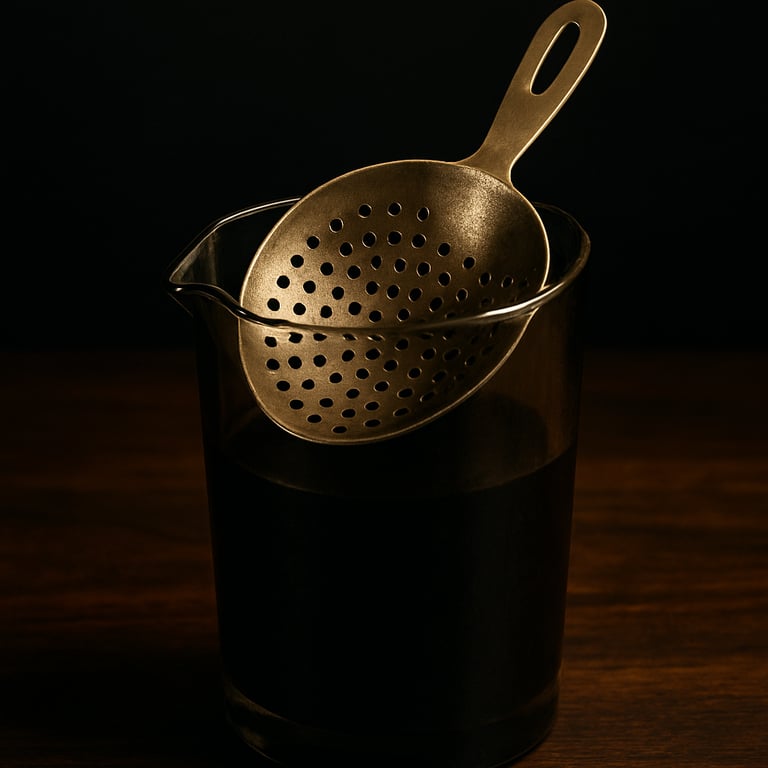
The Julep strainer has a classic, elegant design that resembles a large perforated spoon. It’s traditionally used with mixing glasses rather than shaker tins.
Unlike the Hawthorne, the Julep strainer doesn’t use a spring. Instead, its perforations provide a more controlled and slower pour, making it ideal for stirred cocktails like Old Fashioneds or Manhattans.
Bartenders often prefer Julep strainers when working with spirit-forward drinks where clarity and smooth texture are key.
If you're unsure when to use it, see When to Use a Julep Strainer for a deeper breakdown.
How Strainer Choice Affects Your Drink
Different strainers don’t just filter—they influence the entire drinking experience.
Hawthorne strainers allow for fast, controlled pours
Julep strainers prioritize smoothness and elegance
Fine strainers refine texture and clarity
Choosing the right strainer depends on your mixing method and the style of cocktail you're making.
This is similar to how other tools affect performance. For example, shaking vs stirring changes dilution and temperature, which you can explore further in Stirring Cocktails Properly and Why Metal Shakers Chill Faster.
Which Strainer Should You Use?
Each strainer type works best in specific situations:
Use a Hawthorne strainer for most shaken cocktails
Use a Julep strainer for stirred drinks in a mixing glass
Use a fine mesh strainer when you need a clean, refined finish
For most home bartenders, starting with a Hawthorne strainer and adding a fine mesh strainer later is the most practical approach.
If you're ready to upgrade your setup, check out our picks for the best cocktail strainers or explore complete kits in the best bar tool sets.
Common Cocktail Straining Mistakes
Many issues people experience with cocktails come down to improper straining technique.
Common mistakes include:
Pouring too quickly and losing control
Not sealing the strainer properly
Skipping fine straining when needed
Using the wrong strainer for the method
These mistakes can lead to cloudy drinks, inconsistent texture, and poor presentation.
Understanding proper technique—and using the right tools—helps eliminate these issues and improves consistency across every cocktail.
For a deeper breakdown, see Cocktail Straining Mistakes.
Where Strainers Fit in a Complete Bar Setup
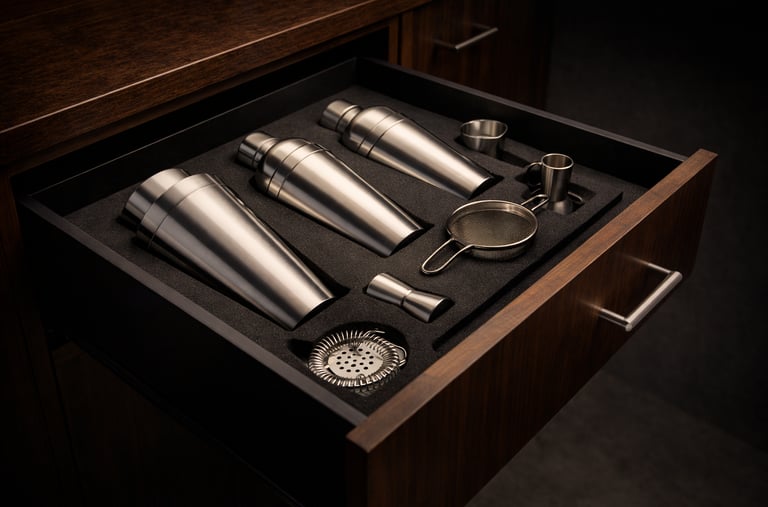
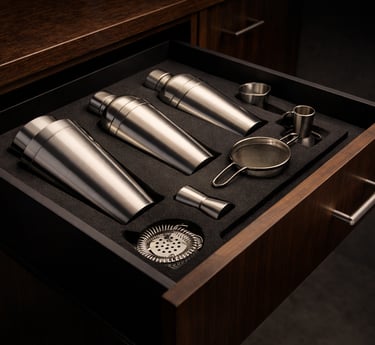
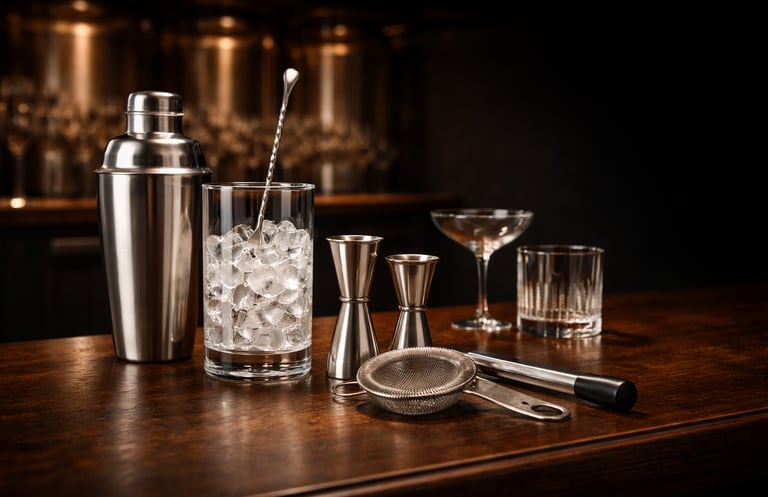
A cocktail strainer is just one part of a complete bar system. To make great drinks consistently, it needs to work alongside other tools like shakers, jiggers, and mixing glasses.
Strainers handle filtration, while tools like jiggers ensure accuracy and balance in every pour. If you want to understand measurement better, explore Cocktail Jigger Measurements or learn the difference in Jigger vs Free Pouring.
Building a complete system ensures every step—from measuring to mixing to straining—works together seamlessly.
For a full breakdown, visit the Bar Tools pillar guide.
© 2026 Barkeepers Buzz. All rights reserved.
Barkeepers Buzz
Master cocktails, spirits, and bar knowledge with clarity and precision. Built for serious home enthusiasts.
Crafted with respect for the culture — and the responsibility that comes with it.
For educational purposes only. Intended for legal drinking age audiences. Please drink responsibly.
General Inquiries: