
Mastering the Art of Fine Straining Cocktails
Discover how fine straining can transform your cocktails by enhancing clarity, texture, and presentation with simple tools and techniques.
BAR TOOL GUIDES
Barkeepers BuzzBlog Editorial Team - Led by AJ “Buzz” Eichman
3/29/20263 min read
Fine straining is one of those bartender tricks that quietly transforms a pretty good cocktail into something memorable. If you’ve ever noticed tiny bits of pulp, ice shards, or herbs muddling up your drink’s texture or messing with its clarity, fine straining could be the game changer you’re missing.
I recently spent a few shifts experimenting with different straining methods, and the results have convinced me it’s an essential technique to learn whether you’re behind a busy bar or mixing drinks at home.
In this article, we’ll explore what fine straining really is, why it matters, and how you can incorporate it into your cocktail routine.
Quick Verdict
Fine straining removes tiny solids such as pulp, seeds, and ice shards
Best results come from combining a standard strainer with a fine mesh strainer
Improves texture and clarity significantly
Slightly slower, but worth it for quality
What Is Fine Straining in Cocktails?
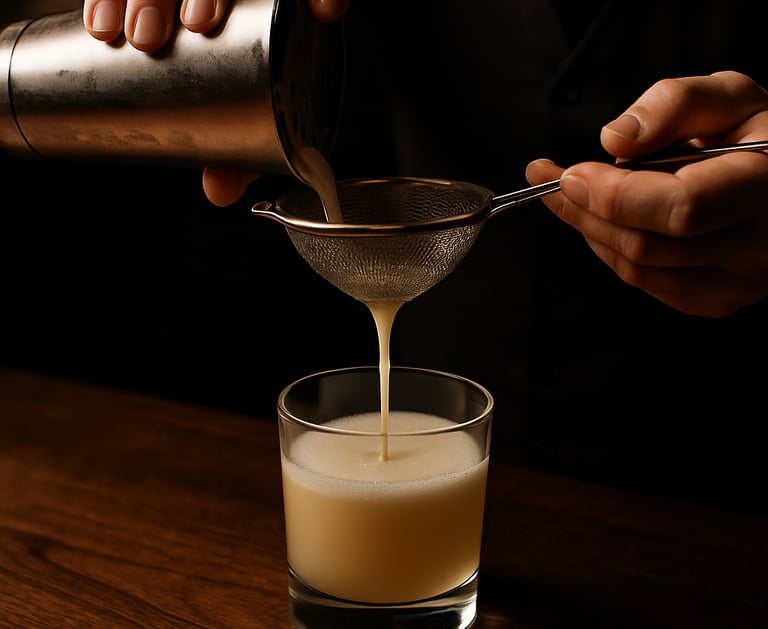
Fine straining is a filtering technique used to catch small particles that pass through standard cocktail strainers.
Think citrus pulp, mint fragments, or tiny ice shards. A Hawthorne or Julep strainer removes large solids—but not these finer elements.
If you want to understand how these tools differ, start with cocktail strainer types explained.
Fine strainers use a tight mesh screen to catch those remaining particles, creating a cleaner final drink.
Why Fine Straining Matters: Texture, Clarity, and Presentation
Texture
Small particles create a gritty or uneven mouthfeel. Fine straining removes them, resulting in a smoother, more refined drink.
Clarity
Unfiltered cocktails often look cloudy due to suspended solids. Fine straining removes these, giving your drink a cleaner, more professional appearance.
Presentation
Clean drinks simply look better. Whether you're serving guests or refining your own craft, fine straining improves the final impression.
Tools for Fine Straining: Cocktail Strainers and Mesh Sieves
Hawthorne Strainer
The most common tool for shaken cocktails. It uses a spring coil to catch large solids.
Learn how it works in why Hawthorne strainers have springs.
Julep Strainer
Best suited for stirred cocktails, this tool removes larger ice pieces but lets smaller particles pass through.
If you’re unsure when to use it, see when to use a julep strainer.
Fine Mesh Strainer
This is the key to fine straining. It catches pulp, seeds, and ice shards that other strainers miss.
This technique is often paired with double straining for maximum smoothness—see how to double strain cocktails.
Step-by-Step Guide to Fine Straining Techniques
Shake or stir your cocktail
Strain through your primary strainer
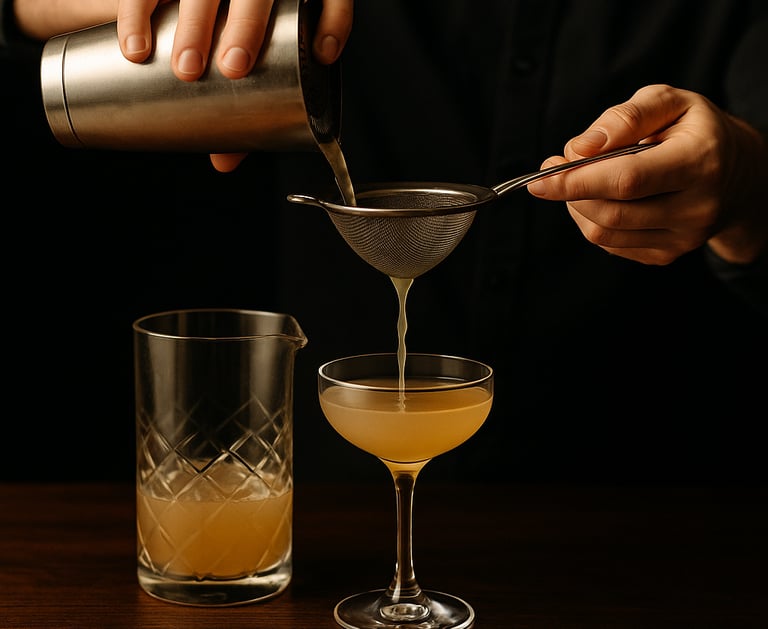
Hold a fine mesh strainer over your serving glass
Pour slowly through the mesh
Serve immediately
A steady, controlled pour is key to avoiding clogging or spills.
Common Mistakes to Avoid When Fine Straining
Skipping fine straining when using muddled ingredients
Using mesh that’s too coarse
Over-straining and removing desirable texture
Neglecting cleaning
Confusing straining with mixing techniques
Many of these issues show up in broader workflow problems—see cocktail straining mistakes.
Tips for Home Bartenders to Perfect Fine Straining
Use a medium-fine stainless steel mesh strainer
Practice slow, controlled pouring
Clean strainers after every use
Test on citrus or herb-heavy cocktails
Improving this skill is part of building overall bartending ability—covered in techniques & professional skills.
Comparing Hawthorne, Julep, and Fine Mesh Strainers
From testing:
Hawthorne handles large solids
Julep works for stirred drinks
Fine mesh removes everything else
Using both a Hawthorne and fine mesh together produces the cleanest results.
If you want to compare the two main strainers directly, check Hawthorne vs. julep strainer.
Maintaining and Cleaning Your Cocktail Strainers
Wash with warm soapy water after use
Use a soft brush for mesh
Avoid abrasive tools
Dry completely
Proper cleaning prevents flavor contamination and keeps tools performing correctly.
If you’re building better habits behind the bar, this ties into bartending mistakes and the gear that fixes them.
Practical Conclusion
Fine straining is a simple but powerful technique that improves cocktail clarity, texture, and presentation.
From testing, it’s clear this extra step makes a noticeable difference—especially for drinks with fresh ingredients or complex textures.
If you’re serious about improving your cocktails, this is one of the easiest upgrades you can make.
To keep building your setup and skills, explore bar tools, find top gear in best cocktail strainers, or upgrade your full setup with best bar tool sets.
© 2026 Barkeepers Buzz. All rights reserved.
Barkeepers Buzz
Master cocktails, spirits, and bar knowledge with clarity and precision. Built for serious home enthusiasts.
Crafted with respect for the culture — and the responsibility that comes with it.
For educational purposes only. Intended for legal drinking age audiences. Please drink responsibly.
General Inquiries: