
When to Use a Julep Strainer: A Bartender’s Guide
Discover when to use a julep strainer for clear, classic stirred cocktails and how it differs from other cocktail strainers to improve your bartending skills.
BAR TOOL GUIDES
Barkeepers BuzzBlog Editorial Team - Led by AJ “Buzz” Eichman
3/29/20263 min read
I’ve been experimenting with different bartending tools over several shifts now, and the julep strainer is one that I keep coming back to for specific cocktails. It’s not the right tool all the time, but understanding when and how to use it makes a noticeable difference in drink quality and workflow behind the bar.
If you’re learning your way through cocktail making or just curious about this lesser-known tool, I want to share what I’ve discovered.
Quick Verdict
Use a julep strainer primarily for stirred cocktails poured from a mixing glass
It fits neatly into mixing glasses but isn’t designed for fine straining
Ideal for drinks like Mint Juleps and Manhattans
Avoid using it with shaken cocktails
What Is a Julep Strainer?
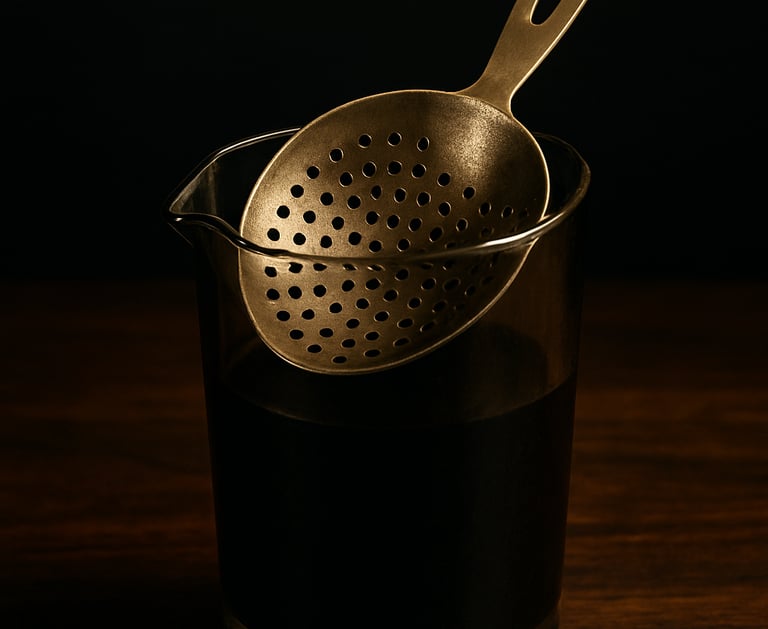
The julep strainer is a classic cocktail tool with a curved, perforated metal design. It was originally created to strain the famous Mint Julep—a cocktail that involves muddled mint leaves and crushed ice.
The strainer’s shape allows it to fit snugly inside a mixing glass, holding back large solids while letting liquid flow through.
If you’re new to cocktail tools, it helps to see how this fits into the bigger picture by understanding cocktail strainer types explained.
Unlike other strainers, the julep strainer doesn’t have a spring or fine mesh. Its holes are larger, making it ideal for specific use cases rather than all-around straining.
How Does a Julep Strainer Differ from Other Cocktail Strainers?
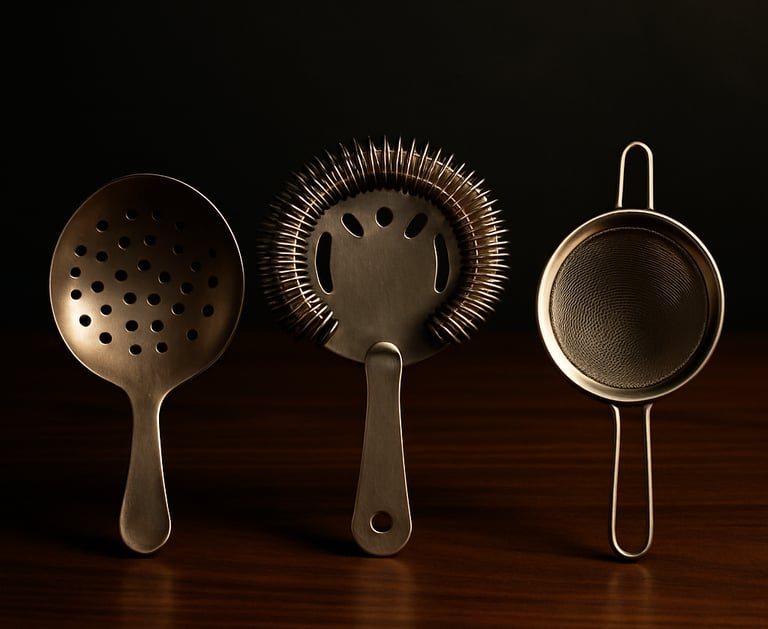
There are three main strainer types bartenders use:
Hawthorne strainer
Julep strainer
Fine mesh strainer
The Hawthorne strainer uses a spring coil to catch smaller particles and works best for shaken drinks. Learn more about that design in why Hawthorne strainers have springs.
Fine mesh strainers act as a second filter, removing even finer debris for a polished result. This is especially useful when fine straining cocktails.
The julep strainer is simpler and designed for stirred drinks. It’s fast, clean, and effective at removing large ice and solids—but not fine particles.
If you’re deciding between the two main options, compare them directly in Hawthorne vs. julep strainer.
When to Use a Julep Strainer: Key Scenarios
Stirred Cocktails
Reach for a julep strainer when pouring drinks like Manhattans, Old Fashioneds, and Martinis. It separates the liquid from large ice cubes quickly and cleanly.
If you want to refine your technique, check out stirring cocktails properly.
Muddled Drinks
Drinks like Mint Juleps or Whiskey Smashes benefit from the julep strainer’s ability to catch larger herb and fruit pieces while letting the liquid pass.
Avoid for Shaken Drinks
Using a julep strainer for shaken cocktails like Margaritas or Daiquiris isn’t ideal. The larger holes allow ice shards and pulp through.
For those, a Hawthorne (and sometimes a second straining step) works much better—see how to double strain cocktails.
At Home Bars
If you’re building a home setup focused on stirred cocktails, the julep strainer is a solid, simple option. It’s one of the core tools covered in essential tools for a home bar.
Step-by-Step Guide: How to Use a Julep Strainer
Stir your cocktail in a mixing glass with ice
Place the julep strainer inside the glass
Hold it firmly at the rim
Tilt and pour into your serving glass
Adjust flow as needed
Rinse after use
The key is a steady pour and proper positioning to avoid spills.
Common Mistakes to Avoid When Using a Julep Strainer
Using it for shaken cocktails
Not fitting it properly in the mixing glass
Treating all strainers as interchangeable
Skipping cleaning between uses
Expecting fine filtration without a mesh strainer
Many of these fall into broader workflow issues—see cocktail straining mistakes.
Benefits of Using the Right Strainer
Speed: Quick and efficient for stirred drinks
Comfort: Natural fit in hand and glass
Consistency: Reliable separation of large solids
Cleanup: Simple design makes cleaning easy
Using the right tool is part of improving your overall bartending workflow—covered in techniques & professional skills.
Cleaning and Maintaining Your Julep Strainer
Rinse immediately after use
Wash with warm, soapy water
Use a brush to clean perforations
Dry thoroughly
Check for bending or wear
Proper cleaning helps avoid performance issues—see bartending mistakes and the gear that fixes them.
FAQs About Julep Strainers
What is a julep strainer used for?
Straining stirred cocktails by separating liquid from ice and large solids.
When should I use it instead of a Hawthorne?
For stirred drinks. Use a Hawthorne for shaken cocktails requiring finer filtration.
Can it be used for shaken drinks?
Yes, but not recommended due to poor fine filtering.
What cocktails work best?
Mint Juleps, Manhattans, Old Fashioneds, and Martinis.
Does it affect flavor or texture?
It improves clarity and removes large solids but doesn’t filter fine particles.
Practical Conclusion
After testing the julep strainer closely, it’s clear this tool deserves a place in your setup—especially for stirred cocktails.
It’s not a one-size-fits-all solution, but when used correctly, it improves clarity, speeds up workflow, and simplifies cleanup.
If you’re continuing to build your setup and improve your technique, explore bar tools, compare options in Hawthorne vs. julep strainer explained, and find gear in best cocktail strainers.
© 2026 Barkeepers Buzz. All rights reserved.
Barkeepers Buzz
Master cocktails, spirits, and bar knowledge with clarity and precision. Built for serious home enthusiasts.
Crafted with respect for the culture — and the responsibility that comes with it.
For educational purposes only. Intended for legal drinking age audiences. Please drink responsibly.
General Inquiries: