Beer Styles Explained: Structure, Balance & Category Clarity
From hop-driven IPAs to malt-rich stouts, beer styles are defined by ingredient balance, fermentation method, and regional tradition.
Beer styles provide structure in a category that spans thousands of variations. While labels and subcategories can feel overwhelming, most beers fall into broader families defined by fermentation type, ingredient emphasis, and flavor balance.
Understanding beer styles is less about memorizing names and more about recognizing patterns — bitterness level, body, alcohol strength, and aroma profile.
This guide outlines the major structural families of beer and how they differ.
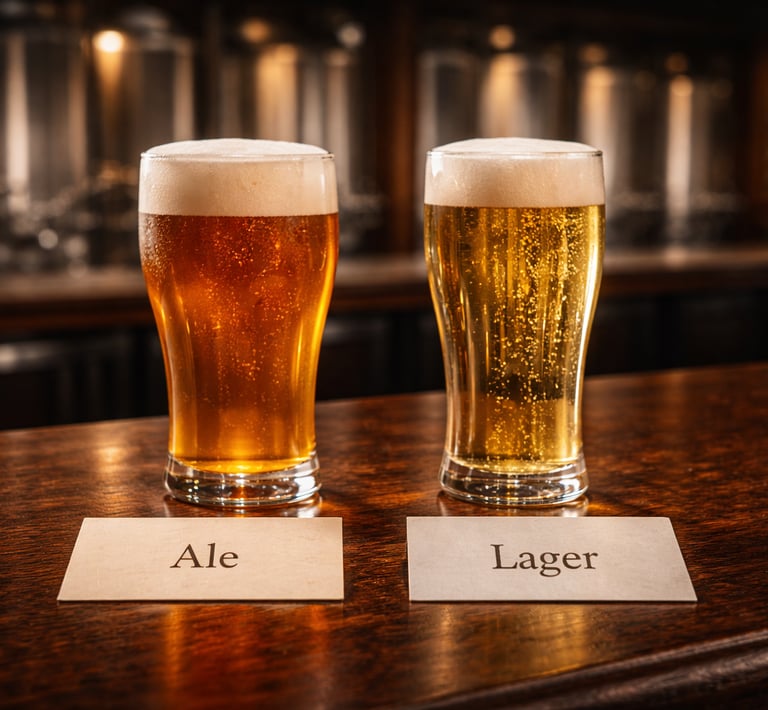
The Two Primary Families: Ales & Lagers
Ales
Ales use top-fermenting yeast and ferment at warmer temperatures.
They typically exhibit:
• More expressive aroma
• Fruity esters
• Fuller body
• Greater stylistic diversity
Many modern craft styles belong to this family.
Common ale categories include:
IPA
Pale Ale
Stout
Porter
Belgian Ale
Wheat Ale
Lagers
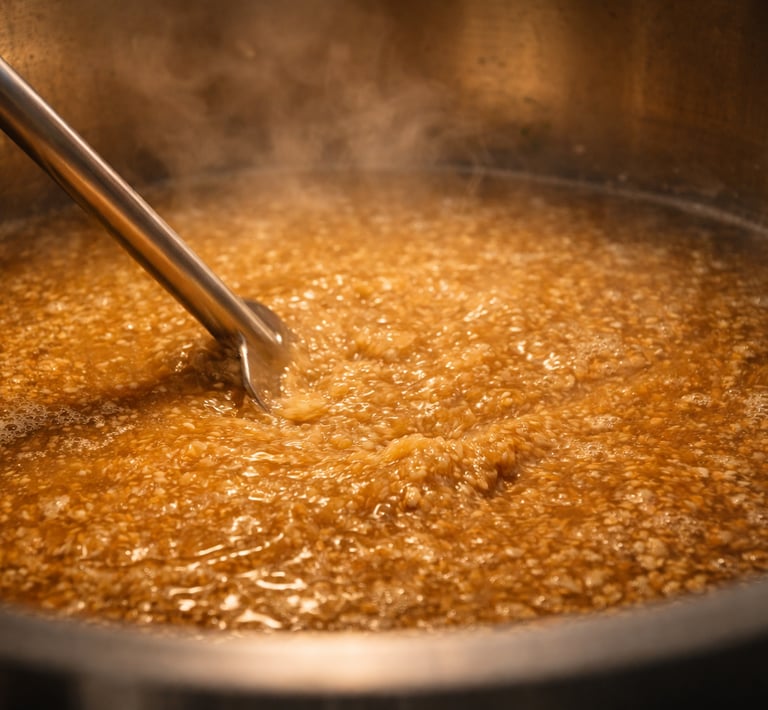
Lagers use bottom-fermenting yeast and ferment at cooler temperatures.
They are often:
• Cleaner
• Crisper
• Smoother
• More restrained aromatically
Common lager styles include:
Pilsner
Helles
Dunkel
Bock
Fermentation method shapes structure before hops or malt variations are considered.
Internal Link → Lagers vs Ales
Fermentation Defines the Foundation
Nearly all beers fall into two foundational categories: ales and lagers.
The difference lies in yeast strain and fermentation temperature — not in quality or prestige.
Hop-Forward Styles
IPA is one of the most recognized modern beer styles.
Defining characteristics:
• Elevated bitterness
• Strong hop aroma
• Moderate to higher alcohol
• Dry finish
Substyles range from sharply bitter West Coast IPAs to softer, fruit-forward hazy IPAs.
Hop character may include:
• Citrus
• Pine
• Tropical fruit
• Floral notes
Balance varies significantly within the category.
India Pale Ale (IPA)
Pale Ale
Pale ale offers hop character with more malt balance than IPA.
It is typically:
• Moderately bitter
• Medium-bodied
• Accessible
Often a starting point for those exploring hop-forward beer without extreme intensity.
Bitterness, Aroma & Structural Tension
Hop-forward beers emphasize bitterness and aromatic intensity.
Double / Imperial IPA
Higher alcohol, more intense hop presence, and greater structural weight.
Alcohol amplifies both bitterness and aromatic lift.
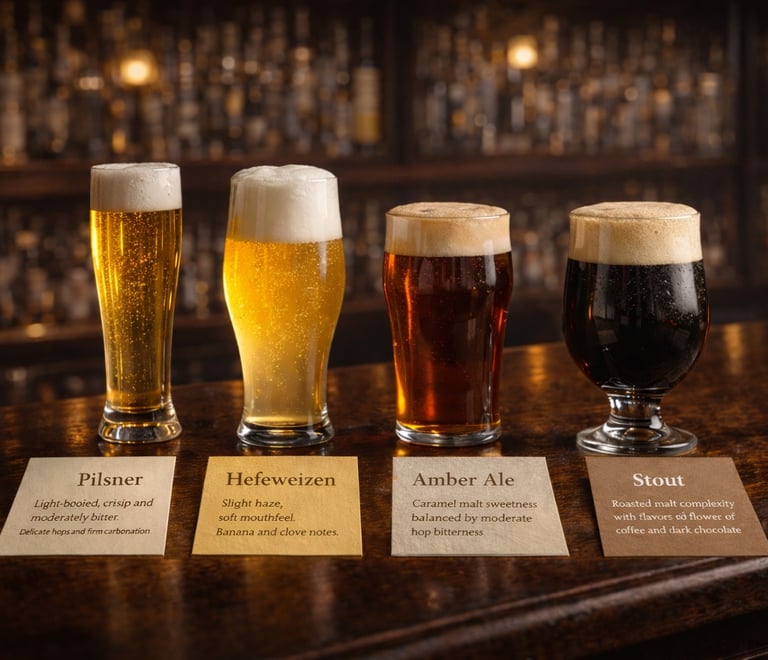
Stout
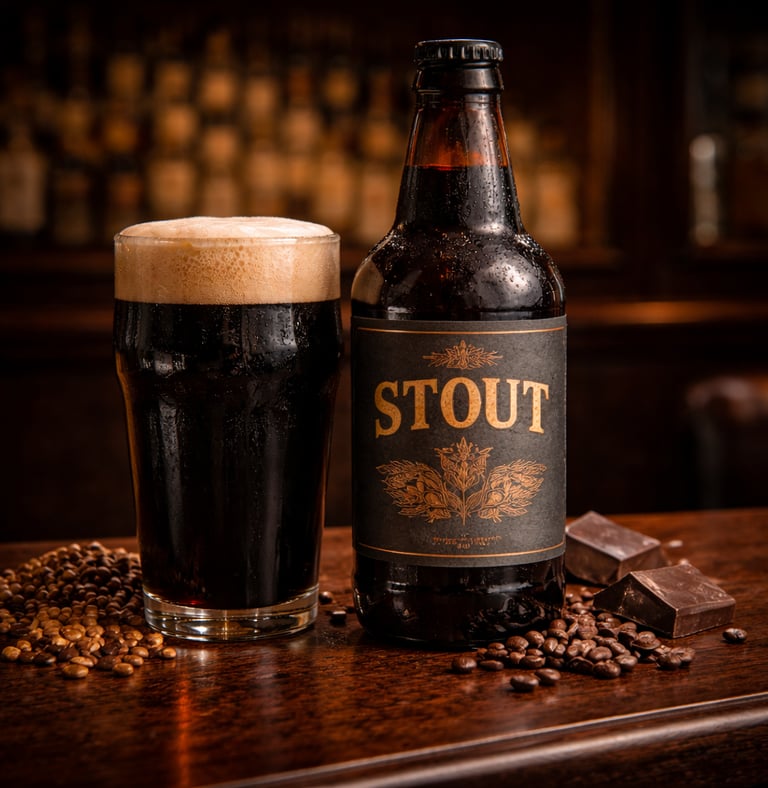
Dark and often roasted.
Common characteristics:
• Coffee notes
• Dark chocolate
• Toasted grain
• Creamy texture (in some variations)
Stouts range from dry and light-bodied to rich and high-alcohol imperial versions.
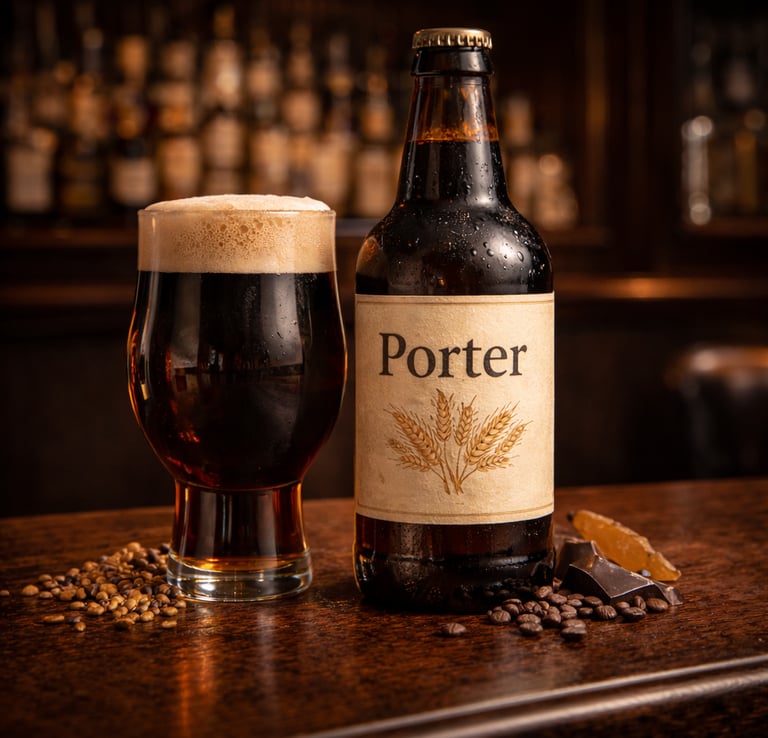
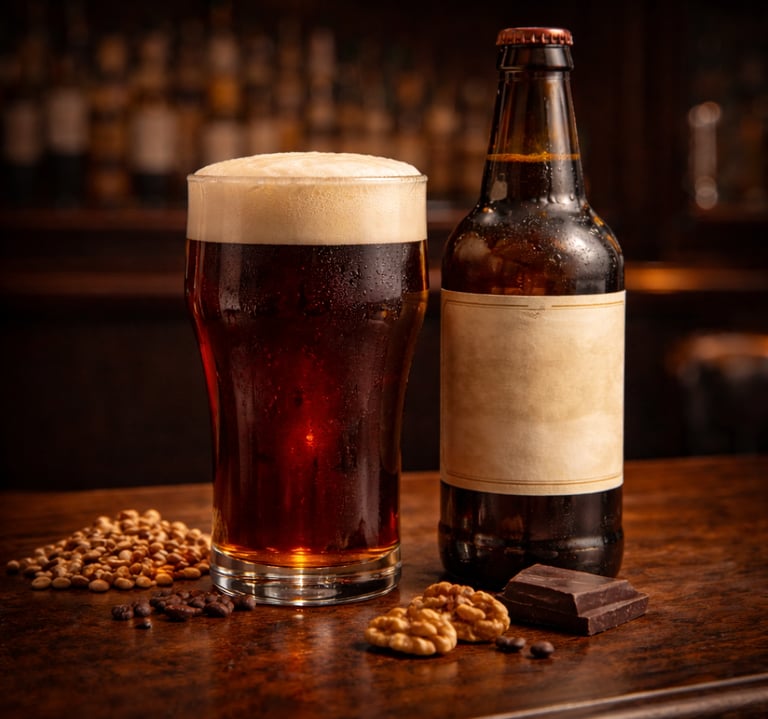
Porter
Closely related to stout but often slightly softer and less aggressively roasted.
Profile:
• Dark malt
• Caramel tones
• Moderate bitterness
Porter can feel rounder and more balanced.
Malt-forward with notes of caramel, toast, and subtle nutty character.
Typically moderate in alcohol and bitterness.
Brown Ale
Malt-Forward & Dark Styles
Roast, Caramel & Body
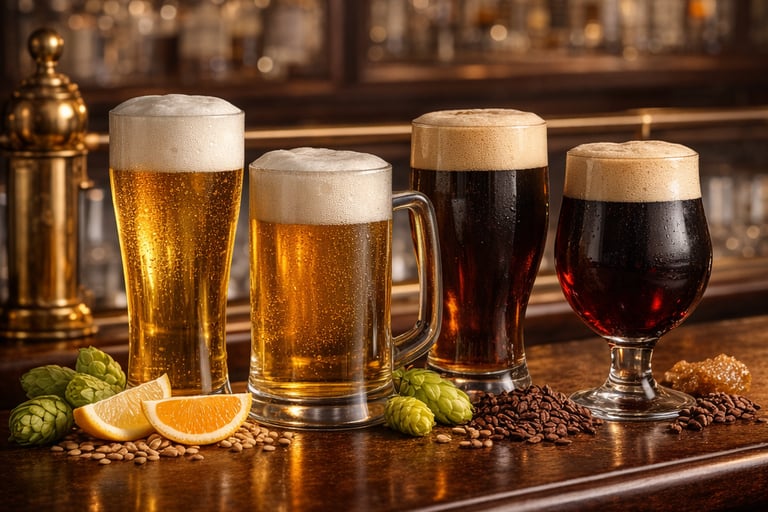
Malt-forward styles emphasize grain character over hop dominance.
Crisp & Clean Lagers
Clarity, Precision & Refreshment
Lager styles often emphasize smoothness and balance.
Pilsner
Light-bodied, crisp, and moderately bitter.
Clear in appearance with firm carbonation.
Often showcases delicate hop character without overwhelming intensity.
Helles
Malt-forward lager with soft sweetness and clean finish.
Lower bitterness than pilsner.
Dunkel
Dark lager with caramel and toasted malt notes, yet still smooth and clean.
Bock
Stronger lager with increased malt richness and higher alcohol.
Emphasizes depth without excessive roast.
Wheat & Yeast-Driven Styles
Texture & Fermentation Expression
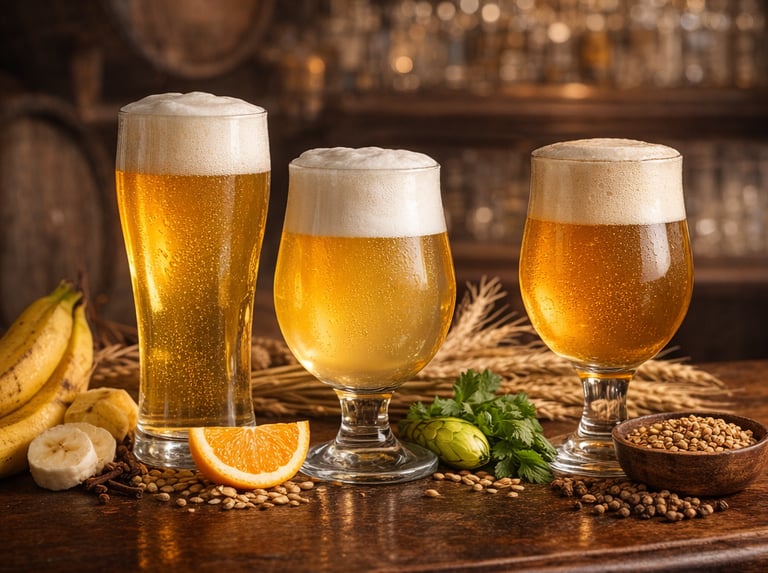
Wheat beers incorporate a significant percentage of wheat in the grain bill.
Hefeweizen
German-style wheat beer.
Characteristics:
• Slight haze
• Soft mouthfeel
• Banana and clove esters from yeast
Lower bitterness, high drinkability.
Belgian Witbier
Wheat-based and often spiced with coriander or citrus peel.
Light, aromatic, and refreshing.
Saison
Originally farmhouse-style ale.
Dry, highly carbonated, often peppery or fruity from yeast character.
Sour & Barrel-Aged Styles
Acidity & Oak Influence
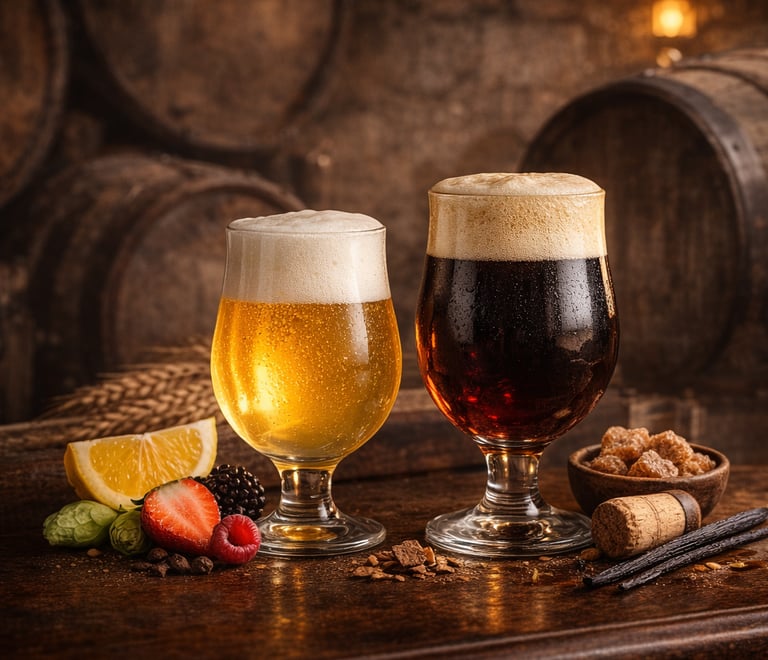
Some beer styles introduce acidity or oak aging.
Sour Beers
Produced through bacterial fermentation or wild yeast.
Profile:
• Tart to sharply acidic
• Light to moderate body
• Fruit often incorporated
Acidity becomes the dominant structural element.
Barrel-Aged Beer
Aged in oak barrels previously used for wine or spirits.
Barrel aging may introduce:
• Vanilla
• Oak
• Subtle sweetness
• Oxidative depth
These beers often carry higher alcohol and greater intensity.
Alcohol Strength & Body Across Styles
ABV & Structural Weight
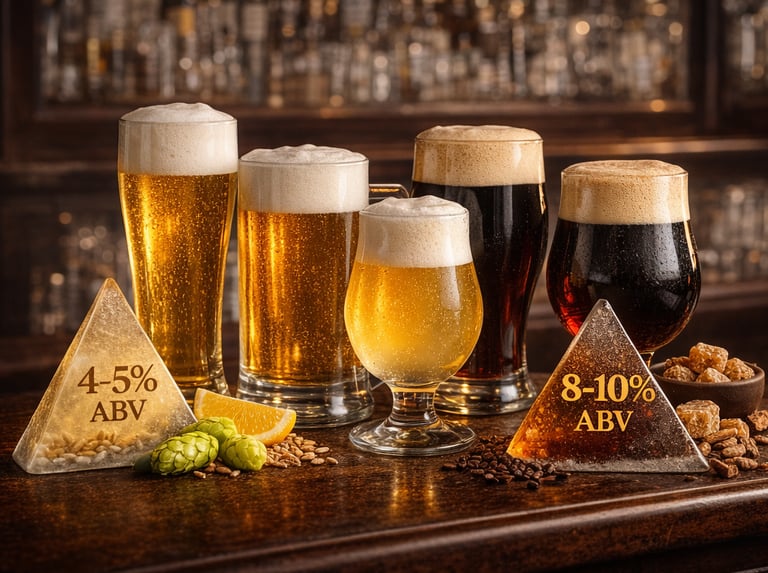
Beer alcohol content typically ranges from 4% to 10% ABV, though some styles exceed this.
Lower ABV beers:
• Feel lighter
• Emphasize refreshment
Higher ABV beers:
• Increase body
• Amplify flavor intensity
• Require slower consumption
ABV influences structure just as much as malt and hops.
Internal Link → Education · Safety · Responsibility
Choosing Styles Intelligently
Finding Your Preference
Selecting beer becomes easier when guided by structure.
Ask:
• Do you prefer bitterness or malt sweetness?
• Light body or full body?
• Crisp or aromatic?
• Lower or higher alcohol?
Building two or three reliable style lanes simplifies buying decisions.
Internal Link → Buying Beer Intelligently
Closing Perspective
Beer styles are not arbitrary labels.
They are structural frameworks defined by:
Fermentation method.
Grain selection.
Hop intensity.
Alcohol strength.
Regional tradition.
Understanding these categories transforms beer from casual consumption into intentional selection.
Structure first.
Trend second.


© 2026 Barkeepers Buzz. All rights reserved.
Barkeepers Buzz
Master cocktails, spirits, and bar knowledge with clarity and precision. Built for serious home enthusiasts.
Crafted with respect for the culture — and the responsibility that comes with it.
For educational purposes only. Intended for legal drinking age audiences. Please drink responsibly.
General Inquiries: