
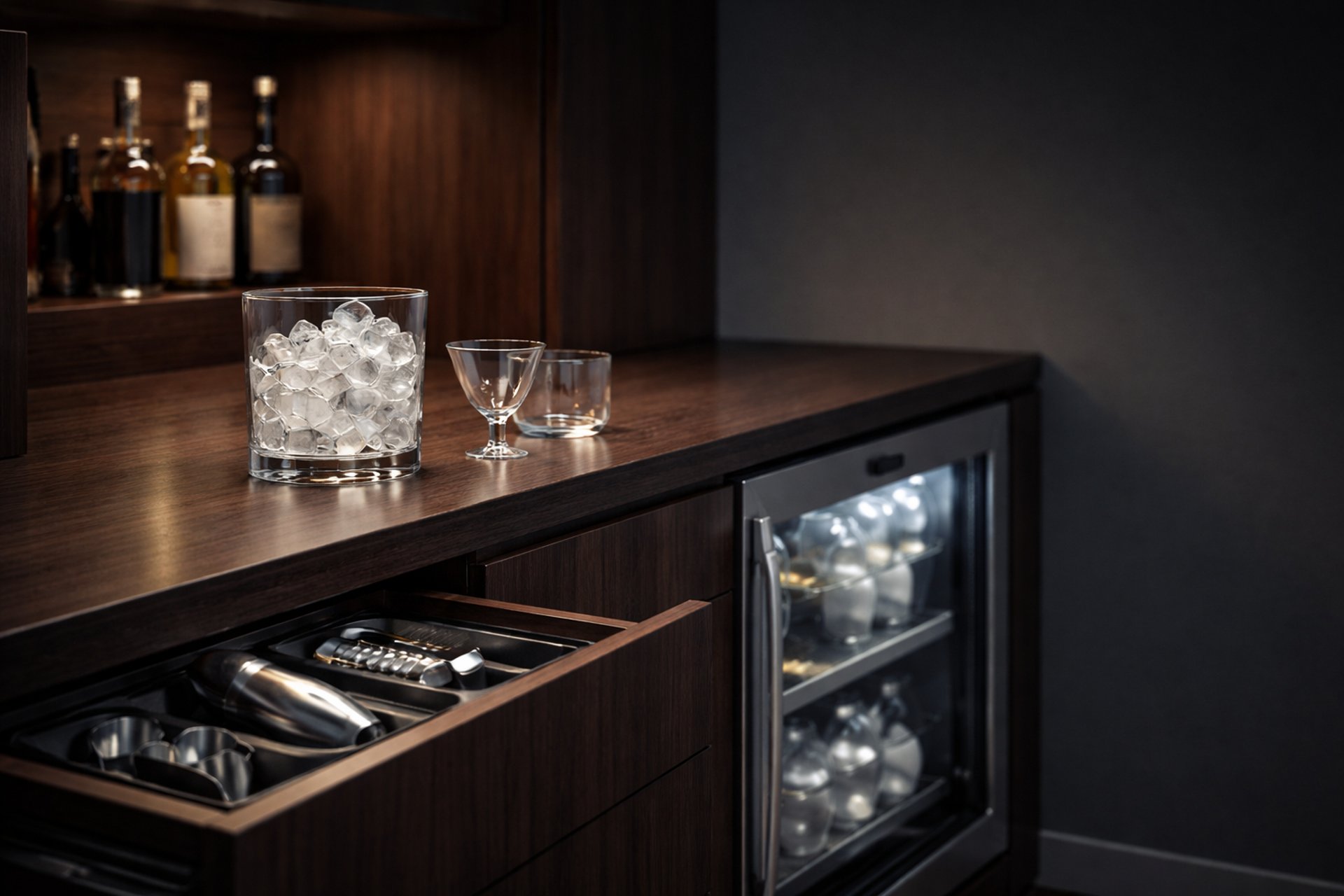
Whiskey Glassware Guide
for Home Bars
If you’re building a serious home bar, whiskey glassware isn’t just aesthetic — it directly impacts aroma, flavor clarity, dilution rate, and overall drinking experience. The right glass enhances what you’re drinking. The wrong one flattens it.
This guide breaks down exactly how whiskey glasses work, which types actually matter, and how to choose the right setup for your home bar.
Why Whiskey Glassware Actually Matters
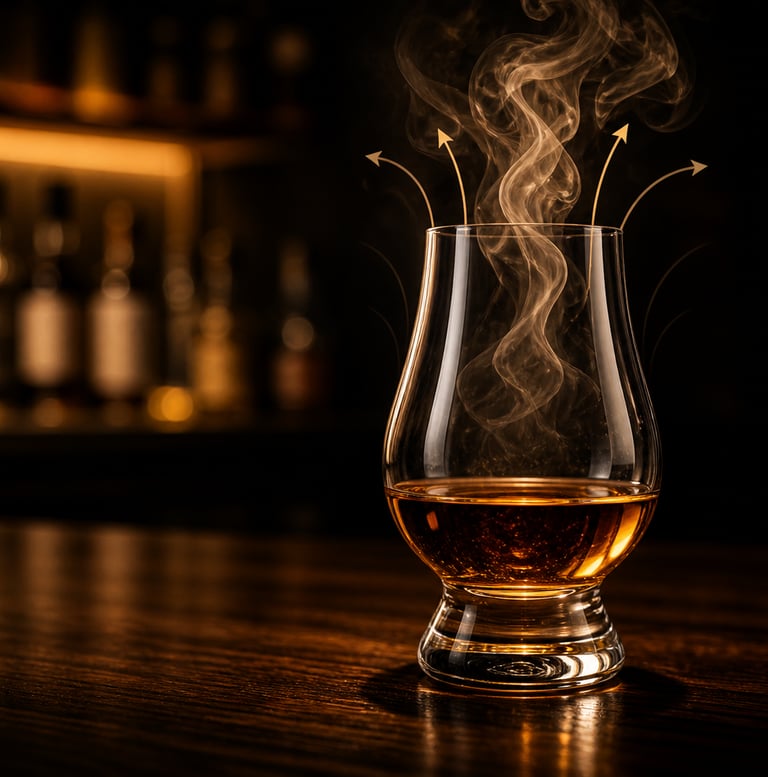
Whiskey is a volatile spirit — meaning aroma carries a huge portion of the flavor experience. The shape of your glass controls how those aromas are delivered, how ethanol dissipates, and how the liquid interacts with air.
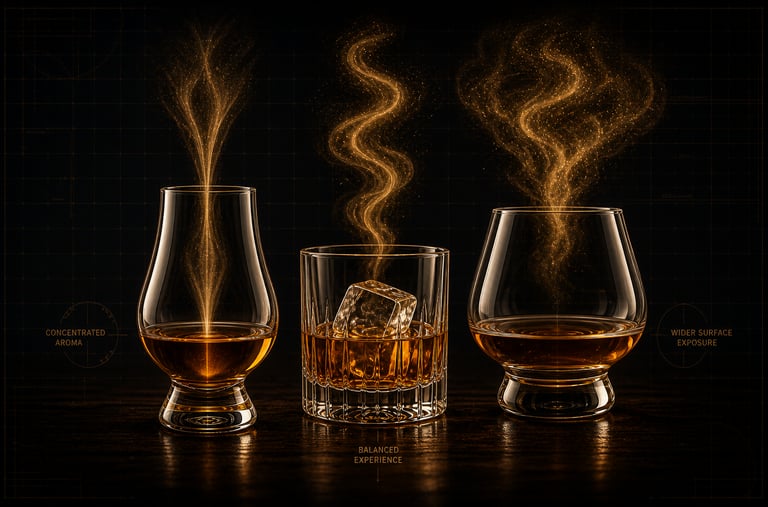
A wide, open glass exposes more surface area, which increases evaporation and softens harsh alcohol notes. A narrow, tapered rim concentrates aromas, allowing you to pick up subtle notes like vanilla, spice, fruit, or smoke.
Glass thickness and shape also influence temperature stability and how ice melts — which directly affects dilution and balance over time.
If you’re serious about whiskey, glassware is not optional. It’s part of the system.
Types of Whiskey Glasses Explained
Understanding the core glass types is the foundation of building a functional setup. For a full breakdown, see Types of Whiskey Glasses Explained.
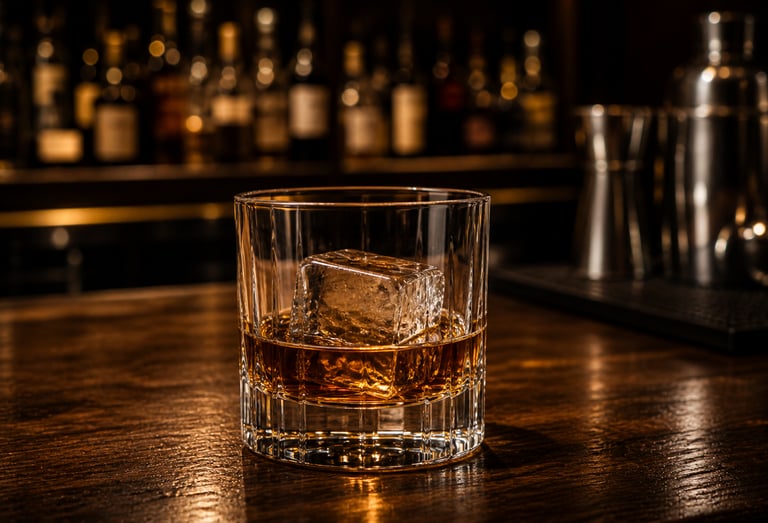
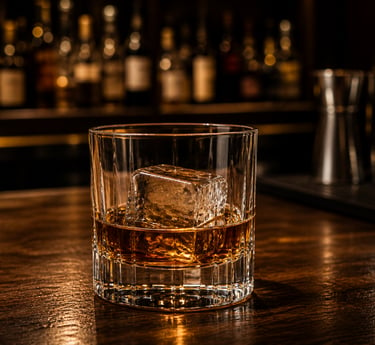
Rocks Glass (Old Fashioned Glass)
Short, wide, and heavy — built for whiskey with ice.
Best for: Whiskey on the rocks, Old Fashioneds, casual pours
Strength: Stability, room for large ice, slower dilution control
Weakness: Aroma disperses quickly
This is your everyday workhorse glass.
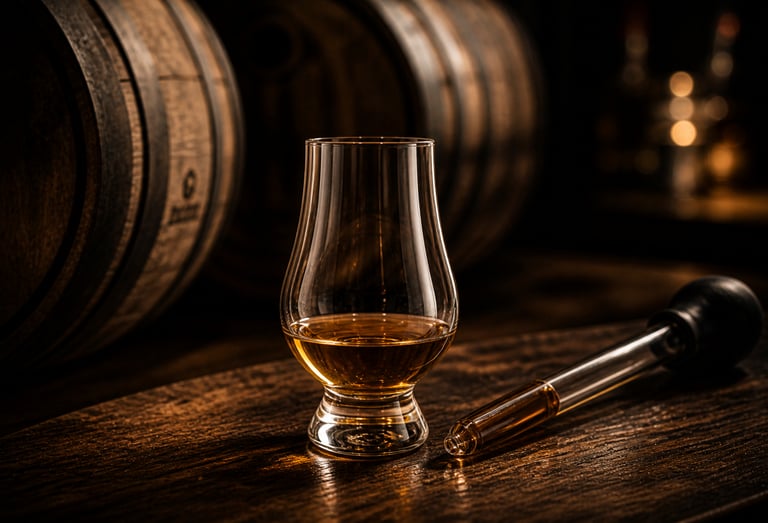
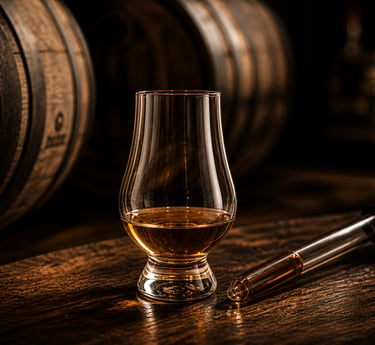
Tasting Glass (Glencairn / Copita Style)
Narrow bowl with a tapered rim designed to concentrate aroma.
Best for: Neat pours, tastings, higher-end whiskey
Strength: Enhances aroma and flavor clarity
Weakness: Not ideal for ice
If you care about flavor detail, this is essential.
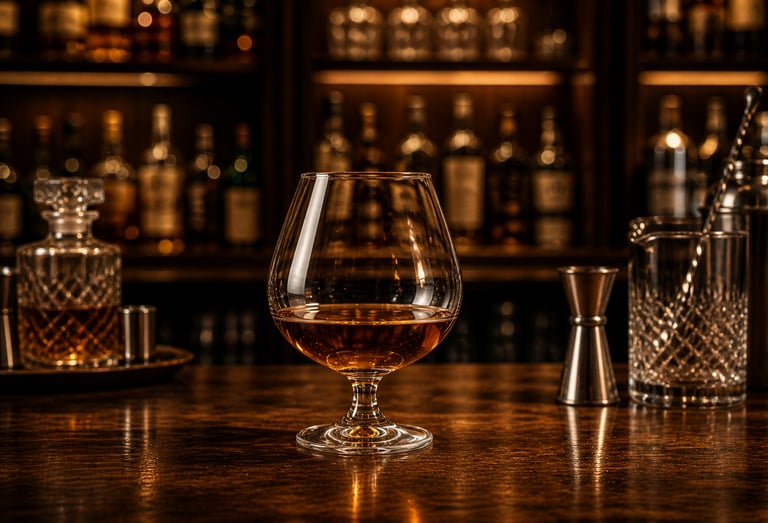
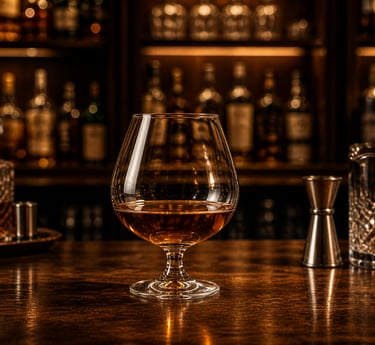
Snifter / Tulip Glass
Similar to tasting glasses but slightly wider and more open.
Best for: Aged whiskey, complex profiles
Strength: Balance between aroma concentration and aeration
Weakness: Less precise than a Glencairn
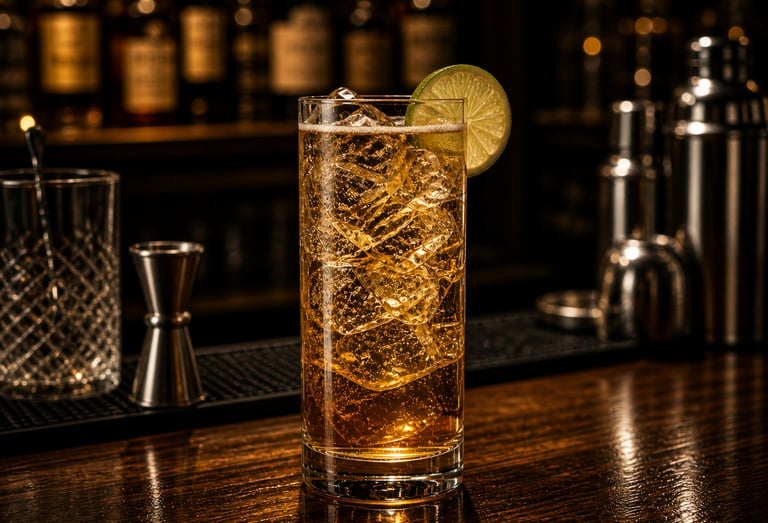
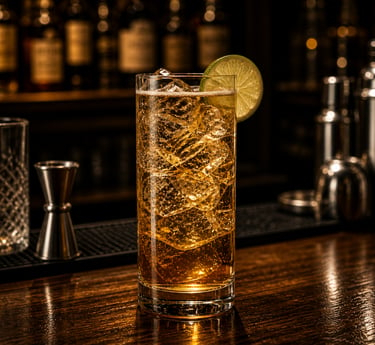
Highball Glass
Tall and narrow, typically used for mixed whiskey drinks.
Best for: Whiskey sodas, highballs
Strength: Preserves carbonation
Weakness: Not built for aroma or sipping
Choosing the Right Glass for Your Drinking Style
Your ideal glass depends on how you actually drink whiskey.
Your ideal glass depends on how you actually drink whiskey.
If you prefer whiskey with ice or cocktails, you’ll want a durable, wide-based option that supports large cubes and slow dilution. That’s where Best Whiskey Glasses for Ice comes into play.
If you drink whiskey neat or want to explore flavor depth, a tapered design is the better choice. See Best Whiskey Glasses for Tasting for options built specifically for aroma and clarity.
Most home bars benefit from having both — one for casual drinking, one for proper tasting.
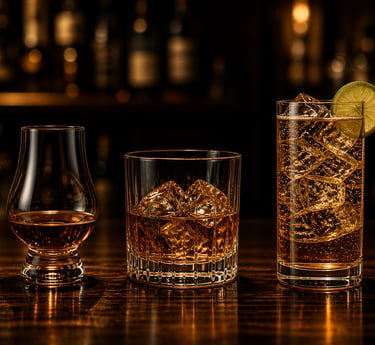
Tasting Glass vs Rocks Glass
(Quick Breakdown)
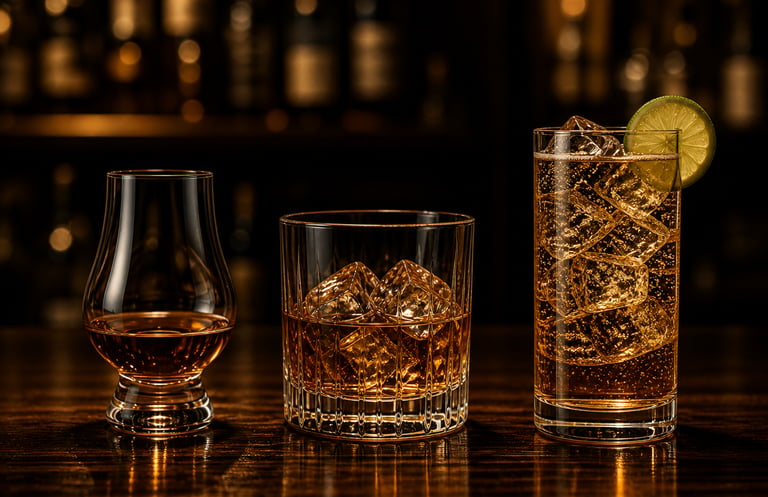
This is the most common decision point.
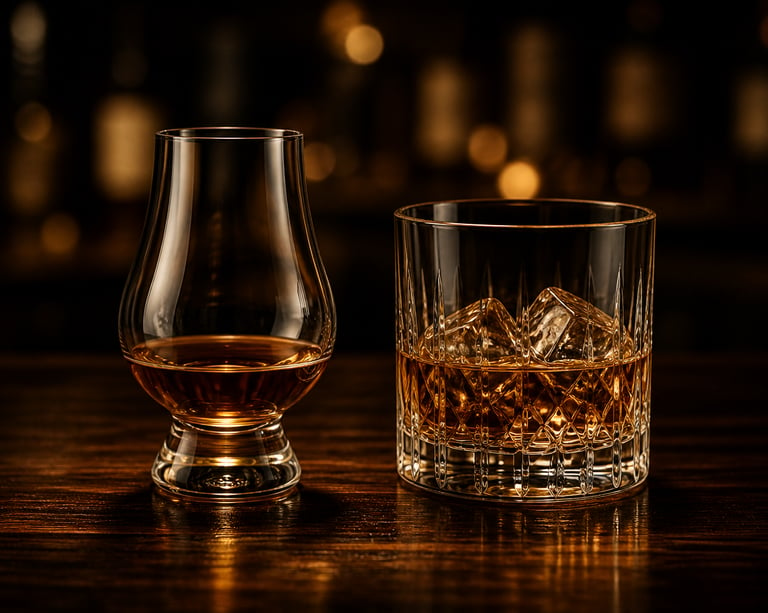
A rocks glass prioritizes comfort, durability, and ice compatibility. A tasting glass prioritizes aroma concentration and flavor precision.
If you’re unsure which direction to go, the full breakdown in NORLAN Whisky Glass vs Waterford Markham DOF walks through when each one makes more sense based on how you drink.
How Glass Shape Affects Aroma and Flavor
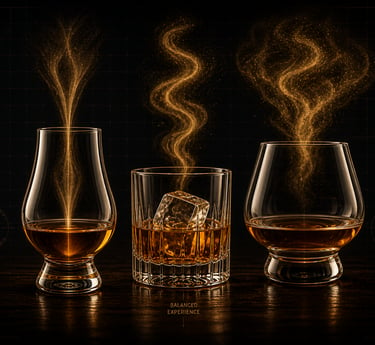
The biggest difference between whiskey glasses comes down to how they handle aroma.
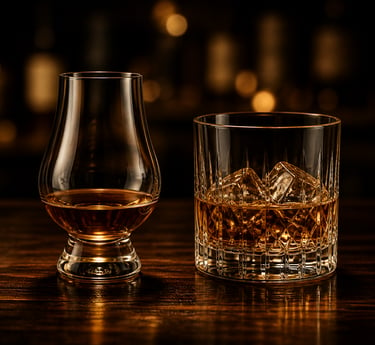
Wide glasses allow ethanol to evaporate quickly, which can soften harshness but also causes delicate notes to disappear. Tapered glasses trap and funnel aroma toward your nose, making it easier to identify layers within the whiskey.
This is why tasting glasses consistently outperform standard rocks glasses when it comes to flavor clarity.
For a deeper explanation of how this works, see
Why Tasting Glasses Improve Whiskey Flavor
Best Whiskey Glasses for Aroma
Ice, Dilution, and Glass Pairing
Glass shape plays a major role in how ice behaves inside your drink.
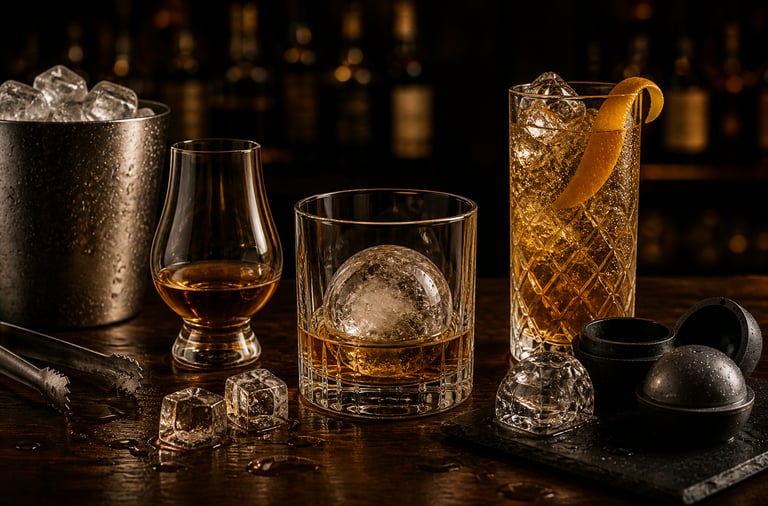
Wider glasses allow for larger ice formats — like spheres or oversized cubes — which melt slower and provide better dilution control. If you’re optimizing for this, check out Best Whiskey Glasses for Large Ice Cubes.
If your whiskey feels watered down too quickly, it’s usually a combination of glass shape and ice quality. A wide, thin glass with small cubes will dilute far faster than a thick, heavy base with a single large cube.
For better results, pairing your glass with proper ice tools matters just as much. Options like Best Ice Molds or Best Sphere Ice for Whiskey & Cocktails help control melt rate and consistency.
If you’re still running into issues, Why Your Ice Melts Too Fast in Whiskey Glasses breaks down what’s actually going wrong.
Building a Complete Whiskey Glass
Setup at Home
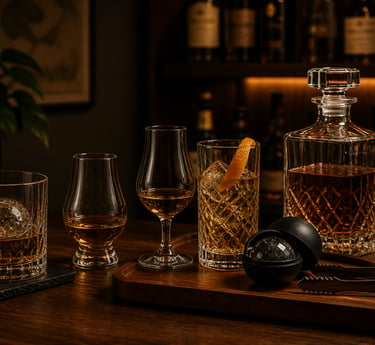
You don’t need a massive collection — just the right combination.
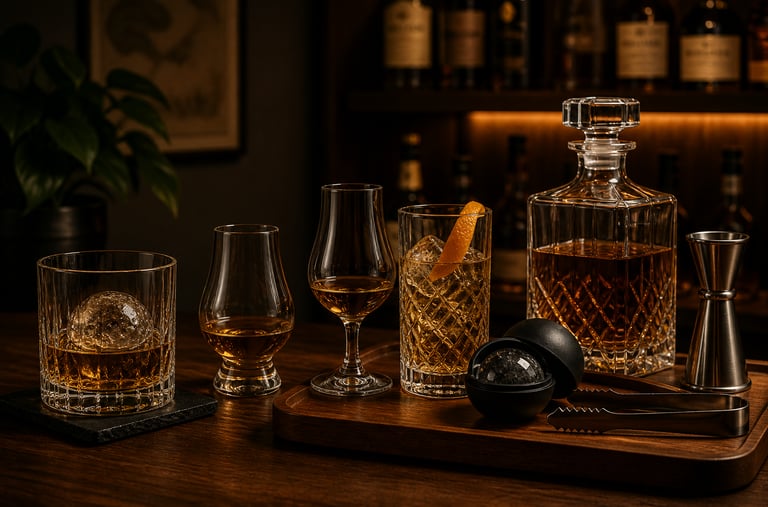
A functional setup usually includes:
A set of rocks glasses for everyday use
A set of tasting glasses for neat pours
Optional specialty glassware for specific experiences
This gives you flexibility without overcomplicating your bar.
If you want a step-by-step breakdown of what to include, see Essential Whiskey Glasses for a Home Bar Setup.
Final Takeaways
Whiskey glassware isn’t about preference alone — it’s about function.
Use rocks glasses for ice, cocktails, and casual drinking
Use tasting glasses for aroma, flavor clarity, and higher-end pours
Match your glass to how you actually drink, not just how it looks
If you want the best performance for each use case:
Go with Best Whiskey Glasses for Ice for durability and dilution control
Go with Best Whiskey Glasses for Tasting for aroma and precision
Build around those two, and your whiskey setup is dialed in.
© 2026 Barkeepers Buzz. All rights reserved.
Barkeepers Buzz
Master cocktails, spirits, and bar knowledge with clarity and precision. Built for serious home enthusiasts.
Crafted with respect for the culture — and the responsibility that comes with it.
For educational purposes only. Intended for legal drinking age audiences. Please drink responsibly.
General Inquiries: