
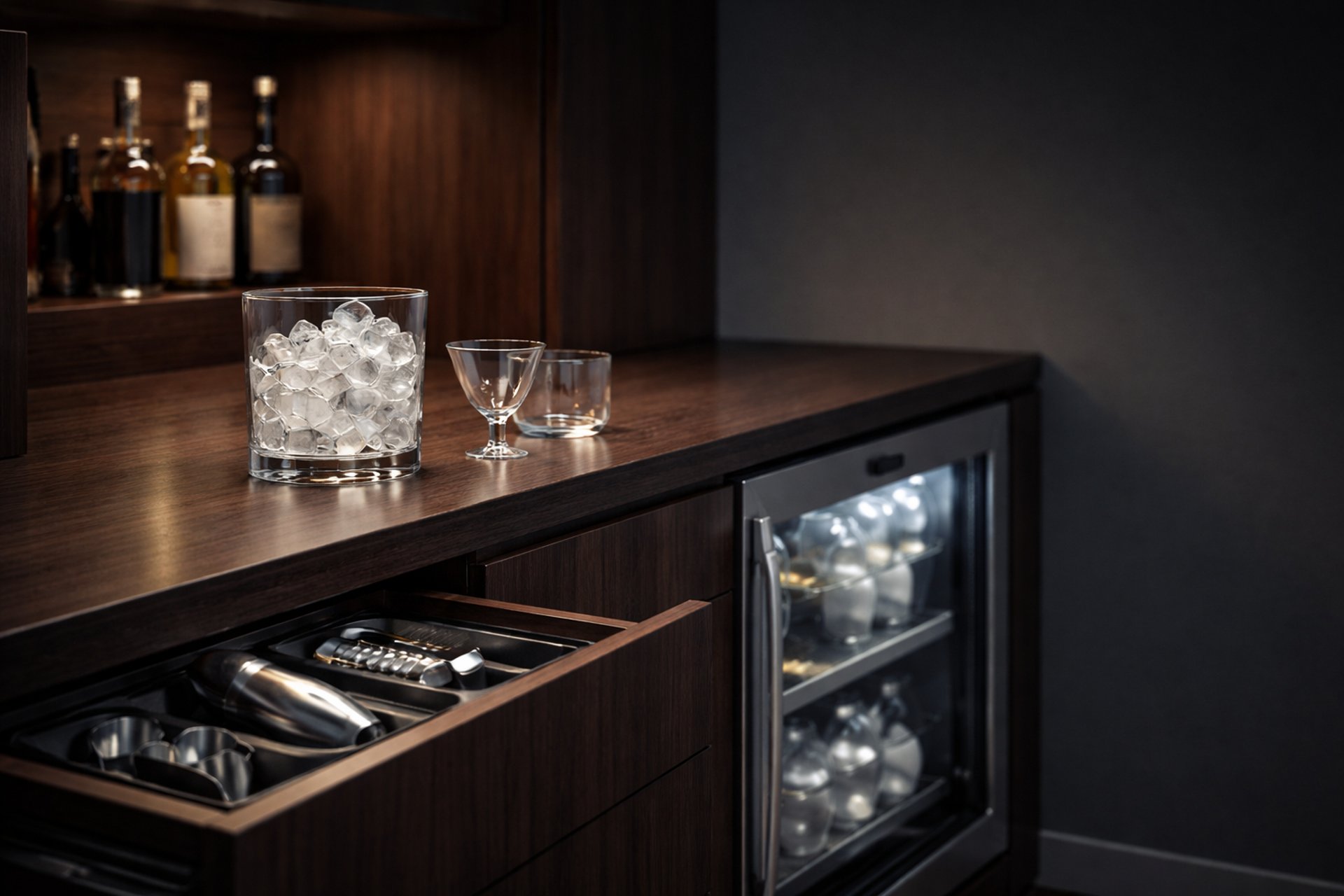
The Home Bar Blueprint
Structure Determines Quality.
A home bar is not furniture.
It is not décor.
It is not a collection of bottles.
It is a system.
When structure is correct, workflow improves.
When workflow improves, drink quality stabilizes.
When quality stabilizes, consistency becomes repeatable.
Most home bars fail because they are assembled — not engineered.
The Home Bar Blueprint defines the structural framework behind a high-performance home bar system. This is not a trend guide. It is not aesthetic inspiration. It is infrastructure logic.
Use this page as the foundation before selecting tools, refrigeration, lighting, or cabinetry.
The Home Bar System Architecture
Structural Layout
Physical footprint and spacing rules







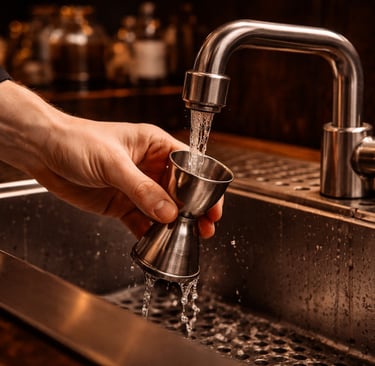
Plumbing
Sink placement and water control
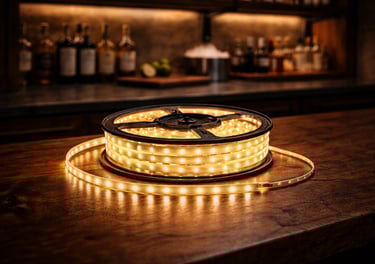
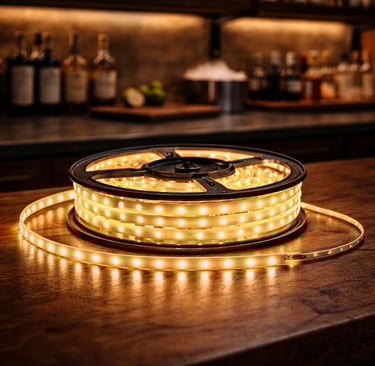
Lighting
Visibility and garnish accuracy
Furniture
Load-bearing infrastructure
Organization
Long-term system maintenance
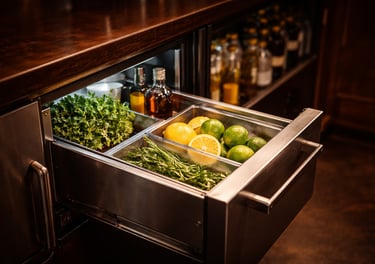
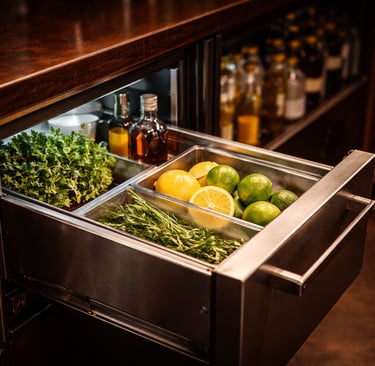
Refrigeration
Ingredient preservation systems
Ice & Temperature
Dilution and stability control
Workflow Engineering
Movement efficiency and tool access
Structural Layout & Spatial Planning
The physical footprint of your bar determines everything that follows.
Poor spacing creates friction.
Friction disrupts workflow.
Disrupted workflow degrades performance.
Structure is the first layer.
Footprint & Clearance Requirements
Every bar system requires three critical clearances:
Working depth (minimum 24")
Rear clearance for refrigeration ventilation
Operator movement space (minimum 36")
If refrigeration doors cannot fully open, workflow collapses.
If freezer lids cannot clear overhead shelving, ice access becomes compromised.
Design backward from movement — not from cabinetry dimensions.
Wet Zone vs Dry Zone Separation
A high-performance bar separates:
Wet Zone – Sink, glass rinsing, ice melt
Dry Zone – Tools, spirits, garnishes
Cross-contamination between zones increases clutter and slows drink assembly.
Wet elements should never sit directly adjacent to:
Primary stirring station
Scale-based dilution testing area
Spirit staging area
Create separation intentionally.
Ice Zone Placement
Ice is the most temperature-sensitive component in the system.
The Ice Zone should:
Sit within 2–3 steps of primary mixing position
Avoid direct light exposure
Avoid heat-producing appliances
Remain insulated from sink splash
This zone determines dilution control.
Misplace it and the entire system suffers.
For deeper breakdown, see the Ice System architecture section below.
Workflow Engineering
The Primary Production Triangle
The most efficient home bars operate within a triangle:
Ice access
Mixing surface
Glass staging area
If any leg of this triangle exceeds one full step, inefficiency compounds over time.
Measure your layout physically.
Do not assume spacing works.
A bar is a production environment.
Workflow must minimize:
Step count
Hand transitions
Cross-body movement
Tool repositioning
Every extra motion increases drink time and error probability.
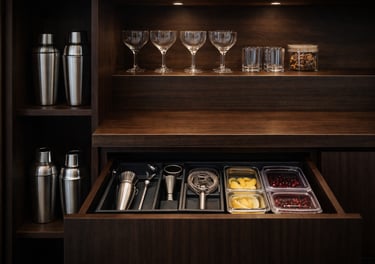
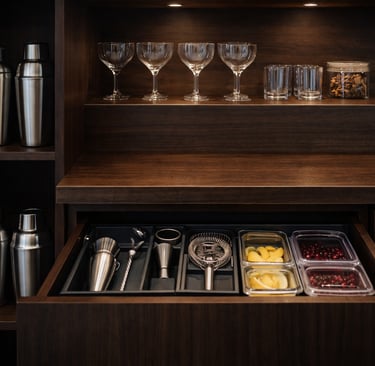
Tool Zoning
Tools fall into three categories:
Primary Tools
Secondary Tools
Peeler
Muddler
Citrus press
Channel knife
Maintenance Tools
Towels
Rinse station
Dump sink access
Primary tools should remain within a 12–18" reach radius.
If you must open drawers repeatedly during production, zoning has failed.
Counter Surface Strategy
You need at least:
One primary mixing surface
One secondary staging surface
Surfaces must resist:
Alcohol corrosion
Acid damage
Heat fluctuation
Water pooling
Material selection directly impacts longevity.
Avoid porous surfaces in high-use zones.
Ice & Temperature Control Architecture
Clear Ice Production Systems
Clear ice systems operate under controlled freezing direction.
Key variables:
Freezing rate
Insulation structure
Mineral separation
Block extraction method
Improper freezer placement causes:
Fracturing
Clouding
Inconsistent density
Freezers dedicated to ice outperform shared kitchen units due to reduced thermal fluctuation.
Ice is not aesthetic.
It is structural.
Dilution defines cocktail balance.
Temperature defines aroma volatility.
Control both, or quality fluctuates.
Ice Storage Strategy
Once ice is cut or molded, storage becomes the next variable.
Best practices:
Store in insulated bins
Avoid frost-heavy freezer compartments
Prevent exposed airflow
Separate cube types by container
Ice cross-contact reduces clarity over time.
Design storage intentionally.
Dilution Control Framework
Temperature and dilution are linked.
To stabilize dilution:
Pre-chill glassware when possible
Store mixing vessels at stable temperature
Control ambient lighting heat
Keep ice insulated until use
Refrigeration & Storage Systems
Beverage Center vs Wine Fridge
These systems serve different structural purposes.
Wine fridges:
Narrow temperature bands
Designed for horizontal bottle storage
Lower humidity control
Beverage centers:
Wider temperature ranges
Vertical storage flexibility
Faster cooling cycles
Selection depends on use case — not branding.
Refrigeration is infrastructure — not luxury.
Wine storage, vermouth stability, syrup preservation, and glass chilling all depend on thermal control.
Ventilation & Clearance Requirements
Under-counter refrigeration requires:
Front-vented systems for enclosed cabinetry
Rear clearance for airflow
Minimum manufacturer-specified spacing
Improper ventilation reduces compressor lifespan.
Longevity is structural performance.
Dedicated Ice Freezers
If serious about ice architecture:
A dedicated freezer:
Reduces temperature cycling
Stabilizes freezing direction
Increases clarity success rate
Prevents odor contamination
Shared freezers introduce unpredictability.
Plumbing & Sink Infrastructure
Sink Depth & Placement
Shallow sinks cause splash.
Splash increases moisture spread.
Minimum recommended depth: 8–10 inches.
Sink placement should:
Sit outside primary mixing surface
Remain within 1–2 steps
Avoid overhead shelving interference
Water is both tool and threat.
It cleans.
It dilutes.
It corrodes.
Control it.
Glass Rinsing Systems
Glass rinsers improve:
Temperature control
Cleanliness
Efficiency
They require:
Adequate pressure
Proper drainage
Backflow prevention
Installation planning must occur before cabinetry is finalized.
Drainage & Splash Management
Standing water is structural decay.
Ensure:
Proper slope
Silicone sealing at cutouts
Moisture-resistant cabinetry
Ventilation near sink zones
Plumbing failures rarely appear immediately.
They surface over time.
Lighting Architecture
Kelvin Strategy
Ideal range:
2700K–3000K warm neutral.
Too cool:
Sterile appearance
Unnatural spirit color distortion
Too warm:
Reduces clarity visibility
Obscures imperfections
Control color temperature intentionally.
Lighting is operational.
Poor lighting affects:
Color perception
Garnish accuracy
Cleanliness visibility
Ice inspection
Layered Lighting System
Every engineered bar uses:
Ambient lighting
Task lighting
Accent lighting
Task lighting should illuminate:
Mixing surface
Ice inspection area
Sink zone
Avoid overhead-only lighting.
Heat & Light Interaction
Lighting produces heat.
Heat accelerates:
Ice melt
Syrup degradation
Refrigeration cycling
LED systems reduce thermal output and improve efficiency.
Furniture & Structural Materials
Cabinet Construction
Look for:
Plywood box construction
Reinforced shelf supports
Moisture-resistant finishes
Soft-close hardware rated for weight
Particleboard degrades under humidity stress.
Furniture is load-bearing infrastructure.
It must withstand:
Moisture
Impact
Chemical exposure
Thermal fluctuation
Countertop Materials
Best performance materials:
Sealed hardwood (properly maintained)
Quartz
Stainless steel
Concrete (sealed)
Avoid untreated wood in wet zones.
Shelving Systems
Back bar shelving must:
Support bottle weight
Resist vibration
Remain anchored into studs
Allow proper spacing
Glassware storage should remain stable and evenly distributed.
Organization & Longevity Systems
Humidity Management
Humidity accelerates:
Label degradation
Metal corrosion
Cabinet swelling
Monitor ambient humidity if possible.
A home bar must maintain performance over time.
Longevity depends on:
Environmental control
Material durability
Organization logic
Maintenance discipline
Bottle Rotation Strategy
Spirits oxidize slowly once opened.
Best practices:
Rotate frequently used bottles forward
Seal tightly
Avoid prolonged heat exposure
Store vermouth refrigerated
Structure extends shelf life.
Maintenance Rhythm
Establish:
Weekly wipe-down protocol
Monthly refrigeration inspection
Quarterly seal checks
Annual deep system review
Consistency preserves infrastructure.
The System Mindset
It is not about trend adoption.
It is about:
Predictability
Efficiency
Control
Repeatability
The Blueprint is not about aesthetics.
Every improvement in structure compounds across:
Workflow
Ice quality
Temperature stability
Equipment longevity
Drink consistency
© 2026 Barkeepers Buzz. All rights reserved.
Barkeepers Buzz
Master cocktails, spirits, and bar knowledge with clarity and precision. Built for serious home enthusiasts.
Crafted with respect for the culture — and the responsibility that comes with it.
For educational purposes only. Intended for legal drinking age audiences. Please drink responsibly.
General Inquiries: