Jigger vs. Free Pouring: Which Technique is Best for Mixing Drinks?
Explore the pros and cons of jigger and free pouring techniques to find the best method for accurate and efficient drink mixing.
BAR TOOL GUIDES
Barkeepers BuzzBlog Editorial Team - Led by AJ “Buzz” Eichman
3/22/20265 min read
Mixing cocktails is as much an art as it is a science, and one of the first skills bartenders wrestle with is measuring their ingredients accurately and efficiently. The debate between using a jigger and free pouring is a classic one — precision versus speed, consistency versus flair.
Both have their place behind the bar, and figuring out which method fits your style or setup depends on what you value most when mixing drinks.
I’ve spent a few shifts testing both techniques, focusing on how they affect accuracy, speed, and the consistency of the cocktails I serve. In this article, I’ll share what I’ve learned so you can decide whether to reach for a jigger or go freestyle with your pours.
Quick Verdict
Jiggers deliver the highest accuracy and consistency, great for replicability and quality control
Free pouring speeds up workflow but requires practice to maintain consistent pour volumes
Beginners benefit from starting with a jigger to build precision before trying free pouring
Experienced bartenders often combine both methods to balance speed and accuracy
What Is a Jigger? Understanding the Tool and Its Uses
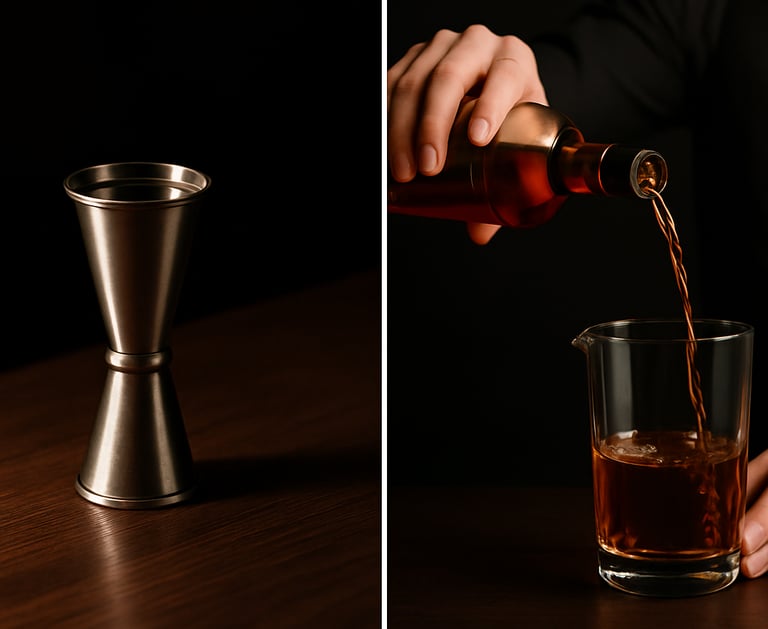
A jigger is a small measuring device, usually metal or glass, designed to measure specific volumes of liquid — typically 1 ounce, 1.5 ounces, or metric equivalents.
If you're building a proper setup, the jigger is one of the core tools every bartender relies on for consistency.
Learn more: Essential tools for a home bar
Using a jigger is straightforward: pour your ingredient into the jigger until it’s full, then pour that into your mixing glass or shaker. It removes guesswork and makes it easier to follow recipes accurately.
Understanding how jiggers are designed also helps explain why they’re so effective.
Learn more: Why jiggers have two sides
In busy bar setups, jiggers help bartenders maintain uniformity across multiple orders, so every Margarita or Old Fashioned tastes consistent from one to the next.
What Is Free Pouring? Technique and Skill Explained
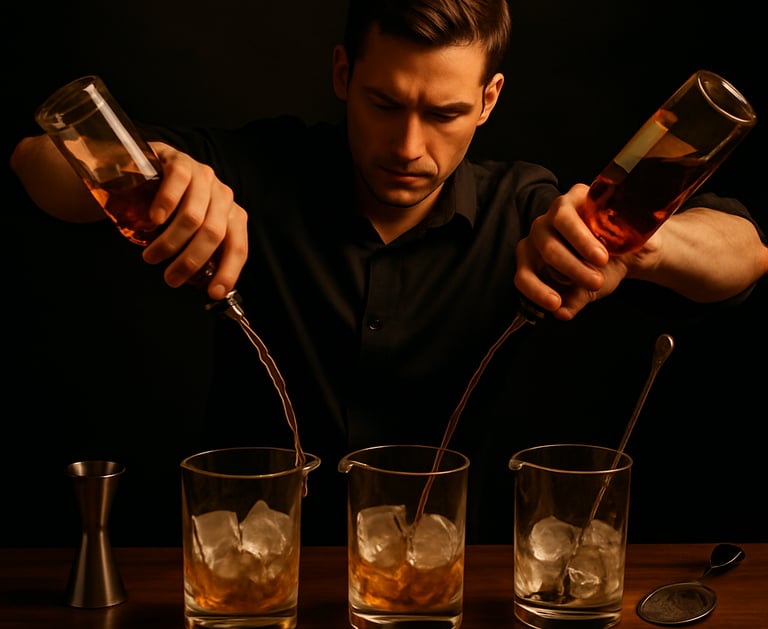
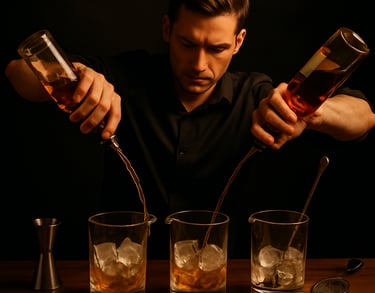
Free pouring is all about estimating volume by eye and muscle memory without intermediate measuring tools. Bartenders pour liquid directly from the bottle into the glass or shaker.
For example, one common timing rule is that a 1-second pour equals roughly half an ounce, though this varies depending on bottle type, pour spout, and liquid viscosity.
If you're practicing this technique, understanding how professionals approach measurement is key.
Learn more: How bartenders measure cocktails
Free pouring takes practice to master — experienced bartenders develop rhythm and muscle memory so their pours become accurate and repeatable without measuring tools.
Accuracy Comparison: Jigger vs. Free Pouring
This is where the biggest differences show up.
Jiggers shine for accuracy. Because you fill them to the brim, the measurements are consistent every time. This becomes especially important when working with balanced or spirit-forward drinks.
If you want to understand the exact measurements behind cocktails:
Learn more: Cocktail jigger measurements
Free pouring accuracy depends heavily on your skill level. Early on, there’s often noticeable variation, especially when relying on timing alone.
Even with practice, factors like bottle shape and liquid flow rate can introduce inconsistencies that jiggers eliminate.
Speed and Workflow Considerations
Free pouring is faster in most cases. Skipping the step of filling and emptying a jigger can save a few seconds per drink, which adds up quickly during busy shifts.
However, beginners often lose that time advantage while correcting pours or second-guessing counts.
Jiggers, on the other hand, provide a consistent and repeatable workflow that reduces mistakes — something that becomes important when avoiding common bartending errors.
Learn more: Common bartending mistakes and the gear that fixes them
How Technique Affects Drink Consistency and Quality
Consistency in cocktail proportions directly impacts taste and customer satisfaction.
With jiggers, each drink matches your recipe exactly, making them ideal for quality control and repeatability.
Free pouring introduces variability, especially for less experienced bartenders. One drink might come out stronger or weaker than the next.
Over time, though, experienced bartenders can achieve impressive consistency through muscle memory and refined technique.
Common Mistakes with Each Method
Free pouring without enough practice leads to inconsistent drink strength
Pouring from varying heights disrupts volume control
Misreading jigger calibration or overfilling throws off measurements
Not cleaning jiggers between uses affects accuracy
Assuming free pouring always saves time without accounting for corrections
Some of these issues also come down to tool design and ergonomics, especially with jiggers.
Learn more: Why jigger shape matters
Tips for Mastering Both Techniques
Start with jiggers to learn proper ratios and build consistency
Practice free pouring using water and timed pours to develop muscle memory
Maintain consistent pour height and pressure
Keep jiggers clean and dry for accuracy
Combine both methods depending on the drink and situation
Observe professional workflows and adapt to your environment
Which Technique Is Best for You? Choosing Based on Context
Neither method is universally better — it depends on your priorities.
If you want maximum accuracy and consistency, jiggers are the better choice. This is ideal for home bartenders and craft cocktail environments.
If your focus is speed and efficiency, free pouring becomes valuable once you’ve developed the skill.
Most experienced bartenders eventually combine both techniques to balance speed and precision.
If you're upgrading your setup, choosing the right tools can make a big difference in how you execute both methods.
See top picks: Best jiggers
And if you're building a complete system:
Explore options: Best bar tool sets
Common Questions About Jiggers and Free Pouring
What is more accurate: jigger or free pouring?
Jiggers provide more reliable accuracy since they measure fixed volumes directly.
How does free pouring technique work in bartending?
It relies on timing, visual cues, and muscle memory to estimate liquid volume.
Can beginners use free pouring effectively?
It’s possible but difficult. Starting with a jigger builds a better foundation.
What types of jiggers are best for cocktails?
Stainless steel jiggers with clear markings (1 oz / 1.5 oz) are the most common and reliable.
Does using a jigger slow down bartending service?
Slightly, but it improves consistency and reduces mistakes.
How do bartenders practice free pouring?
By timing pours and measuring output repeatedly to build consistency.
Is it possible to combine jigger and free pouring methods?
Yes, many bartenders use both depending on the situation.
Why do some bars prefer free pouring?
It speeds up service, especially in high-volume environments.
Conclusion
Mastering cocktail measurements comes down to balancing precision and speed.
Jiggers offer dependable accuracy and consistency, making them ideal for beginners and quality-focused environments. Free pouring provides speed and fluidity for experienced bartenders who have developed strong technique.
If you’re learning, start with a jigger. Build your understanding of measurements, then gradually incorporate free pouring as your confidence grows.
If you're serious about improving your overall bartending ability beyond just measuring:
Improve your skills: Techniques & professional skills
And if you want to explore the full ecosystem of tools that support both methods:
Explore more: Bar tools guide
© 2026 Barkeepers Buzz. All rights reserved.
Barkeepers Buzz
Master cocktails, spirits, and bar knowledge with clarity and precision. Built for serious home enthusiasts.
Crafted with respect for the culture — and the responsibility that comes with it.
For educational purposes only. Intended for legal drinking age audiences. Please drink responsibly.
General Inquiries: