
How Bartenders Measure Cocktails: Techniques and Tools
Learn how bartenders measure cocktails using precise tools and techniques to balance speed, accuracy, and flavor in every drink.
BAR TOOL GUIDES
Barkeepers BuzzBlog Editorial Team - Led by AJ “Buzz” Eichman
3/22/20267 min read
Getting the perfect cocktail every time isn’t just about recipes or fresh ingredients. A big part of consistently great drinks lies in how bartenders measure cocktails. Whether you're behind a busy bar or mixing drinks at home, understanding the right tools and techniques for measuring ingredients can make a huge difference in speed, flavor balance, and overall quality.
I’ve spent a few shifts testing different setups to see what really works—and here’s what I’ve learned about the methods bartenders use to nail perfect pours.
Quick Verdict
Jiggers remain the most reliable tool for precise, consistent measurements, especially during busy service
Pour spouts help speed things up but demand good technique and regular practice to pour accurately
Balancing speed and accuracy is key—combining jiggers with calibrated pour spouts offers the best of both worlds
Regular cleaning and maintenance of measuring tools prevent residue buildup that can throw off pours
Why Accurate Cocktail Measurement Matters
You might think eyeballing a pour is close enough, especially if you’re an experienced bartender. But I wanted to see if small differences in measurement really alter a cocktail’s taste or workflow. What I found was pretty clear: precise measurement seriously affects both the balance of flavors and the efficiency behind the bar.
Cocktails depend on a careful ratio of alcohol, mixers, and modifiers to create the intended flavor profile. If shots vary, the strength and taste can shift dramatically. Consistent measurement means every drink tastes as the recipe intended.
If you want to understand why exact proportions matter so much, it helps to look at how bartenders approach measuring cocktails in real service.
Learn more: Jigger vs. free pouring
That consistency builds customer satisfaction and repeat business.
On the operational side, accurate measurement helps control costs by reducing waste. When bartenders free pour without control, they risk over-pouring expensive spirits, which skews bar inventory and profitability. It also speeds up training—new bartenders develop their skills more confidently using repeatable tools like jiggers.
Common Tools Bartenders Use to Measure Cocktails
Jiggers
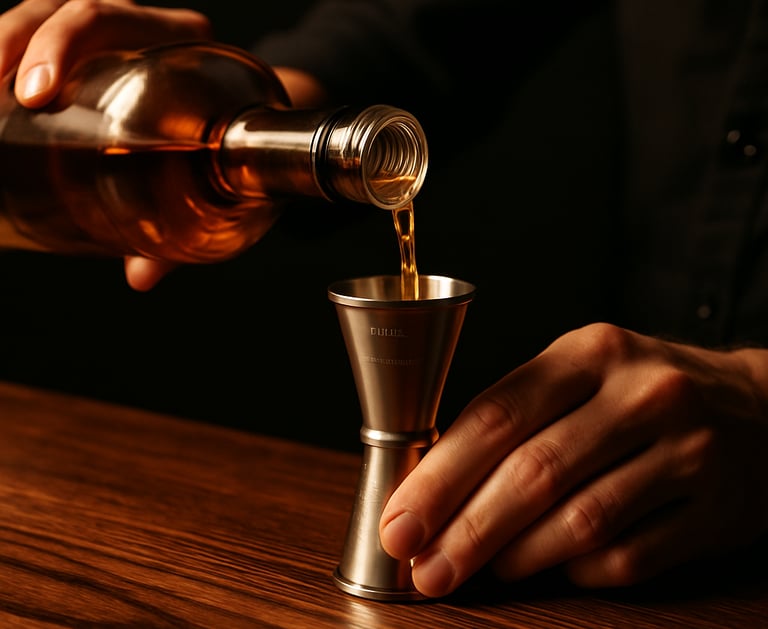
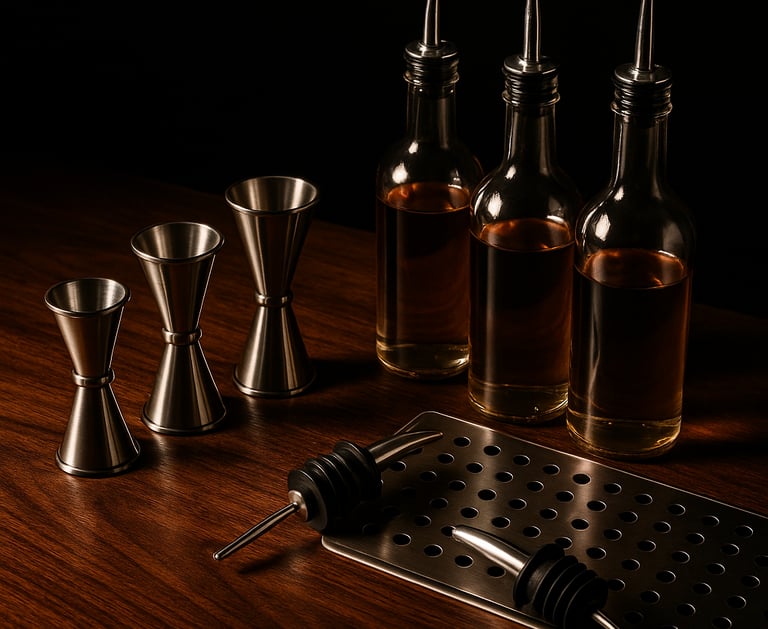
Jiggers are the classic and most recognizable bartender measuring tool. Usually made from stainless steel or glass, they come in various sizes but often feature two differently sized cones on each end—for example, 1 oz on one side and 1.5 oz on the other.
If you're building a dependable setup, a jigger is one of the most important pieces in any bar toolkit.
Learn more: Essential tools for a home bar
This dual-sided design offers flexibility and precision when measuring shots.
I tested several jiggers over multiple shifts and noticed that the etched volume markings—like 0.5 oz, 1 oz, and 1.5 oz—helped me hit exact measurements quickly without second-guessing.
If you want a deeper breakdown of standard jigger sizes and how they work in recipes:
Learn more: Cocktail jigger measurements
Choosing a durable material like stainless steel makes cleanup easier and extends tool life, something I appreciate after long shifts.
Pour Spouts
Pour spouts replace bottle caps and regulate liquid flow, speeding up free pouring. However, accuracy depends on hand angle, steady grip, and practice. I experimented using standard pour spouts with finger counting and found that combining these with occasional jigger checks improved my speed without sacrificing too much accuracy.
Speed Pourers
Some bars use speed pourers calibrated with preset measurements. These can help balance speed and precision during rush hours but still require bartender awareness and consistent technique to avoid inconsistent pours.
Free Pouring With Control
Free pouring without tools is common in high-volume venues. But unless trained on counting and rhythm or using calibrated pour spouts, free pours often lead to variable drink strength.
This is exactly why many bartenders compare free pouring against measured pours before deciding what works best.
Learn more: Jigger vs. free pouring
I wouldn’t recommend starting here if you’re still mastering measurement basics.
How to Use a Jigger Properly
Using a jigger seems straightforward—just fill to the brim and pour—but there are subtle tips that make a difference.
Pour slowly to avoid bubbles or spills, which can affect volume
Use the etched markings to measure unusual quantities like 0.75 oz or 2 oz
Hold the jigger on a flat surface if you need help leveling the pour
Rinse and dry jiggers regularly between drinks to prevent sticky residue buildup
In my test sessions, paying attention to these details improved both pouring speed and accuracy.
It also helps to understand why most jiggers are designed the way they are, especially if you use double-sided models.
➡️ Learn more: Why jiggers have two sides
Pour Spouts and Free Pouring Techniques
Pour spouts shine when you need to serve quickly, but technique really matters. Here are some points I noted:
Steady, consistent hand angle keeps flow rate uniform
Finger counting works well with a trained pourer but isn’t perfectly reliable at first
Using calibrated pour spouts designed to limit ounces per second helps reduce guesswork
Practice is essential—spills and over-pours cut into speed advantages
I found that pour spouts alone aren’t enough for precise measurement but work nicely when paired with occasional jigger checks.
Balancing Speed and Accuracy Behind the Bar
Balancing speed and precision is arguably the biggest challenge behind the bar. Jiggers offer accuracy but slow you down; free pouring is fast but risky in consistency.
Here’s how some setups handled this trade-off during my tests:
Double-sided stainless steel jiggers are great for quick, repeatable shots during peak times
Pour spouts with finger counts speed up common pours, provided bartenders have practiced control
Speed pourers calibrated to fixed volumes combined with periodic jigger verification help maintain balance in busy clubs
Home bartenders often prefer one or two quality jiggers for both precision and ease
If you’re trying to improve both technique and workflow, this is where measurement tools connect directly to broader bartending skill development.
Learn more: Techniques & professional skills
Maintaining and Cleaning Measuring Tools
One thing I underestimated going in was how much residue can affect measurement tools. Sticky sugars or syrups left on jiggers or inside pour spouts can alter flow and accuracy.
Here are some practical tips I learned:
Rinse jiggers immediately after use to prevent sticky buildup
Wash stainless steel with warm soapy water and dry thoroughly to prevent spotting
Clean pour spouts regularly; removable models are easier to disinfect
Avoid plastic measuring cups where possible—they tend to warp and stain
Keeping your tools clean is one of those simple habits that prevents common service mistakes and keeps drinks more consistent.
Learn more: Common bartending mistakes and the gear that fixes them
Choosing the Right Measuring Tools for Your Bar
Material, durability, size, and design all influence which tools fit your environment best.
Stainless steel jiggers are durable, easy to clean, and look professional
Glass jiggers offer visual appeal but risk breakage
Plastic jiggers are budget-friendly but less precise and prone to wear
For pour spouts, pick brands with a consistent flow rate and solid fit to bottles
If you’re setting up a home bar, a dual-sided stainless steel jigger with marked increments is a great starting point.
If you’re comparing styles, shape and design can also affect comfort and control while pouring.
Learn more: Why jigger shape matters
And if you want to compare two of the most common premium jigger styles:
Learn more: Japanese vs. bell jiggers
Tips and Tricks From Professional Bartenders
Train yourself to zero in on pour spout angle and speed
Use jiggers to calibrate your free pouring technique
Rotate your measuring tools so no single one wears unevenly
Keep backup jiggers handy to avoid delays during busy shifts
If you’re ready to upgrade from entry-level gear, a quality jigger makes a real difference in both speed and consistency.
See top picks: Best jiggers
Common Mistakes
Relying only on free pouring without consistent control often leads to uneven drink strength and flavor balance. I’ve seen bartenders assume all jiggers are standard sizes, but they vary—double-checking volumes is crucial for consistency.
Ignoring non-alcoholic ingredients when measuring can also throw off flavor. Syrups, juices, and bitters contribute volume and taste, so measure these carefully too.
Neglecting cleaning causes sticky residue that affects measurement accuracy and slows down service.
Finally, overlooking the balance between speed and accuracy can hurt both service quality and customer satisfaction during rush hours.
FAQ
What is the most accurate tool for measuring cocktails?
Jiggers, especially double-sided stainless steel models with clear markings, are generally the most accurate for consistent measurement.
How do bartenders measure cocktails quickly during busy hours?
Many use a combination of calibrated pour spouts with practiced finger counts and quick jigger checks to balance speed and precision.
What sizes do jiggers come in and which is best for a home bar?
Common jigger sizes include 1 oz, 1.5 oz, and 2 oz, often combined on dual-sided models. For home use, a 1 oz/1.5 oz stainless steel jigger is versatile and recommended.
Can pour spouts improve pouring speed without sacrificing accuracy?
Yes, but only if you practice consistent technique and pair them with occasional jigger measurements for verification.
Why is consistent measurement important for cocktail quality?
It maintains the intended flavor balance and strength, ensuring customers get the perfect drink every time.
How do I clean and maintain my bar measuring tools?
Rinse jiggers promptly, wash with warm soapy water, dry well, and clean pour spouts regularly to avoid residue buildup.
Are there digital tools or apps to help bartenders measure cocktails?
Some apps assist with recipe management and timing pours, but physical measuring tools remain essential for accuracy.
What is the difference between a Japanese jigger and a standard jigger?
Japanese jiggers often have a more precise pour and finer volume graduations, favored in craft cocktail bars for exact measurements.
Conclusion
Experimenting with cocktail measurement techniques showed me just how much difference small details can make in a drink’s taste and bar workflow. Jiggers remain a cornerstone for accuracy and consistency, especially in professional settings, while pour spouts boost speed when wielded with skill and care.
Whether you’re mixing cocktails at home or behind a busy bar, focusing on measurement tools and techniques pays off in better drinks, happier customers, and smarter inventory management.
Take some time to test your tools, practice your pours, and keep your gear in good shape. It’s a simple step that turns curiosity into clarity and helps you grow your bartending craft—glass by glass.
If you want to keep improving both your technique and your gear, these are the next logical reads.
Improve your skills: Techniques & professional skills
Build your setup: Essential tools for a home bar
Explore more gear: Bar tools
© 2026 Barkeepers Buzz. All rights reserved.
Barkeepers Buzz
Master cocktails, spirits, and bar knowledge with clarity and precision. Built for serious home enthusiasts.
Crafted with respect for the culture — and the responsibility that comes with it.
For educational purposes only. Intended for legal drinking age audiences. Please drink responsibly.
General Inquiries: