
Why Your Ice Clumps in the Freezer
Discover why ice clumps in the freezer and how freezer conditions, water quality, and ice storage can prevent clumping for better drinks.
ICE & TEMP GUIDES
Barkeepers BuzzBlog Editorial Team - Led by AJ “Buzz” Eichman
2/27/20264 min read
Ice clumping is a common issue. Whether you’re making ice for drinks or just need cold cubes, clumps get in the way. Understanding why ice cubes stick together comes down to physics, freezer conditions, and water quality. This article covers the basics of ice formation, the causes of clumping, common misunderstandings, and how it affects your drinks.
Quick Verdict: What You Need to Know About Ice Clumping
- Ice cubes clump because pressure at the points where they touch causes a thin melt layer that refreezes, welding cubes together.
- Freeze-thaw cycles in frost-free freezers cause partial melting and new crystal growth, which brings cubes closer.
- Moisture in the air condenses and freezes on ice surfaces, creating frost that bonds cubes.
- Using sealed containers, keeping freezer doors closed, and freezing more slowly help reduce clumping.
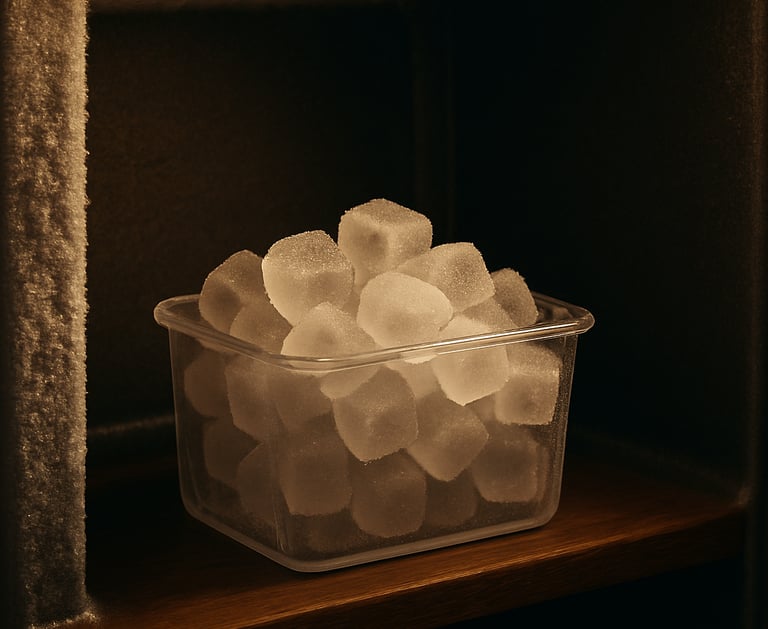
Why Ice Cubes Clump: The Physics of Surface Energy and Pressure
Ice expands about 8% when it freezes because the molecules form a lattice structure that's less dense than water. The surface molecules have higher energy since they aren’t fully bonded.
Where ice cubes touch, pressure makes tiny bits of ice melt. Liquid water takes up less space than ice, so a thin water film appears between contact points. This melts and then quickly refreezes, fusing the cubes to lower surface energy. This process drives the clumping as the system seeks to minimize surface area.
Role of Freezer Conditions and Freeze-Thaw Cycles
Frost-free freezers warm up periodically to prevent frost buildup. This warming partially melts ice cubes. When the unit cools again, water refreezes, growing new crystals that connect cubes.
This melting and refreezing cycle is the main cause of clumping. Upright frost-free freezers tend to have more of these cycles. Chest freezers hold steady temperature and usually see less clumping.
Rapid freezing makes smaller ice crystals, reducing surface roughness and clumping. Slower freezing makes bigger crystals that stick easier.
Humidity, Frost, and Atmospheric Factors
Moisture in freezer air condenses on ice surfaces and freezes as frost, which glues cubes together. This happens mostly if ice is stored openly.
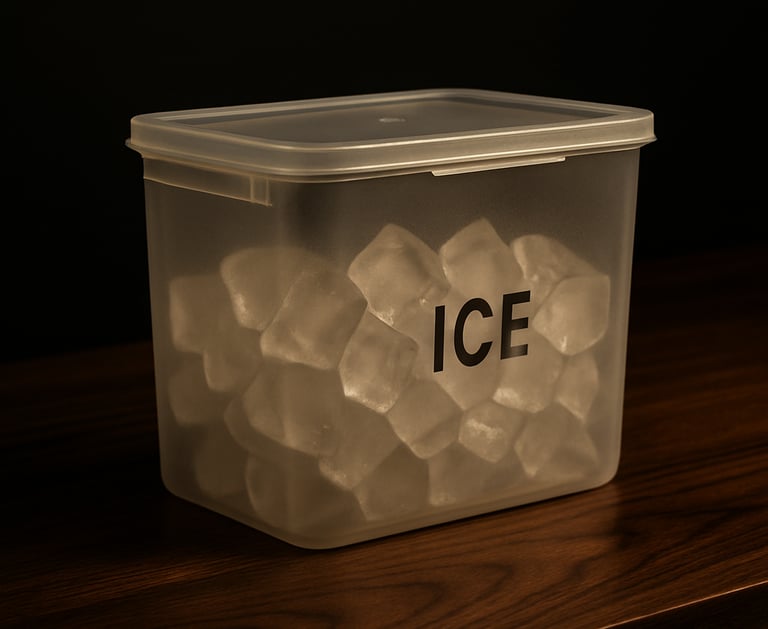
Keeping ice in well-covered or sealed bins cuts down frost buildup. Fans and airflow help by moving moisture away from the ice.
How Clear Ice vs Cloudy Ice Affects Clumping and Drink Quality
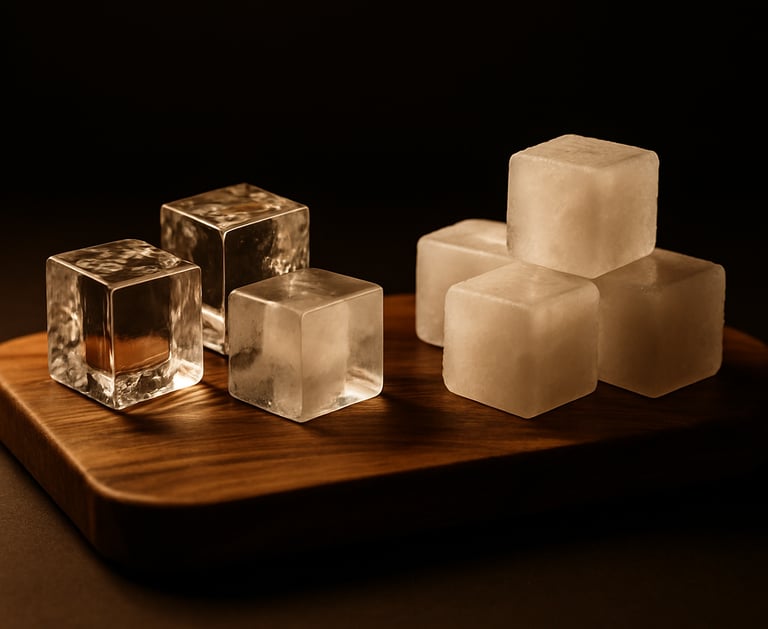
Clear ice forms when water freezes slowly through directional freezing, pushing out gases and minerals. It’s denser and more uniform. Cloudy ice traps air bubbles and minerals due to quick freezing or impurities. If you want a deeper breakdown of melt behavior and clarity differences, see our full comparison of clear ice vs cloudy ice.
What Clear Ice Changes:
- Dilution Rate: Clear ice melts slower, so drinks don’t dilute as fast and flavors last longer.
- Texture and Temperature Stability: It’s harder and cooler, providing better mouthfeel and slower warming.
- Aroma Perception: Slower melting preserves aroma compounds longer.
What Clear Ice Does NOT Change:
- It doesn’t stop clumping. Clumping depends mostly on surface melting and freezer conditions, not internal clarity.
- The basic melting and refreezing at contact points still happens.
Clear ice helps with drink quality, not with keeping cubes separate in the freezer.
Practical Implications for Drink Quality and When It Matters
If your drinks need slow dilution, like neat whiskey or cocktails on the rocks, understanding the full dilution curve and why ice shape matters helps you control melt rate more precisely.
If your main concern is ice that doesn’t stick together, focus on storage and freezer environment over ice clarity.
Most daily use cases do fine with proper storage of regular ice. Serious home bars get the best results combining clear ice molds and good storage methods to cut clumping.
Prevention Tips for Clump-Free Ice
- Store ice in bins with lids to keep moisture out. See - Best Storage Bins
- Use chest freezers for ice storage to avoid freeze-thaw cycles. See - Best Freezers for a Home Bars
- Freeze distilled or filtered water to reduce mineral-caused crystal irregularity. See - Best Ice Molds
- Don’t open the freezer door too often; keep temperatures steady.
- Try automatic clear cube or sphere makers that control freezing for uniform ice. See - Best Automatic Clear Ice Cubes & Sphere Systems
- These systems also help maintain consistent shape and density when comparing nugget ice vs cubes vs spheres for different drink styles.
Common Mistakes That Cause Ice Clumping
- Leaving ice cubes exposed on shelves where moisture can settle and freeze.
- Expecting frost-free freezers alone to stop clumping without protective containers.
- Using hard tap water with high minerals, which alters crystal formation.
- Opening the freezer frequently, causing brief melting.
Fixing these keeps ice cubes separate longer and improves quality.
Frequently Asked Questions (FAQ)
Does freezer temperature affect ice clumping?
Yes. Temperature swings cause freeze-thaw cycles that promote clumping. Steady, low temps reduce it.
Why do ice cubes stick together after being stored a long time?
Moisture buildup and repeated freeze-thaw cycles cause cubes to melt slightly and refreeze stuck together.
Can clear ice prevent ice from sticking?
No. Clear ice improves melting patterns and looks but doesn’t stop physical fusion caused by freezer conditions. For production planning that improves clarity consistency, see our guide to freezer planning for clear ice production.
How do I stop ice from sticking in frost-free freezers?
Use sealed bins, limit door openings, and consider chest freezers or dedicated ice makers designed to reduce clumping.
Why do some ice cubes develop spikes instead of clumping?
Ice spikes form when expanding water pushes through small holes in the surface and freezes outside. It’s a freezing condition issue, separate from clumping.
Is distilled water better for ice quality?
Distilled water freezes with fewer gases and minerals, yielding clearer, more uniform ice and fewer irregular crystals that promote clumping.
Does the shape of ice affect clumping?
Shapes with less surface contact, like spheres, clump less. Smaller contact points mean less pressure and less bonding.
© 2026 Barkeepers Buzz. All rights reserved.
Barkeepers Buzz
Master cocktails, spirits, and bar knowledge with clarity and precision. Built for serious home enthusiasts.
Crafted with respect for the culture — and the responsibility that comes with it.
For educational purposes only. Intended for legal drinking age audiences. Please drink responsibly.
General Inquiries: