
Martini Glass vs Coupe: When Each Wins
Discover when to choose a martini glass vs coupe to enhance your cocktail experience with the right glassware, improving aroma, stability, and style.
GLASSWARE GUIDESCOCKTAILS & MIXED DRINKS
Barkeepers BuzzBlog Editorial Team - Led by AJ “Buzz” Eichman
3/1/20264 min read
Choosing the appropriate glass for your cocktail involves more than aesthetics—it plays a critical role in the drinking experience. Among classic stemware, the martini glass and coupe glass stand apart within the broader world of cocktail glassware due to their distinctive forms and functional qualities. Both are designed for cocktails served without ice, yet their differing shapes, volumes, and histories inform their optimal use based on the drink and setting.
Discerning when to select a martini glass versus a coupe glass will elevate both presentation and taste across classic cocktails and mixed drinks.
Quick Verdict
Martini Glass: Ideal for spirit-forward cocktails emphasizing aromatic focus and refined presentation, such as classic martinis and cosmopolitans.
Coupe Glass: Suited for stirred or shaken cocktails where volume control and stability matter, including daiquiris, Manhattans, and sidecars.
The stemmed design of both glasses minimizes heat transfer from your hand, reinforcing proper ice and temperature control in served cocktails.
Practicality: Coupes provide superior stability and reduce spill risk, while martinis' sharp rims facilitate more direct sipping.
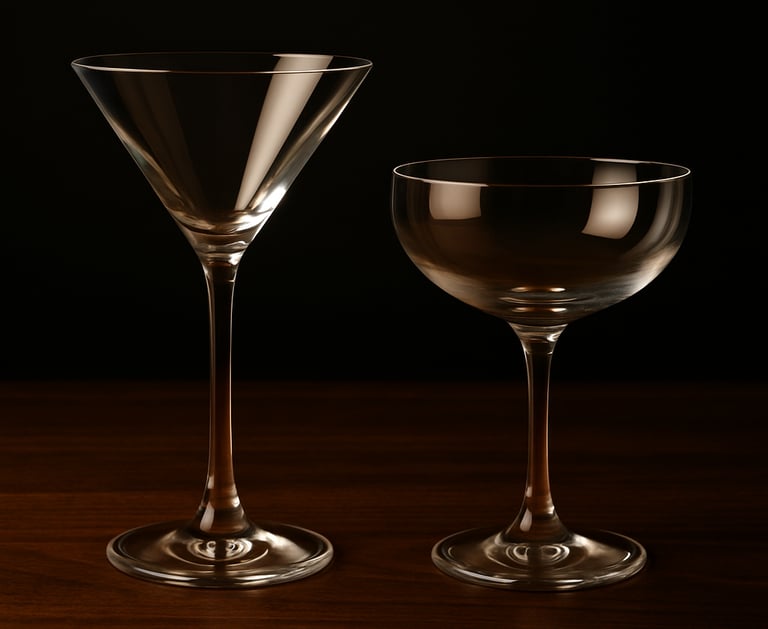
Martini Glass: Design and Strengths
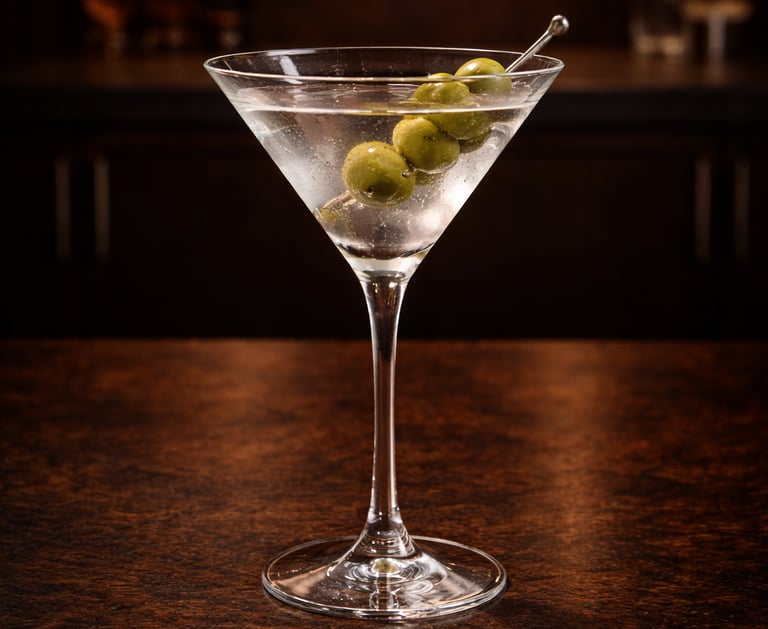
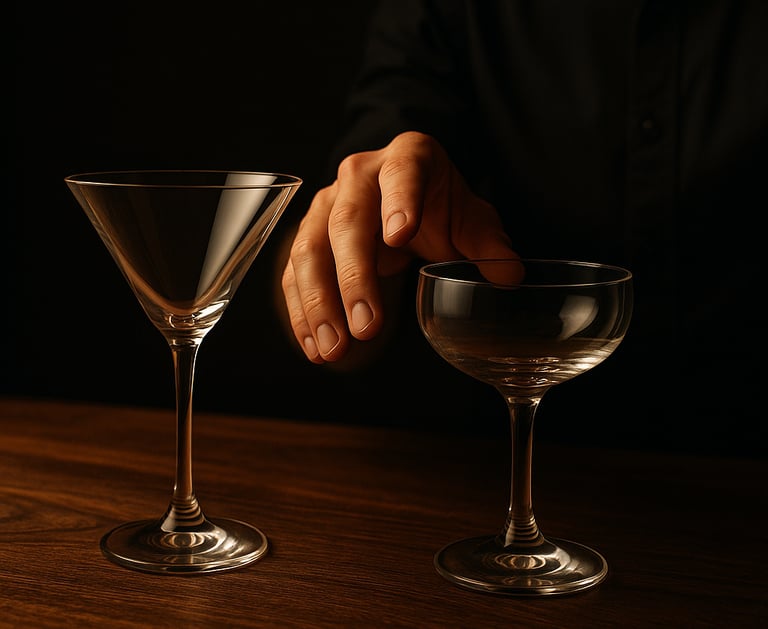
The martini glass is distinguished by its steep, angular V-shaped bowl paired with an elongated stem. Typically accommodating 8 to 10 ounces, its form is engineered to showcase spirit-forward cocktails served neat. The wide bowl opening promotes aromatic release, enriching the sensory dimension.
Why It Works
Aromatic enhancement: The steep sides direct aromas upward, allowing the scent to unfold as you sip.
Visual precision: Its clear, sharp silhouette frames the cocktail elegantly—crucial for drinks where clarity and presentation are paramount.
Temperature control: The long stem keeps your hand removed from the bowl, preserving the drink’s cold temperature longer.
Ideal Uses
Martini glasses excel with:
Dry martinis
Cosmopolitans
Whether shaken or stirred—explained in stirred vs shaken—the glass choice influences aroma delivery and texture perception.
Gibson cocktails
These are served up, without ice, where clarity and aromatic expression benefit from the glass’s design. For refined options, see our curated list of best martini glasses.
Coupe Glass: Versatility and Appeal
The coupe glass features a rounded, shallow bowl reminiscent of a small saucer atop a shorter stem. Originally crafted for champagne, its approachable silhouette and moderate volume—generally 5 to 7 ounces—have earned it renewed favor in cocktail service.
Why It Works
Enhanced stability: The rounded bowl combined with a shorter stem offers a sturdier, more grounded feel, reducing the chance of tipping.
Encouraged pacing: The inward-curved lip moderates sipping speed and minimizes spills.
Capacity matched to shaking and stirring: The modest volume supports balanced pours suited to cocktails prepared with ice then strained.
Ideal Uses
Coupe glasses accommodate cocktails such as:
Daiquiris
Manhattans
Sidecars
These drinks are typically prepared as outlined in our guide to stirring cocktails properly before being strained into stemware.
Classic champagne cocktails
These drinks are typically shaken or stirred with ice and then strained, with the coupe’s shape complementing temperature retention and serving style. Explore our recommendations for best coupe glasses designed for balance and durability.
Key Differences: Shape, Size, and Stability
Shape
Martini Glass: Steep, angular V-bowl
Coupe Glass: Rounded, shallow bowl
Capacity
Martini Glass: 8–10 ounces
Coupe Glass: 5–7 ounces
Stem Length
Martini Glass: Long
Coupe Glass: Shorter
Stability
Martini Glass: More prone to tipping
Coupe Glass: More stable, fewer spills
Use Case
Martini Glass: Spirit-forward, aromatic drinks
Coupe Glass: Shaken or stirred cocktails
While martini and coupe glasses serve cocktails “up,” taller drinks from the Highball Family rely on different glassware principles.
When to Choose Martini vs Coupe
Glass selection depends on cocktail composition, service style, and desired visual effect:
Opt for the Martini Glass when serving clear, spirit-forward cocktails ‘up’ to emphasize aroma and aesthetic refinement.
Choose the Coupe Glass for cocktails prepared with ice and strained, where stability and controlled sipping are priorities.
When uncertain, a coupe generally offers versatile, spill-resistant functionality across a broader cocktail spectrum.
Common Mistakes When Choosing
Oversized martini glasses: Excessively large bowls encourage overpouring and accelerate temperature loss.
Martini glass with shaken/stirred cocktails: The sharp rim is less suited to textured or diluted drinks, increasing spill potential.
Neglecting stemware: Using stemless glasses transfers hand heat rapidly, warming cold cocktails prematurely.
Practical Recommendations for Home Bars
Beyond glass selection, optimize your workflow with appropriate bar tools:
Utilize quality vessels like those featured in our best mixing glasses guide for proper chilling before serving.
Equip your bar with efficient tools such as the best cocktail shakers when preparing shaken drinks destined for coupes.
Invest in refined martini glasses and coupe glasses matched to your preferred cocktail repertoire to elevate the overall drinking experience.
FAQ
Does a coupe glass keep drinks colder than a martini glass?
Both glasses use stems to limit heat transfer from your hand, though the martini’s longer stem may offer a slight edge in temperature retention—this difference is subtle in practice.
Can I use a coupe instead of a martini glass?
Yes. Coupes provide greater stability and controlled volume, making them a versatile alternative in many scenarios.
Why do martini glasses have such a sharp angle?
The steep angle intensifies aroma release and visually distinguishes spirit-forward drinks, enhancing both sensory and aesthetic qualities.
Are martini glasses always bigger than coupés?
Generally, yes. Martini glasses hold roughly 8–10 oz, while coupes tend to accommodate 5–7 oz.
What cocktails are best served in a coupe?
Traditional daiquiris, Manhattans, sidecars, and champagne cocktails benefit from the coupe’s form and volume.
Why is stemware important?
Stems minimize heat transfer from hand to drink, maintaining the cocktail’s intended chilled state.
Can coupe glasses be used for champagne?
Indeed. Coupes were originally designed for champagne and remain a stylish choice for sparkling cocktails.
Mastering the interplay between technical function and sensory experience in glassware fosters cocktails that taste as impeccable as they look, held at the temperature you intend.
© 2026 Barkeepers Buzz. All rights reserved.
Barkeepers Buzz
Master cocktails, spirits, and bar knowledge with clarity and precision. Built for serious home enthusiasts.
Crafted with respect for the culture — and the responsibility that comes with it.
For educational purposes only. Intended for legal drinking age audiences. Please drink responsibly.
General Inquiries: