
How to Stir with a Bar Spoon: A Bartender's Guide
Master how to stir with a bar spoon to create perfectly chilled, balanced cocktails with ideal dilution and crystal-clear texture.
BAR TOOL GUIDES
Barkeepers BuzzBlog Editorial Team - Led by AJ “Buzz” Eichman
4/12/20264 min read
Getting the technique right when stirring cocktails with a bar spoon might seem basic, but this skill plays a huge role in the final quality of drinks like Manhattans or Martinis. Stirring is about more than just mixing ingredients—it’s about chilling the cocktail evenly, achieving the right dilution, and preserving clarity and texture that shaking can disrupt.
Over several shifts, I’ve tested different stirring methods and spoons, and in this guide, I’ll walk you through how to stir like a pro, why it matters, and tips to get the perfect balance every time. If you’re still building your foundation, this is one of those core skills tied closely to the techniques & professional skills every bartender should master.
Quick Verdict
Proper stirring chills and dilutes spirit-forward cocktails smoothly without losing clarity
A bar spoon with a twisted shaft improves control and creates a gentle vortex
Use a smooth, controlled motion with the spoon against the glass for leverage
Stir for about 20–30 seconds or until properly chilled and balanced
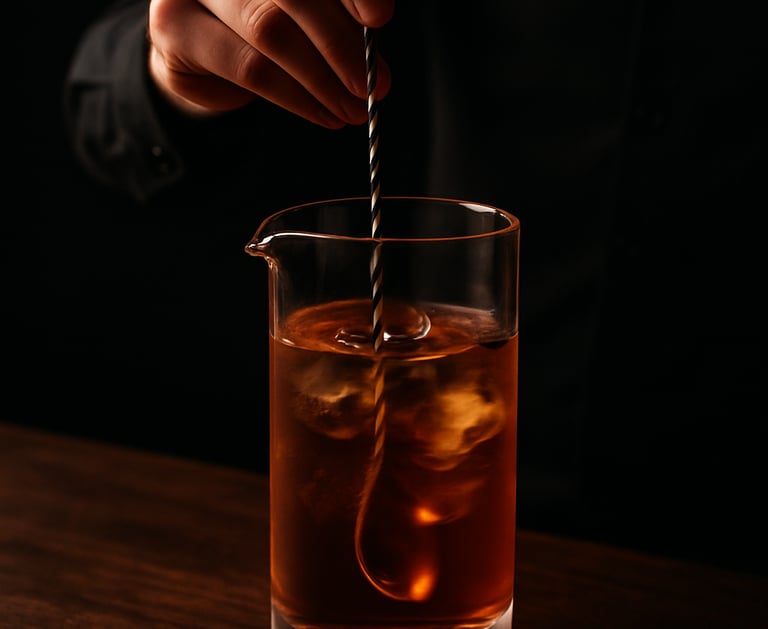
Why Stirring Matters in Cocktails
Stirring is the go-to method for spirit-forward cocktails where clarity and texture are key. Unlike shaking, stirring limits aeration and aggressive dilution, keeping the drink silky and clean.
From my experience, the difference is noticeable. Shake a Manhattan and you’ll introduce unwanted froth and cloudiness. Stir it properly, and you get that smooth, polished finish the drink is known for.
A big part of this comes down to dilution control. If you haven’t explored that yet, why stirring controls dilution is worth understanding—it’s the backbone of good stirring technique.
Choosing the Right Bar Spoon
If you don’t already have a proper bar spoon, this is where I’d start. Regular spoons don’t offer the length or control needed for consistent stirring.
A good bar spoon typically has:
A long handle (10–12 inches)
A twisted shaft
A balanced weight for smooth rotation
The twist isn’t just for looks. It helps guide your fingers and keeps the motion fluid while reducing resistance in the liquid. If you’re curious about the design itself, why bar spoons are twisted explains the mechanics behind it.
You’ll also notice differences in balance and feel depending on the style. This comparison of weighted vs unweighted bar spoons can help you decide what fits your style.
If you’re upgrading, these picks for the best bar spoons are a solid place to start.
Step-by-Step Guide to the Proper Stirring Technique
1. Grip the Bar Spoon Correctly
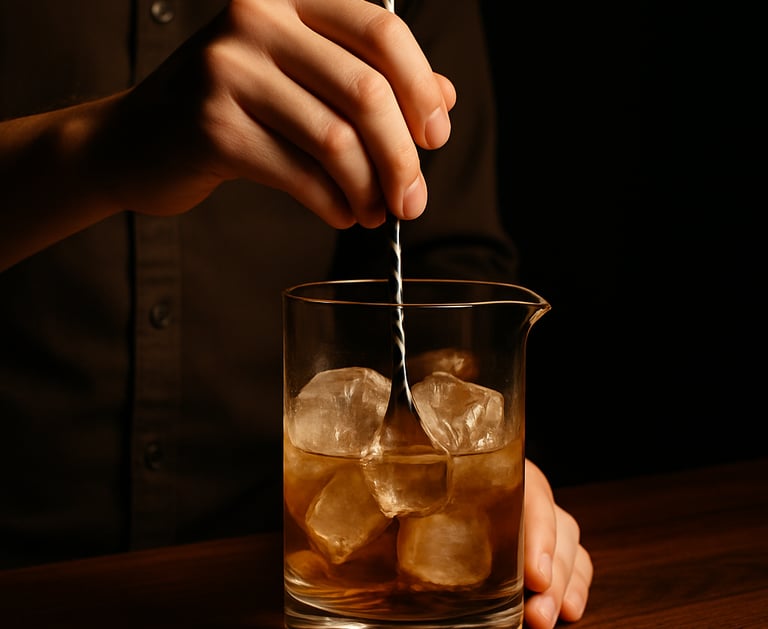
Hold the spoon between your thumb and forefinger near the bowl, letting the handle rest lightly between your other fingers. This gives you control without tension.
2. Place the Spoon in the Mixing Glass
Insert the spoon with the bowl facing inward, resting the back of it against the glass wall.
3. Begin Stirring Smoothly
Use a steady circular motion along the inside of the glass. Direction doesn’t matter—consistency does.
4. Use Gentle, Controlled Movements
Push lightly against the glass to guide the spoon. Avoid jerky or aggressive motion.
5. Watch for Chill and Dilution
After about 20–30 seconds, the glass should feel cold and the drink properly diluted.
If you want to refine this further, how to stir cocktails properly breaks down the mechanics in more detail.

Tips for Achieving the Perfect Chill and Blend
Use large, fresh ice cubes to slow dilution
Keep your motion smooth and consistent
Stop when the glass is cold—don’t overdo it
Focus on feel, not just time
These small adjustments make a noticeable difference in the final drink.
Common Mistakes to Avoid When Stirring
One mistake I see often is stirring too aggressively. It feels like it should help, but it actually speeds up dilution and clouds the drink.
Other common issues include:
Using regular spoons instead of a proper bar spoon
Gripping too tightly or too far up the handle
Stirring unevenly or back-and-forth
Not stirring long enough
If you’re troubleshooting your results, this guide on common stirring mistakes covers these in detail.
Comparing Stirring to Shaking: When and Why to Use Each
Knowing when to stir vs shake is just as important as the technique itself.
Stir spirit-forward cocktails like Martinis, Manhattans, and Negronis
Shake drinks with citrus, syrups, or egg whites that need aeration
Shaking chills faster but introduces air and more dilution. Stirring is slower and more controlled.
If you want the full breakdown, stirring vs shaking science dives deeper into how each method affects the final drink.
Bartender Tips for Consistency and Efficiency
Practice your motion until it feels automatic
Keep your tools organized and within reach
Clean your spoon after each use
Pay attention to the drink—not just the clock
Consistency is what separates decent cocktails from great ones.
Frequently Asked Questions About Stirring with a Bar Spoon
Why do some cocktails require stirring instead of shaking?
Because stirring preserves clarity and texture while controlling dilution.
How long should I stir a cocktail?
About 20–30 seconds, depending on ice and volume.
Is there a correct direction to stir?
No—just keep it consistent and smooth.
Can I use a regular spoon?
You can, but you’ll lose control and efficiency.
What type of bar spoon is best?
One with a long handle and twisted shaft for smooth rotation.
How does stirring affect taste?
It keeps flavors clean, balanced, and properly diluted.
Should I stir with ice?
Always—ice is essential for both chilling and dilution.
What method do bartenders use?
A smooth circular motion with the spoon against the glass is the standard.
Conclusion
Learning how to stir with a bar spoon properly takes your cocktails from basic to polished. It’s a simple technique on the surface, but once you dial in control, timing, and tool choice, the difference is obvious in every sip.
Start with the fundamentals—proper grip, smooth motion, and good ice—and build from there. Over time, you’ll develop that instinct for when a drink is perfectly stirred.
If you’re building out your setup, the full bar tools guide is a great next step. You can also simplify your gear with the minimalist home bar tool setup if you want a clean, efficient starting point.
Master the motion, and everything else follows. 🍸
© 2026 Barkeepers Buzz. All rights reserved.
Barkeepers Buzz
Master cocktails, spirits, and bar knowledge with clarity and precision. Built for serious home enthusiasts.
Crafted with respect for the culture — and the responsibility that comes with it.
For educational purposes only. Intended for legal drinking age audiences. Please drink responsibly.
General Inquiries: