
Why Bar Spoons Are Twisted: The Design Behind the Essential Bartending Tool
Discover why the twisted bar spoon is an essential bartending tool, enhancing stirring control, layering drinks, and improving grip and comfort.
BAR TOOL GUIDES
Barkeepers BuzzBlog Editorial Team - Led by AJ “Buzz” Eichman
4/12/20265 min read
If you’ve spent any time behind a bar or mixing drinks at home, you’ve probably noticed the uniquely twisted handle of a bar spoon. It’s not just a stylish quirk—it’s a deliberate design choice that makes a real difference in how bartenders work. Over a few shifts, I took a closer look at why bar spoons have that spiral handle and how it impacts everything from stirring speed to cocktail presentation.
Whether you're just starting out or looking to sharpen your skills, understanding this design helps explain why the bar spoon is such a core part of the bar tools lineup.
Quick Verdict
The twisted handle improves stirring by enabling smooth, controlled rotation and reducing wrist strain
Its spiral shape guides liquid flow during layering, helping create clean, visually distinct drinks
Twisted handles offer better grip, especially when handling wet or slippery glassware
Ergonomic design makes prolonged mixing more comfortable and consistent
What Is a Bar Spoon and Why Is It Essential?
A bar spoon looks like an ordinary spoon at first glance, but it’s specifically designed for cocktail work. Typically around 10 to 12 inches long, it allows you to reach into tall glasses and mixing vessels without spilling or overreaching. Beyond length, the spoon’s narrow bowl lets you measure small amounts or retrieve garnishes.
More importantly, it’s a multitasking tool used for stirring cocktails, layering drinks, and even light mixing tasks. Its design reflects these functions—and that’s where the twisted handle comes in.
If you're building out your setup, this guide to essential tools for a home bar shows how the bar spoon fits into the bigger picture.
The Twisted Handle: Design and Function Explained
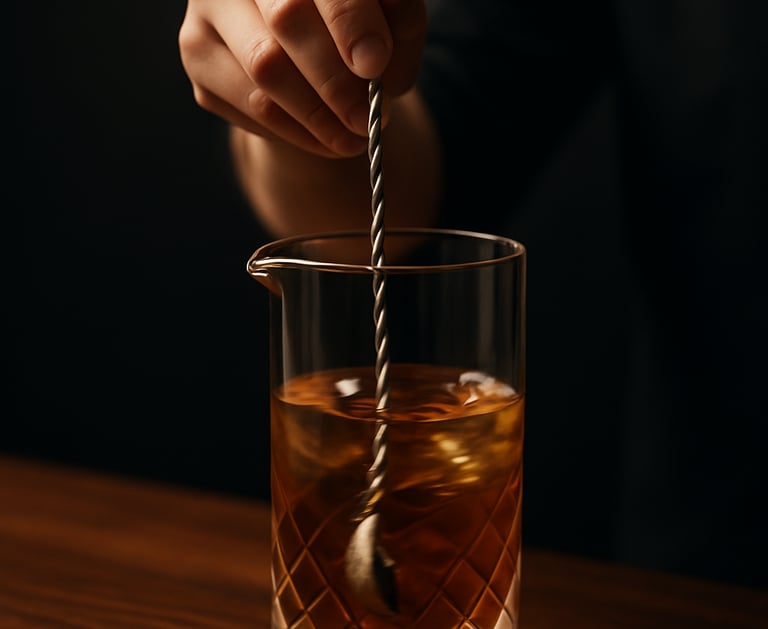
The key feature that stands out on a bar spoon is its twisted handle. This isn’t just for looks. The spiral creates an axis for smooth rotation when you stir—a mechanical advantage that reduces wrist fatigue and improves consistency.
When immersed in liquid, the twist helps the spoon rotate evenly and predictably. This makes it easier to stir without over-agitating or over-diluting the cocktail. The twist also helps reduce dripping by breaking up condensation along the handle.
If you want a deeper breakdown of the design itself, bar spoon design explained dives further into how these features work together.
How the Twisted Design Improves Stirring Efficiency
From hands-on use, I noticed the twisted bar spoon allows for smoother, more controlled stirring compared to flat-handled spoons. The spiral acts like a guide for your fingers, making it easier to maintain a consistent twirling motion between your thumb and forefinger.
That consistency is key. It helps chill drinks evenly, dissolve ingredients properly, and avoid introducing air that clouds the cocktail. The end result is a smoother texture and better balance.
If you're refining your technique, pairing the right spoon with the right motion—like what's covered in how to stir cocktails properly—makes a noticeable difference.
Using the Twist for Layered Drinks and Presentation
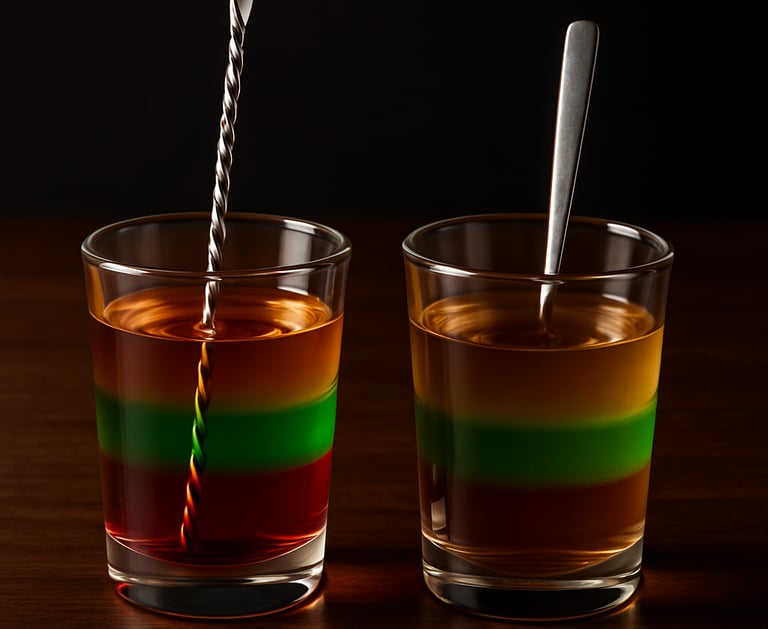
One of the bar spoon’s most underrated features is how well it works for layering cocktails. When making drinks like pousse-cafés or layered shooters, pouring slowly and carefully is everything.
The twisted handle guides liquid down its length, reducing turbulence and slowing the pour. This allows ingredients to settle gently instead of mixing together.
If layering is something you want to experiment with more, how to layer cocktails builds on this concept and shows how to get clean, consistent results.
Ergonomics and Grip: Comfort During Mixing
Mixing cocktails involves repetitive motion, especially during busy sessions. I found that the twisted handle provides a natural grip—even when wet—which helps prevent slipping and improves control.
The spiral grooves act like built-in texture, giving you tactile feedback while you stir. Combined with the balanced weight of most bar spoons, this makes longer mixing sessions more comfortable and efficient.
If you’re comparing options, this breakdown of weighted vs unweighted bar spoons can help you decide what feels best in your hand.
Common Mistakes When Using Bar Spoons
Using flat-handled spoons: Leads to uneven stirring and reduced control
Ignoring the twist when layering: Causes ingredients to mix instead of forming clean layers
Holding the spoon incorrectly: Gripping too tightly or too far back reduces precision
Choosing the wrong length: A spoon that’s too short or too long makes stirring awkward
Skipping proper cleaning: Residue can build up in the grooves and affect hygiene
A lot of these show up in broader technique issues, which is why common home bartending mistakes is worth reviewing if you’re troubleshooting your setup.
Bartender Tips and Real-World Use Cases
From stirring classics like Manhattans to layering visually striking cocktails, the twisted bar spoon earns its place behind the bar. Many bartenders twirl the spoon between their fingers, creating smooth motion without extra effort.
For home bartenders, the benefit is just as real. The length, grip, and control make it easier to stir in everything from mixing glasses to standard drinkware.
If you want to refine the motion itself, how to stir with a bar spoon walks through the technique in detail.
How to Choose the Right Twisted Bar Spoon for Your Bar
When choosing a bar spoon, a few factors matter more than most:
Length: 10–12 inches works for most setups, but match it to your glassware
Material: Stainless steel is the most durable and easiest to maintain
Twist style: Moderate spirals offer the best balance of grip and control
Weight and balance: Heavier spoons can improve control but may fatigue your hand faster
If you want to compare real options, check out the best bar spoons to find one that fits your style and setup.
Frequently Asked Questions
Why are bar spoons twisted?
Bar spoons are twisted to improve stirring control, reduce wrist strain, and guide liquid flow during layering.
How does the twisted design affect cocktail stirring?
It creates a smooth rotation axis, allowing for consistent stirring with less effort and better ingredient integration.
Can a bar spoon be used for layering drinks?
Yes. The spiral handle helps control the pour and reduce turbulence, making layering easier.
What are the benefits over a regular spoon?
Better grip, smoother stirring motion, improved layering control, and overall efficiency.
Is the twisted handle ergonomic?
Yes. The spiral design improves grip and reduces fatigue during repeated use.
Are there different types of twists?
Yes. Some spoons have tighter or looser spirals, which affect grip and flow control.
How do I properly use a twisted bar spoon?
Hold it between your fingers and rotate smoothly when stirring. For layering, pour liquid gently down the handle.
Do bar spoons come in different sizes and materials?
Yes. Most are stainless steel, but lengths and finishes vary depending on preference.
Practical Conclusion
Exploring the twisted bar spoon design shows how much thought goes into even the simplest bar tools. That spiral handle isn’t just for looks—it improves stirring efficiency, enhances grip, supports layering, and makes the entire process more comfortable.
Whether you’re mixing classic cocktails or experimenting with new techniques, choosing the right spoon—and understanding how to use it—can noticeably improve your results.
If you’re continuing to build your setup, the bar tools guide is a solid next step. Pair that with the right technique and a quality spoon, and you’ll start seeing the difference immediately.
It’s a small tool—but it makes a big impact behind the bar.
© 2026 Barkeepers Buzz. All rights reserved.
Barkeepers Buzz
Master cocktails, spirits, and bar knowledge with clarity and precision. Built for serious home enthusiasts.
Crafted with respect for the culture — and the responsibility that comes with it.
For educational purposes only. Intended for legal drinking age audiences. Please drink responsibly.
General Inquiries: