

How Clear Ice Is Made (Step-by-Step Guide)
Learn how clear ice is made with slow, directional freezing techniques using purified water and insulated molds for perfect cocktail cubes.
ICE & TEMP GUIDES
Barkeepers Buzz Editorial Team - Led by AJ “Buzz” Eichman
4/24/20266 min read
Clear ice isn’t just a fancy detail in a cocktail. It’s a sign of solid technique and proper handling. After 30 years installing and fixing commercial bars and refrigeration, I can tell you this isn’t about flair — it's about how the ice behaves over time. Clear ice lasts longer, melts slower, and looks right. If you’re making ice for drinks, get it right. Otherwise, you’re just serving cloudy cubes that melt unevenly and dilute the drink too fast.
Quick Verdict
Clear ice is virtually free of air bubbles and impurities, making it transparent and denser.
Directional freezing is the best method: freezing water slowly from one direction pushes air and impurities away.
Use purified or boiled water, slow freezing, and insulated molds to create clear ice at home.
Remove cloudy outer layers before use; those contain trapped air and mineral deposits.
What Is Clear Ice? Definition and Benefits
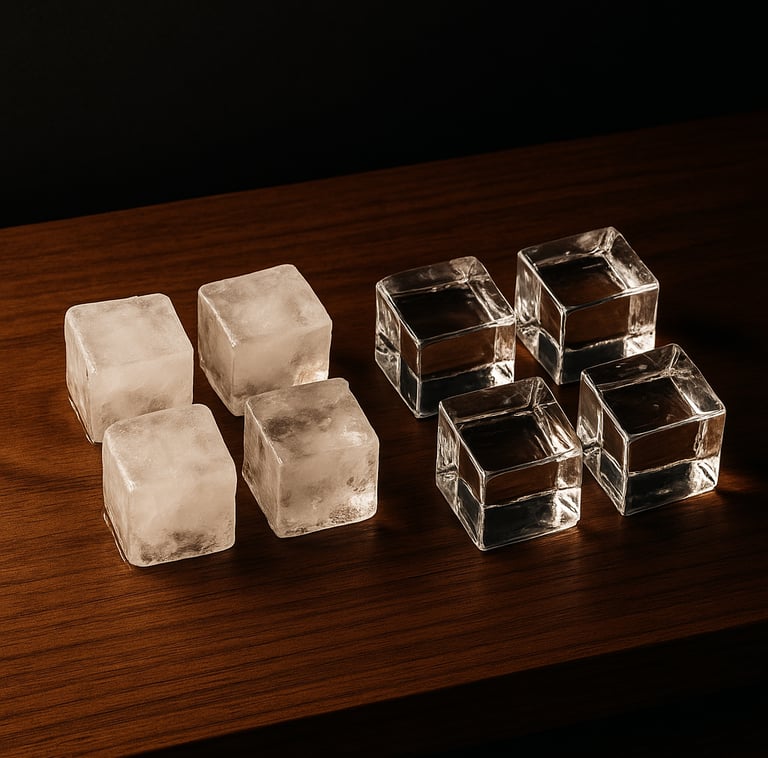
Clear ice is ice that doesn’t have the white, cloudy appearance you see in a standard freezer tray. That cloudiness comes from tiny air bubbles and minerals trapped inside. Clear ice, on the other hand, freezes almost free of those problems, giving you a glassy, see-through cube or block. It’s dense and solid.
Why does this matter? Bars use clear ice because it looks better and melts slower. The fewer air pockets inside, the less surface area exposed to melt. That means drinks stay colder longer without watering down quickly. For high-end cocktails, clear ice is more than just a look — it’s functional. This is also why many setups move toward systems featured in Best Clear Ice Systems for consistent results.
Why Does Ice Become Cloudy? Understanding Ice Clarity
I’ve replaced enough ice machines and trays to know why this happens. The problem is all in the freezing process. When water freezes fast, dissolved air and impurities get trapped inside. This forms the classic opaque white patches or cloudiness. Also, if the water you’re using has minerals — like tap water — they don’t disappear. They settle as the ice forms, creating cloudy spots.
Cloudy ice doesn’t just look bad. It often melts faster because of all those tiny air pockets acting like weak points. The ice breaks down quicker, watering your drink faster than you want. If you’re comparing ice performance across machines, it’s worth looking at breakdowns like GE Opal Ultra vs Frigidaire EFIC264BLK to see how different systems handle ice quality.
The Science Behind Making Clear Ice: Directional Freezing Explained
Directional freezing is the ticket for making clear ice. It means freezing the water so it solidifies from one side only — usually top to bottom. This method forces all the dissolved air and impurities away from the freezing front. Those contaminants get pushed into the remaining liquid water, not locked inside the solid ice.
Once the water completely freezes, you cut or chip away the cloudy layer formed by those impurities at one end. What you’re left with is clear, dense ice. This method is also a major reason why Why Clear Ice Matters for Cocktails goes beyond appearance and directly impacts drink quality.
Step-by-Step Guide to Making Clear Ice at Home
Prepare Your Water
Use purified or distilled water to reduce minerals. Boiling the water first helps release dissolved gases that cause cloudiness. Let the water cool before use.Use the Right Container
Choose an insulated mold designed for directional freezing. Standard ice trays freeze from all sides, which traps air unevenly. Insulating the sides and bottom forces the freeze to happen from the top down. If you’re deciding between shapes and formats, Best Ice Shapes for Different Drinks can help match the right ice to your setup.Freeze Slowly
Set your freezer to a higher temperature than usual. Around -1°C to -3°C slows ice formation, allowing impurities and air bubbles to escape as freezing progresses.Remove the Cloudy Layer
After the ice block freezes, a cloudy layer will remain on the bottom (or the side opposite the freezing start). Carefully cut or chip this away before using the clear ice.Store Properly
Keep clear ice in a sealed container or plastic bag to prevent it from absorbing freezer odors or frost building up on its surface.
Common Mistakes When Making Clear Ice and How to Avoid Them
Freezing too fast is the most common failure. You want slow, directional freezing, not a quick freeze that traps bubbles inside. Using tap water without treatment lets minerals and impurities cloud your ice. Another mistake is ignoring insulation—standard trays freeze from all directions, making clear ice impossible.
Not removing that first cloudy layer is where most improvements get lost. You could have great clear ice inside, but if the outer part stays, you’re using cloudy ice anyway.
Also, don’t expect regular ice trays to produce clear ice. I’ve fixed too many bars that tried to cut corners here. Specialized molds or a clear ice machine cost more but reduce callbacks. For buyers comparing machine output and consistency, EUHOMY IM-02 vs VEVOR IMC9000F-UL highlights how different units handle production.
Tips for Using and Storing Clear Ice in Drinks
Clear ice works best in large cubes or spheres. Bigger blocks melt slower, so they contribute less dilution. Handle them with clean, dry hands or tongs to avoid clouding from fingerprints or frost. If you’re deciding between formats, comparisons like Klaris Mini vs EUHOMY 2.4" Sphere help break down cube vs sphere performance.
If you’re storing clear ice for a while, freeze it in an airtight bag or container. This keeps moisture and freezer smell out, maintaining clarity and taste.
Tools and Equipment for Clear Ice Production
There are plenty of options for clear ice production, from simple insulated molds to more advanced machines. The deciding factor is cost versus consistency.
If you’re making ice occasionally at home, insulated silicone molds designed for directional freezing work well. For a commercial setup, clear ice machines automate the process and produce large blocks with less fuss. Keep in mind the footprint and maintenance these machines require. For buyers ready to upgrade, options in Best Countertop Ice Makers offer a balance between cost and performance.
For more on ice handling and selection, check out our guide on choosing the best ice molds to make sure you get your money’s worth.
Common Mistakes
Freezing water too quickly, which traps air and impurities inside.
Using untreated tap water that contains minerals causing cloudiness.
Skipping insulation that directs freezing, resulting in uneven, cloudy ice.
Not cutting away the cloudy end of the ice block before use.
Using standard ice trays instead of directional freezing molds.
FAQ About Clear Ice Making
What is clear ice and why is it preferred for cocktails?
Clear ice is ice that’s free from air bubbles and impurities, making it transparent. It melts slower and looks better in drinks, helping maintain flavor balance longer.
How does directional freezing produce clear ice?
It freezes water in one direction only, pushing air and impurities away from the freezing front instead of trapping them inside.
Can I make clear ice at home with a regular freezer?
Yes, but you’ll need insulated molds that encourage directional freezing and purified or boiled water. It also requires slow freezing at a slightly higher freezer temperature.
Why does my ice always turn out cloudy?
Cloudy ice mostly comes from rapid freezing that traps air bubbles, or from using unfiltered tap water containing minerals.
How long does it take to make clear ice?
Typically, slow freezing for clear ice takes anywhere from 12 to 24 hours depending on mold size and freezer temperature.
Do I need special equipment to make clear ice?
Directional freezing molds or insulated containers are necessary for good clear ice. Clear ice machines are available but not required for home use.
What types of water are best for clear ice?
Purified, distilled, or boiled water minimizes dissolved gases and minerals, which cause cloudiness.
How should I store clear ice to maintain its clarity?
Store clear ice in sealed containers or plastic bags to prevent frost and freezer odors from affecting the ice.
Conclusion
Clear ice is a sign of solid installation and good technique — the kind of detail that lasts. While the process might seem technical, the core is straightforward: slow, directional freezing with clean water. Ignore this, and you end up with cloudy, fast-melting ice that undermines your drinks. Do it right, and you get ice that holds up, looks professional, and serves its purpose. No gimmicks. Just ice that works — until it doesn’t.
For more on managing temperature and ice in your setups, look at our comprehensive pillar on Ice & Temperature Control.
If you’re ready to buy, see our recommendations for the Best Countertop Clear-Style Ice Makers for Home Bars to fit your needs and budget.
Other reading to keep your drinks working right includes tips on stirring cocktails properly and common home bartending mistakes to avoid.
© 2026 Barkeepers Buzz. All rights reserved.
Barkeepers Buzz
Master cocktails, spirits, and bar knowledge with clarity and precision. Built for serious home enthusiasts.
Crafted with respect for the culture — and the responsibility that comes with it.
For educational purposes only. Intended for legal drinking age audiences. Please drink responsibly.
General Inquiries: