

Are Countertop Ice Makers Worth It?
Explore the convenience and practicality of countertop ice makers, their maintenance needs, and whether they’re the right fit for your home or small office.
ICE & TEMP GUIDES
Barkeepers Buzz Editorial Team - Led by AJ “Buzz” Eichman
4/24/20266 min read
When you set out to buy a countertop ice maker, you’re really asking if the convenience and flexibility justify the cost and upkeep. These machines promise quick ice on demand without complex installation. That sounds easy enough, but I’ve been around long enough to see what holds up and what doesn’t. If you’re after something that will last well and not break your back with maintenance, there are a few hard truths about countertop ice makers you should know.
Quick Verdict
Countertop ice makers produce fresh ice faster than a freezer but usually less volume than built-in machines.
They’re good for small spaces, occasional use, or supplementing existing ice supplies.
Proper maintenance and water quality matter for lasting performance.
These units avoid complicated plumbing but require regular refilling and drainage.
What Is a Countertop Ice Maker and How Does It Work?
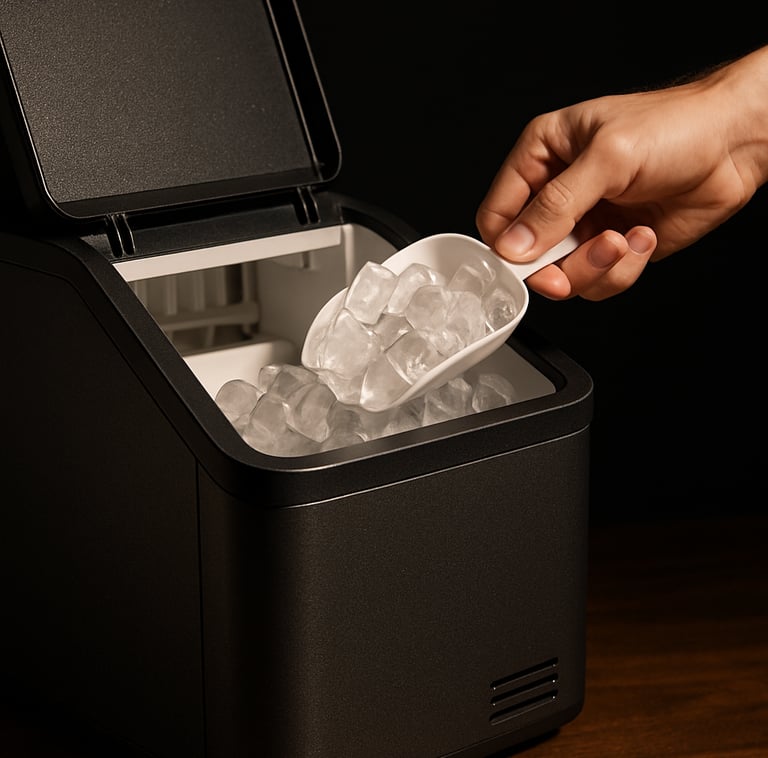
Countertop ice makers are compact appliances designed to churn out ice without plumbing. They use a refrigeration cycle — basically a cooling plate that freezes water in molds. After about 6 to 15 minutes, the ice is released by a brief heating cycle and stored inside the unit’s bin until you scoop it out.
Unlike built-in ice machines, they pull water from a removable reservoir instead of a direct water line. This means no plumbing, but also no continuous water supply. You refill the tank manually, which can be a sticking point if you need large quantities on demand.
These machines come in various sizes, typically able to produce anywhere from about 20 to 50 pounds of ice per day. That’s enough for most casual home or small office needs but falls short of commercial or heavy-party demands.
Benefits of Using a Countertop Ice Maker
The main draw is flexibility. You don’t have to install a water line or dedicate cabinet space. You can put the machine basically anywhere with electrical access and some room for refilling and draining.
Fresh ice is another benefit. Ice from your freezer isn’t always great — it has a tendency to absorb odors and can develop a cloudy, crumbly texture. Countertop ice makers produce cleaner, clearer ice with fewer impurities because they freeze small batches quickly rather than storing frozen cubes for months. That makes for better drinks. Not that I know cocktails much, but I know the ice affects how a drink tastes and cools. If you’re comparing ice quality across setups, Why Clear Ice Matters for Cocktails explains how clarity impacts performance.
Also, these machines are usually fairly quiet. You might get some hum from the compressor or fans, but it’s not the kind of noise that shouts for attention — except in cheaper units where the compressor cycles noisily.
Common Types and Sizes of Countertop Ice Makers
You’ll see different shapes of ice — cubes, nuggets, bullets, or crescent shapes. Each has its place depending on how you plan to use the ice. Nugget ice, sometimes called “chewable” ice, is popular for softer drinks or softer chew, while cube ice lasts longer in a glass. If you’re comparing nugget performance specifically, Best Nugget Ice Makers for Home Bars breaks down the better-performing machines.
Sizes vary from very compact units with 0.5-liter reservoirs up to models holding a couple of liters. Bigger reservoirs mean less frequent refills but also a larger footprint.
Key Considerations When Buying a Countertop Ice Maker
Capacity matters more than brand name here. If you underestimate how much ice you’ll need, you’ll spend too much time refilling and waiting between batches. I’ve replaced plenty of undersized machines that frustrated their owners.
Think about where you’ll put it. You need a flat surface near an outlet. Having access to a tap or filtered water nearby makes refilling less of a chore. Also, some models drain into an internal tray, which you have to empty, while others have a drain hose you can direct to a drain.
Noise isn’t just a nuisance; it can matter a lot in quiet environments like offices or apartments. If you place one near bedrooms or study spaces, test the noise level before buying or pick a model known for quiet operation.
Expect maintenance. Scale from mineral buildup is your enemy. Regular cleaning with descaling solutions is not optional if you want that machine to last beyond a couple of years. I’ve repaired units ruined by neglect in months. If you’re planning your full setup, How to Choose an Ice Maker for Your Home Bar covers long-term considerations.
Maintenance Tips to Keep Your Ice Maker Running Smoothly
Clean the reservoir and ice bin often. Sanitize once a month, at least.
Descale if you notice slower ice production or odd tastes. Even filtered water can leave deposits over time.
Empty any meltwater after use to prevent mold or bacteria growth.
Don’t skip manufacturer-recommended upkeep steps. Avoiding maintenance only guarantees a shortened equipment lifecycle.
Common Mistakes to Avoid with Countertop Ice Makers
Buying a model too small for your typical needs makes the whole thing a hassle. I see people struggling with constant refilling and disappointment when the machine runs dry mid-party.
Skipping cleaning. This one’s a sure path to foul-tasting ice and eventual mechanical troubles.
Expecting perfect crystal-clear ice like commercial freezers. Even the best countertop units produce some cloudiness because of rapid freezing and the water source.
Placing the machine far from a convenient water refill or drainage spot. Convenience disappears fast when you’re carrying water back and forth.
Ignoring noise specs. It’s easy to underestimate how a cheap compressor will bother you after several hours.
Countertop Ice Makers Compared to Freezer Ice and Built-in Ice Machines
Freezer ice is free and always there, but it’s often smaller, cloudy, and picks up freezer smells. It also clumps together and melts faster in drinks.
Built-in ice machines deliver large capacity and crystal-clear cubes if connected to a water line, but they’re expensive, require professional installation, and take up space in cabinetry.
Countertop ice makers offer a middle ground: faster, cleaner ice without installation but smaller capacity and more maintenance. They’re not a replacement for built-in systems but a supplement or alternative for smaller spaces, rentals, or where plumbing isn’t feasible. For a real-world comparison of performance between units, GE Opal Ultra vs Frigidaire EFIC264BLK highlights how different machines stack up.
Real User Scenarios: When Does a Countertop Ice Maker Make Sense?
I’ve seen countertop units work well in dorm rooms, small offices, or rental properties where plumbing changes aren’t allowed.
They’re handy for home entertaining when freezer ice won’t keep up. I know bartenders or party hosts who keep one tucked away for the holidays or summer barbecues.
Outdoor kitchens benefit from portable units placed near the grill or beverage station where running water isn’t handy.
For anyone wanting fresh ice quickly without investing in costly equipment or plumbing, these machines fit the bill — once you size and maintain them properly.
FAQ
How much ice does a countertop ice maker produce per hour or day?
Most models produce between 20 and 50 pounds per day. Batch time ranges roughly from 6 to 15 minutes depending on the machine and ice size.
Can I use tap water, or do I need filtered water?
Tap water works but can cause mineral buildup faster. Filtered or distilled water helps reduce scaling and prolong machine life.
How long does it take to make the first batch of ice?
Usually about 6 to 15 minutes depending on the model. You get ice on demand faster than waiting for freezer ice to form.
Are countertop ice makers energy efficient?
They’re generally efficient since they run in short cycles. They use more power than a freezer alone but less than built-in commercial ice makers.
Do I need to connect it to a water line or drain?
No. These units use removable reservoirs that you refill by hand and drain meltwater into an internal tray or outside drain.
How often should I clean my countertop ice maker?
Monthly sanitizing and periodic descaling based on water hardness are recommended.
What is the difference between nugget ice and cube ice?
Nugget ice is softer, chewable, and cools drinks fast but melts quicker. Cube ice lasts longer and is denser.
Can these ice makers be used outdoors or in warm environments?
They can be, but warm ambient temperatures lower ice production efficiency and may shorten machine life.
Conclusion
Countertop ice makers have their place. They’re not miracle machines but practical tools for generating fresh ice fast without plumbing.
If you need moderate ice volume, want portability, and are ready to keep up with maintenance, a countertop ice maker can work well for your home or small office. But size your purchase to your actual needs, plan for regular cleaning, and be realistic about ice quality compared to built-in machines.
Don’t expect perfection, but expect reliability if you avoid the common mistakes and maintain your unit properly. That’s how these machines earn their keep.
For more on keeping your beverage setup sound and efficient, check out Ice & Temperature Control.
© 2026 Barkeepers Buzz. All rights reserved.
Barkeepers Buzz
Master cocktails, spirits, and bar knowledge with clarity and precision. Built for serious home enthusiasts.
Crafted with respect for the culture — and the responsibility that comes with it.
For educational purposes only. Intended for legal drinking age audiences. Please drink responsibly.
General Inquiries: