

How to Choose an Ice Maker for Your Home Bar
Choose the right ice maker for your home bar with practical tips on types, capacity, and maintenance to keep your drinks perfectly chilled.
ICE & TEMP GUIDES
Barkeepers Buzz Editorial Team - Led by AJ “Buzz” Eichman
4/24/20267 min read
Choosing the right ice maker for a home bar isn’t about keeping up with trends. It’s about getting something that lasts and does the job right. Ice might seem simple, but it’s an integral part of the bar’s infrastructure. If your ice machine can’t keep up or breaks down, it’s not just an inconvenience — it affects the quality of your drinks and often leads to expensive repairs down the line.
I’m speaking from experience. I’ve installed and fixed enough ice machines in both commercial and residential settings to know what works. This guide will walk you through the key considerations for picking an ice maker for your home bar. It’s about straightforward, practical advice — no fluff, no hype.
Quick Verdict
Choose the ice maker type based on your space and usage frequency: portable for flexibility, built-in for permanence.
Match your machine’s production capacity to how often and how many people you serve.
The ice shape and size matter for both drink temperature and dilution — clear cubes last longer.
Don’t overlook installation and maintenance needs; these are the root of many failures.
Why the Right Ice Maker Matters for Your Home Bar
Ice makers are the unsung heroes behind every decent home bar. Without proper ice, drinks don’t chill right and flavors can get diluted too fast. I’ve seen fancy bars fall flat because they skimped on ice quality or installed machines poorly.
There’s more to it than just putting any machine under the counter. The right ice maker matches your space and your bar’s daily routine. It anticipates your ice demand and keeps ice tasting clean and clear. And it holds up over years without water damage, breakdowns, or noise complaints.
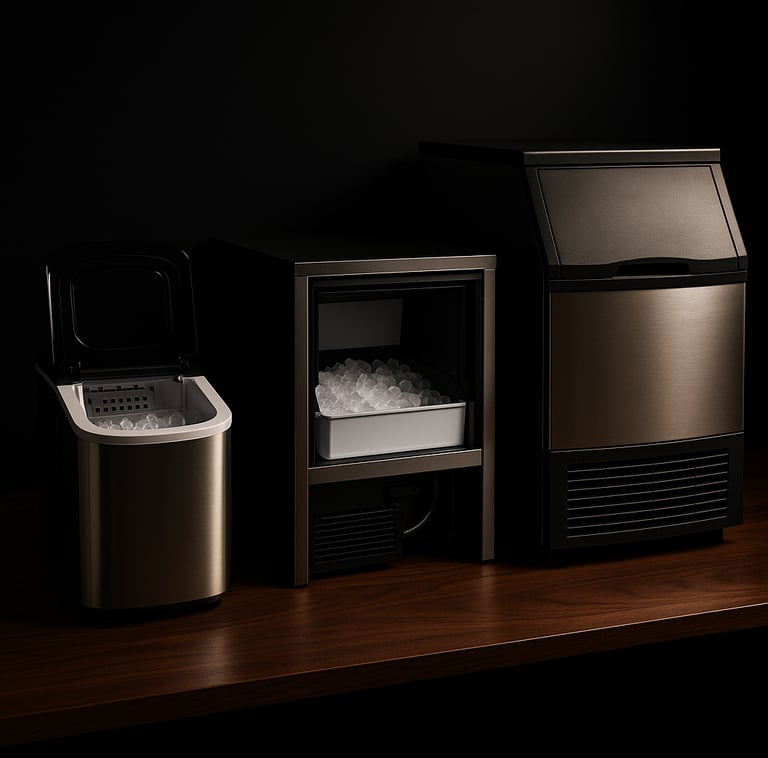
Types of Ice Makers: Portable vs Built-In vs Commercial Grade
Portable Ice Makers
These countertop units work well if space is tight or you don’t want plumbing changes. They usually produce enough ice for small gatherings and can be moved around easily. I don’t recommend them if you entertain frequently or for large groups — the production capacity is limited and ice storage is small. Plus, you’ll need to fill and empty the water reservoir manually. If you’re considering portable units, Best Countertop Nugget Ice Makers is a good place to compare real-world options.
Built-In Ice Makers
These install under the counter and connect directly to your water and drainage lines. They save countertop space and often match your cabinetry for a seamless look. Installation requires some planning and often a pro to hook up the plumbing correctly. I’ve replaced one too many built-ins that were rushed or installed without proper drainage. The upside is they usually have higher production and storage capacity, so they’re better for frequent use. If you’re going this route, Best Undercounter Cube Ice Makers for Home Bars highlights the more reliable setups.
Commercial Grade Ice Makers
These are overkill for most home bars but ideal for heavy entertainers or those seeking longevity from tough, well-built machines. Commercial models usually have greater production capacity and better filtration but cost more and require professional installation including ventilation considerations. If you’re debating this level, Do You Need a Commercial Ice Maker for Your Home Bar? breaks down when it actually makes sense.
Key Features to Consider When Choosing an Ice Maker
Ice Cube Shape and Size
Different ice shapes melt and chill differently. Clear, large cubes melt slower, keeping drinks colder without watering them down quickly. Nugget or bullet-shaped ice melts faster and is sometimes chosen for chewability and aesthetic preference. Consider what drinks you make most often and pick an ice type that supports those. For a deeper breakdown, Best Ice Shapes for Different Drinks explains how each type performs.
Production Capacity
Measured in pounds per 24 hours, this tells you how much ice the machine can make daily. I’ve seen many installs where owners underestimated their ice needs, especially when hosting larger groups. If you host regularly, lean towards higher capacity. For casual use, smaller is fine but be realistic. If you’re unsure how much you actually need, How Much Ice Do You Really Need for a Home Bar? helps put real numbers to it.
Storage Capacity
Where does the ice sit when it’s made? If the storage bin is too small, you’ll run out quickly during a party. Conversely, too large a bin means more melting and frost build-up if the machine isn’t used often. Match storage to production to avoid wastage or shortages.
Water Filtration
Water quality affects ice clarity and taste. Many machines include filtration options; if not, consider adding a dedicated water filter to your supply line. Clean water prolongs machine life by reducing mineral buildup and prevents off-flavors.
Ease of Maintenance
Ice makers need routine cleaning to prevent bacteria and scale. Models with simple cleaning cycles and accessible parts reduce headaches long-term. Avoid machines that complicate maintenance tasks — I've repaired too many that were practically designed to fail if neglected.
Noise Levels
This is often overlooked but important in a home environment. Some ice makers hum quietly; others sound like small engines. Quieter machines preserve the bar’s ambiance.
How Ice Type and Cube Shape Affect Your Drinks
Ice does more than cool. It controls dilution and presentation, which affects flavor balance. Clear, dense cubes melt slowly. They’re best for sipping spirits or cocktails where you want to keep the full flavor intact over time.
Smaller or nugget ice melts faster, delivering quick chill but watering down sooner. This might be okay for casual drinks or soda mixers but isn’t the best for every bar setup. If you’re comparing machine output and consistency, GE Opal Ultra vs Frigidaire EFIC264BLK shows how different units perform under real use.
If you cut corners and pick a machine that only makes fast-melting ice, you’re paying for a quick chilling effect but sacrificing long-term drink quality. It can look fine at first but it’s year three when you see the cost—liquid dilution, customer disappointment, or frequent machine replacement.
Capacity and Size: Matching Your Needs to Your Space
You have to balance how much ice you need with the space you can dedicate to the machine. Portable ice makers are small but fit tight spots. Built-ins need more room, water lines, and drainage.
If you go bigger than your space allows, you risk poor ventilation or water damage. I’ve seen countless setups where the installer didn’t account for clearance around the machine, and the unit overheated or leaked over time.
There’s some give here if you pay attention to the specs for clearance and water hookups ahead of time. Measure your available space, then pick a model that fits with room to breathe.
Installation and Maintenance Tips for Your Ice Maker
Installation is where good machines start to fail. Incorrect plumbing, lack of proper drainage, and poor ventilation cause most breakdowns down the road.
If you’re going built-in, don’t guess on water connections or drainage sizing. Have a professional check the lines and use proper trapping and venting to prevent clogs or smells.
Maintenance is straightforward but critical. Clean your machine regularly using the recommended cycle. Inspect filters once or twice a year and clean or replace them as needed.
Turn off the machine if you’re not using it for extended periods and drain water to prevent mold or scale. It works — until it doesn’t — just like everything else on a bar job site.
Common Mistakes to Avoid When Buying an Ice Maker
Underestimating capacity for your entertaining needs.
Ignoring space requirements, clearances, and ventilation.
Assuming all ice makers make the same quality or type of ice.
Overlooking water filtration and maintenance needs.
Buying without considering noise impact on your bar space.
Trying to DIY installation on built-ins without plumbing or electrical expertise.
I’ve replaced enough machines and fixed poor installations to know these corners aren’t worth cutting.
FAQs About Home Bar Ice Makers
What are the different types of ice makers suitable for a home bar?
Portable countertop units, built-in under-counter machines, and commercial-grade ice makers are the main types. Each has its place depending on space, usage, and installation preferences.
How much ice does a home bar ice maker need to produce daily?
That depends on your frequency of entertaining and guest count. For casual use, 25–50 pounds per day can suffice. Frequent or large gatherings usually require 50+ pounds daily production.
What ice cube shapes are best for cocktails?
Large, clear cubes melt slower and retain flavor better. Nugget or bullet-shaped ice melts faster and can dilute drinks quicker. Pick a cube shape that matches your drink style and guest expectations.
Should I choose a portable or built-in ice maker?
Portable units suit small spaces and occasional use without plumbing. Built-ins are ideal if you want higher capacity and a permanent installation integrated with your bar cabinetry.
How do I maintain and clean my home bar ice maker?
Follow the manufacturer’s cleaning schedule, typically every three months. Use proper cleaning cycles, replace water filters as needed, and empty the machine if not used for long periods.
Can I install an ice maker myself or should I hire a professional?
Portable models need no plumbing and are easy to set up yourself. Built-in units require plumbing and electricity hookup; I recommend hiring a professional to avoid costly mistakes.
What features improve ice quality and production efficiency?
Look for water filtration, efficient compressors, and models that produce the cube shape you want. Energy Star-rated models often run efficiently and quietly.
Are there energy-efficient ice makers for home use?
Yes, some models carry ENERGY STAR ratings. These consume less power and tend to have quieter operations. Worth considering if noise and energy costs matter to your setup.
Conclusion
An ice maker is more than just a box that spits out ice. It’s a key piece of your home bar’s infrastructure. Choose one that suits your space, your entertaining style, and your maintenance habits. Go cheap on installation or ignore capacity, and you’ll pay for it down the road in repairs, poor ice quality, and wasted time.
If you do one thing right, make it this: pick the right machine for your realistic ice needs and ensure it’s installed with proper plumbing and ventilation.
For more on controlling bar temperatures and ice handling, check out Ice & Temperature Control.
© 2026 Barkeepers Buzz. All rights reserved.
Barkeepers Buzz
Master cocktails, spirits, and bar knowledge with clarity and precision. Built for serious home enthusiasts.
Crafted with respect for the culture — and the responsibility that comes with it.
For educational purposes only. Intended for legal drinking age audiences. Please drink responsibly.
General Inquiries: