

Do You Need a Commercial Ice Maker for Your Home Bar?
Considering a commercial ice maker for your home bar? Learn about benefits, space needs, and whether it's practical for your setup.
ICE & TEMP GUIDES
Barkeepers Buzz Editorial Team - Led by AJ “Buzz” Eichman
4/24/20265 min read
Setting up a home bar isn't just about the spirits or glassware. Ice plays a crucial role in cocktails and chilled drinks, impacting both quality and experience. Commercial ice makers promise fast production, multiple ice types, and high capacity. But are they necessary or practical for a home bar? I’ve installed enough systems over the years to say you need to think beyond the allure of commercial gear. Let’s walk through what a commercial ice maker really brings to the table—and where it falls short in typical home use.
Quick Verdict
Commercial ice makers produce larger volumes of ice more quickly than residential models.
They offer various ice types that can influence drink dilution and presentation.
Installation requires adequate space, water, drainage, and ventilation.
Higher upfront costs and ongoing maintenance may not justify the benefits for most home bars.
What Is a Commercial Ice Maker?
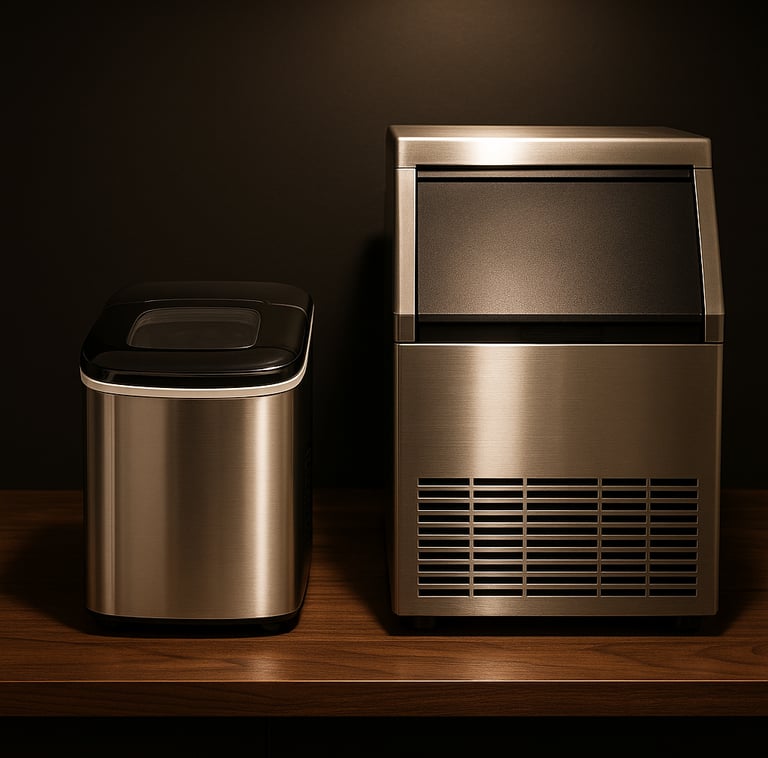
A commercial ice maker is an industrial-grade machine built to keep up with the demands of bars, restaurants, and event venues. Compared to residential ice makers, commercial units produce upwards of 50 pounds or more of ice daily. They come with options for different ice shapes, like clear cubes, nuggets, flakes, or crescent shapes.
These machines need dedicated water lines, drainage, and proper ventilation to operate efficiently. They also run louder and consume more energy. The build and components are designed to perform continuously, handling heavy usage and the quick turnaround times required in commercial settings.
Types of Ice Suitable for Home Bars
The type of ice matters more than most new home bar owners realize. Ice affects how quickly a drink dilutes and the tactile feel of the cocktail.
Clear Cubes: Denser, melt slower, and least dilution. Preferred in spirits-forward cocktails like Old Fashioneds. If you’re building around clarity and performance, Best Countertop Clear-Style Ice Makers for Home Bars highlights where those systems stand out.
Nuggets: Softer, chewable, and chill quickly. Good for casual drinks and mixed beverages. For setups focused on this style, Best Nugget Ice Makers for Home Bars breaks down reliable options.
Crescent: Common in commercial machines; reasonably clear and moderate melt rate.
Flake: Often used in bars for certain cocktails or presentations requiring crushed ice.
Most residential machines make standard cube or nugget ice. Commercial machines give you more flexibility, but it’s worth matching the ice type to your drink preferences rather than assuming more is better.
Benefits of Using a Commercial Ice Maker at Home
Faster and Larger Output: If you throw regular large gatherings or parties, a commercial machine can keep the ice coming without a pause.
Variety of Ice Types: These machines often let you pick ice shapes that fit your cocktail style.
Consistency: Commercial units maintain consistent size and clarity for each batch rather than the uneven cubes residential units sometimes produce.
Less Frequent Refills: Connected to a dedicated water source, they reduce manual effort in ice management.
But these benefits shine mainly in higher volume situations. For a small home bar or occasional use, they’re often overkill.
Considerations Before Buying: Space, Cost, and Energy
Commercial ice makers aren’t small. They require space not only for the machine but also for clearance around it to ensure proper ventilation. If you cram one into a tight spot without air circulation, you’ll face frequent breakdowns and shortened lifespan.
Energy use is another factor. Commercial units run larger compressors and fans. That means higher electric bills, especially if the machine stays on all day during heavy use.
Installation complexity is higher, too. You need a dedicated water line and drain, which might require plumbing work—something many home bar owners don’t plan for.
Finally, cost. Commercial machines often cost several times more than residential ice makers. Installation and maintenance add to that. You want to be sure your usage justifies the investment. If you’re weighing real-world capacity needs, How Much Ice Do You Really Need for a Home Bar? helps anchor that decision.
Comparing Commercial vs Residential Ice Makers for Home Use
Residential ice makers produce 10 to 30 pounds of ice per day. For many home bars, that’s enough for casual entertaining. They’re quieter, smaller, and easier to install.
Commercial machines produce 50+ pounds daily but take up more room, require professional installation, and need regular maintenance.
If you entertain weekly or more often with large groups, a commercial ice maker could save time and headaches. Otherwise, a good-quality residential machine will do the job with fewer complications. For a full breakdown of how to choose properly, How to Choose an Ice Maker for Your Home Bar covers long-term considerations.
Maintenance and Installation Tips for Commercial Ice Machines
Maintenance on commercial units is more involved. Filters need changing regularly. Drain lines can clog if not cleaned. Fans and compressors require inspection to avoid overheating.
Proper installation is critical. The unit must be level and set with correct clearances for air flow. Without that, expect premature failures.
Also, locate the machine where noise won’t be an issue. Commercial units produce more operational noise, which could be disruptive in a quiet home setting.
If you decide on a commercial ice maker, hire experienced professionals for installation and maintenance. Cutting corners leads to costly repairs later.
Common Mistakes
Assuming commercial ice makers fit all home bars. They rarely do unless use is high volume.
Ignoring ventilation. Overheating machines break down fast.
Underestimating installation needs for drainage and water line.
Buying oversized machines that waste energy and produce excess ice.
Overlooking ongoing maintenance requirements.
Choosing based solely on brand or capacity without considering ice type preferences.
Expecting commercial-grade ice always improves drink quality. It depends on the cocktail and ice selection.
FAQ
Is a commercial ice maker worth it for a home bar?
Only if you regularly serve large groups and need constant ice. Otherwise, residential machines are more practical.
What types of ice do commercial ice makers produce for cocktails?
They can produce clear cubes, nugget, flake, crescent, and others depending on the model.
How much space does a commercial ice maker require in a home bar?
Expect to allocate enough room not just for the machine but also for ventilation clearance—usually several inches on each side and above.
What are the energy costs associated with commercial ice machines?
Commercial units use more power due to larger compressors and constant operation during heavy use. Costs vary by model and runtime.
How do commercial ice makers improve drink quality?
By providing consistent ice size and clarity, they reduce uneven dilution and maintain drink balance, especially with specific ice types.
Can a residential ice maker be sufficient for a home bar?
For most home bars, yes. They’re quieter, easier to maintain, and generally produce enough ice.
What maintenance is needed for commercial ice makers?
Regular cleaning, filter changes, drain clearing, and inspection of mechanical components to avoid overheating.
Are there any noise considerations with commercial ice machines at home?
Yes. Commercial machines are louder due to larger fans and compressors, which can be disruptive indoors.
Is a Commercial Ice Maker Right for Your Home Bar?
If you prioritize longevity and functional reliability over flashing status symbols, the decision should be practical. Commercial ice makers have their place—it’s where ice demand is high, turnover is fast, and ice variety makes a critical difference.
For the typical home bar setup, they’re often oversized, more expensive, and require infrastructure few home bars have. You’ll also trade quieter operation for power and volume.
If you do one thing right, assess your ice demand carefully. Plan your space with ventilation and plumbing in mind. Then select an ice maker that fits that need without cutting corners.
With the right approach, you avoid preventable failures, wasted energy, and frustrated reinstallation down the line.
For more on managing your full bar setup and ice system performance, check out Ice & Temperature Control.
© 2026 Barkeepers Buzz. All rights reserved.
Barkeepers Buzz
Master cocktails, spirits, and bar knowledge with clarity and precision. Built for serious home enthusiasts.
Crafted with respect for the culture — and the responsibility that comes with it.
For educational purposes only. Intended for legal drinking age audiences. Please drink responsibly.
General Inquiries: