
Ideal Home Bar Counter Height
Discover the ideal home bar counter height with expert insights on bar layout & ergonomics to boost comfort, efficiency, and guest satisfaction.
HOME BAR GUIDES
Barkeepers BuzzBlog Editorial Team - Led by AJ “Buzz” Eichman
3/13/20265 min read
Creating a home bar that feels right goes beyond just gathering your favorite bottles and glasses. One detail I see overlooked all too often is the bar counter height. Get that wrong, and you’ll end up with guests feeling cramped or bartenders working in awkward postures.
The height you choose influences comfort, efficiency, and how well the space works overall. I’ll break down the ideal home bar heights, what to consider from both guest and staff angles, and point out some common pitfalls to avoid — all tied back to solid bar layout and ergonomics principles.
If you're designing a full bar space from the ground up, starting with a structured plan like The Home Bar Blueprint can help ensure your layout works properly before you start buying equipment or installing cabinetry.
Quick Verdict
A standard home bar counter between 40 and 42 inches tall works best with most barstools.
Keep about 10 to 12 inches of clearance from the stool seat to the underside of the bar for comfortable legroom.
Plan for 30 to 36 inches of aisle space behind the bar to allow free movement and smooth workflow.
Adjustable or zoned bar counter heights help the staff stay comfortable and work efficiently.
What is the Ideal Height for a Home Bar Counter?
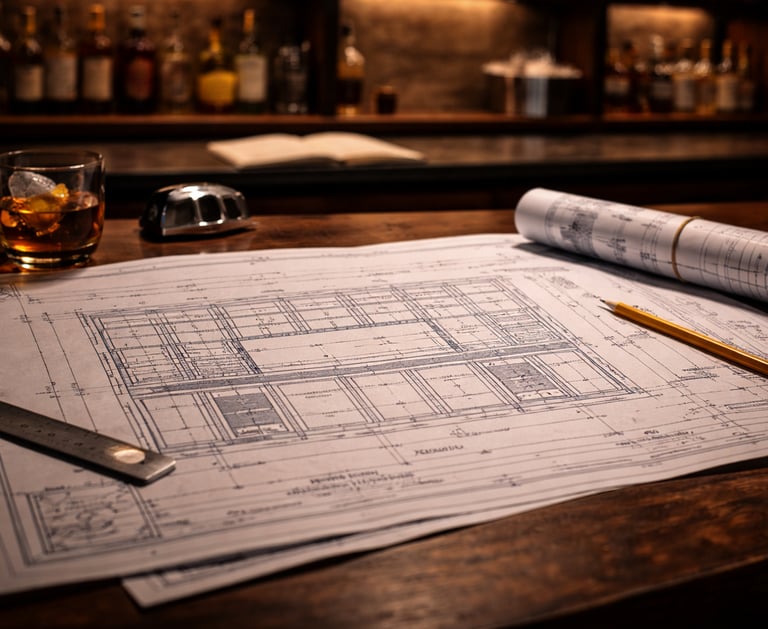
For years, the sweet spot has hovered around 40 to 42 inches—roughly 102 to 107 centimeters. That lines up neatly with standard bar stools that typically have seat heights in the 28 to 30-inch range. The critical part here is the 10 to 12 inches of clearance you want between the stool seat and the bar bottom. Without that, guests will feel cramped after sitting for a while.
This height strikes a good balance for guests to lean forward comfortably, raise a glass, or enjoy some snacks while seated. It’s the same standard you’ll find in commercial bars, and applying it in your home gives your setup a professional touch without overcomplicating things.
Of course, the counter height is only one piece of the puzzle. Once guests are seated, the overall experience is shaped by the tools and glassware you serve with, which is why choosing the right equipment—like those covered in Best Mixing Glasses or Best Cocktail Shakers—helps create a more functional and professional bar setup.
Key Ergonomic Considerations for Guests and Staff
Guest Comfort
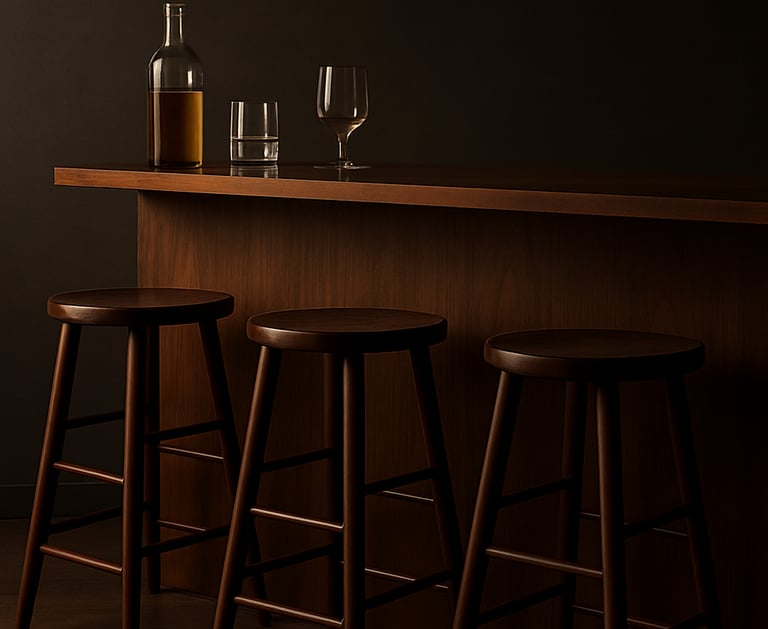
Stool height: Standard bar stools for this counter height should have 28 to 30-inch seat heights.
Legroom: Aim for 10 to 12 inches clearance between the stool seat and bar underside to avoid cramped legs.
Width per person: Allocate about 18 to 24 inches of horizontal space per guest at the bar.
Drink rail: Adding a 10 to 12-inch deep ledge on the bar surface gives guests a spot to rest their drinks without encroaching on workspace.
Comfort at the bar also depends on having enough space for proper drink service. If you're building a cocktail station, the measuring and stirring tools covered in Best Jiggers and Best Bar Spoons help keep preparation efficient without cluttering the counter.
Staff Efficiency and Comfort
Behind the bar, where the actual work gets done, the height needs depend on the task.
Prep surfaces: Worktops at 34 to 36 inches help reduce back strain when cutting, mixing, or pouring.
Serving counters: These tend to be higher—42 to 45 inches—to maintain interaction with guests standing or seated.
Adjustable heights: When possible, having tiered or adjustable counters lets bartenders find their comfort zone and prevents repetitive strain during long sessions.
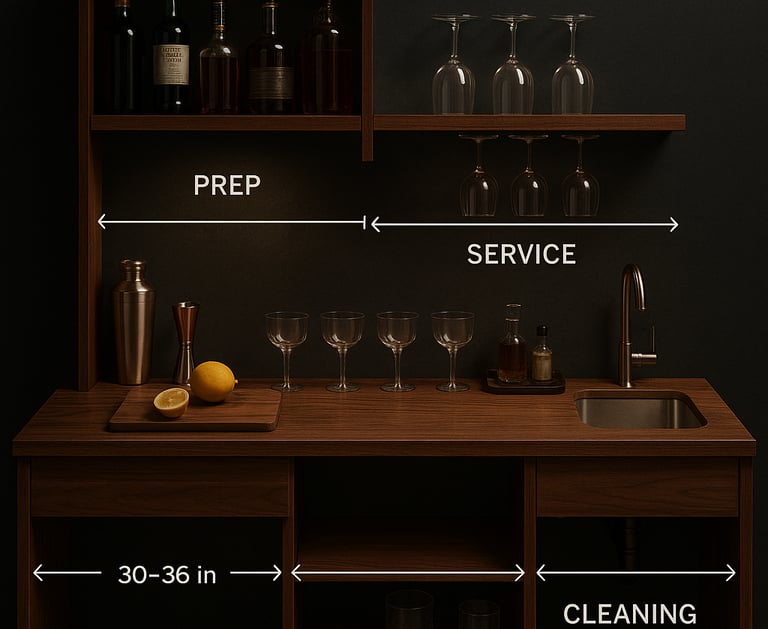
Aisle space: Allow at least 30 to 36 inches behind the bar so staff can move freely without knocking into equipment or each other.
Keeping your workspace organized also means having the right tools within reach. Articles like The Minimalist Home Bar Tool Setup explain how to streamline your tool selection without overcrowding the bar.
These guidelines come from tried-and-true ergonomic principles (the same ones commercial operators rely on) and they’re essential if you want to avoid aches and injuries while keeping service smooth.
Bar Layout Best Practices for Optimal Workflow
The right height matters — but bar layout and ergonomics extend well beyond it. Designing your space with workflow in mind makes a huge difference in how the bar functions day to day.
Zone your bar space: Separate prep, service, and cleaning areas so tasks flow naturally without cross-interference.
Clear aisle space: Stay consistent with at least 3 feet (36 inches) of clearance behind the bar for easy staff movement.
Vertical storage: Use shelving smartly — keep frequently used tools within easy reach but avoid cluttering the workspace.
Bar top depth: A surface about 24 inches deep offers enough room for prep, tools, and guest comfort.
ADA compliance: Consider integrating a lower counter section around 34 inches to make your bar more accessible for all guests.
If your bar includes refrigeration, planning space for equipment early is important. Resources like Best Beverage Fridges for Home Bars can help you understand sizing and placement before committing to cabinetry or layout decisions.
Temperature management also affects equipment longevity, which is why it’s worth understanding issues like moisture buildup covered in How to Prevent Fridge Condensation.
Common Mistakes in Home Bar Height and Layout
Ignoring staff ergonomics: Fixed-height bars that don’t consider prep tasks force awkward bending and wear down your efficiency.
Cramped aisle space: Less than 30 inches behind the bar leads to bottlenecks and can even become a safety risk.
Shortchanging legroom: Forgetting the clearance between bar stools and counter surfaces quickly turns seating uncomfortable.
Overcrowded tools and equipment: Poor organization slows down prep and frustrates bartenders.
Skipping accessibility: Not having any lowered sections limits usability for people with mobility challenges.
Many of these mistakes show up when people rush into building a bar without a clear plan, which is why structured layouts like The Home Bar Blueprint exist in the first place.
FAQ
What is the standard bar stool height for a 42-inch counter?
Standard bar stools usually have seats around 28 to 30 inches tall, allowing for that key 10 to 12 inches of clearance underneath the bar.
How much space should be behind a home bar counter?
You want at least 30 to 36 inches of aisle space so staff can move and work without feeling cramped.
Are multiple height levels beneficial for home bars?
Yes. Having prep areas lower (34–36 inches) and serving surfaces higher (42–45 inches) helps maintain good posture and improves workflow efficiency.
Can bar counters be customized for ADA compliance?
Absolutely. Including a lowered section at roughly 34 inches without a raised bar rail accommodates wheelchair users and improves accessibility.
What width per patron is recommended at a bar counter?
Plan on about 18 to 24 inches per person to keep things comfortable and avoid crowding.
How deep should a bar countertop be?
A 24-inch depth strikes a solid balance — plenty of workspace for tools and guest comfort without wasting room.
Why is aisle space behind the bar important?
Enough aisle space prevents congestion, promotes safety, and ensures bartenders can work smoothly during busy times.
© 2026 Barkeepers Buzz. All rights reserved.
Barkeepers Buzz
Master cocktails, spirits, and bar knowledge with clarity and precision. Built for serious home enthusiasts.
Crafted with respect for the culture — and the responsibility that comes with it.
For educational purposes only. Intended for legal drinking age audiences. Please drink responsibly.
General Inquiries: