
How Much Space Do You Need for a Home Bar Setup?
Plan your home bar space requirements with the right dimensions, clearances, and storage ideas to create a functional and elegant home bar setup.
HOME BAR GUIDES
Barkeepers Buzz Editorial Team - Led by AJ “Buzz” Eichman
5/11/20266 min read
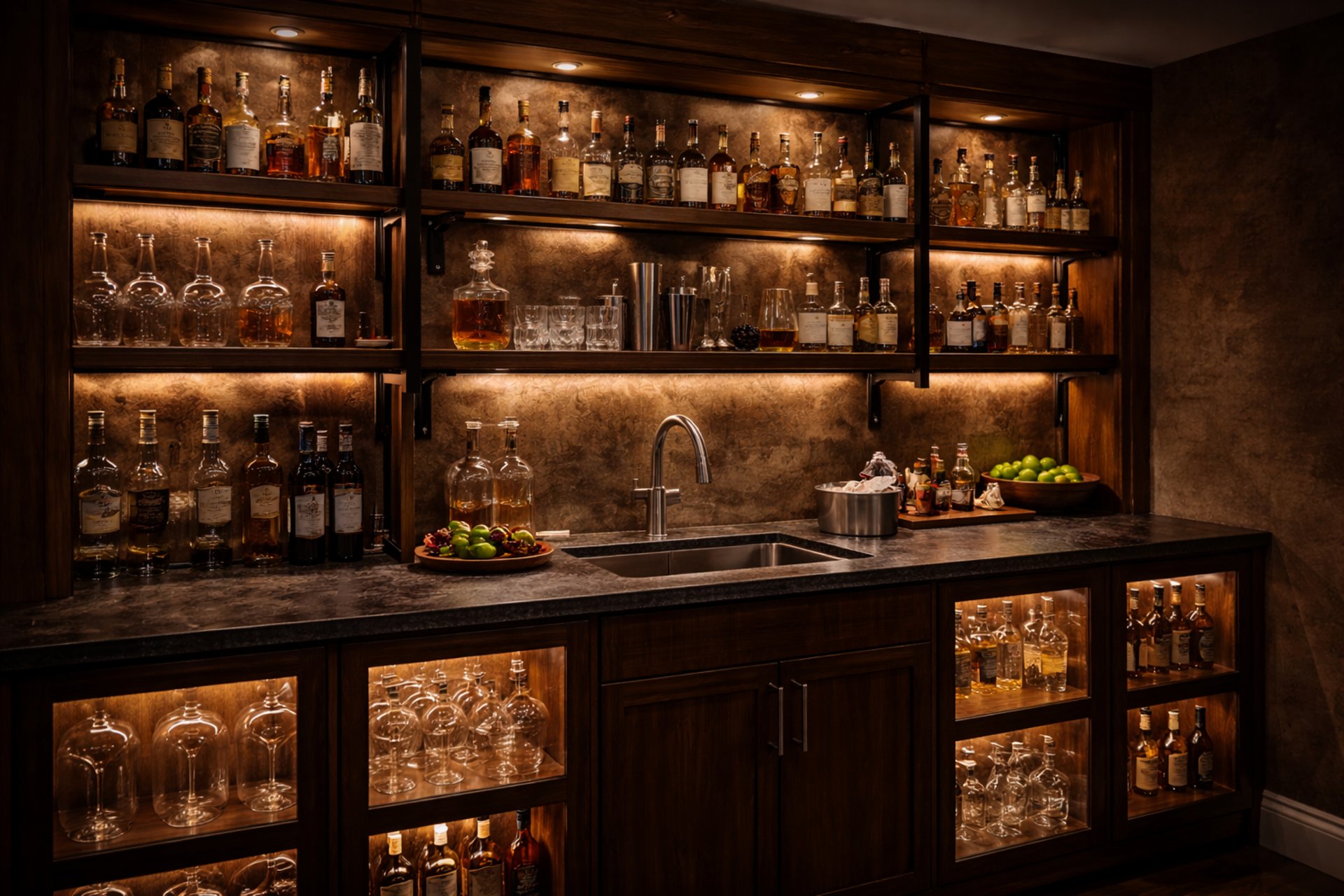
Creating a home bar is an exercise in balance—between elegance and function, between comfort and efficiency. The design must support the seamless flow of bartending tasks without sacrificing the inviting atmosphere where guests linger. Proper planning of Home Bar Setup space requirements is essential to achieve this balance. When you approach a home bar setup with spatial authority, each measure is intentional, serving both an aesthetic and a practical purpose.
Before finalizing dimensions, seating, or cabinetry, it also helps to understand the broader planning concepts outlined in The Home Bar Blueprint. A well-designed bar is not simply about fitting equipment into a room — it is about creating clear workflow, comfortable circulation, and long-term usability that feels composed rather than crowded.
This article guides you through the spatial dimensions appropriate for home bars of varying sizes. From standard layouts to compact, multi-functional bars, we explore how to optimize space, circulation, storage, and seating. This ensures your bar’s design enhances workflow, elevates your drink service, and comfortably accommodates guests—all within the spatial parameters of your home.
Quick Verdict
A functional home bar counter should measure at least 4 to 6 feet wide with a depth of 20 to 24 inches to provide sufficient working surface.
Maintain a minimum clearance of 36 inches behind the bar to enable unobstructed bartender movement and access to storage areas.
Seating spacing requires a width of approximately 24 inches per guest and legroom clearance to avoid crowding and promote comfort.
In smaller spaces, vertical storage and multi-functional furniture solutions make efficient use of limited square footage without compromising style or utility.


Why Space Planning Matters for a Home Bar
Space is the framework on which the entire home bar experience rests. A beautifully styled bar that restricts movement or feels cramped undermines usability and guest enjoyment. Conversely, overgenerous dimensions without intent can waste valuable real estate and create an awkward focal point.
Consider this scenario: If the lighting is too cool and positioned at odd angles due to limited space, it creates harsh shadows on the work surface, complicating drink preparation. The entire workflow becomes compromised by something as simple as improper planning of space and lighting integration.
Good space planning anticipates the roles and flow behind the bar—from mixing and serving to cleaning and restocking—while simultaneously supporting guest circulation. It ensures every material choice and layout decision enhances function without sacrificing the composed aesthetics required of a luxury home bar.
Standard Home Bar Dimensions and Layouts
The typical height of a home bar counter ranges between 36 and 42 inches. This allows flexibility depending on seating solutions and design preferences. While commercial bars often standardize at 42 inches, home bars are calibrated more thoughtfully for ergonomic access.
Width and depth are crucial in preserving adequate working area and accommodating necessary tools and appliances. A counter width of 4 to 6 feet provides a fundamental work area that supports preparing several drinks without overcrowding. A depth of 20 to 24 inches is usually sufficient to hold spirits, glassware, and bar tools while allowing the bartender clear access to the back edge for mixing and assembling drinks.
Behind the bar, allow a clearance of at least 36 inches for comfortable movement and cabling or plumbing access, if applicable. This dimension facilitates a smooth workflow while preventing accidental collisions with cabinetry or stacked bottles.
When planning layout, designate the “barrier” carefully. Patrons should remain in front of the counter, where interaction occurs, while the bartender accesses everything behind with ease. A poorly planned barrier confuses circulation, causes bottlenecks, and ultimately reduces the sense of calm and order that defines well-designed bars.
If your setup includes refrigeration or beverage storage, integrating systems like Best Wine Fridges for Home Bars early in the layout process helps avoid awkward spacing issues later.
Designing Small Home Bars: Tips and Ideas
When space is limited, the design strategy pivots toward verticality and multi-functionality. A pared-down counter as slim as 18 inches can function adequately in a small apartment, provided storage and workflow are optimized.
In such scenarios, integrated shelving extending from floor to ceiling maximizes storage without encroaching on floor space. Select glass-front cabinets or open metal shelves to maintain visual lightness and avoid a claustrophobic feel.
Furniture such as bar carts or fold-down counters can add flexibility—housing essentials without permanently occupying footprint. Incorporating refrigeration or ice storage beneath the counter rather than separate units preserves overall space.
The key is intentionality. Every element, from the height of shelves to the placement of lighting fixtures, must be carefully orchestrated to prevent clutter and maintain fluid bartending motions.
Storage infrastructure matters heavily in compact bars. Choosing solutions like Best Home Bar Cabinets can help consolidate equipment while maintaining cleaner workflow and preserving limited square footage.
Optimal Clearance and Workflow Considerations
Adequate clearance behind the bar is non-negotiable. When the sink is placed too close to shelving or appliances, the operator’s movement is restrained, resulting in unnecessary strain and slower service.
A consistent 36-inch clearance ensures the bartender can pivot easily, reach all necessary tools with minimal effort, and avoid accidental collisions that disrupt the environment’s tranquility. This dimension also allows for healthy airflow and proper accessibility to plumbing or electrical components installed behind built-in cabinetry.
The height of the bar materials, combined with the seating arrangement, influences workflow. If bar stools are too high or lack sufficient leg clearance (generally 10 to 12 inches), guests’ discomfort may cause cramped posture, further clashing with the bartender’s working perimeter.
Storage solutions must also be integrated without encroaching on movement zones, allocating space specifically for glassware, spirits, and essential bar tools. Intentional placement reduces wasted steps and visual clutter, preserving a calm visual environment.
Seating and Guest Space Recommendations
Clear, comfortable guest seating is a critical dimension of home bar space requirements. Allocating approximately 24 inches width per seat is standard to ensure guests do not feel cramped or intrude on the bartender’s area.
Consider the sightline between guest and bartender carefully. Too shallow a counter surface can cause patrons’ knees to bump against cabinetry, whereas an overly deep bar can create a disconnect, inhibiting interactive engagement.
Maintain consistent stool height with the bar surface to avoid awkward posture and create an inviting flow of conversation. In larger setups, stagger stools if necessary to preserve personal space, keeping visual balance and rhythm intact.
Storage Solutions for Home Bars
Storage is foundational to a functional home bar, yet it is often overlooked in the rush to achieve a photogenic image. Properly scaled and placed storage contributes directly to workflow efficiency.
Plan for dedicated compartments for bottles, frequently used tools, glassware, and garnishes. Multi-level shelving behind the bar ensures visibility and easy reach without overcrowding the counter.
In small spaces, consider custom cabinetry with pull-out drawers and compartments that tuck away clutter invisibly. Refrigeration units, whether built-in or freestanding, should be integrated with hidden wiring to preserve a refined spatial aesthetic and avoid disruption in workflow.
Lighting should highlight storage zones appropriately, ideally using temperature-controlled fixtures that display liquid colors accurately without harshness.
Integrating infrastructure like Best Back Bar Shelving can also improve both organization and bottle accessibility while reinforcing the visual structure of the bar itself.
Common Space Planning Mistakes to Avoid
If it looks beautiful but disrupts movement, it will frustrate you over time. Common errors include:
Underestimating clearance space behind the bar, resulting in cramped, inefficient workflow that feels claustrophobic.
Neglecting storage requirements, leading to cluttered surfaces that diminish prep space and detract from the bar’s visual calm.
Selecting bar dimensions too small to accommodate equipment or multiple guests, limiting functionality and hospitality.
Overcrowding the bar surface with excessive tools or decoration, reducing effective work area and complicating drink preparation.
Failing to account for both bartender and guest movement, resulting in awkward barrier placement and poor circulation.
Avoiding these pitfalls is as much about foresight as it is about restraint. The elegance of a home bar is found in disciplined proportion and thoughtfully orchestrated flow, not in layers of decorative excess.
FAQ
How much space do I need to build a home bar?
A minimum of 4 feet width and 20 inches depth for the counter area is typical, with 36 inches clearance behind for movement and access.
What are the standard dimensions for a home bar?
Common dimensions range from 36 to 42 inches in height, 4 to 6 feet in width, and 20 to 24 inches in depth, balancing ergonomic and aesthetic considerations.
Can I create a functional home bar in a small space?
Yes. Use vertical storage, slim counters, and multi-functional furniture to optimize small areas without sacrificing utility or style.
How much clearance is needed behind the bar for bartending?
At least 36 inches clearance behind the bar is recommended for ease of movement and workflow efficiency.
What layout works best for a home bar setup?
Layouts maintaining a clear ‘barrier’ effect—guests in front, bartender behind with unobstructed access—offer the best balance of function and interaction.
How should I plan storage for a home bar?
Integrate storage zones for bottles, glassware, and tools with easy reach, using vertical or built-in cabinetry tailored to your bar’s workflow.
What seating space is recommended for bar stools?
Allocate approximately 24 inches width per stool, with 10 to 12 inches legroom clearance for comfortable, undisturbed seating.
How does bar size affect drink preparation and guest interaction?
Appropriately sized bars support efficient preparation by providing sufficient work and storage space while facilitating smooth guest interaction through balanced sightlines and comfortable seating.
Conclusion
Designing a home bar setup is an architectural exercise in both spatial precision and operational clarity. Long-term satisfaction derives from marrying measured dimensions with an understanding of bartending workflow, guest dynamics, and spatial psychology.
From small studios to dedicated entertaining rooms, the space required for a home bar hinges on intention—proportioned counters, thoughtful clearance, ergonomic seating, and integrated storage. These elements conspire to create an environment that is visually balanced, functionally efficient, and enduringly elegant.
For further considerations on establishing the perfect home bar atmosphere and selecting luxury fixtures, explore Best Wet Bar Sinks and Best Bar Lighting Systems for Home Bars to better refine workflow, ambiance, and long-term usability within your space.
© 2026 Barkeepers Buzz. All rights reserved.
Barkeepers Buzz
Master cocktails, spirits, and bar knowledge with clarity and precision. Built for serious home enthusiasts.
Crafted with respect for the culture — and the responsibility that comes with it.
For educational purposes only. Intended for legal drinking age audiences. Please drink responsibly.
General Inquiries: