
Why Glass Thickness Matters
Discover why glass thickness in bar glassware & service impacts durability, temperature retention, carbonation, and overall drinking experience.
GLASSWARE GUIDES
Barkeepers BuzzBlog Editorial Team - Led by AJ “Buzz” Eichman
3/15/20264 min read
When you’re picking out bar glassware or setting up a home or commercial bar, glass thickness is one of those details that can easily get overlooked. But after testing glassware across a few shifts, I found that thickness really shapes not just durability but the whole drinking experience — things like how well the drink keeps its temperature, how carbonation behaves, how aromas come through, and even how the glass feels in your hand.
In this post, I’m walking through why glass thickness matters for bar glassware and service, what differences it actually makes, and how to figure out the best thickness for different glasses and bar surfaces based on what I’ve learned.
Quick Verdict
Thinner glass (around 2–3 mm thickness) tends to boost clarity and aroma, but it’s less durable.
Thicker glass (up to 5 mm or more) helps with insulation, carbonation retention, and is tougher overall.
Bar tops need much thicker glass (often half an inch to three-quarters inch or more) for safety and long-term wear.
Tempered glass is usually the way to go in commercial settings because it’s stronger and safer.
Glass thickness plays a key role in several practical and sensory aspects of drinking.
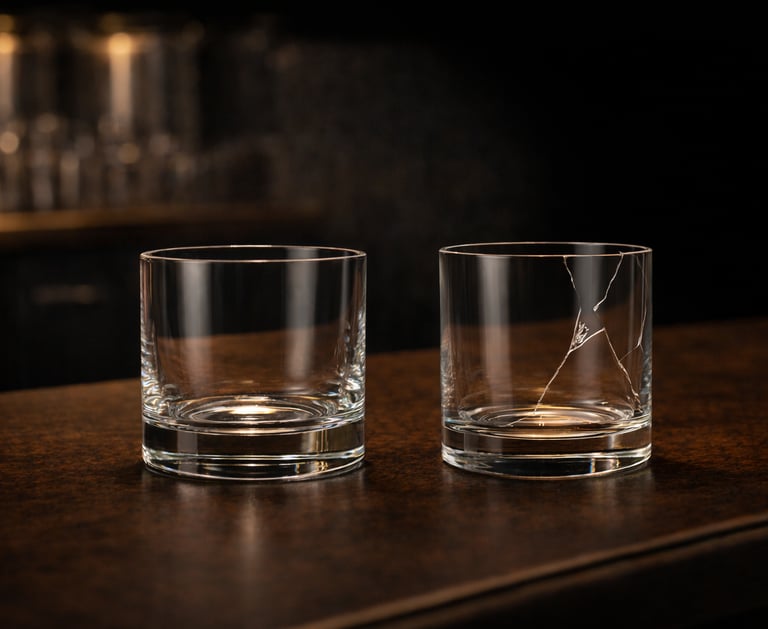
Temperature Stability and Insulation
I tested thicker versus thinner glasses for a few shifts and noticed thicker glass holds temperature noticeably better. Because it has more thermal mass, thicker glass slows down heat transfer from your hand or the environment. This becomes even more noticeable when serving drinks with ice or chilled cocktails where understanding dilution and melt rate can help maintain balance.
Carbonation and Aroma Perception
Thicker glass seems to keep carbonation from escaping more effectively by shielding the liquid better from outside factors. On the other hand, very thin glasses — like the ones pilsners come in — prioritize visual appeal and let delicate aromas shine, but drinks warm up faster in them.
This also ties into serving beer properly, where glass design and thickness influence foam retention, aroma release, and overall presentation.
Texture and Tactile Feedback
The glass thickness affects how the edge and walls feel against your lips and in your hand. Heavier, thicker glasses often feel more substantial, which can carry a premium vibe, but I found they might get tiring to hold during long shifts or sessions.
Durability and Safety
Thicker glass is tougher against chips and cracks, which definitely matters behind a busy bar. And for commercial setups, tempered glass with the right thickness is essential to meet safety standards and reduce injury risks. When building out a bar space, these decisions often start during home bar planning and layout design.
Standard Thicknesses for Beer and Cocktail Glasses
From what I’ve come across and tested:
Pilsner and light beer glasses: Around 2–3 mm thin walls to emphasize clarity and sparkles.
Stout and heavier beer glasses: Thicker, about 4–5 mm, to help keep the drink cold and bubbly.
Cocktail glasses: Usually somewhere between 3–4 mm to balance strength and style.
It’s all a trade-off between looks and function. Glass shape also matters here — especially when comparing martini glasses and coupe glasses, where rim thickness and balance can noticeably affect the drinking experience.
Glass Thickness for Bar Tops and Counters
Bar surfaces need significantly thicker glass compared to drinkware:
Light-use bar tops: At least ½ inch (about 12 mm) tempered glass.
Standard commercial bar tops: Closer to ¾ inch (about 19 mm).
Heavy-duty bars: Up to 1 to 1.5 inches thick for max durability.
Tempered glass here isn’t optional — it breaks into small, less sharp pieces, which is crucial for safety.
Benefits of Proper Thickness in Alcohol Service
Safety: Right thickness means fewer breaks and less risk of injury.
Better drinking experience: It keeps your drinks’ temperature and carbonation more consistent.
Longevity: Thicker glass resists damage much longer.
Visual appeal: Thickness can either highlight clarity or give a solid, premium feel, depending on glass type.
Choosing the Right Thickness for Your Bar
A few things to consider when choosing thickness:
What kinds of drinks are you serving? Pilsners and stouts call for different thicknesses.
How often and where will these glasses be used? Home casual use isn’t the same as high-traffic commercial bars.
Finding the right balance between how a glass feels, how durable it is, and how well it performs thermally.
Using tempered glass in commercial settings can add peace of mind, especially for cocktail and beer glasses.
If you’re still building out your drinkware collection, it helps to understand which glasses belong in a well-designed home bar setup so durability and thickness match how they’ll actually be used.
Common Mistakes
Picking glass that’s too thin for bar tops, which risks breakage and safety problems.
Forgetting tempered glass in busy, commercial environments.
Going for one uniform thickness on all glassware without considering differences in drink style and wear.
Not thinking about how thicker glass adds weight and affects how comfortable the glass is to handle.
FAQ
What is the ideal thickness for beer glasses?
For light beers and pilsners, 2–3 mm wall thickness is great for showing clarity and bubbles. For heavier brews like stouts, 4–5 mm helps keep the temperature and carbonation longer.
How does glass thickness affect drink temperature?
Thicker glass has more thermal mass, so it slows down warming, especially useful for beers on tap or cocktails with ice.
Is tempered glass necessary for bar use?
Yes. Especially in commercial bars, tempered glass increases durability and safety since it breaks into smaller, safer pieces.
Can thicker glass impact flavor perception?
Definitely. Thicker walls can slightly insulate aromas and flavors — sometimes enhancing or muting certain notes depending on the drink.
Does glass thickness affect carbonation?
Thicker glass helps maintain carbonation by limiting how fast gas escapes from the liquid.
How thick should a bar top glass be?
At least ½ inch for light use, ¾ inch is common for commercial bars, and up to 1–1.5 inches for heavy-duty durability.
What tools can measure glass thickness?
Digital calipers work well for accurately measuring both glassware walls and panel thickness.
For anyone serious about bar glassware and service, taking the time to understand and choose the right glass thickness really pays off. It makes both your bar setup and the customer experience better in practical, noticeable ways. If you want to dive deeper into selecting the right drinkware, learning how different whiskey glass shapes affect aroma and flavor is another helpful next step.
© 2026 Barkeepers Buzz. All rights reserved.
Barkeepers Buzz
Master cocktails, spirits, and bar knowledge with clarity and precision. Built for serious home enthusiasts.
Crafted with respect for the culture — and the responsibility that comes with it.
For educational purposes only. Intended for legal drinking age audiences. Please drink responsibly.
General Inquiries: