
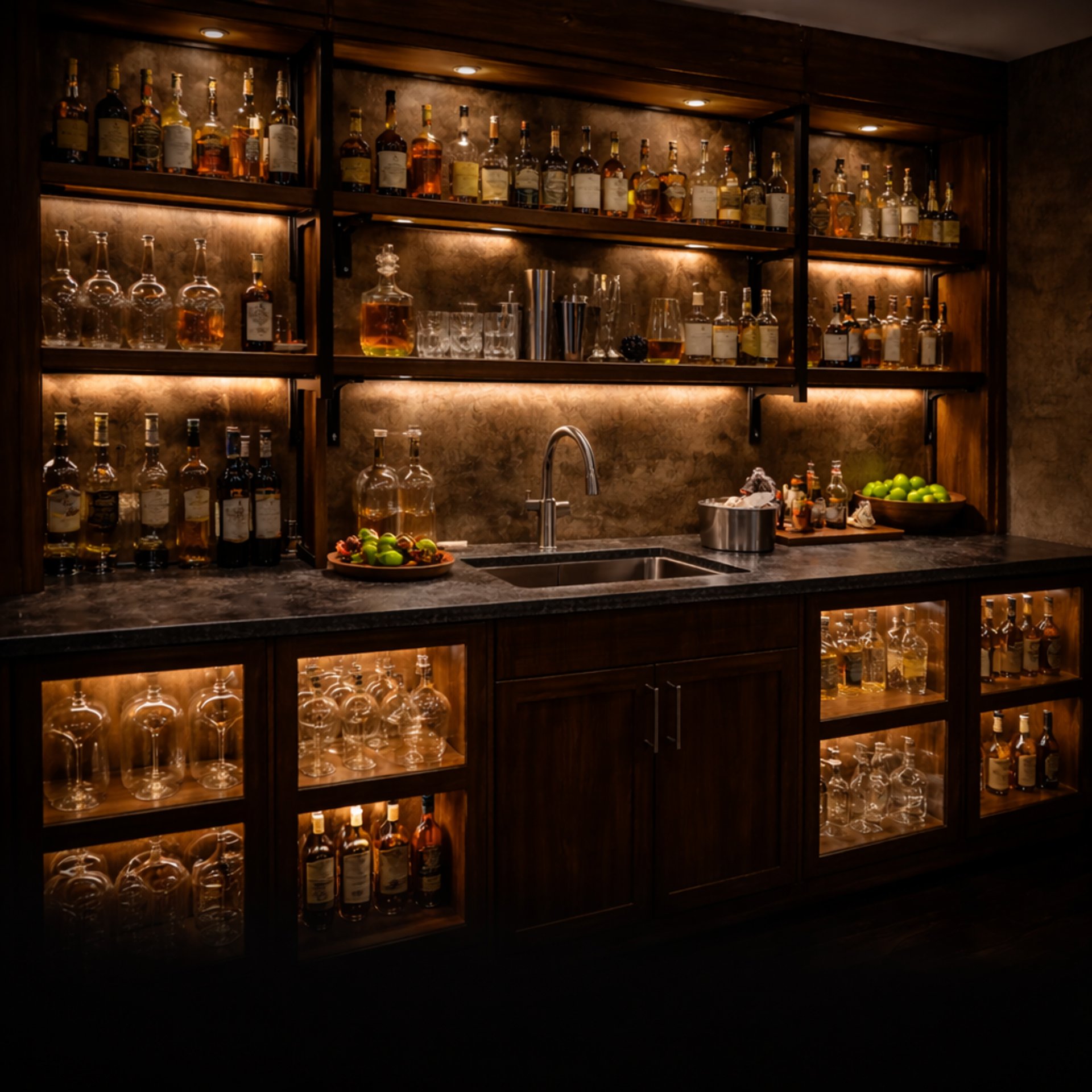
The Most Common Home Bar Setup Mistakes (And How to Avoid Them)
Avoid common home bar setup mistakes by organizing essentials, optimizing preparation space, and improving lighting for a functional and lasting bar.
HOME BAR GUIDES
Barkeepers Buzz Editorial Team - Led by AJ “Buzz” Eichman
5/11/20267 min read
Setting up a home bar seems straightforward at first. You pick your favorite spirits, grab some glassware, maybe throw in a shaker or two, and call it done. Trouble is, what works on day one rarely holds up over time. I’ve spent 30 years installing and fixing bar systems, both commercial and residential. From what I’ve seen, poor setups usually come down to basic mistakes nobody bothers to fix until they break. The truth is, good home bar organization and proper Home Bar Setup planning aren’t just nice to have—they’re what keep your bar functional and your drinks consistent years down the line.
Before buying equipment or laying out storage, it also helps to understand the broader planning framework covered in The Home Bar Blueprint. A good setup isn’t about stuffing bottles and gadgets into a stylish corner — it’s about creating a workflow that stays efficient, organized, and comfortable years after the excitement of the initial build wears off.
Get these fundamentals right, and the bar works. Ignore them, and you’re signing up for cramped counters, cluttered drawers, and probably a bunch of tools you never actually use. This isn’t about flashy trends or expensive gear. It’s about making something that lasts.
Quick Verdict
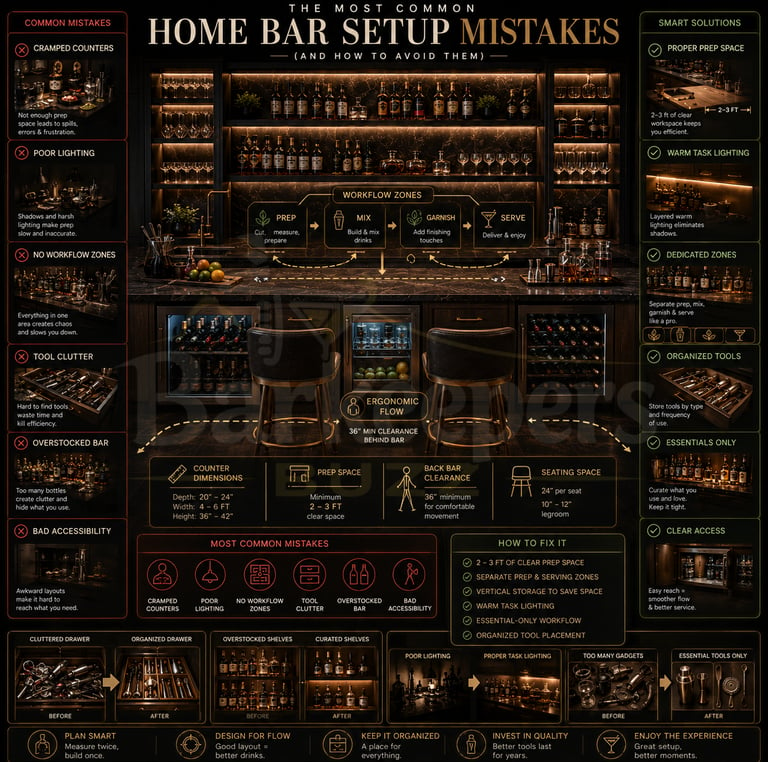
Allocate at least 2 to 3 square feet of clear preparation space to avoid cramped work zones.
Organize tools and ingredients by function; clutter kills efficiency and increases errors.
Don’t overstock or crowd your bar with unnecessary equipment; stick to essentials.
Plan for good lighting and easy accessibility to keep the space practical and inviting.
Why Proper Home Bar Setup Matters
If you’re serious about your home bar, the setup phase is where the foundation gets laid. A decent spirit collection and fancy glassware won’t mean much if your workspace is too tight to build a proper drink or if you waste half your time hunting for the right tool.
Space matters. I’ve replaced enough bars with cramped counters where bottles sit next to strainers, next to dirty glasses, next to garnish scraps. That’s how mistakes happen—spills, broken glass, mismeasured pours. When the flow breaks down, even the best ingredients can’t save the cocktail.
Likewise, incorrect organization leads to clutter over time. People tend to buy tools they think might come in handy, then shove them in a drawer somewhere. You end up with loads of stuff, none easy to find, and inevitably you reach for whatever’s on top, not what’s right. That’s a mistake I’ve warned clients against more than once.
Good setup also accounts for lighting and ergonomics. Having a dim, cramped corner bar might look cozy but makes preparation slower and more prone to errors. You can never overestimate the value of seeing clearly what you’re doing.
Common Home Bar Setup Mistakes
Lack of Cocktail Preparation Space
The single most common issue is insufficient clear countertop space. Some setups cram everything into a corner where barely two feet are free. That looks fine on day one. It’s year three that tells the truth. You need room to build drinks without knocking over bottles, plus space to drop your mixing glass or shaker safely while you grab the next ingredient.
Many homeowners also underestimate how important cabinetry and infrastructure are to preserving open workspace. Choosing layouts supported by Best Home Bar Cabinets can help consolidate clutter and free up valuable prep area.
Poor Tool and Ingredient Organization
Tools mixed in with bottle openers and cocktail picks, spirits crowded under the sink, garnishes stored too far from the prep area. These disorganized setups force you to shuffle back and forth, breaking the flow and increasing cleanup time. When tools or ingredients aren’t organized by their function or frequency of use, preparation drags.
Overloading With Unnecessary Tools
It’s tempting to stock every gadget or bottle you see online. Don’t. Excess gear clutters drawers and surfaces, making it harder to find what you actually need. I’ve fixed bars loaded with strange contraptions no one used. The fewer tools properly organized, the better the workflow.
Ignoring Essential Bar Tools
Some skimp on basics like a reliable jigger, shaker, or strainer. Makes measuring and mixing sloppy. That results in inconsistent drinks, which kills the enjoyment. A proper setup prioritizes these essentials.
Poor Lighting and Bad Layout
Low or harsh lighting, awkward angles, or blocked access slow you down. Lighting should be warm, diffuse, and positioned to illuminate your workspace without shadows. Layout should separate mixing, storage, and serving zones. This reduces spills and speeds service.
Planning lighting intentionally with systems like Best Bar Lighting Systems for Home Bars can dramatically improve visibility while keeping the environment comfortable and inviting.
Failing to Zone Your Bar Area
Good setup separates mixing, storage, and garnishing into designated spots. Without zones, you risk cross-contamination (think sticky glasses next to lemons) and frequent mistakes. Zoning keeps things clean and logical.
Essential Tools and Ingredients You Need
Start with the basics. You don’t need a fully stocked commercial bar for home use, but these few essentials will save headaches:
Jigger for accurate pours
Shaker to mix properly
Strainer to keep ice and pulp out of the glass
Stirring spoon for stirring cocktails
Variety of glassware suited for your drinks (e.g., rocks glass, coupe, highball)
Bottle opener and corkscrew
Bar towel or cloths for spills
Ingredients-wise, keep basics like simple syrup, bitters, citrus, and common garnishes close at hand. Organize spirits by category and frequency of use. Don’t overload your shelves blindly—rotate what you use regularly.
Organizing Your Home Bar for Efficiency
A well-organized bar cuts down prep time and cleanup. Here’s how:
Designate drawers or racks for tools by type. Keep your jiggers and shakers within arm’s reach of the prep surface. Store garnishes and mixers nearby but separate from spirits to avoid sticky spills.
Use labeled containers or trays to group small items like cocktail picks, stirrers, and napkins. Avoid tossing everything in one drawer where items get buried under clutter.
Keep glassware near the mixing zone but separated from heavy bottles. This prevents accidental breakage.
If your bar is small, consider vertical storage like wall-mounted racks or magnetic strips to free countertop space. Integrating systems like Best Back Bar Shelving can also improve bottle visibility and accessibility without overcrowding your prep zones.
Optimizing Cocktail Preparation Space
Aim to leave at least 2 to 3 square feet of clear space on your prep counter. This might mean removing or relocating decorative items and non-essentials.
Keep that surface clear except for the active tools and ingredients you need at the moment. Bottles stationed far from shaking or pouring areas slow things down and increase spills.
Keep your garbage or compost container close but tucked out of the way to dispose of peels and waste quickly.
A good counter height of around 36-42 inches lets most people work comfortably standing or seated.
Design and Lighting Tips for Your Home Bar
Forget flashy LED strips or gimmicky colors. A warm, steady light source works best. Overhead lighting paired with under-cabinet lamps can eliminate shadows where you mix.
Place lighting so it hits your workspace directly. Floor lamps or side lamps create odd shadows or glare if placed wrong.
For design, avoid cramped nooks with no ventilation. Moisture buildup causes damage over time, especially in bars with sinks or ice makers. Keep airflow steady or add ventilation grills.
Open shelving or glass doors can make your bar feel more spacious and accessible. Avoid closed cabinets that make it harder to find things quickly.
Maintenance and Restocking Best Practices
A bar left unattended forgets how to serve. Regularly wipe down surfaces, clean tools, and reorganize drawers. Sticky residue or spilled syrup only worsens with time.
Restock staples before they run out. Keep an inventory checklist handy for spirits, mixers, and perishable garnishes.
Don’t hoard old ingredients. Expired syrups or stale bitters only hurt your cocktails.
Common Mistakes to Avoid
Cramping your workspace looks fine until it doesn’t. You’ll end up bumping glasses or spilling drinks as soon as the bar gets busy.
Shoving everything into a single drawer or shelf slows you down and damages tools over time.
Ignoring essential tools to save money on setup leads to inconsistent drinks and more frustration. I’ve seen too many bars missing a proper strainer or jigger.
Overlighting or underlighting your bar makes cocktail prep harder. Avoid extremes.
Failing to separate mixing and storage zones causes clutter and mistakes.
FAQs About Home Bar Setup
What are the must-have essentials for a home bar?
At minimum, a good jigger, shaker, strainer, stirring spoon, a few types of glassware, and a decent knife for garnishes. Add a bottle opener and some basic syrups and bitters.
How much space do I need for an efficient home bar setup?
Aim for at least 2 to 3 square feet of clear countertop for mixing. If that’s not possible, use modular or portable carts that expand your work surface.
What’s the best way to organize bar tools?
Group by function: measuring tools together, mixing tools nearby, garnishing supplies separately. Use labeled containers or racks to keep everything visible and accessible.
How can I avoid clutter in my home bar?
Stick to essentials. Store rarely used items elsewhere. Regularly clean and reorganize to prevent buildup.
What lighting works best for a home bar area?
Warm, diffuse overhead lighting combined with task lighting at the prep surface. Avoid harsh or colored lights.
Which bar tools are often overlooked but important?
A quality strainer and a good jigger are often underappreciated but essential for consistent drinks.
How do I maintain and restock my home bar?
Clean tools and surfaces regularly. Keep an inventory checklist. Rotate perishables and dispose of expired ingredients.
Can I set up a functional home bar in a small space?
Yes, with modular carts, wall-mounted storage, and careful organization you can maximize efficiency even in tight quarters.
Conclusion
Setting up a home bar right means no guesswork when you’re ready to mix. It means having enough space to work without spills and placing tools so you don’t waste time searching. Most importantly, it means avoiding cheap shortcuts that lead to failures years down the line.
If you do one thing right, make it this: plan your space and organize your essentials logically. That prevents almost every common mistake before it starts. After all, a bar is only as good as the work it supports, not the gear it holds.
For homeowners refining workflow and appliance integration, systems like Best Wet Bar Sinks and Best Wine Fridges for Home Bars can further improve long-term usability while keeping the setup clean and efficient.
© 2026 Barkeepers Buzz. All rights reserved.
Barkeepers Buzz
Master cocktails, spirits, and bar knowledge with clarity and precision. Built for serious home enthusiasts.
Crafted with respect for the culture — and the responsibility that comes with it.
For educational purposes only. Intended for legal drinking age audiences. Please drink responsibly.
General Inquiries: