
Kegerator vs Keezer: Which One Makes More Sense?
Explore the key differences between a kegerator vs keezer to determine which system best fits your home bar for capacity, cost, and energy efficiency.
HOME BAR GUIDES
Barkeepers BuzzBlog Editorial Team - Led by AJ “Buzz” Eichman
2/27/20265 min read
When you're deciding how to store and pour kegged beer at home, the choice usually boils down to a kegerator or a keezer. Both get the job done, but they’re built differently, cost differently, hold different amounts of beer, and come with their own maintenance needs. Let’s break down what you really need to know so you can pick the system that genuinely makes sense for your home bar setup.
Quick Verdict
- Kegerators provide simple, ready-to-go temperature controls but typically fit fewer kegs.
- Keezers are chest freezers converted for keg use, offering better capacity and energy efficiency, but they need some DIY elbow grease.
- Go with a kegerator if you want straightforward operation, reliability, and a clean, professional look.
- Opt for a keezer if you’re after multiple kegs, lower energy costs, and don’t mind customizing your setup.
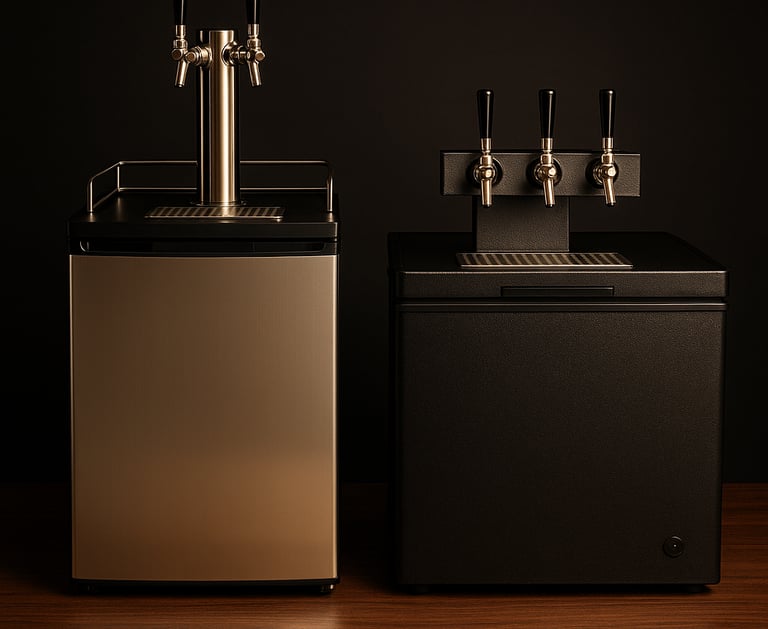
What Is a Kegerator?
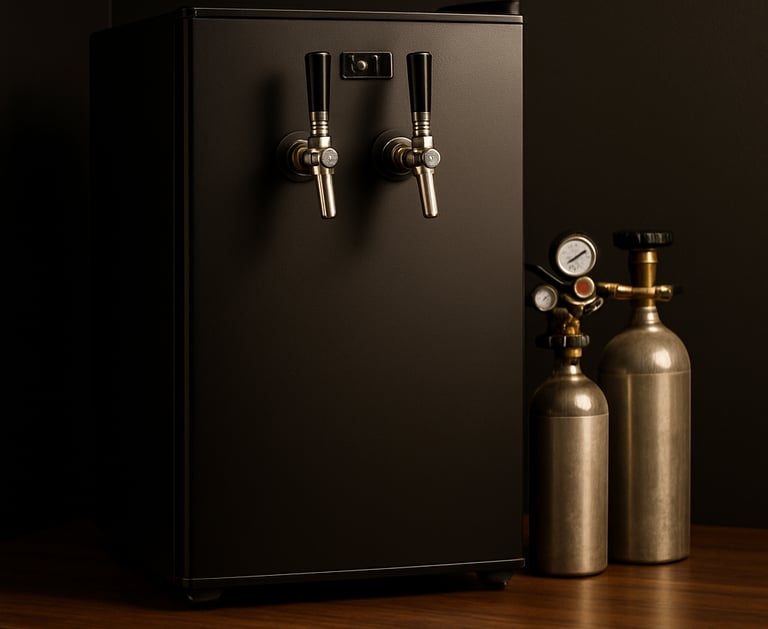
A kegerator is basically a fridge built or adapted exclusively to store and serve kegged beer at just the right temperature. You’ll recognize it easily—it looks like an upright fridge with taps on the door or top. These usually come with temperature controls tuned specifically for draft beer. Draft systems ultimately serve one purpose—better beer service—which ties directly into understanding beer styles and proper serving.
Key Features
- Upright fridge style
- Holds 1 to 3 kegs depending on size
- Plug-and-play setup with CO2 tanks and taps
- Precise temperature controls designed for beer service
If you're leaning toward plug-and-play convenience, explore our breakdown of best kegerators for home bars.
What Is a Keezer?
A keezer is a chest freezer converted into a keg cooler. You add an external temperature controller and mount taps on the lid to create a high-capacity, energy-efficient draft system. The insulation and cooling in chest freezers tend to be better, but the flip side is you’ll have to assemble some of this yourself. Choosing the right chest freezer matters—our guide to best freezers for home bars breaks downsizing and performance considerations.
Key Features
- Chest freezer fitted with external temp controller
- Can hold 3 or more kegs, depending on freezer size
- Usually less expensive if you do the build yourself
- More energy-efficient due to freezer insulation and compressor design
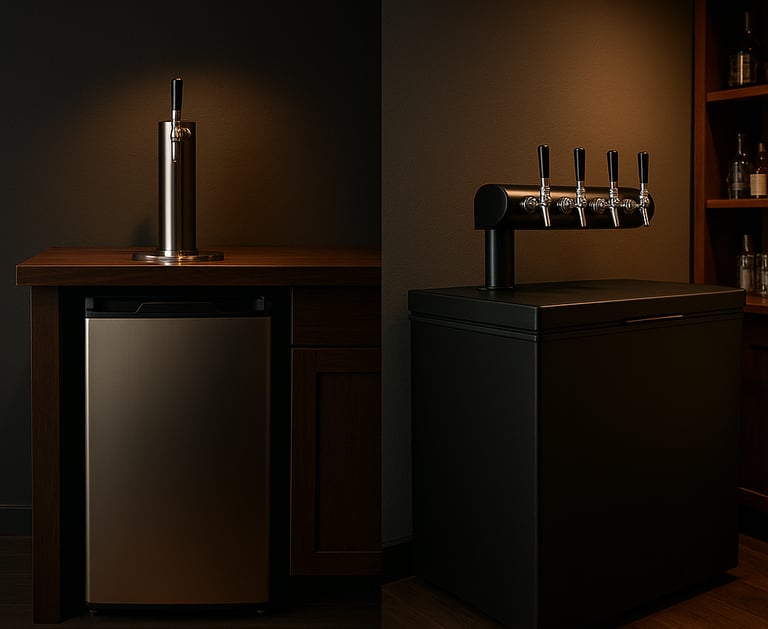
Kegerator vs Keezer: Pros and Cons
When choosing between a kegerator and a keezer, the differences come down to capacity, efficiency, setup effort, and aesthetics. Here’s how they compare in practical terms.
Kegerator
Best for: Clean installs and plug-and-play convenience
A kegerator is a purpose-built draft system designed to look and function like a traditional bar appliance.
Typically holds one to three kegs, depending on size
Costs range from $400 to $1,700 for pre-built units
Requires minimal setup, usually just gas and line connection
Uses refrigerator-style cooling, which is less energy-efficient than freezers
Needs little ongoing maintenance
Offers a clean, professional, bar-style appearance
Keezer
Best for: Maximum capacity and efficiency
A keezer is a chest freezer converted into a draft system, favored by enthusiasts who want flexibility and performance.
Can hold three or more kegs, depending on freezer size
DIY builds often stay under $800
Requires manual conversion, including collar installation and temperature control
Uses freezer cooling, which is more energy-efficient
Needs more hands-on upkeep due to the DIY nature
Has a bulkier, utilitarian look compared to a kegerator
Cost Breakdown
Buying a purpose-built kegerator runs wide: $400 will get you a simple single-tap unit, while premium models with multiple taps and electronic controls push past $1,700. For a keezer, you pay for the chest freezer plus a temperature controller and taps, which can total under $800 if you do it yourself.
Don’t overlook ongoing electricity bills either. Keezers usually win here since chest freezers are designed to keep low temps efficiently compared to the fridge-style cooling in kegerators. Energy consumption and compressor design also play into broader home bar refrigeration and beverage storage decisions.
Capacity and Space Considerations
Kegerators have a vertical, narrow shape that fits a couple of kegs nicely but can feel tight if you want to add more later. Kezer setups use the broad, boxy layout of chest freezers—they fit more kegs and gear like extra CO2 tanks, but they take up more floor space and open from the top.
This means keezers might be tough to squeeze into small bars, whereas kegerators fit well under counters or in tighter, vertical spots. In tighter layouts, some homeowners compare draft systems to under-counter beverage centers when deciding how much dedicated draft capacity they truly need.
Understanding the differences between dedicated draft systems and standard cooling units is easier when you compare beverage center vs beverage fridge setups.
Practical Implications for Home Bars
- Choosing a Kegerator: Pick this if you want an out-of-the-box experience, a clean appearance, and only a few kegs. It’s often the best fit if space’s tight or you want something professional without fuss.
- Choosing a Keezer: This makes sense if you need lots of capacity, want to cut energy costs, and enjoy tinkering. Ideal for larger spaces where you can spare the footprint of a chest freezer.
Common Mistakes
- Overshooting keezer size and ending up with more space than you’ll use.
- Grabbing cheap used refrigerators for kegerators that end up needing repairs.
- Underestimating the DIY time and skills needed to convert and maintain a keezer.
- Forgetting ventilation needs—chest freezers require good airflow and placement considerations.
- Placement also affects appliance hum—especially in open layouts—so review how to reduce noise from home bar refrigeration before committing.
Internal Linking Notes
For a deeper dive on kegerators, see /kegerators/. If you're leaning toward a keezer, /best-freezers-for-home-bars/ is a solid resource for freezer options. For broader setup tips, /home-bar-setup/ has practical suggestions. Note that /under-counter-beverage-centers/ doesn’t fit keezer setups well, since those are chest freezers usually kept on the floor.
FAQ
What's the main difference between a kegerator and a keezer?
A kegerator is a purpose-built or modified fridge designed for a couple of kegs and easy setup. A keezer is a chest freezer converted to serve multiple kegs with energy advantages but needs DIY work.
Are keezers more energy-efficient than kegerators?
Yes. Chest freezers have thicker insulation and a compressor designed for deep freezing, so they generally use less power than regular refrigerators.
Can you build a keezer yourself?
Absolutely. Lots of homebrewers convert chest freezers by adding temperature controllers and draft hardware. It takes some basic electrical understanding but isn’t rocket science.
How many kegs can each hold?
Kegerators usually fit 1–3 kegs, depending on model size. Keezers can hold 3 or more, depending on chest freezer dimensions.
What about maintenance?
Kegerators are mostly plug-and-play with minimal upkeep. Keezers may need periodic temperature controller checks and DIY troubleshooting.
Are there differences in the quality of poured beer?
Quality boils down to temperature control and CO2 pressure, not so much the dispenser. Quality boils down to temperature control and CO2 pressure—both core elements of proper ice and temperature control strategy. Both can serve great beer, though keezers sometimes have an edge in temperature stability thanks to freezer-grade insulation.
What setup works best for small home bars?
Kegerators tend to be the practical choice for small spaces due to their compact, upright design and easier placement.
This should give you a balanced perspective that helps you make a confident, sensible choice based on capacity, budget, energy efficiency, and ease of use—without any fluff.
© 2026 Barkeepers Buzz. All rights reserved.
Barkeepers Buzz
Master cocktails, spirits, and bar knowledge with clarity and precision. Built for serious home enthusiasts.
Crafted with respect for the culture — and the responsibility that comes with it.
For educational purposes only. Intended for legal drinking age audiences. Please drink responsibly.
General Inquiries: