
Do You Need a Dual Zone Wine Fridge?
Discover if a dual zone wine fridge is right for you by understanding how it preserves red and white wines at ideal temperatures efficiently and stylishly.
HOME BAR GUIDES
Barkeepers BuzzBlog Editorial Team - Led by AJ “Buzz” Eichman
2/27/20265 min read
For the serious wine enthusiast, storing both red and white wines presents a clear challenge: maintaining their ideal serving or aging temperatures within the same space. A dual zone wine fridge offers a refined solution—two independently controlled compartments set to distinct temperatures, a feature that sits at the core of proper home bar setup strategy. Yet, is investing in a dual zone wine fridge justified for every collector or home bar, or can a single zone unit perform adequately?
This guide provides a precise understanding of what defines a dual zone wine fridge, explains its operation, and helps determine if it suits your collection’s demands. The focus remains on temperature control as a cornerstone for preserving wine quality and enhancing enjoyment.
Quick Verdict
- Dual zone wine fridges enable simultaneous storage of reds and whites at tailored temperatures, safeguarding flavor integrity more effectively than single-zone units.
- Recommended temperatures generally range from 41–50°F for whites and sparkling wines, and 51–64°F for reds.
- They offer greater energy efficiency and occupy less space compared to running two separate fridges.
- Best suited for collectors with varied inventories or those who entertain regularly.
What Is a Dual Zone Wine Fridge?
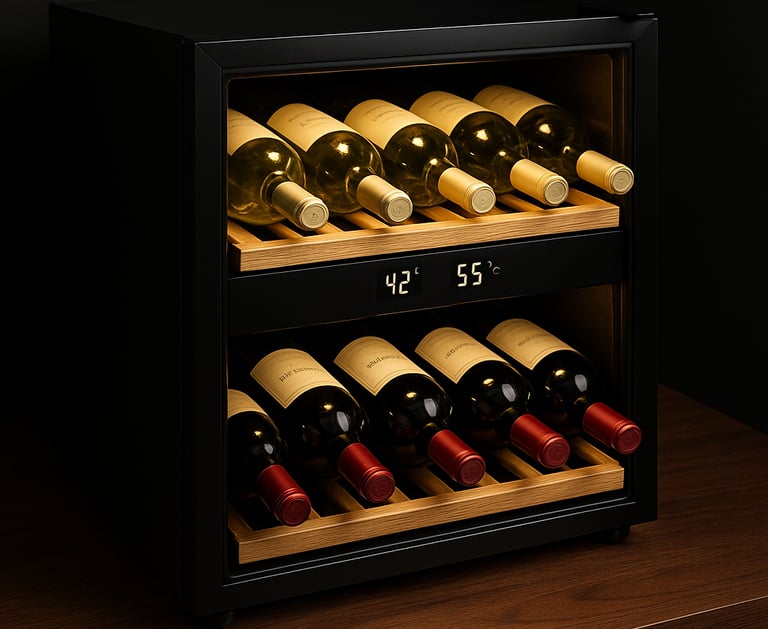
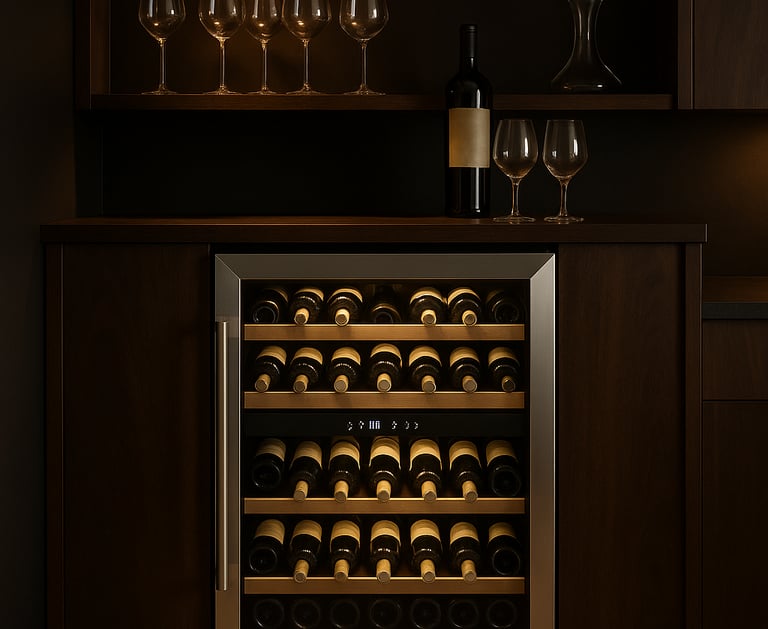
A dual zone wine fridge is an elegantly engineered appliance featuring two discrete compartments, each maintained at its own temperature setpoint. This design accommodates different wine types side-by-side without compromising the distinct environmental requirements vital for quality preservation.
Typically, the cooler zone is reserved for white and sparkling wines, while the warmer zone caters to reds, which require modestly higher temperatures to mature appropriately.
How Dual Zone Technology Works
These fridges achieve temperature separation via independent cooling systems or sophisticated airflow management paired with insulated barriers. Each zone is governed by its own thermostat and digital controls, preventing thermal crossover that could undermine optimal storage conditions. For a broader understanding of cooling performance across bar appliances, see our guide to home bar blueprint.
Many configurations employ a horizontal split—upper and lower compartments with separate settings—though vertical splits remain an option depending on space and design preferences.
This isolation guarantees that the cooler zone consistently maintains its lower temperature, uninterrupted by the warmer segment.
Optimal Temperature Ranges for Different Wine Types
Temperature precision is fundamental to wine storage. Recommended ranges include:
- White and sparkling wines: 41°F to 50°F (5°C to 10°C)
- Red wines: 51°F to 64°F (10.5°C to 18°C)
Within reds, Pinot Noir thrives nearer 60-64°F, while those who appreciate Pinot Grigio will prefer the cooler side around 45-48°F. The dual zone wine fridge allows nuanced temperature control to match such varietal distinctions, supporting a balanced and purposeful collection.
Temperature precision across beverages—whether wine or cocktails—ties directly into broader ice and temperature control principles.
Key Benefits of Dual Zone Wine Fridges
- Versatility: Enables concurrent storage of multiple wine styles without compromise.
- Flavor Preservation: Maintains delicate aroma profiles and prevents premature aging through precise temperature control.
- Energy Efficiency: More economical than operating two standalone fridges, sharing components and management.
- Space Saving: A single footprint replaces two separate units, optimizing bar or cellar layout.
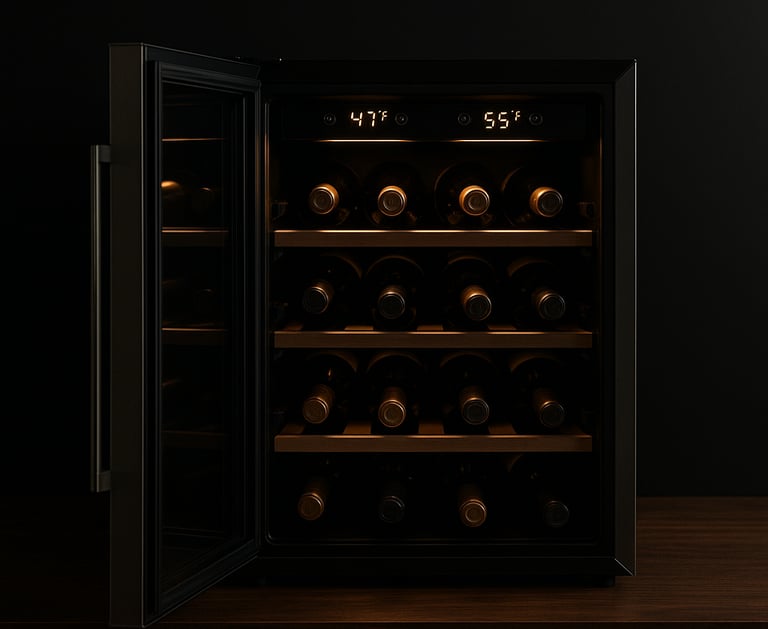
- User Control: Independent digital interfaces afford intuitive, rapid adjustment for storage or serving.
Who Should Invest in a Dual Zone Wine Fridge?
A dual zone wine fridge is most beneficial for:
- Collectors with diverse inventories: Curators of reds, whites, rosés, and sparklings who require differential storage conditions.
- Entertainers: Those hosting tastings or dinners where wines must be served at varying temperatures.
- Compact home bars: Consolidating wine storage without sacrificing environmental control.
Integrating wine storage properly is a key component of intelligent home bar setup design.
If your consumption focuses largely on one type or your collection remains modest, a single-zone unit may adequately serve your needs.
Dual Zone Configurations and Layouts
Dual zone wine fridges generally present two primary configurations:
- Horizontal split: A layout with upper and lower independently controlled compartments.
- Vertical split: Side-by-side zones, each with its own thermostat.
Premium options may include more than two zones or customizable divisions—consider which arrangement best accommodates your bottle organization and access patterns. Those building a full bar setup may also evaluate kegerator vs keezer options when planning refrigeration zones.
Thermoelectric vs. Compressor Cooling Systems
Dual zone models typically operate with one of two cooling methods:
- Thermoelectric cooling: Quiet, cost-effective, best for moderate ambient temperatures; limited cooling capacity relative to external environment.
- Compressor cooling: Offers stronger, more consistent cooling performance, especially in warmer rooms; tends to be louder but better at sustaining lower temperatures.
Choice depends on your environmental conditions, noise tolerance, and performance expectations.
Space and Cost Considerations
While dual zone wine fridges generally carry a higher initial price than single-zone models, their long-term advantages in energy use and spatial efficiency often justify the investment. Assess your collection’s size alongside the available footprint carefully.
For a broader understanding of cooling performance across bar appliances, see our guide to home bar refrigeration and beverage storage.
Additional features such as humidity control, UV protection, and vibration damping significantly influence wine quality and should be factored into your decision.
Common Mistakes When Choosing a Wine Fridge
- Assuming a single temperature zone suffices for both reds and whites—this undermines proper storage.
- Neglecting humidity regulation and light exposure controls, which are as pivotal as temperature.
- Overlooking compressor noise and power consumption differences between models.
- Failing to anticipate spatial requirements, resulting in obstructive, cluttered layouts.
Practical Takeaways to Improve Your Wine Storage
- Set zones according to your dominant wine types.
- Reserve the cooler zone strictly for white and sparkling wines.
- Use the warmer zone for reds, fine-tuning temperature per varietal.
- Store bottles horizontally to maintain cork hydration.
- Avoid frequent temperature swings which stress the wine.
- Select a fridge size proportional to your collection to maintain visual balance and efficiency.
For refined wine storage options, consult our detailed guide on best wine fridges.
Pair proper storage with thoughtfully selected best wine glasses to fully express aroma and structure at serving temperature.
FAQ
Are dual zone wine fridges worth the investment?
Regularly storing both red and white wines justifies the investment; they preserve quality and optimize space efficiently.
Can you adjust the size of the zones in a dual zone fridge?
Most models have fixed compartments, though some premium options offer configurable or additional zones.
What's the difference between storage and serving temperatures?
Storage temperatures are typically cooler for long-term preservation; serving temperatures trend warmer to unlock wine aromas. For a deeper breakdown of varietal-specific serving standards, visit our complete wine guide.
Do dual zone fridges consume more power than single zone ones?
They consume less power than running two separate units but more than a single-zone fridge.
Is compressor cooling better than thermoelectric for dual zones?
Compressor systems provide superior cooling in warmer environments and sustain colder temperatures, though with increased noise.
Can I use a dual zone fridge for beers or other beverages?
Yes, but temperature ranges are optimized for wine, which may not suit all beverages perfectly.
How important is UV protection in wine fridges?
Crucial—it prevents light damage that degrades wine quality over time.
In conclusion, a dual zone wine fridge offers meticulously controlled environments tailored to both red and white wines within a single, integrated unit. This precision protects flavor nuances and adds operational convenience. It represents an excellent investment for collectors, enthusiasts, and hosts seeking elevated storage performance. Conversely, for those with modest collections or simplified needs, a single-zone fridge remains a practical choice.
For broader beverage storage considerations aligned with sophisticated home bars, explore our curated selection of undercounter beverage centers.
Thoughtful arrangement of your wine and drink station transforms your home bar into an elegant, functional sanctuary that balances aesthetics and performance.
© 2026 Barkeepers Buzz. All rights reserved.
Barkeepers Buzz
Master cocktails, spirits, and bar knowledge with clarity and precision. Built for serious home enthusiasts.
Crafted with respect for the culture — and the responsibility that comes with it.
For educational purposes only. Intended for legal drinking age audiences. Please drink responsibly.
General Inquiries: